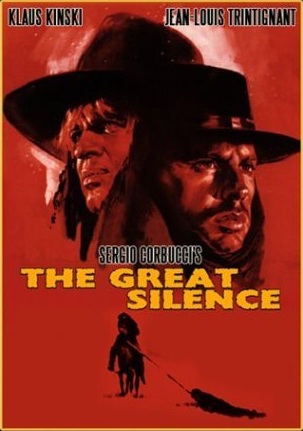
Director: Sergio Corbucci
Written by: Mario Amendola, Bruno Corbucci, Sergio Corbucci, Vittoriano Petrilli
Cast: Jean-Louis Trintignant, Klaus Kinski, Frank Wolff, Luigi Pistilli
Year / Country: 1968, Italy / France
Running Time: 101 mins.
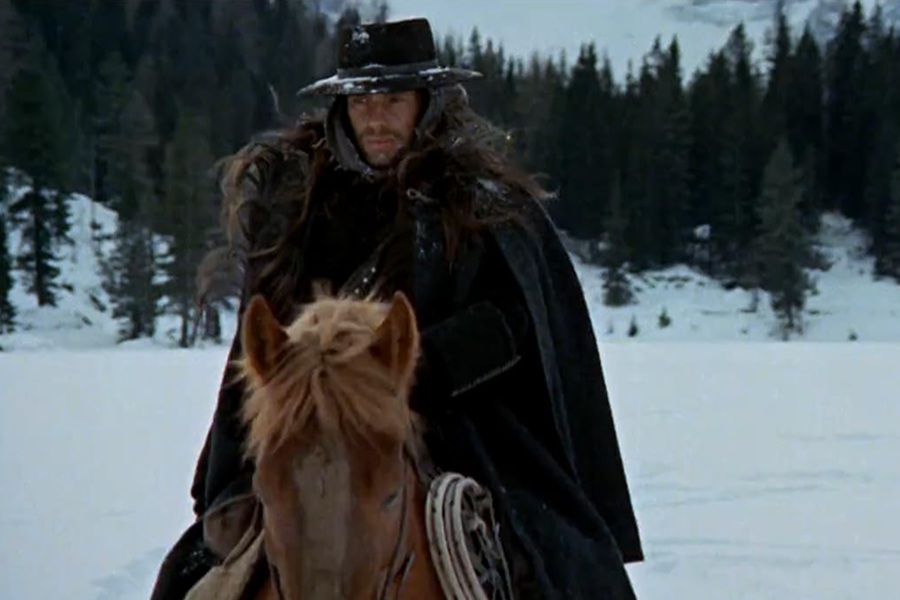
A spaghetti western in the snow? Now that is distinctive and that’s exactly what The Great Silence is. Besides its Fargo-like landscape, the ending is another element that sets it miles apart from its contemporaries. You definitely don’t see that one coming!
Director Sergio Corbucci clearly has a political streak, as he already demonstrated in earlier films and does again here. The misuse of the law by populists to eliminate the people they hate forms the core of the story. That said, Corbucci never neglects style. Right from the opening – a brutally bloody ambush shoot-out in the snow – it’s obvious this is going to be a kick-ass western. Corbucci’s films are certainly comparable to Sergio Leone’s, only with more blood, grit, and brains splattering across the screen.
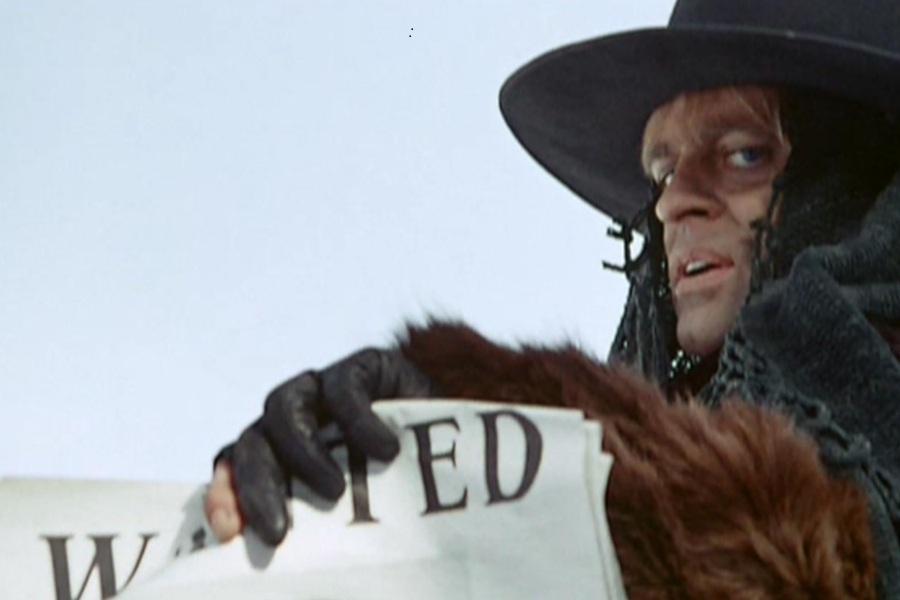
Storywise, The Great Silence is essentially a revenge movie. The ‘Silence’ of the title is a mute ranger who hunts the vulturous bounty killers profiting from the ‘dead or alive’ law of the time. Silence always provokes his enemies into drawing first, ensuring the law can’t touch him. The truly ‘great’ character, however, is Tigrero, played by the terrific Klaus Kinski. This evil, weaselly bastard is impossible not to love to hate, and he alone already lifts the film above the average B-western. Beautiful cinematography and Ennio Morricone’s haunting score do the rest.
Rating:


Biography: Sergio Corbucci (1926, Rome – 1990, Rome) was, alongside Sergio Leone, one of the most prominent directors of spaghetti westerns. Born and raised in Rome, Corbucci played a crucial role in popularizing the genre, particularly through his iconic films Django (1966) and The Great Silence (Il Grande Silenzio, 1968). He frequently collaborated with actor Franco Nero, crafting memorable characters and stories that helped define the genre’s unique style. His B-movies are characterized by brutal violence, surrealist and apocalyptic production design, black humour and politically left symbolism. Corbucci was a fanatical Marxist and many of his films show the hopelessness of the revolution. He kept working in Italy throughout his career and most of his films were barely released abroad. He died in Rome in 1990.
Filmography (a selection): Foreign Earth (1954), Water’s Love (1954), Supreme Confession (1957), Angel’s Sky (1957), Duel of the Titans (1961), Toto, Peppino and La Dolce Vita (1961), The Son of Spartacus (1963), Grand Canyon Massacre (1963), Django (1966), Navajo Joe (1966), The Mercenary (1968), The Great Silence (1968), Compañeros (1970), Bandera Bandits (1972), The White, the Yellow, and the Black (1975), The Payoff (1978), Super Fuzz (1980), My Darling, My Dearest (1982), Days of Inspector Ambrosio (1988)
 FRAGMENTEN UIT HET SCHEMERLAND
Pingback: Filmdungeon – HOME | FRAGMENTEN UIT HET SCHEMERLAND
Pingback: Django | FRAGMENTEN UIT HET SCHEMERLAND
Pingback: Compañeros | FRAGMENTEN UIT HET SCHEMERLAND