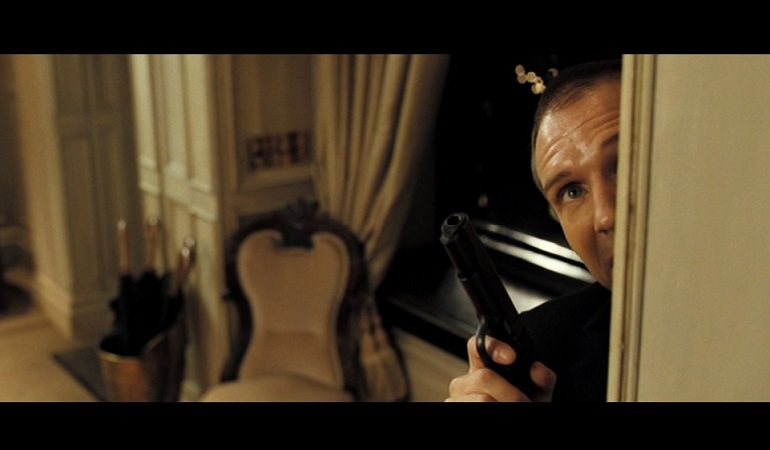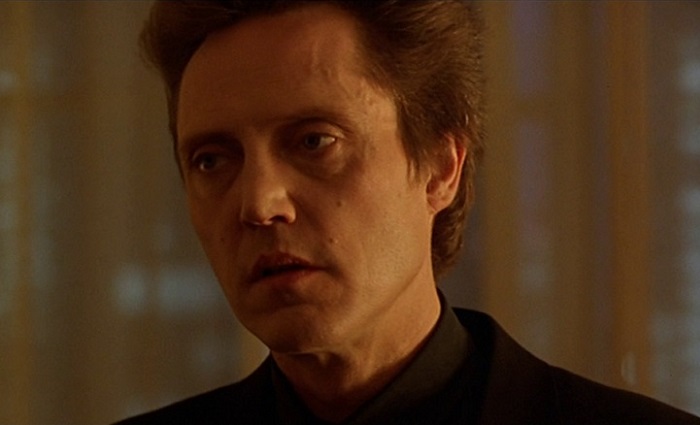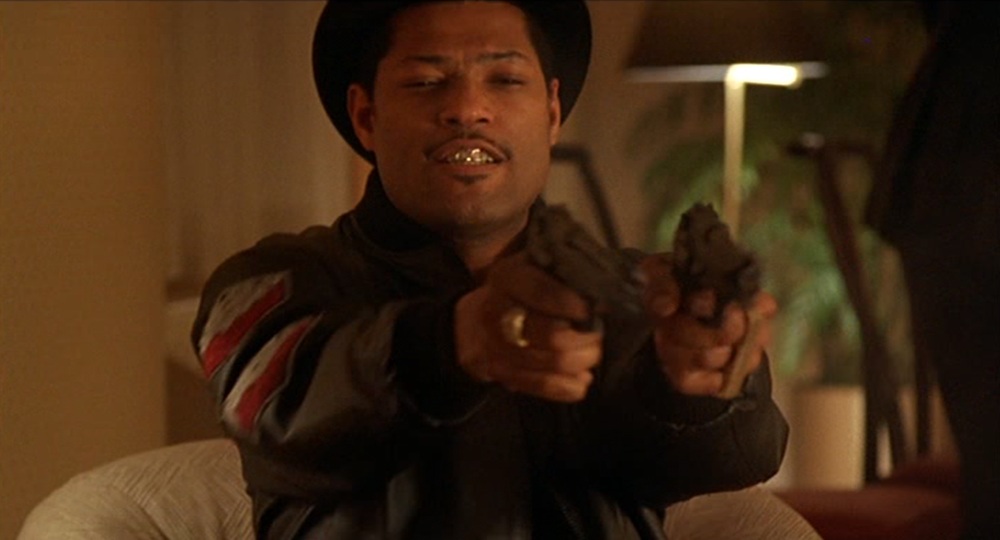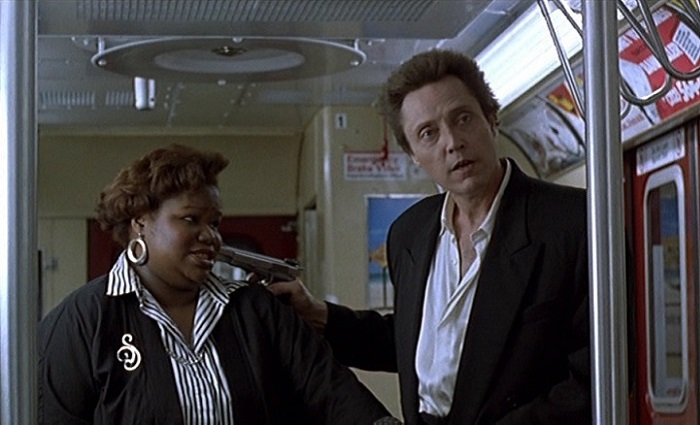
Few films share as much in common as Fargo and A Simple Plan. Both unfold in the snowy, desolate landscapes of Minnesota, steeped in an atmosphere that feels as bleak as it is gripping. Thematically, they explore the destructive power of greed – how a single, flawed decision can spiral into violence, ruin lives, and reveal the darkness lurking within ordinary people. The connection between the films extends beyond their themes. The Coen Brothers, directors of Fargo, and Sam Raimi, who helmed A Simple Plan, are longtime collaborators and friends. Both films are superb, but Fargo stands as a true masterpiece. Its razor-sharp original screenplay and unforgettable characters set it apart. The story centers on Jerry Lundegaard (William H. Macy), a pathetic and desperate car salesman who arranges the kidnapping of his own wife, hoping to extort ransom money from his wealthy father-in-law. When the sociopathic criminals he hires (Steve Buscemi and Peter Stormare) murder a state trooper and two witnesses, they draw the attention of the sharp, heavily pregnant Brainerd police chief Marge Gunderson – an Oscar-winning role from Frances McDormand. Nothing in Jerry’s plan goes right, and the consequences of his evil scheme are as brutal as they are inevitable. A Simple Plan follows a similarly grim trajectory. When three men stumble upon a crashed plane in the woods – containing a dead pilot and over four million dollars in cash – the seemingly level-headed Hank (Bill Paxton) agrees with his dim-witted brother Jacob (Billy Bob Thornton) and Jacob’s redneck friend Lou (Brent Briscoe) to hide the money until they can safely claim it. What starts as a simple scheme quickly unravels, forcing Hank into a series of horrific acts to protect their secret. Together, these films serve as chilling cautionary tales, illustrating how the pursuit of easy money can corrupt ordinary lives and destroy families.
Tagarchief: FilmDungeon
The Roaring Twenties (1939)

‘America’s Most Colorful Era!’
Directed by:
Raoul Walsh
Written by:
Jerry Wald (screenplay)
Richard Macaulay (screenplay)
Robert Rossen (screenplay)
Mark Hellinger (story)
Cast:
James Cagney (Eddie Bartlett), Priscilla Lane (Jean Sherman), Humphrey Bogart (George Hally), Gladys George (Panama Smith), Jeffrey Lynn (Lloyd Hart), Frank McHugh (Danny Green), Paul Kelly (Nick Brown), Elizabeth Risdon (Mrs. Sherman), Ed Keane (Henderson), Joe Sawyer (The Sergeant)
The Roaring Twenties opens in the immediate aftermath of World War I, as soldiers James Cagney and Humphrey Bogart return home in 1919. They find a nation grappling with economic hardship and rising living costs just as Prohibition is ratified, turning alcohol into both a forbidden fruit and a lucrative business opportunity.
The film follows Eddie Bartlett (Cagney), a former doughboy who seizes the moment and rises to power in the bootlegging underworld. Along the way, he reconnects with Jean Sherman, a woman he corresponded with during the war, securing her a singing job at a nightclub. His path eventually crosses again with his old comrade George Hally (Bogart), now a rival booze importer. Their partnership sours, and tensions escalate when they double-cross fellow bootlegger Nick Brown.
The movie by Raould Walch, who would ten years later make the best gangster film yet at that point – White Heat – is a trendsetter in more than one way. Walsh crafts The Roaring Twenties with a dynamic, almost documentary-like style. Crisp black-and-white cinematography is punctuated by newsreel-style interludes, lending the film an energetic, GoodFellas-esque rhythm. The story of the ‘working gangster’ feels like a clear influence on Scorsese, blending ambition, a jetset lifestyle, and eventually an ugly downfall.
Cagney delivers another magnetic performance as Eddie Bartlett, a character who begins as a mild-mannered entrepreneur, but grows increasingly volatile as his world unravels. What sets The Roaring Twenties apart is its focus on redemption: Eddie’s final act is a selfless one, driven by love rather than greed. It is a rare moral twist for the genre.
Like most gangster tales, it ends with a memorable line, this time spoken by a dame: “He used to be a big shot.”
Rating:
![]()
Quote:
EDDIE BARTLETT: “I just ran into a streak of bad luck, that’s all. I’ll be there on top again. I just got to figure out a new angle.”
Trivia:
Gladys George replaced Ann Sheridan (the female star of Cagney’s previous gangster film Angels with Dirty Faces) who had replaced Lee Patrick who had replaced Glenda Farrell for the character of Panama Smith.
Angels with Dirty Faces (1938)

‘The saga of America’s dirty faced kids… And the breaks that life won’t give them!’
Directed by:
Michael Curtiz
Written by:
John Wexley (screenplay)
Warren Duff (screenplay)
Rowland Brown (story)
Cast:
James Cagney (Rocky Sullivan), Pat O’Brien (Jerry Connolly), Humphrey Bogart (James Frazier), Ann Sheridan (Laury Ferguson), George Bancroft (Mac Keefer), Billy Halop (Soapy), Bobby Jordan (Swing), Leo Gorcey (Bim), Gabriel Dell (Pasty), Huntz Hall (Crab)
Angels with Dirty Faces brings together two screen legends – James Cagney and Humphrey Bogart – in a gangster film that transcends the genre. The chemistry between them is great.
Cagney stars as Rocky Sullivan, a tough kid sent to juvenile prison for petty theft who grows into a hardened criminal. Bogart plays his lawyer, Frazier, while Pat O’Brien portrays Jerry Connolly, Sullivan’s childhood friend turned priest. And the lovely Ann Sheridan stars as Laury, his childhood teasing target who becomes his trusted partner.
When Sullivan befriends a group of street kids who once robbed him, Connolly tries desperately to steer them away from a life of crime. Meanwhile, Frazier orchestrates a betrayal that adds a layer of moral complexity to the story.
Directed by Michael Curtiz (Casablanca), Angels with Dirty Faces feels less like a traditional gangster film (such as The Public Enemy or White Heat) and more like a sharp social commentary. The real focus isn’t just on Sullivan, but on the impressionable youth drawn into his orbit.
Still, it’s a powerful film with standout performances. Cagney’s portrayal of Sullivan foreshadows the unhinged mobster he’d later perfect in White Heat. His influence on the genre is undeniable. The film’s iconic ending remains just as gripping today.
A year later, Cagney and Bogart would reunite for another classic, The Roaring Twenties, but Angels with Dirty Faces stands on its own as a thought-provoking blend of crime and conscience.
Rating:
![]()
Quote
ROCKY SULLIVAN: “What do you hear, what do you say?”
Trivia
The scene where Rocky forces a reluctant henchman to take his place in the pharmacy’s phone booth – knowing it will cost him his life – was directly inspired by the real-life death of infamous New York gangster Vincent ‘Mad Dog’ Coll. During a brutal gang war with Dutch Schultz, Coll took refuge in an apartment above a pharmacy, venturing out only to use the phone booth inside to call his girlfriend. Schultz caught wind of this routine and seized the opportunity: when Coll entered the booth for his usual call, Schultz’s gunmen stormed in and fatally shot him.
Across the Universe – a Beatles Musical
Director: Julie Taymor
Written by: Dick Clement, Ian La Frenais, Julie Taymor
Cast: Evan Rachel Wood, Jim Sturgess, Joe Anderson
Year / Country: 2007, United Kingdom, United States
Running Time: 133 mins.
Across the Universe is a jukebox musical in which the songs are provided by the greatest band of all time: the Beatles.
It opens with the main character Jude (Jim Sturgess) singing ‘Girl’ – a John Lennon classic – on a beach, immediately immersing the audience in the emotions and energy of the 1960s. The film continues with ‘Helter Skelter’ and ‘Hold Me Tight’, offering a glimpse of Liverpool’s vibrant nightlife.
Like so many of the Beatles’ songs, love is the film’s central theme, and Evan Rachel Wood and Jim Sturgess bring undeniable chemistry to their roles. Jude, a shipyard worker, travels to the US to find his G.I. father, whom he’s never met. After locating him – a janitor at Princeton – he meets student Max, who takes him home to meet his sister Lucy. Their connection sparks a romantic love story, but Across the Universe is also deeply rooted in the era’s revolutionary spirit.
Max and Jude move to New York, but their lives are disrupted when Max is drafted for Vietnam. They rent a room from Sadie, a talented singer, and her guitarist Jo Jo, both on the brink of stardom. Lucy joins them in New York, and their relationship blossoms amid the growing anti-war movement, which becomes increasingly radical as the conflict worsens.
The movie features 34 Beatles compositions, many performed memorably by the cast. Standout musical numbers include ‘I Want You’ in a US Army Recruitment Centre, a surreal circus performance of ‘Being For the Benefit of Mr. Kite’ (complete with blue meanies), and a soulful ‘Let It Be’ by a black church choir.
The film is packed with visual and lyrical nods to the Beatles, from character names to cranberry sauce, the number 9, and psychedelic imagery that mirrors the band’s evolution – from Liverpool’s working-class roots to the revolutionary fervor of 1960s America, and in between a psychedelic magical mystery tour in the countryside.
The film unfortunately was a box office flop, but the two surviving Beatles praised the film after seeing it, and when the director asked Paul McCartney what could have been done better, he replied: “What’s not to like?” And who am I to disagree with Paul?
Rating:
![]()
Biography: Julie Taymor (1952, in Newton, Massachusetts) is an acclaimed American director, playwright, and costume designer, renowned for her groundbreaking work in theater, opera, and film. She is best known for her inventive use of masks, puppets, and visual spectacle, blending Eastern and Western artistic traditions. Her most iconic achievement is directing Disney’s The Lion King (1997), which revolutionized Broadway with its innovative puppetry and staging. In film, Taymor directed Frida (2002), a biopic of artist Frida Kahlo starring Salma Hayek, which received six Academy Award nominations and won two. She also directed Across the Universe (2007), The Tempest (2010), and The Glorias (2020), a biopic about feminist icon Gloria Steinem. Her work often explores themes of transformation, identity, and social justice, and she is celebrated for her ability to create magical, immersive worlds on stage and screen.
Filmography: (a selection): The Tempest (1986, Video), Juan Darién: A Carnival Mass (1990, TV Movie), Fool’s Fire (1992, TV Movie), Salome (1995, TV Movie), Titus (1999), Frida (2002), Across the Universe (2007), The Tempest (2010), A Midsummer Night’s Dream (2014), The Glorias (2020)