What ‘Jacob’s Ladder’ Teaches Us About Reality

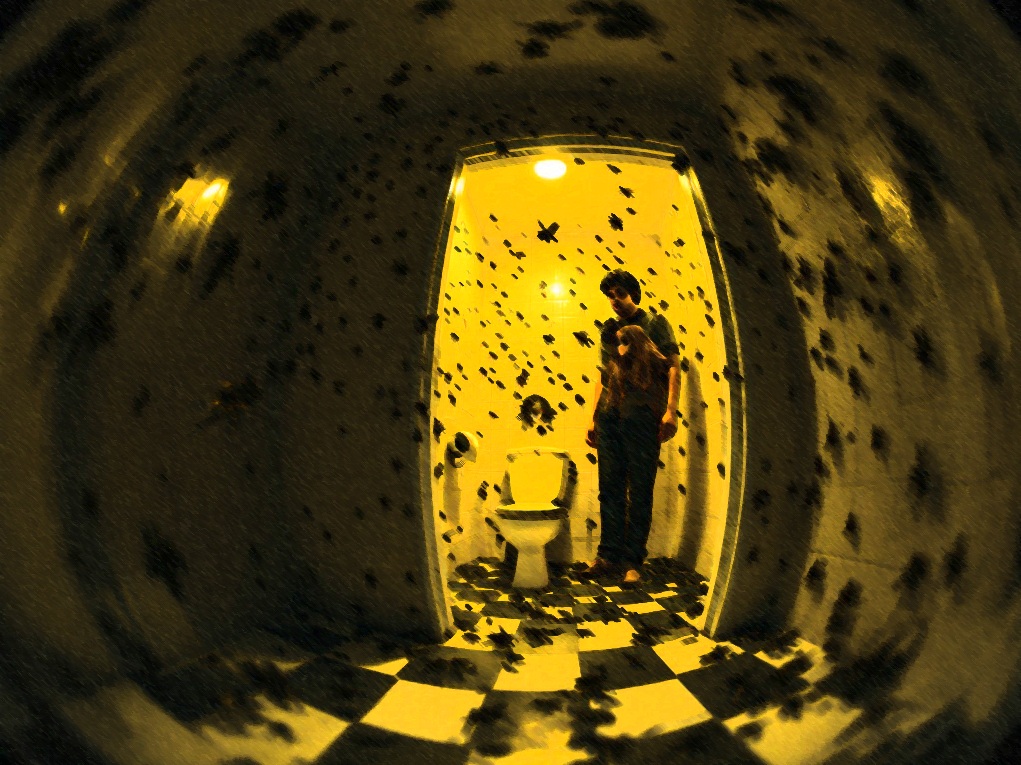
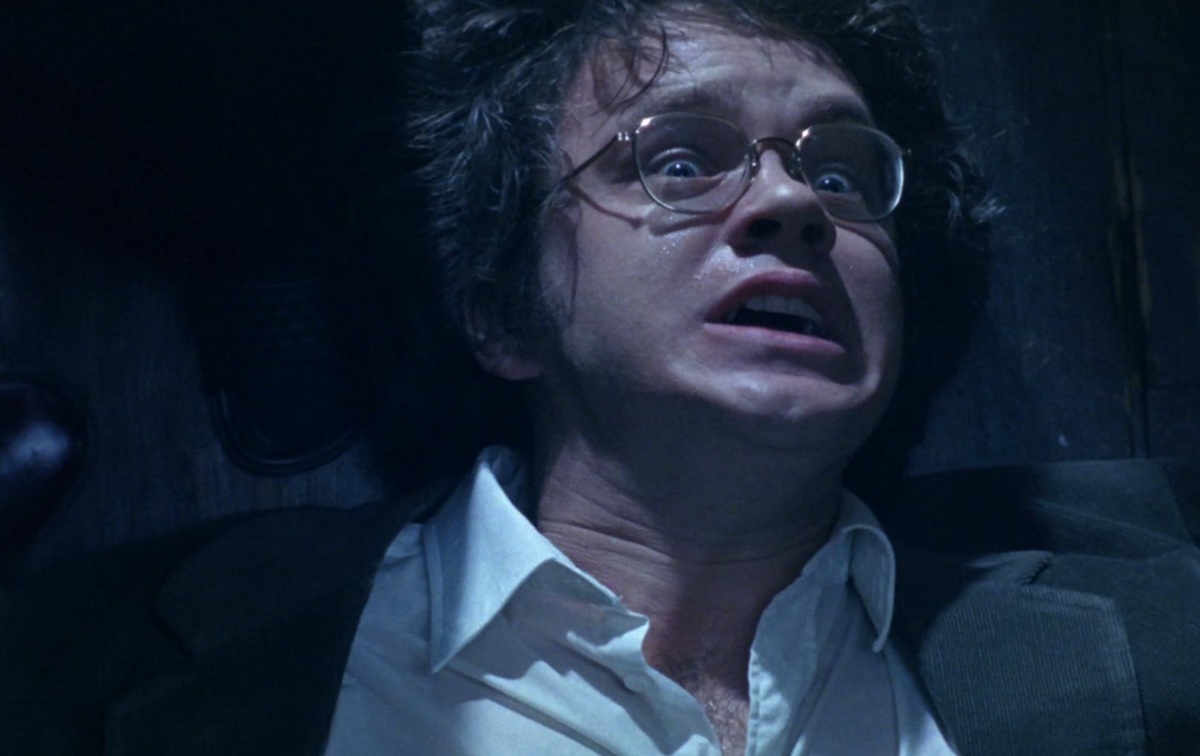
Jacob’s Ladder (1990, Adrian Lyne) – a haunting exploration of reality and death – opens with a brutal ambush of American soldiers in Vietnam. Jacob Singer (Tim Robbins) is among them, but his fate in the attack is left unresolved.

Years later, Jacob is back in New York City, living with his girlfriend Jezzie (Elizabeth Peña). We learn he is divorced, has two children, and is still grieving the death of his third child, Gabe (an uncredited role by Macaulay Culkin).

It soon becomes obvious that something is wrong with Jacob’s reality. He is haunted by ghost-like entities, sees a tentacle protruding from a sleeping homeless person, and at the Veterans Office there is no military record of his service in Vietnam. Then, inexplicably, he is suddenly back with his ex-wife and children as if no time has passed.

At a friend’s party, a psychic delivers a chilling revelation: Jacob is already dead. Could this be the key to understanding his torment? The film’s script, penned by Bruce Joel Rubin (known for Ghost, 1990), delves into the mysteries of existence beyond our own.

Read the entire article on Free-Consciousness.com

In Closing

I’d like to say: I deeply love film; I love catching ideas; and I love to meditate. I love enlivening unity. And I think the enlivening of unity brings a better and better life. Maybe enlightenment is far away, but it’s said that when you walk toward the light, with every step, things get brighter. Every day, for me, gets better and better. And I believe that enliveling unity in the world will bring peace on earth. So I say: Peace to all of you.

May everyone be happy. May everyone be free of disease. May auspiciousness be seen everywhere. May suffering belong to no one.

Peace.

R.I.P. David Lynch (1946 – 2025)

(Text from Catching the Big Fish, 2006)

Het ervaren van niet-fysieke realiteit

Ik dreef in een wilde rivier met in mijn buurt ook andere drijvers. Geen idee hoe ik hier terecht was gekomen, wat natuurlijk heel vaak het geval is in dromen. Tijdens het drijven – wat ik als extreem prettig ervoer – besefte ik me dat dit drijven voor een lange tijd (om precies te zijn één jaar) mijn realiteit zou zijn. Het was een soort pauze van de worstelingen van het dagelijkse bestaan. Of een beloning! Puur drijven langs de kolkende rivier, uitsluitend plezierige sensaties belevend, af en toe de kick van een val van een waterval of rotswand, maar hoofdzakelijk puur ontspannen. Gewoon ‘zijn’ in het hier en nu. Ik had in deze droomstaat wel een lichaam. Maar het was op geen enkele manier een belemmering, zoals het lichaam in het dagelijks leven soms iets kan zijn wat je met je mee moet zeulen. Mijn lichaam was oneindig licht en flexibel. Wat ik ervoer in deze toestand was de niet-fysieke realiteit, zoals hij vaak is beschreven door mensen die een bijna-dood-ervaring hebben meegemaakt. Er waren nog steeds fysieke elementen, zoals het water, de rotsen, en het fysieke lichaam, maar ze hadden hun vastheid verloren. Alles veranderde razendsnel; het stromen van mijn eigen geest was het enige continue in deze toestand.

De verklaring voor waarom we dromen wordt vaak gezocht in het functioneren van de hersenen. Misschien is de verklaring veel simpeler. Dromen is gewoon wat onze geesten voortdurend doen, of we nou wel of niet wakker zijn en interacteren met de fysieke wereld. Een nachtelijke droom vindt plaats in de niet-fysieke realiteit waar we allemaal vandaan komen. Wanneer je wakker wordt, triggert je geest vrijwel direct de fysieke omgeving om je heen zodat alles weer vast lijkt te zijn. Onderliggend is het niet vast. De dromer begrijpt dat. Maar de wakkere persoon (die eigenlijk nog steeds droomt, maar dat niet doorheeft) gelooft dat de solide wereld de ultieme realiteit is terwijl het in werkelijkheid slechts een subdomein is van een veel grotere realiteit. Dromen zijn net zo echt als de wakkere staat. Misschien wel echter omdat puur bewustzijn fundamenteel is en de fysieke wereld niet. Bovendien is het een illusie dat de fysieke wereld echt fysiek is. Wanneer je iets aanraakt, ervaar je slechts energievelden die elkaar afstoten. In een atoom zit zoveel lege ruimte dat wanneer je al het vaste spul van alle atomen van de aarde samenperst, je niet meer dan een knikker overhoudt. De fysieke wereld lijkt alleen fysiek in de beleving van de dromer.

Meer weten over de realiteit als droomtoestand? Bezoek mijn nieuwe website Free-Consciousness.

An Atheist Goes To Heaven

Dan Dennett opened his eyes, and he found that he was in a dazzling green landscape. He looked at himself, his body was completely intact. Even his long white beard was still there. Only his glasses were missing. Still, there was something different about him. His body was more radiant, like he was in some sort of lucid dream. He looked at his hands, as he had done often in lucid dreams, and bright light shone through them. He really was dreaming! Except then why wasn’t he waking up right about now? Lucid dreams were usually very brief experiences.

The last thing he remembered was being in the medical center with his wife. His lovely Susie whom he loved so so much. His interstitial lung disease had drained him of his last powers and he felt like he was slipping away into a deep sleep. Eternal sleep. He looked at his wife one last time. “I love you…” And that was it….

And now he was here, or so it seemed. But what was here? It was not in Maine, that’s for sure. He looked around him and saw the most beautiful trees. They were cedar trees, he thought. But way bigger than he had ever seen them before. There were also huge bushes of flowers in yellow, blue, pink, orange and purple. Dan tried if he could float through the air and found that he actually could. He followed a narrow path alongside a small creek with round white shining stones illuminating the way. There were small clouds also, really close to the ground, and when he passed through them they felt like silk to his skin. The creek made the most peaceful sound he had ever heard and he could also hear birds chirping.

But how can my consciousness still be intact?, Dan thought. During all of his career as one of the most widely read and debated American philosophers, he had proposed that consciousness was constructed by tiny little machines inside the human brain. But he was pretty sure his physical brain would by now be no longer functioning. Had the dualists been right after all? That consciousness existed in a different realm as the brain? But no, he still had his body. He was looking right at it and it felt more real than it had ever felt. What about these idealists, these woo woo cosmic consciousness peddlers? Was mind indeed the primal substance of the universe? There was still some doubt in Daniel’s mind.

He reached a valley surrounded by beautiful mountains covered in flowers. Dan was completely in awe of the astonishing scenery. It was more awesome than anything he had ever seen in his life. Then he gasped as he was approached by a magnificent blue butterfly the size of a man. It came up to him and said in a clear voice: “I am so happy to see you, Dan. So very happy.” The bearded philosopher was shocked; he was now 100% certain he was not in Kansas anymore, or any other place on earth for that matter. “And who might you be?’”, Dan asked. “I am Christopher”, the butterfly replied. “Christopher Hitchens”. Dan’s jaw dropped a mile deep. Then he quickly recovered and he smiled the widest smile he had ever smiled. “Now jump on my back, my old friend”, the butterfly said. “We’ve got a lot to talk about.”

More about life after death: From Here To Eternity And Back Again. About Death In Mental Space