Man on the Run: McCartney After the Beatles

Do you foresee a time when Lennon-McCartney becomes an active songwriting partnership again?

No.

What if you’ve been part of the greatest band in history and it breaks up, what do you do?

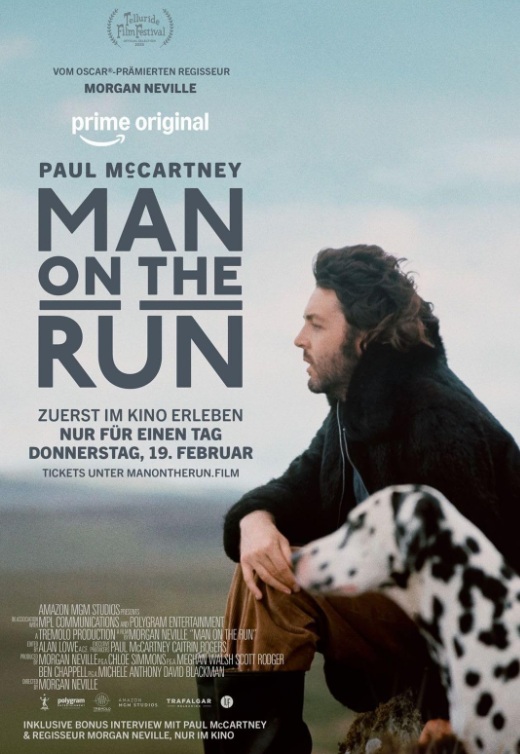
That is the central question of Paul McCartney: Man on the Run, a documentary about Paul McCartney in his post-Beatles years.

The Beatles officially disbanded in 1970, but the cracks had already begun to show a year earlier when John Lennon declared he wanted a “divorce.” Devastated, McCartney retreated to Scotland, sparking the infamous ‘Paul is Dead’ rumor.

Struggling with depression and heavy drinking, McCartney found solace in his family: his wife Linda, whom he had married just eight months prior; his adopted daughter Heather; and their newborn, Mary (named after his late mother). Slowly, he began composing again.

His first post-Beatles album, ‘McCartney’, was a homemade effort that received scathing reviews. His follow-up, ‘Ram’ – nowadays considered a classic – fared little better with critics at the time.

Determined to move forward, McCartney formed a new band. Linda, a photographer but capable singer and keyboardist, joined first, followed by guitarist Denny Laine (formerly of The Moody Blues), lead guitarist Henry McCullough, and drummer Denny Seiwell.

Yet to truly break free, McCartney had to legally dissolve The Beatles. The only way out was to sue his former bandmates, a painful but necessary step. “My mates would hate me for it, the public would hate me for it, and I would hate me for it”, he admitted. “But otherwise, I would never get out.”

To prove The Beatles were finished, McCartney played Lennon’s song ‘God’ for the court, in which Lennon sings, “I don’t believe in Beatles.” The case was settled.

In 1972, his new band, Wings, began rehearsing. McCartney wanted to start fresh, so they embarked on a modest UK tour, playing university gigs for little pay. Bigger tours soon followed, with the family in tow.
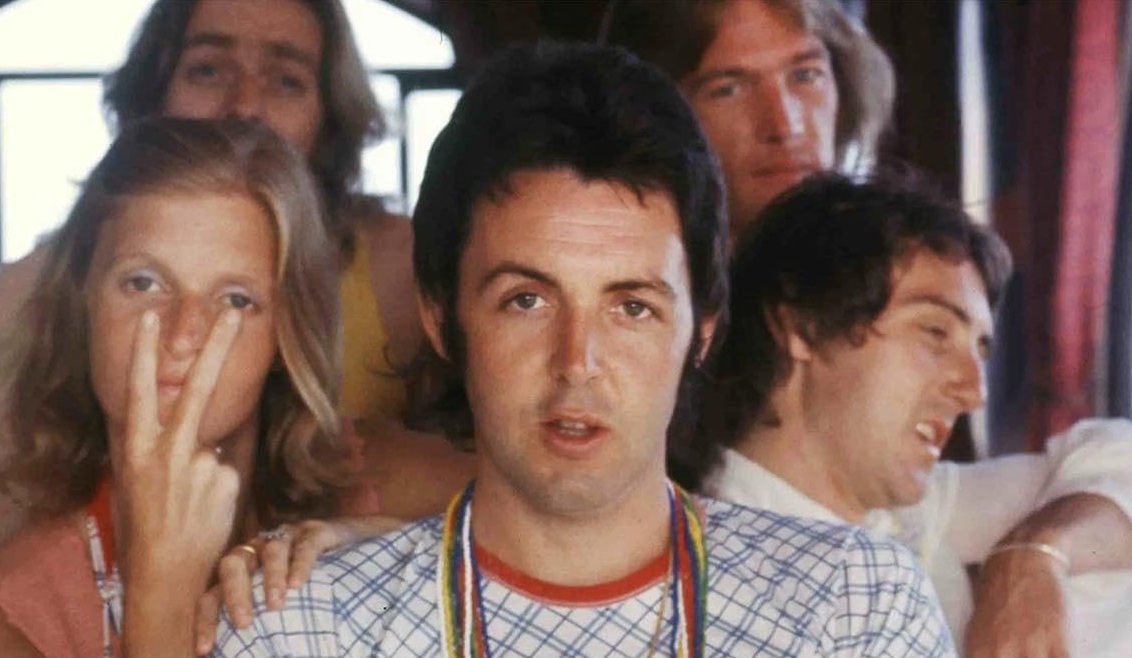
Musically, Wings was still finding its footing, and McCartney faced criticism for not matching his Beatles-era brilliance. Worse, he recorded ‘Mary Had a Little Lamb’ – hardly the revolutionary rock ‘n’ roll of the time.

Everything changed in 1973. Wings traveled to Nigeria to record their third album, but two members quit just before the sessions. Furious, McCartney declared, “I’m gonna make the best album you’ve ever heard.”

The result, ‘Band on the Run’, may not be the greatest album ever, but it’s undeniably terrific. It’s a thematic exploration of breaking free and embracing total creative freedom. The album was a hit, earning praise even from Lennon, who had been critical of McCartney’s post-Beatles work.

New members joined the band – Jimmy McCulloch on guitar and Geoff Britton on drums – and they learned enough new songs, so they could go on world tour. They did. In 1975 they did the Wings Over America tour. He had made it there, like more than ten years earlier with the Beatles. The word spread: this show is good. Wings brought a new sound for a new generation.

Wings was successful commercially. But the problem with the band was obvious. Paul wanted them to be equals, but obviously they weren’t. He was the only superstar in the band.

There were more changes in the line-up, and they produced more hit singles, like ‘Mull of Kintyre’. But when another member quit and another died of an overdose, Wings was heading towards the end.

Linda was pregnant and tired of touring, and even McCartney felt his enthusiasm for touring had peaked. So when they were going to Japan for a concert tour, he subconsciously sabotaged it. He smuggled marijana and got arrested at the airport. He spent time in jail and had time to think what he would do if “he ever got out of there.”

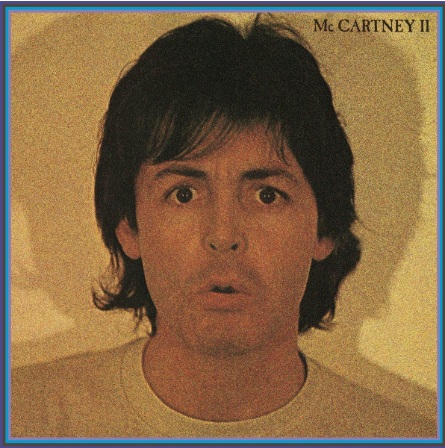
It was 1980, ten years after the end of the Beatles, and now it was the end of Wings as well. And just like in 1970 he released a solo album, aptly titled ‘McCartney II’. After two decades in which he had been the driving force beyond two wildly successful bands, McCartney was back again.
Ranking the Top 100 Beatles Songs – Part 1

The Beatles, the most influential band of all time, deserve the ultimate list. I decided to make a ranking of their 100 greatest songs and devote a major video to this list on my YouTube channel.

Now, this video – published in two parts and totaling 43 minutes of screentime – was quite an undertaking and took me eight months to complete. Compiling the list was relatively tough because the boys have made so many masterpieces. Special thanks to the ever-knowledgeable Jan Bletz for his helpful input. The really tough part was creating the video itself though.

Make no mistake: getting to 43 minutes of edited video can be a real nightmare. Many things go wrong: technical issues, copyright claims of YouTube, the stress of perfectionism and more. Respect for anybody who does this for a living.

That said, I’m pretty happy with the final result – flaws and all. So without further ado, I proudly present the ultimate Beatles playlist, in two parts. I hope you enjoy it.

100. A Hard Day’s Night

99. The Night Before

98. Eight Days a Week

97. Love Me Do

96. I Will

95. Hey Bulldog

94. She Said She Said

93. It Won’t Be Long

92. Mother Nature’s Son

91. The Continuing Story of Bungalow Bill

90. Please Please Me

89. No Reply

88. I Want to Tell You

87. Martha My Dear

86. This Boy

85. Lady Madonna

84. I’m Only Sleeping

83. Can’t Buy Me Love

82. We Can Work It Out

81. Your Mother Should Know

80. Getting Better

79. I Saw Her Standing There

78. Magical Mystery Tour

77. You Can’t Do That

76. Taxman

75. And I Love Her

74. I’ve Just Seen a Face

73. From Me to You

72. You Won’t See Me

71. I’m So Tired

70. Ob-La-Di, Ob-La-Da

69. I’m a Loser

68. Octopus’s Garden

67. I’ll Follow the Sun

66. Help!

65. Julia

64. When I’m Sixty-Four

63. Two of Us

62. The Ballad of John and Yoko

61. With a Little Help from My Friends

60. I Should Have Known Better

59. Ticket to Ride

58. Nowhere Man

57. Don’t Let Me Down

56. If I Needed Someone

55. Sgt. Pepper’s Lonely Hearts Club Band

54. I Want You (She’s So Heavy)

53. All You Need Is Love

52. Carry That Weight

51. Oh! Darling

Check out part 2 here…

Ranking the Top 100 Beatles Songs – Part 2

50. Paperback Writer

49. Sexy Sadie

48. I Me Mine

47. Maxwell’s Silver Hammer

46. For No One

45. Hello, Goodbye

44. I Am the Walrus

43. Get Back

42. I Feel Fine

41. She Loves You

40. Tomorrow Never Knows

39. And Your Bird Can Sing

38. Within You Without You

37. Here Comes the Sun

36. I’m Down

35. Revolution

34. If I Fell

33. The Long and Winding Road

32. All My Loving

31. You Never Give Me Your Money

30. Day Tripper

29. Golden Slumbers

28. Fixing a Hole

27. Michelle

26. I Want to Hold Your Hand

25. Across the Universe

24. Yesterday

23. Drive My Car

22. Dear Prudence

21. Back in the U.S.S.R.

20. Blackbird

19. Come Together

18. Girl

17. The Fool on the Hill

16. Lucy in the Sky with Diamonds

15. Something

14. Being for the Benefit of Mr. Kite!

13. Eleanor Rigby

12. Happiness Is a Warm Gun

11. Penny Lane

10. While My Guitar Gently Weeps

09. Norwegian Wood (This Bird Has Flown)

08. Strawberry Fields Forever

07. Let It Be

06. Hey Jude

05. In My Life

04. She’s Leaving Home

03. Because

02. Here, There and Everywhere

01. A Day in the Life

Check out part 1 here

John & Paul: A Love Story in Songs

‘Ticket to Ride’ glints with meanings; you can walk around it forever and see different shafts of light bounding off its surfaces. It’s about a break-up, viewed through a haze of pot smoke. It’s about a generational shift in the balance of power between men and women. It’s about a shift in the balance of power between John and Paul, as John comes to suspect that Paul doesn’t rely on him quite as much as he relies on Paul.’

This new book by British author Ian Leslie tells the story of John Lennon’s and Paul McCartney’s intimate relationship. Starting with their first meeting at the Woolton Village Fête and ending with Paul’s response to John’s death in 1980. It tells the story by way of the richest primary source of all: the songs they wrote together. Each chapter is anchored in a song that tells us something about the state of their relationship at that time. The main point is that even after the Beatles broke up, John and Paul were inseparable. They merged their souls and multiplied their talents to create the greatest bodies of music in history.

This is also a love story. John and Paul were more than just friends or collaborators in the sense that we normally understand these terms. Their friendship was in a sense a romance, full of longing and passion, riven by jealousy.

The biographical stories told aren’t new – although I certainly learnt new things – but Leslie’s approach still feels fresh. The psychology behind the stories is what sets it apart. Every anecdotal story is approached by how things must have felt and been experienced by John and Paul. It delves into their state of mind at the time certain songs were written.

The first song Leslie discusses is ‘Come Go With Me’, which John performed with the Quarrymen at the Woolton Village Fête. His improvised lyrics impressed Paul, who realized they might connect through a shared passion for music and songwriting. It moves on with their first songs: ‘I Lost My Little Girl’ by Paul and ‘Hello Little Girl’ by John. This was right away the first instance in which the two were borrowing and building on each other’s ideas.

They began writing songs together, something nobody was doing at that time except the Great Ones from America. The two trusted each other enough to let the other hear their unfinished work, and the more they shared the closer they became.

They bonded even more deeply over the loss of their mothers—Paul at 14, John at 17. Paul: “Each of us knew that had happened to the other. At that age you’re not allowed to be devastated and particularly as young boys, teenage boys, you just shrug it off.” It shattered them he later said, but they had to hide how broken they felt. “I’m sure I formed shells and barriers in that period that I’ve got to this day. John certainly did.”

Shells and barriers are defensive fortifications, but for John and Paul this shared trauma also blasted open an underground tunnel through which they were able to communicate in secret from the rest of the world, and even from themselves. In music they could say what they felt without having to say it at all. In 2016, McCartney told Rolling Stone Magazine: “Music is like a psychiatrist. You can tell a guitar things that you can’t tell people. And it will answer you with things people can’t tell you.”

The story goes on with their rise in Hamburg and then in Liverpool. Those who knew the pair marveled at how close they were. Bernie Boyle, a Cavern regular who did some work for the Beatles as a roadie, observed their eerie mental connection: “They were so tight, it was like there was a telepathy between them: on stage, they’d look at each other and know instinctively what the other was thinking.”

People were drawn to them, but were also wary of them, for both were capable of shriveling outsiders with wit. Together they had an aura of unbreachable assurance. This was partly the arrogance of the damaged. The well known trauma psychiatrist Bessel van der Kolk observes: “After trauma the world becomes sharply divided between those who know and those who don’t.”

In their early years, McCartney brought in ballads to their performances like ‘Till There Was You’. John felt discomfort during those moments, but he realized that these songs contributed to the band’s more varied approach than just rock ‘n roll. Besides, John – despite his tough image – secretly also loved the genres that they both got familiar with in their childhood, like folk, music hall, jazz and show-tunes.

It was the song ‘Please Please Me’ that really got the Lennon-McCartney songwriting partnership going. At that point, it became a second revenue stream within the band just for the two of them. ‘Please Please Me’ was their first number one hit and was the final move towards the Lennon-McCartney songwriting explosion that would soon be unleashed.

The book goes on to describe many of the songs that followed, focusing on how John and Paul conceived them, delivered them, and why their combination of voices and sensibilities made the music so enduring. Leslie also teases out the hidden meanings some songs carried for each of them; messages they sometimes couldn’t say directly.

There were also differences in their approach to songwriting. John’s song ideas were often used as a creative platform to which the others could bring their brilliant contributions. Paul – the most accomplished musician and instrumental allrounder – tended to bring more fully fledged songs to the band with clear ideas of what he wanted.

In the first five albums, John was mostly the song originator of the band. Paul’s ‘Yesterday’ was an important moment in their relationship, argues Leslie. John always felt uncertain about it, perhaps because it showed that Paul was such a brilliant songwriter in his own right and that he could do without John. After the break-up, John wrote ‘Imagine’ and according to a collaborator at that time, John felt he had finally written a melody as good as ‘Yesterday’.

After the creative highlight that was ‘Sgt. Pepper’s’, the disintegration of the band started in John’s mind. During their time in India, John was depressed as evident by songs such as ‘I’m So Tired’ and ‘Yer Blues’. The Beatles had been his closest connection and had pulled him through the most difficult of times. Now, it was time to start anew.

Leslie covers the break-up and post-break-up years in great detail, showing how the songs of that period reflect what was going on in their minds. For example, John’s ‘Look At Me’ – which was written in India – is about John’s sense of identity hanging on by being seen by Paul, his creative partner. And if he is not being seen by Paul, who is he supposed to be?

After the break-up, their connection always remained strong and they always kept communicating through music. There were the famous songs at which they were having digs at each other (‘Too Many People’ and ‘How Do You Sleep?’). There was also the instance of John’s final live performance at a concert by Elton John. He chose three songs to perform and one of them was ‘I Saw Her Standing There’. Why did he choose this Paul-song? Because he was scared and needed to summon Paul to get him though, Leslie argues.

The book ends with John’s murder and Paul’s heartbreaking response. The bond was severed forever, yet Paul found a way to keep speaking to John – as always through music. His song ‘Here Today’ is a conversation with the friend, rival, and partner he could never replace.