Robert Lanza Announces New Book About the Illusion of Death

Robert Lanza – the visionary scientist and author behind the ‘Biocentrism’ series and ‘Observer’ – has once again ignited my curiosity about the nature of reality. This time, he’s announced a groundbreaking new book on LinkedIn, and I couldn’t be more excited.

His announcement reads:

I’m thrilled to announce that I have signed a six-figure book deal with St. Martin’s Essentials/Macmillan for my upcoming book WHAT SURVIVES, as a lead title scheduled for Spring 2027. I look forward to working with Editor-in-Chief George Witte and his team at St. Martin’s Press. Thank you to my agent Mel Berger at WME for his support throughout this process.

The death we fear – lights out, oblivion, the end – may be an illusion born of biological limitation, not physical law. WHAT SURVIVES shows us why your consciousness persists, why your pets survive, and why the love we carry for the dead isn’t delusion but may be the deepest truth science has ever uncovered.

This news feels especially personal to me. It was Lanza’s radical idea – that death might not exist – that first set me on this transformative journey. I remember stumbling upon a Facebook post in 2016, promoting his first ‘Biocentrism’ book with a bold claim: “New quantum theory shows that death is not the end.”

The post explained how Lanza’s theory merges quantum physics with biology, suggesting that death is an illusion and consciousness is fundamental to the universe. According to this perspective, space and time aren’t external realities but constructs of the mind, allowing life to exist as an eternal, non-linear phenomenon within a multiverse.

Intrigued, I ordered the book. After familiarizing myself with the basics of quantum mechanics, I dove into ‘Biocentrism’ in March 2017 and it shattered my worldview. The revelation that death might not be the end was exhilarating, filling my heart with joy and my mind with endless possibilities.

Lanza is a genius, and the thought of exploring his latest ideas in WHAT SURVIVES come Spring 2027 is thrilling. Until then, I’ll be eagerly awaiting the chance to dive deeper into his vision of a reality where consciousness transcends the boundaries of life and death.

Dan Brown’s ‘The Secret of Secrets’ Explores a Radical New Paradigm of Consciousness

Is the world headed to a new scientific mindset? I think this might be happening, even though with the current political hellscape in the USA, the Ukraine war still raging, the genocide in Gaza, and countless other atrocities unfolding across the globe, it can feel as if human evolution is running backwards.

Yet online – in discussion forums, academic debates, and emerging intellectual communities – there are signs that the long-standing dominance of materialism may be beginning to fade.

Changing the collective ‘mega-mind’ of the public is no small feat; such shifts often take generations. Quantum mechanics brought the mind into the realm of physics as early as the twentieth century, and yet public understanding of consciousness has remained largely unchanged.

What is a huge contributor to a new mindset is popular culture. New ways of thinking can spread virus-like, thanks to books, movies, television series, social media, and now also A.I. The material mindset – that sees the universe as unintelligent, and life and consciousness as having no relation to the physical world – has been largely resistant to change.

For that to change, the biocentric ideas researched on my website Free-Consciousness.com have to reach a contagion level, so that they can replicate like a virus. It cannot be predicted when this will happen, but products of popular culture can help to speed up the transition. The latest of such products is a brand new novel by best selling author Dan Brown (‘The Da Vinci Code’). It is called ‘The Secret of Secrets’ and it’s the sixth novel in the Robert Langdon series.

The book opens with the near-death experience of a neuroscientist. She explains to herself in clear terms that what she is experiencing – floating above the city of Prague, massless, and formless – cannot be happening. In the materialist perspective, death is the end and all experience, which is created by chemical compounds held in suspension by electrical charges in our brains, dissolve into nothing. The afterlife is a shared illusion… created to make our actual lives more bearable.

This is the typical materialist mindset. Brown immediately invites the reader to question that assumption…

Read the Entire Essay on Free-Consciousness (Free-Access)

The Doorway (2): DMT

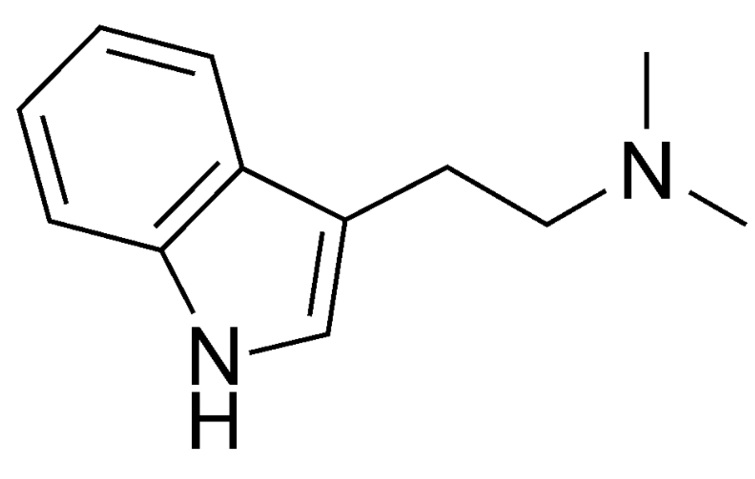
DMT (Dimethyltryptamine) is an extremely powerful hallucinogenic found throughout nature that has a profound impact on human consciousness.

The structure of DMT is very simple: there are only four positions where chemical groups can attach. It’s everywhere in nature. All organisms have the two key enzymes that lead to the synthesis of DMT. It is also the visionary ingredient in ayahuasca, a very popular psychedelic in the West nowadays.

Ayahuasca is created by combining two Amazon plants, one containing DMT and one containing an enzyme inhibitor, needed for the DMT to have effect. How did these Amazonian Indians know how to combine these plants? A trip created by orally consuming DMT can last three to four hours. That is much more time than the bullet train trip you get when smoking or injecting DMT.

So DMT is everywhere in nature, but what is it for? Many leading experts say they are messenger molecules. It is a powerful tool to explore the whole mysterious question: what is consciousness?

DMT is often referred to as the spirit molecule, which is a conundrum. The spirit is the inner world and the molecule is the external world. So the psychedelic is an entheogen; they take us from the science to the spirit.

DMT can also be produced by the human brain in extremely small amounts. The enzymes necessary for its production are expressed in the cerebral cortex, the choroid plexus, and the pineal gland.

Rick Strassman – a professor in psychiatry – has done extensive research in DMT and non-ordinary states of consciousness. It is his belief that the pineal gland, a tiny, pinecone-shaped endocrine gland in the center of the brain, at times releases DMT to facilitate the entering and exciting of the soul in the body.

Through various practices, like fasting, chanting and praying, a release might be triggered that is correlated with mystical experiences. A DMT trip is described as a ‘psychedelic bungee jump’. Just like that, you find yourself in a completely different reality, and – bang! – just like that, you’re out of it again.

Why are these plants made illegal in our ‘enlightened’ Western societies? “It is very revealing about these societies”, says writer and journalist Graham Hancock. “Our society devalues non-ordinary states of consciousness. Any other consciousness that is not related to the production or consumption of material goods is stigmatized in our society today.”

There is fear in the powers that be that ended the psychedelic revolution in the sixties. Fear that if enough people take these substances, the very fabric of our societies would be picked apart.

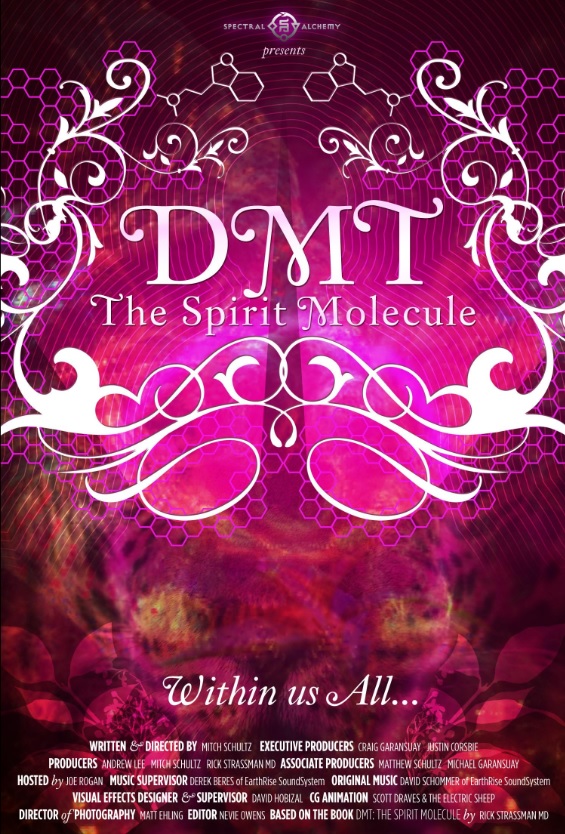
After a near ban of psychedelic research, Rick Strassman got approval in 1989 to do a DMT study. It was the first psychedelic research in a generation. He did not approach the work as psychotherapy, but as pure scientific research, focusing on what happened in the body and brain. He recorded the experiences of participants and later published them in his book ‘DMT: The Spirit Molecule’, a fascinating byproduct of the study.

So what is the experience like? Time crumbles. The linearity of time is totally meaningless in a DMT experience. You are at the God Head, the point where all time folds in on itself. You are no longer a human being. In fact, you are no longer anything you can identify with. It is a terrifying experience. You are blasted out of your body at warp speed, backwards through your own DNA out the other end into the universe.

DMT users often report encountering pure consciousness, sometimes perceived as a vastly advanced civilization; far beyond anything known on Earth. “My sense was that at some point there was an implicit realization: this is the divine realm”, one user said.

“It’s a place I’ve been many times before. A place where souls await rebirth. An incredible, transcendent peace came over me. I have never felt such peace in my life. Every fear, hope, and attachment to the material world was stripped away. I was free to simply be the essence of a soul.”

Strassman’s explanation: The brain, the organ of consciousness, was transformed in such a way that it could receive information that it couldn’t normally receive. “It rips that filtering mechanism away for just a few minutes and for this time you are immersed in raw data: sensory input, memories, associations. It seems your brain builds reality out of these things. You associate and synthesize these things together and tell yourself a story basically.”

During DMT experiences, encounters with aliens, angels, and other entities are common, as are visions of other civilizations. An intelligence is often perceived, one that does not seem to exist within three-dimensional space.

DMT is a messenger that offers a glimpse into possible future stages of human evolution. It may be the ultimate psychedelic compound: a doorway to another reality.

The documentary ‘DMT: The Spirit Molecule’ is available on YouTube.

The Doorway (1): LSD

“A fraction of a milligram and everything changes. A molecule that alters your consciousness. An unforgettable experience.”

On April 16, 1943, Swiss chemist Albert Hofmann, working at the Sandoz laboratory in Basel, accidentally ingested a small dose of LSD. Suddenly, he felt as if he were in another world. Fear gripped him: he worried he might never return to his wife and child, and panic set in. But later, the fear gave way to a positive wave. Afterwards, Hofmann felt he had crossed to the other side and returned.

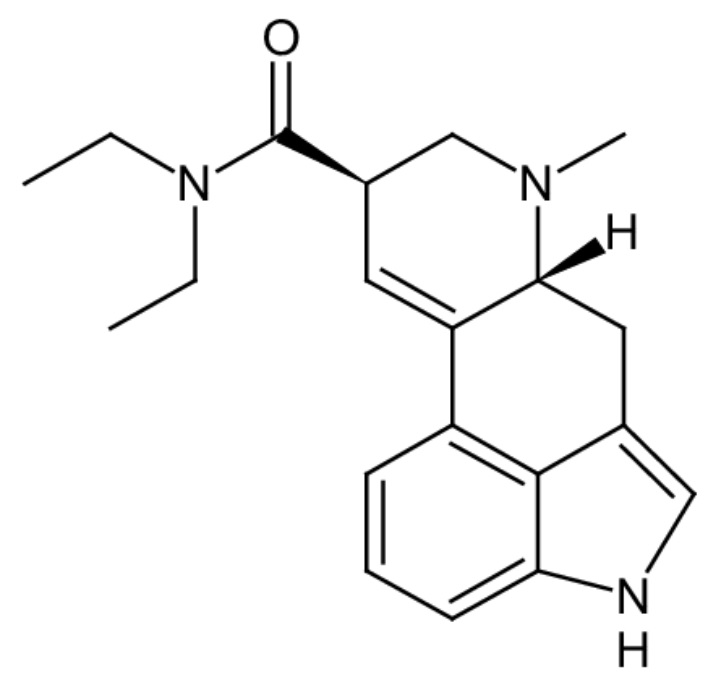
Hofmann had been searching for a medicine to improve circulation. His work led him to ergot, a fungus that grows on rye and related plants. From this he synthesized LSD (lysergic acid diethylamide), a substance chemically related to psilocybin, the psychedelic compound found in magic mushrooms. At first, Hofmann did not know what had caused his extraordinary experience, but he soon realized it must have been the compound he had created.

At Sandoz, researchers recognized LSD’s potential value for psychiatric research. Samples were sent to Stanislav Grof, a Czech-born American psychiatrist and consciousness researcher. This marked the beginning of Grof’s decades-long exploration of non-ordinary states of consciousness.

Grof saw LSD as a catalyst. It does not create these experiences, he argued, but makes them accessible. “In that sense”, he said, “LSD is comparable to what a microscope is for biology or a telescope for astronomy. We don’t think the microscope creates worlds that are not there, but we cannot study these worlds without the tool.”

During the Cold War, the CIA became interested in LSD as a possible truth serum. The problem was that they were seeking predictable outcomes and LSD does not work that way. It was also considered as a potential weapon to incapacitate the enemy.

So how does LSD work? Our consciousness is the sum total of everything our senses perceive. LSD amplifies these senses dramatically. Psychedelic sessions can take people further than years of psychoanalysis.

In a positive experience, users may feel the ego dissolve, boundaries melt away, and control loosen. This can be deeply pleasant. Space and time lose their meaning; experience flows freely until one becomes pure experience itself.

In the 1960s, the psychedelic revolution erupted. The Merry Pranksters, led by Ken Kesey – author of ‘One Flew Over the Cuckoo’s Nest’ – embraced LSD and drove a brightly painted bus across America, inviting people to experience it for themselves.

In Millbrook, an abandoned estate in New York, psychiatrist Timothy Leary and Ralph Metzner established a psychedelic research center where anyone could participate. LSD was seen as a great equalizer. No matter one’s social background, the experience could dissolve hierarchy and expand cosmic understanding.

“We teach people to turn on, go out of their minds, and tune in”, Leary said. “The country is an insane asylum, focused on material possession, war, and racism.” His ambition was nothing less than a spiritual revolution, achieved by millions of people using LSD regularly.

Hofmann strongly objected to this approach. LSD, he warned, was a powerful instrument that required a mature mind. Promoting it indiscriminately to young people was irresponsible.

LSD often triggered strong anti-war sentiments, rooted in transpersonal experiences of unity with nature and all living beings. This directly challenged conservative values. In the United States, amid the escalating Vietnam War, tensions between the counterculture and the establishment grew. LSD became a convenient scapegoat for social unrest, and the government launched an aggressive – and often absurd – propaganda campaign.

In 1966, LSD was outlawed in California. In 1967, President Nixon declared Timothy Leary “the most dangerous man in America.” Grof later remarked, “In the irresponsible hands of Leary, it came to be seen as dangerous and that killed nearly all possibilities for research.”

Some clinical work continued for a while. Grof conducted LSD sessions with terminal cancer patients, profoundly altering their relationship with death. Many became reconciled with the fact that they were dying. “In our culture”, Grof said, “we are programmed to think we are only our bodies. LSD can show you that you are part of something much larger.”

Soon, however, LSD was internationally demonized. Research disappeared underground and remained there for decades.

Albert Hofmann died on April 29, 2008, at the age of 102. He never denied LSD’s risks, but he also believed its greatest danger lay in misunderstanding it. For Hofmann, LSD was not an escape from reality but a doorway… A doorway that, if approached with care, could reveal how vast and mysterious consciousness truly is.
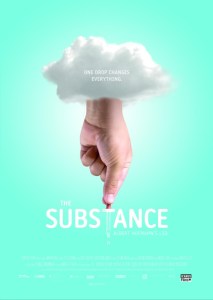
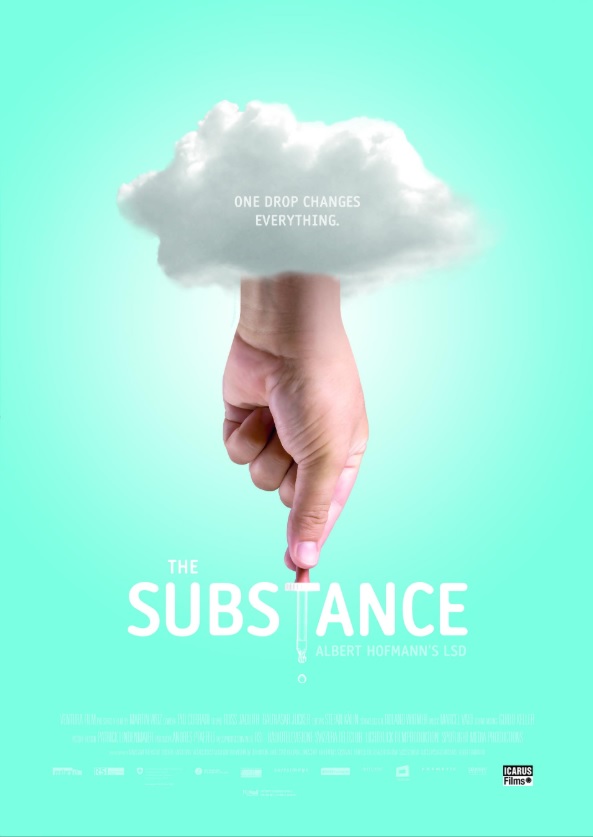
The documentary ‘The Substance: Albert Hofmann’s LSD’ is available for rent on the Apple TV app.