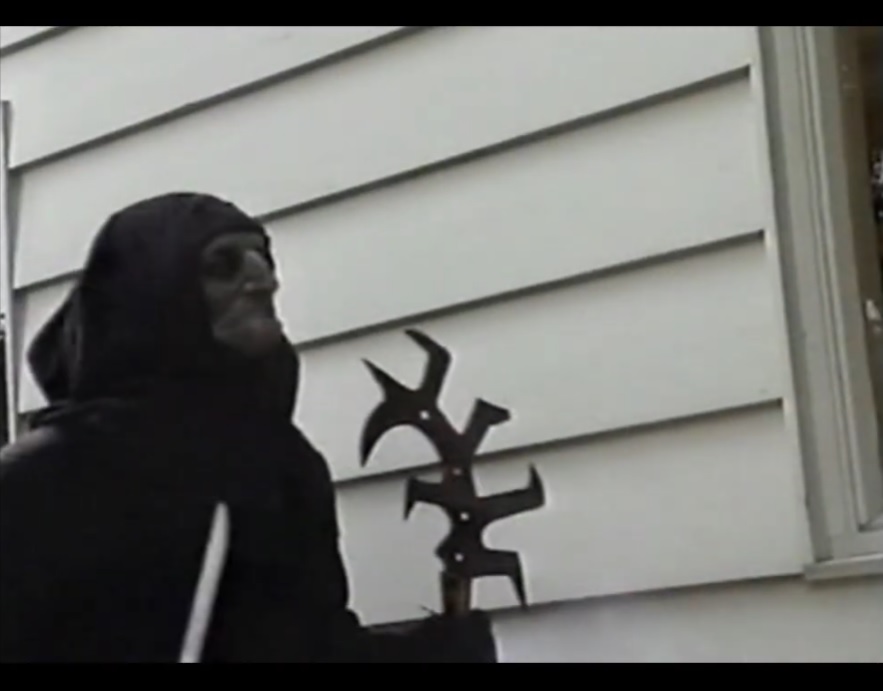
Recently, I released a precious childhood amateur film of mine called Brains For Breakfast. If you haven’t seen it yet, feel free to check it out by clicking the icon below.
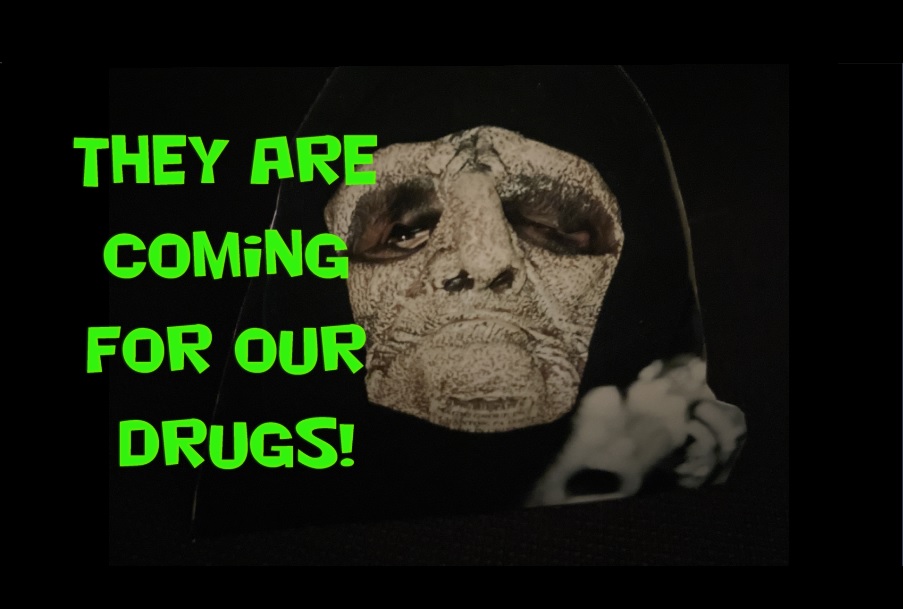
It’s still a dream of mine to one day expand this short horror-comedy into a full-length feature. To that end, I’ve developed a treatment for a screenplay. If you’re interested in getting involved in any way, I’d love to hear from you – just reach out at jeponline@hotmail.com.
BRAINFOOD — Treatment
Genre: Comedy / Horror / Science Fiction / Action
Setting: The Netherlands (alternative universe) – Bergen, Heiloo, Alkmaar, Schermer Region
Tagline: The ultimate drug in the galaxy has been found… and they want it.
LOGLINE
In an alternate Netherlands where alien encounters are routine, a disgraced psi-soldier must rejoin his disbanded elite unit to stop a violent race of interdimensional drug-hunters from stealing the most powerful psychedelic ever created.
SYNOPSIS
A Violent Return
In a parallel universe version of the Netherlands – an English-speaking, militarized, right-wing nation used to alien visitors – an aggressive alien race known as the Atomics breaches into Earth via a ‘Dimension Traveller’ device.
Primitive in appearance – some resemble lizards, some skeletons, some monkeys and the leader – Taurus – a bull –.the Atomics wear long dusters and wield antique-looking rifles. They land in the dunes near Bergen, killing a dune ranger and parasitizing another using a leech-like creature that implants a mind-controlling worm through the ear.
On their way to their concealed base, they murder a police officer, triggering a national military alert.
General Glorious, the army chief responsible for alien containment, recognizes the race instantly. The Atomics were here two years ago, on a drug-harvesting mission for Netherweed, and escaped with their stash despite heavy casualties inflicted by the elite Psychedelic Unit, a special-forces team of psi-sensitive soldiers.
A Broken Hero
One of the Psychedelic Unit’s finest, Max Crunch, has spent the past two years at home in the small rural village of Schermer, crippled by PTSD. He feels alienated, mocked by locals, and increasingly distant from his girlfriend Nina. His psychiatrist has given him an ‘anchor’ technique to keep him grounded during flashbacks, but his trauma remains unresolved.
When the government cuts off his benefits and Nina leaves him, Max reluctantly answers the army’s summons. General Glorious reveals that the Atomics have returned and the Psychedelic Unit must be reassembled. If Max helps, he’ll receive permanent paid leave afterward. Reluctantly, Max agrees.
Reforming the Psychedelic Unit
Max reunites with the scattered members of his old team:
• Captain Jimmie Lombardo – alpha-male, tough, impatient, the unit’s brash leader.
• Henry ‘Cowboy’ Waterman – laconic sharpshooter in a cowboy hat.
• Steve ‘Suicide Steve’ Hoskins – fearless, volatile, and racist and fascist tendencies.
• Thomas ‘Tank’ Larson – the team’s powerhouse
• Olaf ‘Bulldog’ Braat – sniper with perfect accuracy
The group once used the substance Daylyrium, enabling psychic attunement and interspecies telepathic tracking. But this time, Max can’t make a connection at the scene of the cop killing – the Atomics are clearly using psi-blockers.
With telepathy off the table, the squad turns to old-school detective work: Find the drugs, find the aliens.
The New Drug
They discover that eccentric chemist Dr. Schnobel has invented the ultimate psychedelic, dubbed Entheogen, a liquid that dissolves the ego and induces cosmic unity. Rejected by corporate drug monopolies, Schnobel distributed product through two major dealers, called Frans Hario and Teeg Brown.
Unbeknownst to humanity, Alien scouts monitoring Earth’s drug trade identified Entheogen as the most valuable substance in the galaxy. In response, the Atomics sent a forty-soldier strike team to harvest the drug and abduct its creator.

Two Raids
The Psychedelic Unit and the Atomics both converge on the dealers:
• At Hario’s home, a chaotic gunfight erupts. The squad kills all Atomics on site and captures Frans.
• At Teeg Brown’s, the Atomics strike first and abduct Brown without resistance.
Interrogation leads both sides to the same destination: Dr. Schnobel’s lab.
Ambush by the Terrifying Five
Taurus anticipates pursuit and dispatches the Atomics’ elite hunters – The Terrifying Five – to ambush the Psychedelic Unit. The squad barely survives the devastating encounter, but Schnobel is abducted and brought to the Atomics’ commandeered villa base in the forests of Heiloo.
There, Schnobel is forced to teach an Atomic chemist the formula for Entheogen, while the villa’s parasitized owner serves as a puppet caretaker.
The Oracle of Bergen
With leads running dry, Max suggests visiting The Oracle of Bergen, a powerful psychic buried waist-deep in a forest hill, clad in a Hawaiian shirt and aviator shades, flanked by two similarly dressed psychic companions.
The Oracle reveals:
• The Atomics are master chemists from Atom X, a devastated world stripped of natural resources.
• Another alien race gifted them the Dimension Traveller to scavenge resources from other worlds.
• The Atomics’ return, and the showdown to come, is part of a cosmic design.
• Their leader is Taurus, the same figure responsible for Max’s trauma.
Max’s PTSD surges at the mention of Taurus.
But the Oracle also gives the squad the Atomics’ exact location.
The Assault on the Villa
The team launches a coordinated three-front assault:
• Max and Steve attack through dense forest.
• Jimmie and Cowboy approach from a rear field.
• Tank and Bulldog hold the front to intercept escapees.
Fierce firefights rage as both teams carve their way toward the villa.
Schnobel completes the Entheogen formula, but Taurus prepares to flee. He releases the Terrifying Five once more. The squad manages to kill them, but Cowboy falls in battle, enraging Suicide Steve into a berserker and foreigner hating rampage.
Taurus escapes with the Entheogen sample and formula, fleeing in the same van the Atomics used upon arrival. Bulldog manages to plant a tracker before Taurus escapes.
Showdown in the Dunes
Max takes the tracker and pursues Taurus alone. In the dunes, Max is attacked by the mind-controlled dune ranger. Back at the villa, Jimmie kills the leech-creature controlling the ranger, and the ranger dies instantly. Max continues the chase.
Taurus reaches the Dimension Traveller, a lift-like mechanism atop a dune. Before he can signal home, Max confronts him and a traumatic flashback hits:
Two years earlier, during the first invasion, Max and the squad pursued Taurus to a similar base. Among the team then was Max’s younger brother Patrick Crunch. Patrick was parasitized and attacked Max, who was forced to shoot his own brother. Taurus laughed as he escaped with stolen Netherweed.
Back to the present. Both characters draw their guns and Max blows Taurus his brains out.
A Gift for Atom X
At the Atomics’ base on barren Atom X, Taurus appears to call home. But it’s actually Max holding up Taurus’s severed face to the camera, mimicking his grunt. The Atomics activate the teleportation system.
Instead of Taurus, the bag of C4 appears and detonates. The Atomic base is obliterated.
Enlightenment on the Lawn
Max returns to the villa. Dr. Schnobel lies dying, but hands Jimmie one final vial of Entheogen:
“Take it together. This is enlightenment in a bottle.”
Jimmie proposes sharing the drug with the last surviving Atomics they captured. Steve objects, but the others agree.
On the villa lawn, surrounded by the bodies of friends and foes alike, the five surviving members of the Psychedelic Unit sit with five captured Atomics. They ingest the Entheogen together.
As the purple sky stretches endlessly above them, they gaze upward, united in a moment of pure transcendence.
For the first time, they truly understand: they are all one.







 FRAGMENTEN UIT HET SCHEMERLAND