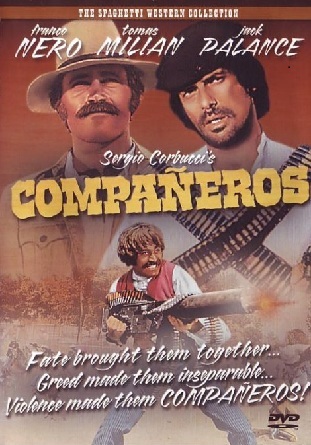
Compañeros

Director: Sergio Corbucci
Written by: Sergio Corbucci, Massimo De Rita, Fritz Ebert, José Frade, Dino Maiuri
Cast: Franco Nero, Tomas Milian, Jack Palance, Fernando Rey

Year / Country: 1970, Italy / West Germany / Spain
Running Time: 120 mins.

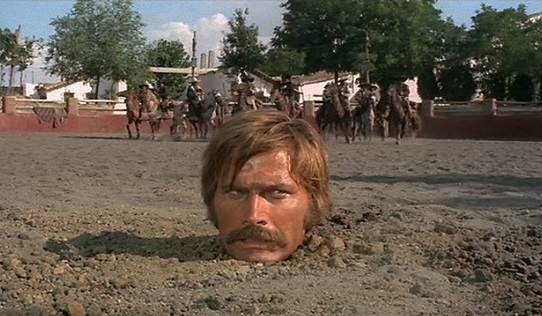
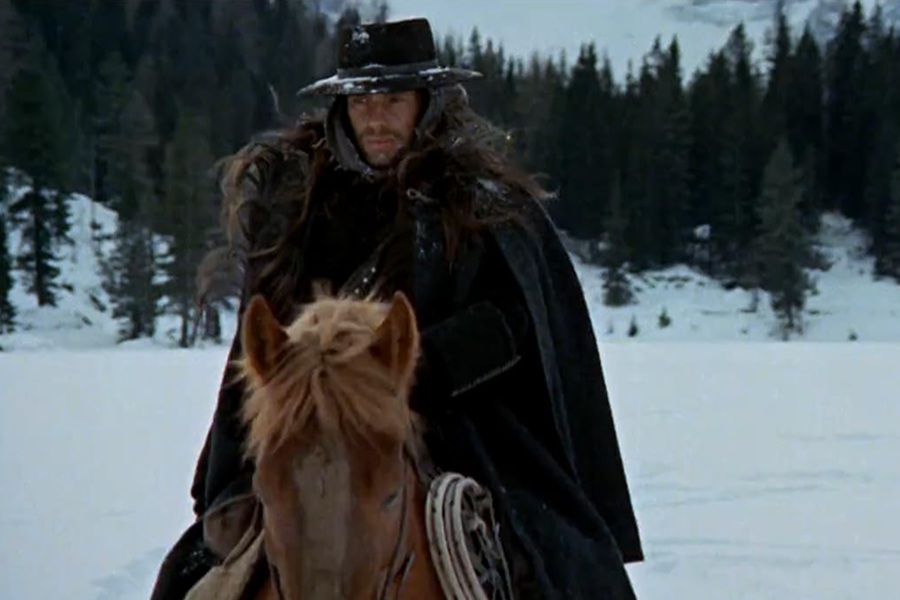
In a country torn apart by revolution, an unlikely duo teams up. The not too bright Mexican bandit Vasco (Tomas Milian) and the very polite arms dealer ‘The Swede’ (Franco Nero) go on a mission for the money hungry General Mongo. Their goal is to free Mongo’s pacifistic opponent Professor Xantos from a Texan jail because he knows the combination of a loaded safe. The two hate each other, so there is plenty of double-crossing along the way.

This spaghetti western, directed by the other Sergio, is an early buddy movie featuring two of the most established spaghetti western actors. The music is – of course – composed by Ennio Morricone and Jack Palance plays a very interesting supporting role as marijuana addicted gunslinger.

The movie misses the sharp humour and emotional depth that made genre films such as Django and the Dollar-trilogy so enjoyable, but it is certainly not the worst spaghetti western. The two strong leads fight, joke and shoot their way through a series of engaging adventures. The many last minute rescue scenes become kind of repetitive, so Corbucci could have been doing some heavier cutting. But, like the Mexican revolution, the movie ends in a massive shoot-out which is certainly worth the wait. Viva la Revolution!

Rating:

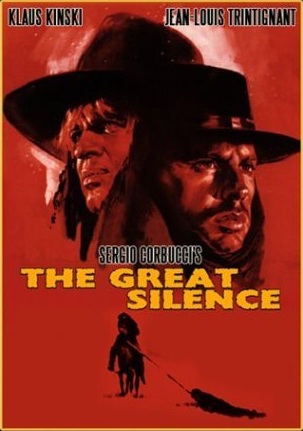
Biography: Sergio Corbucci (1926, Rome – 1990, Rome) is, alongside Sergio Leone, one of the most renowned directors of Spaghetti Westerns. He played a pivotal role in popularizing the genre, particularly through landmark films such as Django (1966) and Il grande silenzio (1968). Corbucci often collaborated with actor Franco Nero, creating some of the most iconic works of the genre. His films, often categorized as B-movies, are distinguished by their unflinching brutality, surreal and apocalyptic production design, dark humor, and politically left-leaning themes. A committed Marxist, Corbucci infused many of his works with a sense of revolutionary despair, reflecting the futility of social upheaval. Despite his significant contributions to cinema, Corbucci remained rooted in Italy throughout his career, with most of his films receiving limited international distribution. He passed away in Rome in 1990.

Filmography (a selection): Foreign Earth (1954), Water’s Love (1954), Supreme Confession (1957), Angel’s Sky (1957), Duel of the Titans (1961), Toto, Peppino and La Dolce Vita (1961), The Son of Spartacus (1963), Grand Canyon Massacre (1963), Django (1966), Navajo Joe (1966), The Mercenary (1968), The Great Silence (1968), Compañeros (1970), Bandera Bandits (1972), The White, the Yellow, and the Black (1975), The Payoff (1978), Super Fuzz (1980), My Darling, My Dearest (1982), Days of Inspector Ambrosio (1988)
Django

Director: Sergio Corbucci
Written by: Sergio Corbucci, Bruno Corbucci, Franco Rossetti
Cast: Franco Nero, José Bódalo, Loredana Nusciak, Ángel Álvarez

Year / Country: 1966, Italy / Spain
Running Time: 88 mins.

In 1964, Sergio Leone, an Italian director, redefined the western genre with A Fistful of Dollars, a groundbreaking remake of Akira Kurosawa’s Yojimbo. Starring a then-unknown Clint Eastwood, the film introduced audiences to the now-iconic figure of the nameless gunslinger, a drifter who arrives in a town torn apart by a bitter private war. Playing both sides against each other, he emerges victorious, setting the template for the spaghetti western genre.

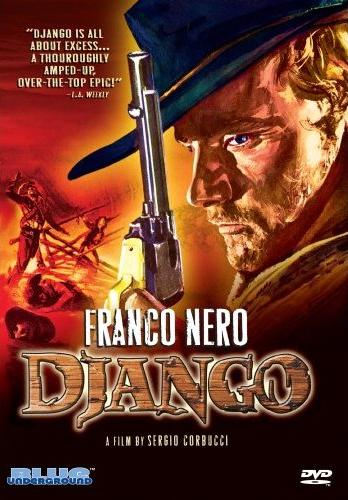
The overwhelming success of Leone’s film inspired a wave of imitations, varying in quality. Among these, Django (1966) by Sergio Corbucci stands out as one of the best and certainly the most famous. The film borrows heavily from A Fistful of Dollars but adds its own distinctive twist. Instead of a nameless drifter, we meet Django, a mysterious stranger trudging through a desolate landscape while dragging a coffin behind him. His identity is memorably introduced through Louis Bacalov’s haunting theme song, which passionately proclaims his name: Django!

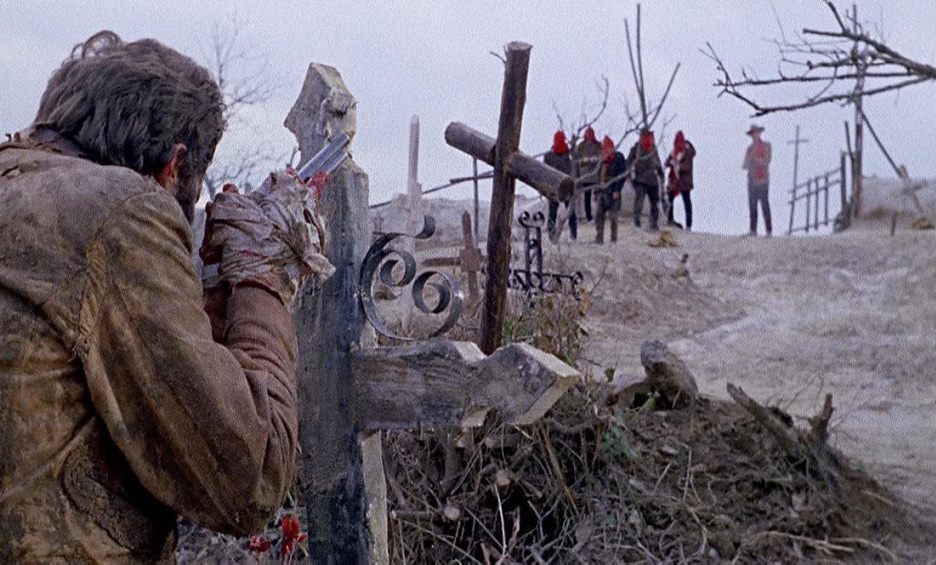
The story follows Django as he rescues a prostitute named Maria from a gang of ruthless outlaws. He escorts her to a ghostly, near-abandoned town where he intends to settle an old score. There, he finds himself caught in a deadly conflict between Mexican revolutionaries and a band of racist Southern renegades led by his arch-nemesis, Major Jackson. Initially siding with the Mexicans to deal a crippling blow to Jackson, Django’s motivations soon come to light, setting the stage for an explosive and tragic finale. By the film’s end, only Django and Maria are left standing amidst the carnage, with the rest buried – literally and figuratively.

What elevates Django almost to the level of Leone’s masterpiece is Corbucci’s skillful execution of the genre’s defining elements. Franco Nero delivers a magnetic performance as the titular anti-hero, rivaling Eastwood’s cool and detached gunslinger. Bacalov’s score, while perhaps not as iconic as Ennio Morricone’s, is equally evocative, setting the perfect tone for the film. The supporting cast adds depth to the world, and the stylish, gritty action sequences ensure the audience remains captivated throughout.

Of course, Django is also notorious for its graphic violence, which was shocking for its time. Though modern audiences might find it less visceral compared to contemporary standards, the film doesn’t shy away from bloodshed. That said, the lack of squibs – a result of budgetary constraints – dampens some of the impact, as the gunplay often lacks the visual punch of more modern films.

The film’s pacing does falter slightly in the middle act, where the tension and momentum dip after the gripping opening sequences. However, Corbucci makes up for this with a thrilling and memorable climax that reaffirms the film’s status as a cult classic.

In conclusion, Django is a quintessential spaghetti western and a must-watch for fans of the genre. With its unforgettable protagonist, striking visuals, and bleak tone, it stands as a testament to the creativity and enduring appeal of Italian westerns.

Rating:

Biography: Sergio Corbucci (1926, Rome – 1990, Rome) was, alongside Sergio Leone, one of the most prominent directors of spaghetti westerns. Born and raised in Rome, Corbucci played a crucial role in popularizing the genre, particularly through his iconic films Django (1966) and The Great Silence (Il Grande Silenzio, 1968). He frequently collaborated with actor Franco Nero, crafting memorable characters and stories that helped define the genre’s unique style. His B-movies are characterized by brutal violence, surrealist and apocalyptic production design, black humour and politically left symbolism. Corbucci was a fanatical Marxist and many of his films show the hopelessness of the revolution. He kept working in Italy throughout his career and most of his films were barely released abroad. He died in Rome in 1990.

Filmography (a selection): Foreign Earth (1954), Water’s Love (1954), Supreme Confession (1957), Angel’s Sky (1957), Duel of the Titans (1961), Toto, Peppino and La Dolce Vita (1961), The Son of Spartacus (1963), Grand Canyon Massacre (1963), Django (1966), Navajo Joe (1966), The Mercenary (1968), The Great Silence (1968), Bandera Bandits (1972), The White, the Yellow, and the Black (1975), The Payoff (1978), Super Fuzz (1980), My Darling, My Dearest (1982), Days of Inspector Ambrosio (1988)

Cannonball!

Director: Paul Bartel
Written by: Paul Bartel, Don Simpson
Cast: David Carradine, Bill McKinney, Veronica Hamel, Gerrit Graham

Year / Country: 1976, USA
Running Time: 94 mins.

Your liking of Cannonball! aka Carquake will mainly depend on how you generally appreciate B-movies about car-racing. I personally like them a lot. Cool-ass heroes in slick cars; pretty girls; highway chase scenes; crashes; mayhem: the works. This movie is based on real illegal cross-continental road races that took place around the time this movie was made.

The seventies was a fruitful era for this type of film. In 1976, the year this movie came out, The Gumball Rally, was also released about the same topic. A year earlier, its director Paul Bartel had considerable B-movie success with the very similar film Death Race 2000 which also had David Carradine in the lead role and covered a road race through America. This is not exactly a sequel though. It’s no sci-fi for one thing and unlike Death Race 2000, it has not been produced by Roger Corman, but by Run Run Shaw (one of the Shaw Brothers). Corman does have a small cameo. So do Martin Scorsese, Joe Dante and Sylvester Stallone. The movie was written by Bartel and Don Simpson. That’s right, the now deceased Don Simpson who formed a team with Jerry Bruckheimer and made one Hollywood smash hit after another. This is the first film on his resume.

David Carradine plays Coy ‘Cannonball’ Buckman, a former convict who participates in the Trans-America Grand Prix, an illegal annual race from L.A. to New York City. The prize money for winning is 100.000 dollars, so most of the participants play any dirty trick in the book to rid themselves of the competition. The police also finds out about the race and plans to arrest all the participants. Buckman has to overcome many obstacles to reach the finish line, such as car damage, malicious competitors and hand-to-hand combat. The latter of course is no problem for David ‘Kung Fu’ Carradine, but the driving proves to be a bigger challenge. Buckman is no Frankenstein (Carradine’s character in Death Race 2000), who had a mechanical hand to shift his gears faster and who was designed to win. Buckman is not that mythological. At least it looks that way initially…

Director Bartel usually offers more satire in his films, but Cannonball! doesn’t seem to have any pretensions except to offer simple entertainment. The campy fun consists mostly of the drivers competing with each other through racing moves and fist fights. Unfortunately the lack of real excitement makes it look like a cheap cash-in on its predecessors.

Because besides its subversive character, Death Race 2000 had intriguing characters and many outrageous action scenes and dialogues. It appeared to have been made with great enthusiasm and care to provide the audience with as much entertainment as possible. And it worked. Cannonball! doesn’t really try to excel in anything. Not in the acting, the writing or the directing.

Even Carradine, an actor I normally love (to me he is the ultimate B-movie star) seems a bit out of his depth here. Some good stunts and a final scene of appropriate demolition save this from being a complete failure, but there is little to recommend it for. A shame really because all those involved did a lot of good work elsewhere. Oh well, if you’re up for a no-brainer, this flick may suit you well. Otherwise Death Race 2000 is the far better alternative.

Rating:

Biography: Paul Bartel (1938, New York – 2000, New York) majored in theater arts at UCLA and studied film directing in Rome. After getting his first work experience with Roger Corman he directed a number of low budget cult films. He also worked as a writer and an actor. He died in 2000 from a heart attack.

Filmography: The Secret Cinema (1968, short), Naughty Nurse (1969, short), Private Parts (1972), Death Race 2000 (1975), Cannonball! (1976), Eating Raoul (1982), Not for Publication (1984), Lust in the Dust (1985), The Longshot (1986), Amazing Stories (1986/87, TV episodes), Shelf Life (1993), The Comic Strip Presents…(1993, TV episode), Clueless (1996, TV episode)