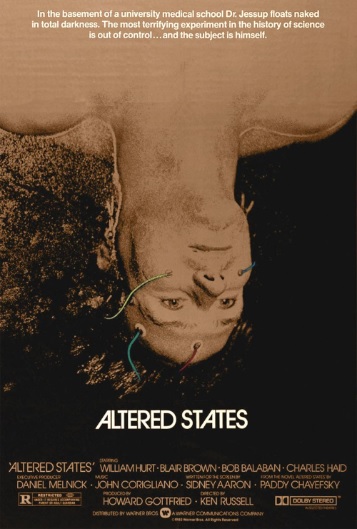
Altered States

Director: Ken Russell
Written by: Paddy Chayefsky (novel & screenplay)
Cast: William Hurt, Blair Brown, Bob Balaban

Year / Country: 1980, USA
Running Time: 102 mins.

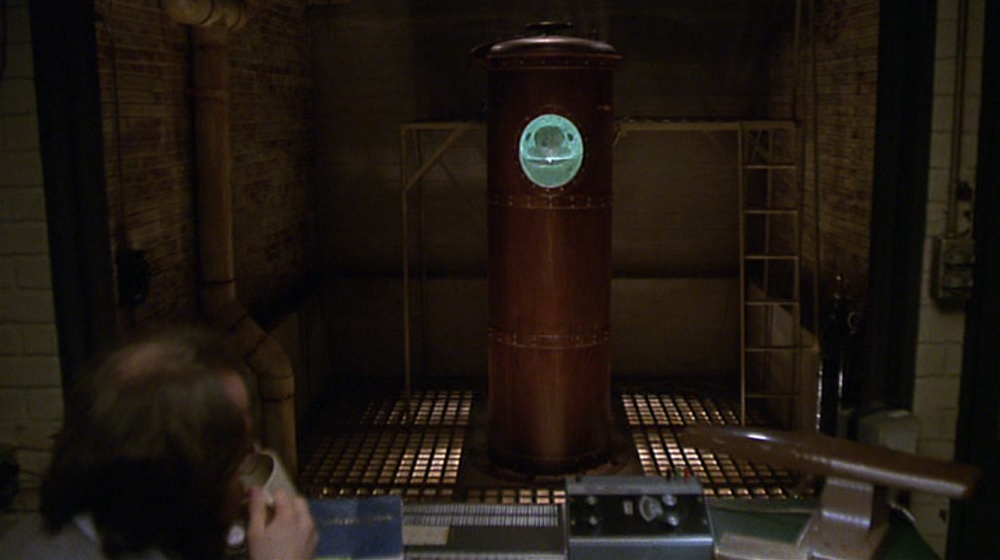
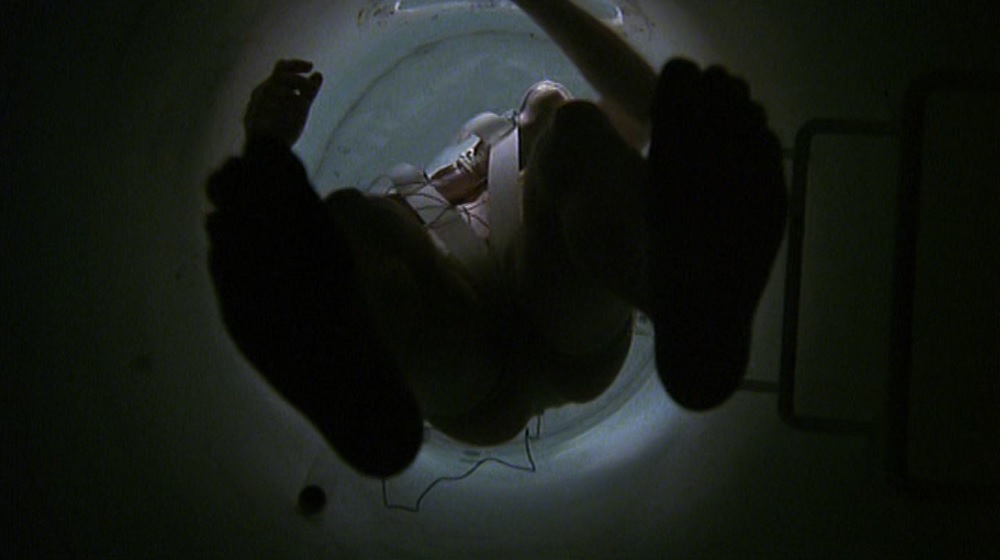
Altered States is a wild and thought-provoking journey into the mind of Dr. Eddie Jessup, a psycho-physiologist in the 1960s who becomes obsessed with exploring the boundaries of human consciousness. Plagued by unresolved childhood trauma, Jessup is driven by an insatiable curiosity about the meaning of existence. His experiments with a mind-altering isolation tank trigger intense religious hallucinations featuring visions of God, Jesus, and crucifixion scenes, blending spirituality with the surreal.

The story takes a darker turn after Jessup encounters a remote Mexican tribe and brings home a powerful psychedelic compound. Incorporating this substance into his experiments, he discovers that the altered states of consciousness he experiences are not merely internal, but can manifest physically. This revelation pushes the film into unsettling body-horror territory, shifting its tone to something more visceral and disturbing. The escalating tension and grotesque transformations make the latter half of the film both unnerving and memorable.

While Altered States begins with fascinating philosophical and scientific ideas, it struggles to maintain its initial momentum. Despite this, there is much to admire. William Hurt delivers an outstanding performance in his film debut, capturing Jessup’s intense obsession and vulnerability. The hallucinatory sequences are stunningly crafted, offering surreal imagery that lingers in the mind.

The film’s controversial themes and bold exploration of consciousness, faith, and identity make it a product of its time, yet it remains daring even by today’s standards. Though it doesn’t fully sustain its excitement throughout, Altered States is an ambitious and visually arresting experience that’s worth exploring for fans of psychological horror.

Rating:

Biography: Ken Russell (1927, Southampton, Hampshire – 2011, Lymington, Hampshire) was a visionary British filmmaker celebrated for his flamboyant and provocative style. He initially pursued a career in dance and photography before turning to filmmaking in the 1950s. His early work in documentaries demonstrated a flair for blending artistic innovation with compelling storytelling. His breakthrough came with Women in Love (1969), an adaptation of D.H. Lawrence’s novel, which earned critical acclaim and an Academy Award for actress Glenda Jackson. He followed this with audacious films like The Music Lovers (1971), The Devils (1971), and Tommy (1975), each characterized by their bold visuals, experimental narratives, and controversial themes. Known for his unflinching exploration of sexuality, religion, and human eccentricity, Russell’s work was often polarizing but undeniably influential. He continued to push boundaries with films like Altered States (1980) and Gothic (1986), cementing his reputation as a maverick artist.

Filmography (a selection): Peepshow (1956, short), A House in Bayswater (1960, short), French Dressing (1964), Billion Dollar Brain (1967), Women in Love (1969), The Devils (1971), Savage Messiah (1972), Mahler (1974), Tommy (1975), Lisztomania (1975), Valentino (1977), Altered States (1980), Crimes of Passion (1984), Faust (1985, TV-Movie), Gothic (1986), Salome’s Last Dance (1988), The Rainbow (1989), Whore (1991)

Bad Lieutenant: Port of Call New Orleans

Director: Werner Herzog
Written by: William M. Finkelstein
Cast: Nicolas Cage, Eva Mendes, Val Kilmer

Year / Country: 2009, USA
Running Time: 122 mins.

Loose remake of Abel Ferrara’s 1992 cult classic. Ferrara was pretty pissed when he heard about it and said he wanted the makers to ‘die in hell’. Nicolas Cage is the deranged central character who uses his badge to do bad things.

In the aftermath of the hurricane Katrina, Terence McDonagh (Cage) saves a convict from drowning which earns him a medal and a major back injury. He starts to take huge amounts of drugs for the pain. It starts with Vicodin, but soon he turns to heroin, cocaine and crack.

After he is promoted to lieutenant, McDonagh starts investigating the murder of a Senegalese family which eventually leads him to local dope boss Big Fate. His increased drug intake in the meantime, causes him to lose grip on reality. He also has a gambling debt that is getting way out of control.

Herzog’s version is a little lighter than Ferrara’s although there are some intense scenes as well, like the one in which McDonagh withholds oxygen from an old lady in a wheelchair to get information out of her. Another difference is that Keitel’s character is terrible from the beginning, while McDonagh degenerates more gradually during the film.

Cage is in one of his more weird modes, and it is a lot of fun to watch. So are his hallucinations of lizards and the sweet interactions with his girlfriend, the prostitute Frankie (Eva Mendes). Around her, he’s a different character. Cage and Mendes have a great chemistry.

This remake was perhaps a strange choice for a renowned filmmaker such as Herzog. It is not amongst his finest works, but it does have a lot of quality. Ferrara and Herzog met years after its release at the Locarno Film Festival and made peace. Despite its sound reviews, Bad Lieutenant: Port of Call New Orleans was a box office flop.

Rating:

Biography: The German filmmaker Werner Herzog (1942, Munich) is considered as one of the most important directors alive. In 1961, when Herzog was 19, he started work on his first short film Herakles. He has since produced, written, and directed over 60 films and documentaries. Among his most important films are Aguirre, the Wrath of God (1972), Fitzcarraldo (1982), and the documentary Grizzly Man (2005).

Filmography (a selection): Herakles (1962, short) / Lebenszeichen (1968) / Auch Zwerge haben klein angefangen (1970) / Fata Morgana (1971) / Aguirre, der Zorn Gottes (1972) / Kaspar Hauser (1974) / Herz aus Glas (1976) / Stroszek (1977) / Nosferatu: Phantom der Nacht (1979) / Woyzeck (1979) / Fitzcarraldo (1982) / Wo die grünen Ameisen träumen (1984) / Cobra Verde (1987) / Echos aus einem düsteren Reich (1990) / Glocken aus der Tiefe – Glaube und Aberglaube in Rußland (1993) / Little Dieter Needs to Fly (1997) / Invincible (2001) / Wheel of Time (2003) / Grizzly Man (2005) / Rescue Dawn (2006) / Bad Lieutenant: Port of Call New Orleans (2009) / Into the Abyss (2011) / Lo and Behold: Reveries of the Connected World (2016, doc)

Bad Lieutenant

Director: Abel Ferrara
Written by: Zoë Lund, Abel Ferrara
Cast: Harvey Keitel, Victor Argo, Paul Calderón

Year / Country: 1992, USA
Running Time: 96 mins.

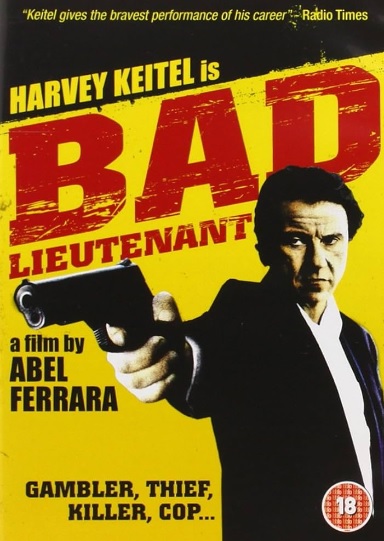
Harvey Keitel is the Bad Lieutenant in Abel Ferrara’s disturbing cop drama. He’s the kind of guy who starts snorting cocaine in his car right after he has dropped his two boys off at school. LT, as he’s credited, is a hopeless addict. He’s addicted to alcohol, crack, smack and gambling. He is also a walking time bomb.

Harvey Keitel was on a roll this year. First he appeared in Reservoir Dogs and then in this, probably the most well known and appreciated movies by New York artist and filmmaker Abel Ferrara. His performance in Bad Lieutenant is very raw, angry and animallike. LT is like a whacked out version of Keitel’s Mean Streets character.

Speaking of that movie, there are some definite links there, and with Scorsese in general. New York plays a big role, and so does religion. In his most desperate moment, LT even hallucinates of Jesus.

So how bad is LT? Pretty bad. He steals illegal drugs from evidence and puts them in the market and he steals money from two guys who just robbed a store owner while he sends the poor guy over to the station to file a report. He uses his badge only to blackmail two underaged girls to perform sexual acts, and his gun is strictly for blowing out his car radio after he lost another basebal bet.

Like Ferrara’s other drug movie The Addiction, Bad Lieutenant is a very effective film about addiction as it shows the constant hunger and the madness of it. LT is just going around frantically feeding the beast, but it’s never going to be enough. We know he is never going to fill that void and his inevitable downfall draws ever nearer. The despair that Keitel expresses is very well acted. The level of self destruction and self hatred is at times hard to watch though.

Rating:

Biography: Abel Ferrara (1951, New York) is a New York artist and filmmaker. He started making amateur films on Super 8 in his teens before making his mark as independent film director with bloody underground films such as The Driller Killer. Ferrara has an independent way of working, uses low budgets, but is still able to attract Hollywood talent for his movies, such as Christopher Walken and Harvey Keitel. His raw, realistic style and controversial content has earned him a position as an important voice in American cult cinema.

Filmography (a selection): Nicky’s Film (1971, short) / 9 Lives of a Wet Pussy (1976) / Not Guilty: For Keith Richards (1977, short doc) / The Driller Killer (1979) / Ms. 45 (1981) / Fear City (1984) / Cat Chaser (1989) / King of New York (1990) / Bad Lieutenant (1992) / Body Snatchers (1993) / The Addiction (1995) / The Funeral (1996) / The Blackout (1997) / New Rose Hotel (1998) / ‘R Xmas (2001) / Mary (2005) / Go Go Tales (2007) / Chelsea on the Rocks (2008, doc) / Napoli, Napoli, Napoli (2009) / Welcome to New York (2014) / Pasolini (2014) / Alive in France (2017, doc) / Piazza Vittorio (2017, doc) / The Projectionist (2019, doc) / Tommaso (2019) / Siberia (2019) / Padre Pio (2022)

A Scanner Darkly

Director: Richard Linklater
Written by: Philip K. Dick (novel), Richard Linklater (screenplay)
Cast: Keanu Reeves, Winona Ryder, Robert Downey Jr., Woody Harrelson

Year / Country: 2006, USA
Running Time: 100 mins.

A Scanner Darkly, Richard Linklater’s adaptation of Philip K. Dick’s semi-autobiographical novel about a futuristic undercover agent who gets addicted to the drug ‘Substance D’ during a drug epidemic in Orange County in 1994, opens with Rory Cockrane’s junkie character being tormented by bugs that keep respawning on his body and face. It sets the tone of the film right away. This movie, set in a near-future dystopia and police state, seems to be mostly about the frightening downsides of a drug habit.

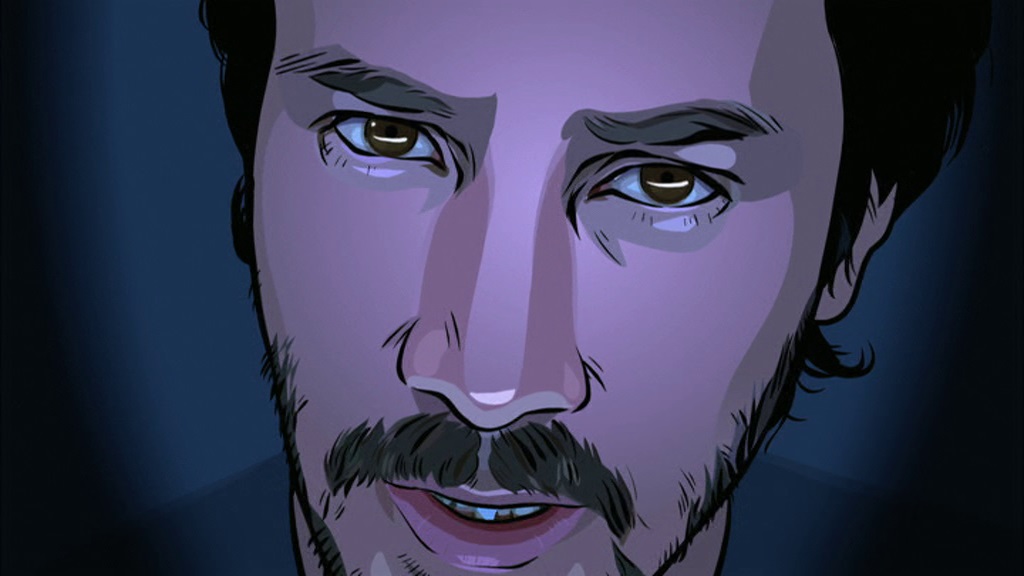
Typical for Dick, it is also about losing one’s identity as heavy users of Substance D, like main character Bob Arctor (Keanu Reeves), typically develop a serious brain impairment. The movie was shot digitally and then animated using rotoscoping technique. This visual style, also used in Linklater’s Waking Life, fits this movie perfectly. Apart from the police characters’ use of ‘scramble suits’, which are suits that change their appearance and voice every microsecond to hide their identity, this is not really a science fiction film. The story – of which there is not much really – is kind of hard to follow, but thanks to the terrific visuals and strong performances by the main cast it is still captivating. Robert Downey Jr. is especially on a roll here.

After The Matrix, Keanu Reeves is on another mind trip here (he literally takes a red pill at one point), but while The Matrix delivers a crystal clear concept, what A Scanner Darkly tries to do, plotwise or thematically, remains pretty much… well… in the dark. What the movie does very well though is portray the depressing hopelessness of being stuck in a community of junkies, with all the panic, pain, fear and paranoia that comes with it. It is admirable that Linklater stayed faithful to Dick’s source material, and did not try to turn it into a Hollywood movie. But maybe this is the one book of the famous sci-fi author that could have used some clarification. Now it remains quite a confusing affair, albeit a mesmerizing one.

Rating:

Biography: Richard Linklater (1960, Houston) is an American film director, screenwriter and producer. He was among the first and most successful talents to emerge during the American independent film renaissance of the 1990s. Suburban culture and the passage of time are big themes in many of his movies, some of which are set during one 24-hours period, including his successful ‘Before’-trilogy with Ethan Hawke and Julie Delpy. He is married to Christina Harrison and they have three children, including Lorelei who played a large part in Linklater’s much praised movie Boyhood.

Filmography (a selection): It’s Impossible to Learn to Plow by Reading Books (1988, short), Slacker (1990), Dazed and Confused (1993), Before Sunrise (1995), The Newton Boys (1998), Waking Life (2001), Tape (2001), School of Rock (2003), Before Sunset (2004), Fast Food Nation (2006), A Scanner Darkly (2006), Me and Orson Welles (2008), Before Midnight (2013), Boyhood (2014), Everybody Wants Some (2016), Apollo 10 1/2: A Space Age Childhood (2022)