The Good, the Bad and the Ugly

Director: Sergio Leone
Written by: Agenore Incrocci, Furio Scarpelli, Luciano Vincenzoni, Sergio Leone
Cast: Clint Eastwood, Lee Van Cleef, Eli Wallach

Year / Country: 1966, Italy, Spain, West Germany
Running Time: 171 mins.

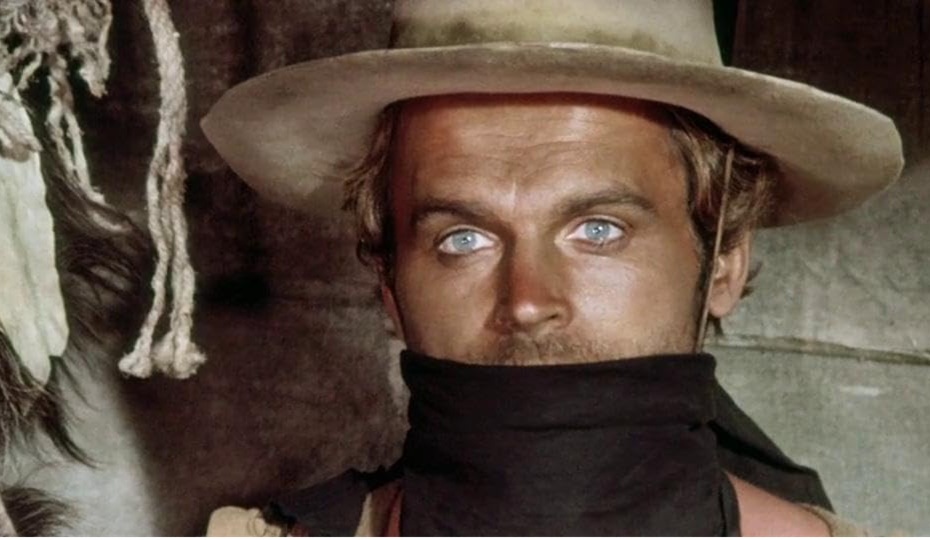
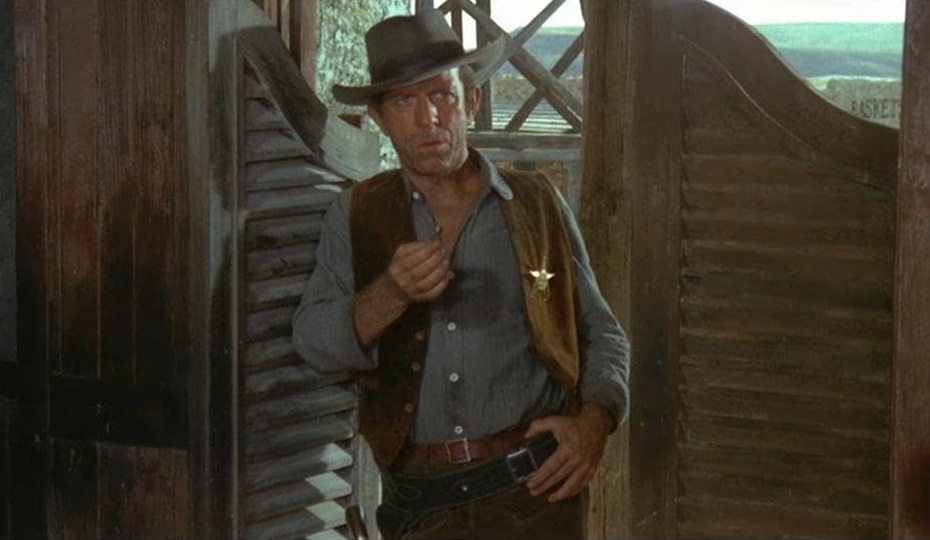
The final installment of Sergio Leone’s ‘Dollars Trilogy’ is a critically acclaimed masterpiece. Set against the backdrop of the American Civil War, three men are on a relentless quest for a fortune in hidden gold. While soldiers fight to determine the fate of a nation, these men pursue only their own interests. They are the Good, the Bad, and the Ugly. While the last two labels are fitting, the first is somewhat misleading – Eastwood’s character, Blondie, may be more principled than the others, but he doesn’t hesitate to kill when it serves his purpose.

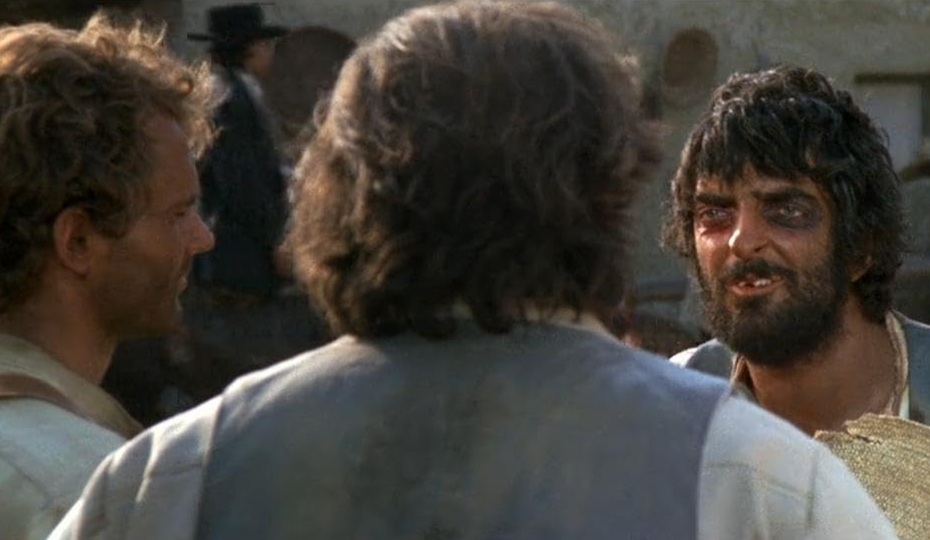
Blondie and Tuco (the Ugly, played by Eli Wallach) form a crooked partnership built on mutual betrayal. After one double-cross nearly costs Blondie his life, they’re forced into a reluctant alliance when each comes into possession of a crucial piece of information that could lead them to the buried treasure. Meanwhile, Angel Eyes (the Bad, portrayed by Lee Van Cleef) is hot on their trail, determined to claim the gold for himself. The three men converge on a remote graveyard, where their fates – and the money – await.

Compared to the earlier two films in the trilogy, The Good, the Bad and the Ugly offers a surprisingly human touch. Eastwood’s Blondie reveals a gentler side, cradling a kitten in his hat and comforting a dying soldier with a cigar. Tuco, though undeniably a scoundrel, becomes unexpectedly poignant during a visit to the monastery where he confronts his estranged brother. This and other scenes flesh out Tuco into the trilogy’s most fully realized character, brought to life in a brilliant performance by Wallach. Despite the emotional depth, Leone doesn’t abandon his signature blend of dark humor and biting cynicism.

Visually, the film is a triumph. Leone’s mastery shines in the rhythmic interplay between intimate close-ups and sweeping, war-torn landscapes that seem to take on a character of their own – harsh and unforgiving, especially evident in the desert sequence where Blondie’s face is scorched by the sun. From the bold, stylized opening credits to the iconic, ritualistic cemetery shootout, the cinematography and editing are innovative and arresting. Add to that Ennio Morricone’s legendary score, and you have one of the most influential films of all time.

The Good, the Bad and the Ugly has been released in various versions, but nothing less than the full three-hour cut does it justice. Only in its complete form does this epic ‘horse opera’ truly come into its own. This is cinema as it was meant to be.

Rating:

Biography: Sergio Leone (1929, Rome – 1989, Rome) made his debut in the cinema working as a voluntary assistant and extra, among other things, in The Bicycle Thieves by Vittorio de Sica. Later, he became assistant director to Mario Bonnard. In 1959, when Bonnard was ill, he took over from him on the set of The Last Days of Pompeii. In 1961 he directed his first full-length film: The Colossus of Rhodes. But the film that was to bring him to the general attention came out in 1964: A Fistful of Dollars. His next films, For a Few Dollars More and The Good, The Bad and the Ugly complete what came to be known as the Dollars Trilogy and were a great box-office success. He would only make three more films before tragically passing away in 1989. He was taken from us by a heart attack in his house in Rome, while working on an ambitious project for a film on the Siege of Leningrad.

Filmography: The Colossus of Rhodes (1961), A Fistful of Dollars (1964), For a Few Dollars More (1965), The Good, The Bad and the Ugly (1966), Once Upon a Time in the West (1968), A Fistful of Dynamite (1971), Once Upon a Time in America (1984)


Four of the Apocalypse

Director: Lucio Fulci
Written by: Ennio De Concini, Bret Harte (Story)
Cast: Fabio Testi, Lynne Frederick, Michael J. Pollard, Harry Baird

Year / Country: 1975, Italy
Running Time: 104 mins.

Lucio Fulci delivers a stylish and accomplished entry into the spaghetti western genre with this gripping tale of survival and vengeance. The story begins in a Utah jail cell, where four unlikely companions find themselves thrown together: card shark Stubby Preston, a pregnant prostitute named Bunny, a perpetually drunk Clem, and the enigmatic Bud, who claims to see spirits.

Their uneasy camaraderie is soon tested when masked men unleash a massacre in the local saloon, forcing the quartet to flee into the desolate frontier. Along the way, they encounter the sadistic bandit Chaco (played with chilling intensity by Tomas Milian), who subjects them to harrowing acts of brutality. As they navigate this land of the damned, their journey transforms into a desperate search for salvation – and ultimately, revenge.

Once banned in the U.K. for its purportedly extreme violence, the film’s shock value seems relatively restrained by today’s standards, particularly within Fulci’s notoriously graphic oeuvre. However, it still stands out as one of the maestro’s finest works, largely due to its compelling narrative and strong performances from the ensemble cast. Fulci expertly balances moments of stark brutality with a hauntingly subdued atmosphere, enhanced by the light yet unsettling musical score.

Rather than approaching this film for its controversial reputation, viewers should appreciate it as a showcase of Fulci’s skill when paired with the right material. For anyone doubting his craftsmanship, this is a vivid reminder of his ability to tell a gripping, multilayered story with style and conviction.

Rating:

Biography: Lucio Fulci (1927, Rome – 1996, Rome) originally studied medicine but quickly turned to filmmaking instead. He started his film career with directing comedies, musicals and spaghetti westerns. Later he turned to Italian shock horror films and made a name for himself as the goriest director ever. His international career came off the ground in 1979 when he directed Zombi 2, an unofficial sequel to George A. Romero’s Dawn of the Dead, which had been released in Italy under the title Zombies. Fulci died from diabetes in 1996.

Filmography (a selection): The Thieves (1959), The Jukebox Kids (1959), Getting Away with It the Italian Way (1962), The Strange Type (1963), The Maniacs (1964), 002 Operation Moon (1965), How We Stole the Atomic Bomb (1967), The Conspiracy of Torture (1969), A Lizard in a Woman’s Skin (1971), Don’t Torture Donald Duck (1972), White Fang (1973), Challenge to White Fang (1974), Four of the Apocalypse (1975), Silver Saddle (1978), Zombi 2 (1979), City of the Living Dead (1980), The Beyond (1981), The New York Ripper (1982), Evil Eye (1982), The New Gladiators (1984), Dangerous Obsession (1986), Zombi 3 (1988), Demonia (1990), Door to Silence (1991)

Django Kill… If You Live, Shoot!

Director: Giulio Questi
Written by: Franco Arcallo, Benedetto Benedetti, María del Carmen Martínez Román, Giulio Questi
Cast: Tomas Milian, Ray Lovelock, Piero Lulli, Milo Quesada

Year / Country: 1967, Italy / Spain
Running Time: 117 mins.

This spaghetti western by director Giulio Questi has nothing to do with the popular Django series. The studio just called it that to cash in on the success of the Django household name. However, its quality is certainly equal or better than most of the Django cash-ins.

Tomas Milian plays half-breed gunslinger ‘The Stranger’, who is betrayed and left for dead by his fellow outlaws, after they stole a considerable amount of gold. With the help of two Indians, he is brought back to life and he heads to the town ‘The Unhappy Place’ to take revenge on the bandits who double-crossed him. This is the beginning of a bizarre, surrealist journey filled with torture, graphic violence and sexual depravity.

Django Kill… If You Live, Shoot! is perhaps best described as Django on peyote. It features homosexual cowboys, scenes of brutal horror and many weird images, such as ‘The Stranger’ rising from the ground. Somewhere I suppose, it includes some sort of message about how gold causes greed and death, a bit like The Treasure of Sierra Madre. This never becomes exactly clear though, due to the weird hallucinatory editing.

The film goes on a bit too long and its shock value is perhaps a bit overdue. However, this is worth a look for spaghetti western lovers with a taste for the bizarre. The cinematography by Franco Delli Colli (Rocco and his Brothers) is excellent and so is the unique atmosphere created by director Questi. The uncut version is now available!

Rating:

Biography: Giulio Questi (1924, Bergamo, Italy) is an Italian director, screenwriter and cinematographer. He started his movie career with an uncredited role in Fellini’s La Dolce Vita. He is considered an original filmmaker, who performs a lot of tasks alone. He has worked in different genres such as thriller and horror, but is most famous for his spaghetti western escapade Django Kill… If You Live, Shoot!.

Filmography: Giocare (1957, short), Latin Lovers (1961, segment: ‘Viaggio di nozze’), Nudi per vivere (1964, doc), Amori pericolosi (1964, segment ‘Il passo’), Django Kill… If You Live, Shoot! (1967), Death Laid an Egg (1968), Arcana (1972), Vampirismus (1982), Quando arriva il giudice (1986, mini-series), Don’t Open the Door for the Man in Black (1990, TV), Il segno del commando (1992, TV)

For a Few Dollars More

Director: Sergio Leone
Written by: Fulvio Morsella, Sergio Leone, Luciano Vincenzoni
Cast: Clint Eastwood, Lee Van Cleef, Gian Maria Volontè

Year / Country: 1965, Italy, Spain, West Germany
Running Time: 126 mins.

A credit sequence can make or break a movie, and I’ve always loved the one that opens For a Few Dollars More. A lone rider approaches in an extreme long shot. Suddenly, a rifle cracks, the rider falls, and the horse gallops off. Then Ennio Morricone’s score bursts in, and the credits roll. Simple, yet brilliant.

Next, a title card appears: “Where life had no value, death, sometimes, had its price. That is why the bounty killers appeared.” In the first half hour, we’re introduced to the film’s three central figures. Colonel Mortimer (Lee Van Cleef) and Monco (Clint Eastwood) are rival bounty hunters who form an uneasy alliance to take down the deranged bandit El Indio (Gian Maria Volontè).

This second installment in Sergio Leone’s world-famous ‘Dollars Trilogy’ is a tense, action-packed rollercoaster. Just one year after the excellent A Fistful of Dollars, Leone delivers an even more stylish and accomplished Western. It’s also the funniest film of his career.

The decision to cast Lee Van Cleef as Eastwood’s ultra-cool counterpart was inspired. Few actors could match Eastwood’s screen presence, but Van Cleef not only holds his own, he arguably matches him in sheer badassery. Volontè, already a memorable villain in A Fistful of Dollars, turns in an even more manic, menacing performance here. His gang of outlaws, including a wonderfully twitchy Klaus Kinski, adds further flavor to the mix.

If the film has a flaw, it’s that its pacing is occasionally uneven. Some sequences, like the El Paso bank heist, drag a bit. But this is a minor gripe in a film overflowing with memorable moments, sharp dialogue, and unforgettable characters. Leone’s blend of style, suspense, and morbid humor has rarely been better.

And the ending – well, no spoilers – but suffice to say, it’s one of those perfectly twisted moments that’s sure to leave a massive grin on your face.

Rating:

Biography: Sergio Leone (1929, Rome – 1989, Rome) made his debut in the cinema working as a voluntary assistant and extra, among other things, in The Bicycle Thieves by Vittorio de Sica. Later, he became assistant director to Mario Bonnard. In 1959, when Bonnard was ill, he took over from him on the set of The Last Days of Pompeii. In 1961 he directed his first full-length film: The Colossus of Rhodes. But the film that was to bring him to the general attention came out in 1964: A Fistful of Dollars. His next films, For a Few Dollars More and The Good, The Bad and the Ugly complete what came to be known as the Dollars Trilogy and were a great box-office success. He would only make three more films before tragically passing away in 1989. He was taken from us by a heart attack in his house in Rome, while working on an ambitious project for a film on the Siege of Leningrad.

Filmography: The Colossus of Rhodes (1961), A Fistful of Dollars (1964), For a Few Dollars More (1965), The Good, The Bad and the Ugly (1966), Once Upon a Time in the West (1968), A Fistful of Dynamite (1971), Once Upon a Time in America (1984)