Do you foresee a time when Lennon-McCartney becomes an active songwriting partnership again?
No.
What if you’ve been part of the greatest band in history and it breaks up, what do you do?
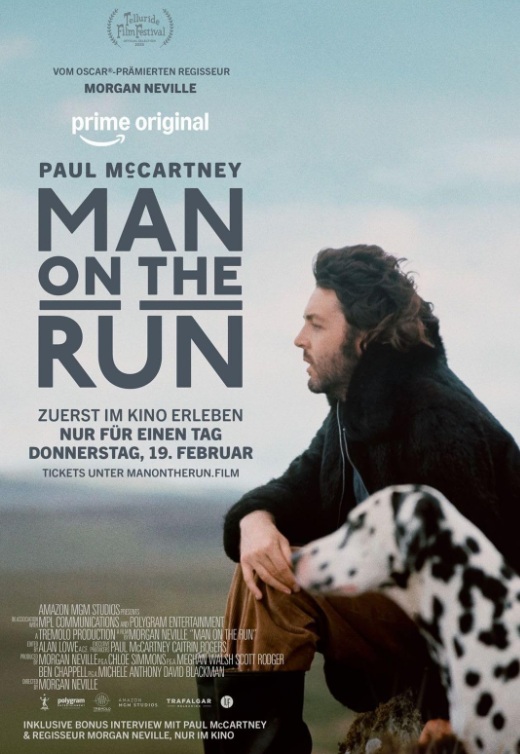
That is the central question of Paul McCartney: Man on the Run, a documentary about Paul McCartney in his post-Beatles years.
The Beatles officially disbanded in 1970, but the cracks had already begun to show a year earlier when John Lennon declared he wanted a “divorce.” Devastated, McCartney retreated to Scotland, sparking the infamous ‘Paul is Dead’ rumor.
Struggling with depression and heavy drinking, McCartney found solace in his family: his wife Linda, whom he had married just eight months prior; his adopted daughter Heather; and their newborn, Mary (named after his late mother). Slowly, he began composing again.
His first post-Beatles album, ‘McCartney’, was a homemade effort that received scathing reviews. His follow-up, ‘Ram’ – nowadays considered a classic – fared little better with critics at the time.
Determined to move forward, McCartney formed a new band. Linda, a photographer but capable singer and keyboardist, joined first, followed by guitarist Denny Laine (formerly of The Moody Blues), lead guitarist Henry McCullough, and drummer Denny Seiwell.
Yet to truly break free, McCartney had to legally dissolve The Beatles. The only way out was to sue his former bandmates, a painful but necessary step. “My mates would hate me for it, the public would hate me for it, and I would hate me for it”, he admitted. “But otherwise, I would never get out.”
To prove The Beatles were finished, McCartney played Lennon’s song ‘God’ for the court, in which Lennon sings, “I don’t believe in Beatles.” The case was settled.
In 1972, his new band, Wings, began rehearsing. McCartney wanted to start fresh, so they embarked on a modest UK tour, playing university gigs for little pay. Bigger tours soon followed, with the family in tow.
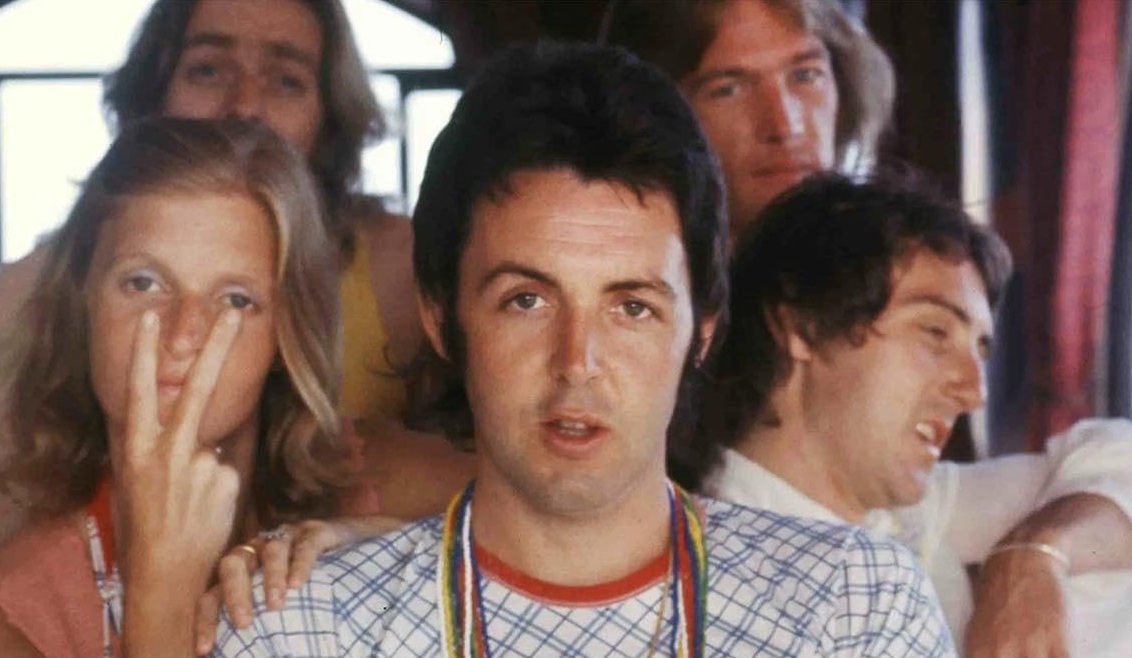
Musically, Wings was still finding its footing, and McCartney faced criticism for not matching his Beatles-era brilliance. Worse, he recorded ‘Mary Had a Little Lamb’ – hardly the revolutionary rock ‘n’ roll of the time.
Everything changed in 1973. Wings traveled to Nigeria to record their third album, but two members quit just before the sessions. Furious, McCartney declared, “I’m gonna make the best album you’ve ever heard.”
The result, ‘Band on the Run’, may not be the greatest album ever, but it’s undeniably terrific. It’s a thematic exploration of breaking free and embracing total creative freedom. The album was a hit, earning praise even from Lennon, who had been critical of McCartney’s post-Beatles work.
New members joined the band – Jimmy McCulloch on guitar and Geoff Britton on drums – and they learned enough new songs, so they could go on world tour. They did. In 1975 they did the Wings Over America tour. He had made it there, like more than ten years earlier with the Beatles. The word spread: this show is good. Wings brought a new sound for a new generation.
Wings was successful commercially. But the problem with the band was obvious. Paul wanted them to be equals, but obviously they weren’t. He was the only superstar in the band.
There were more changes in the line-up, and they produced more hit singles, like ‘Mull of Kintyre’. But when another member quit and another died of an overdose, Wings was heading towards the end.
Linda was pregnant and tired of touring, and even McCartney felt his enthusiasm for touring had peaked. So when they were going to Japan for a concert tour, he subconsciously sabotaged it. He smuggled marijana and got arrested at the airport. He spent time in jail and had time to think what he would do if “he ever got out of there.”
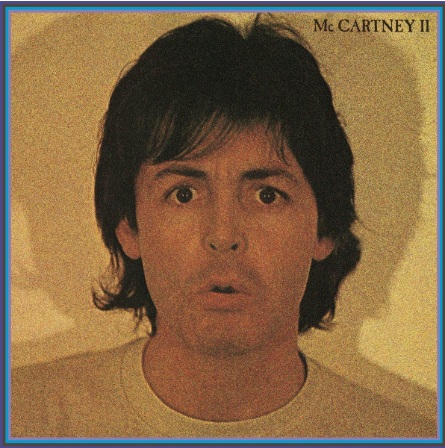
It was 1980, ten years after the end of the Beatles, and now it was the end of Wings as well. And just like in 1970 he released a solo album, aptly titled ‘McCartney II’. After two decades in which he had been the driving force beyond two wildly successful bands, McCartney was back again.
 FRAGMENTEN UIT HET SCHEMERLAND