With the holiday season fast approaching, there’s no better time to gather with friends and family for a festive dinner. But if you’d rather stay in, why not enjoy a similar experience through a great movie or TV show centered around the world of food?
Rosa and I recently watched The Final Table on Netflix – not once, but twice – and we highly recommend it. This captivating competition show delves into the artistry and creativity of cooking on a global scale. Another excellent choice is the Emmy Award-winning series The Bear on Disney Plus. This comedy-drama follows a renowned chef who takes over his late brother’s sandwich shop in Chicago. It’s a gripping and highly entertaining portrayal of the intense, often stressful world of restaurant life.
When it comes to food-centric entertainment, these two TV productions are must-sees. But what about movies? For the occasion of Christmas 2024, I’ve curated an exclusive menu featuring seven of the finest films about food, restaurants, and fine dining. Just be sure to have some delicious snacks and drinks on hand while you watch these!
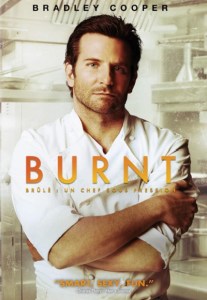
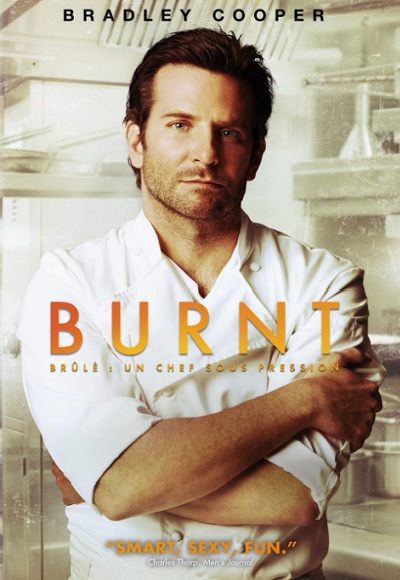
07. Burnt (2015)
On the Menu
– Summer vegetables on a bed of ricotta
– Smoked mackerel with duck egg
– Potato truffle velouté
– And many other beautiful looking dishes…
The Movie
Adam Jones (Bradley Cooper), a once-renowned head chef, is determined to reclaim his place in the culinary world after a self-imposed exile. Battling the ghosts of his past – fueled by booze and drugs – he heads to London to restart his career. There, he joins the restaurant of an old friend, Tony (Daniel Brühl), who has a not-so-secret crush on him. Adam’s ultimate goal? To earn the coveted three Michelin stars. To achieve this, Adam recruits former colleagues – some of whom he must make amends with – and hires the talented sous-chef Helene (Sienna Miller). The setup is engaging, but Adam is acting like such a gorilla-asshole that you almost don’t care what happens anymore. But then the filmmakers pull the right move at the right moment, and the characters become more relatable again. The film has a great cast, with Daniel Brühl portraying an especially likable character. Despite the somewhat flawed screenplay, the story gradually pulls you in, leaving you invested in the outcome of this engaging character study featuring delicious looking cuisine.
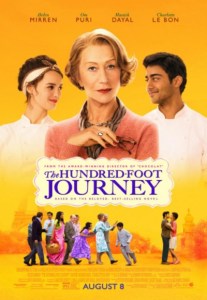
06. The Hundred-Foot Journey (2014)
On the Menu
– Saag Aloo
– Murgh Masala With Cashews
– Cardamom-infused Pigeon With Truffles
– Boeuf Bourguignon
– Veal With the Five French Mother Sauces: Béchamel, Espagnole, Hollandaise, Tomato, and Velouté
The Movie
Produced by Steven Spielberg and Oprah Winfrey, directed by Lasse Hallström and based on the best-selling novel by Richard C. Morais, The Hundred-Foot Journey is a real feel-good movie with a lead role for the unlikely combination of French and Indian cuisine (subtlety versus teemingness). An Indian family starts a restaurant in the French village of St. Antonin across the street from the prestigious restaurant Le Saule Pleureur run by the competitive restaurateur Madame Mallory (Helen Mirren). Immediately a fierce battle breaks out between the two parties, but Madame Mallory discovers that her competitor’s son Hassan is a brilliant chef. And since she wants a second Michelin Star, the sworn culinary adversaries might find some unity after all in their love of food. Like the diverse cuisine on display, Hallström has made a very rich film filled with many ingredients like beauty, love, passion, grief, ambition, talent and culture.
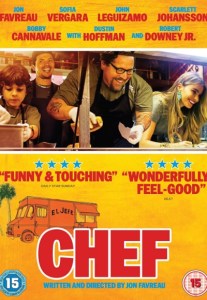
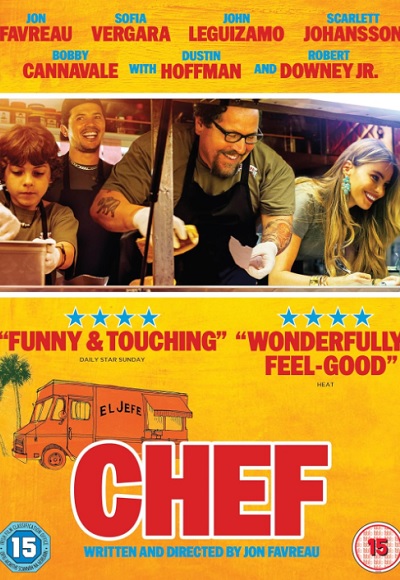
05. Chef (2014)
On the Menu
– An overcharged caviar egg
– Chocolate lava cake with the core not quite molten
– Grilled cheese sandwich
– Cubanos (Real Cuban sandwiches)
– Yuca Fries
– Tostones
– BBQ brisket sliders
– Medianoches
– Platanos
– Cerveza
The Movie
In this delightful food-centric film, directed by and starring Jon Favreau, a successful chef makes a bold decision to quit his job after clashing with his boss over creative freedom. He decides to buy a food truck and embarks on a culinary tour through the Miami area with his son. Thanks to his stellar cooking of classic Cuban dishes and his son’s knack for social media, their venture quickly becomes a smashing success. Chef is a true feel-good movie that’s as visually appealing as it is heartwarming. The characters are constantly eating all these mouthwatering dishes. It makes you wanna cook and eat yourself, and this is precisely what makes a movie like this so enjoyable. The impressive supporting cast adds even more flavor, featuring performances from Robert Downey Jr., Scarlett Johansson, Dustin Hoffman, John Leguizamo, Bobby Cannavale, Sofía Vergara, and Oliver Platt.
04. Dinner Rush (2000)

On the Menu
– Lobster & fried spaghetti with champagne vanilla sauce, garnished with salmon caviar and chives
– Snapper carpaccio with blood orange sauce (for the critics)
– Pumpkin risotto with chestnuts (also for the critics)
The Movie
Dinner Rush successfully fuses the mob movie and the restaurant film. A Tribeca restaurant owner and bookmaker (Danny Aiello) is squeezed out by two mobsters from Queens. They already killed his partner and on this particular night, they’re coming over to try to make a deal with him. There is a lot more going on. His son Udo is a talented chef who wants to take over the business. Their other cook Duncan has gambling debts and is two-timing with Udo’s girlfriend. There is also a food critic, a waitress with aspirations, a detective with his wife, and a power blackout… How this night will turn out is hard to tell, but something is gonna go down, that is certain. Very enjoyable movie, obviously made by a cast and crew with a lot of passion for this movie and Italian cuisine. You can almost taste it by looking at the screen.
03. Boiling Point (2021)

On the Menu
– Duck With Soy, Lamb, Krab, Oysters, Salmon, Liver, Mackerel, Brill, Risotto
– Château Marie
– Steak and Chips (off the menu)
The Movie
A health & safety downgrade, a rascist customer, a horrible food critic, an allergy fuck-up, an annoying ex-colleage, lazy staff members, drugs, debts, booze, and more. Boiling Point gives us a tension-drenched evening in a busy restaurant made in one, single, 90 minute shot. It is an amazing accomplishment, because nowhere does it feel inauthentic. Stephen Graham is superb als chef Andy, but all the supporting players are excellent as well. Due to the first Covid-19-lockdown, they could only make four takes and used the third one for the final movie. If you want a completely realistic sense of what it is like to work in an overcrowded restaurant on the busiest night of the year, then this is the one to check out. Followed by a television series with the same title and concept.
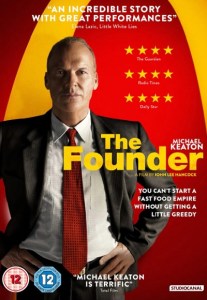
02. The Founder (2016)
On the Menu
Delicious:
– Hamburgers (grilled for exactly the right length, two pickles, mustard, ketchup)
– French fries
– Soda
– Milkshakes (with and without milk)
The Movie
The Founder tells the fascinating origin story of the world’s largest hamburger chain. Ray Kroc (Michael Keaton) is a relentless and ambitious milkshake mixer salesman who stumbles upon a hidden gem in 1954: an innovative family-run restaurant offering a revolutionary fast-food experience and the best burgers he’s ever tasted. Sensing a once-in-a-lifetime opportunity, Kroc strikes a deal with the McDonald brothers to franchise their concept. Initially, the partnership flourishes, but tensions arise as Kroc’s cutthroat ambition clashes with the brothers’ principles. Determined to succeed at all costs, Kroc makes bold and ruthless business moves that ultimately transform McDonald’s into a global empire. The Founder is a standout business origin story, anchored by a terrific performance from Michael Keaton. The film has many memorable moments, but the ending for me stands out in which one of the McDonalds brothers asks Kroc why he didn’t just steal the concept but went for the franchise formula instead. “It’s the name”, he says. “That glorious name McDonalds. It sounds like America. Would you ever eat at a place called Kroc’s?” Indeed.
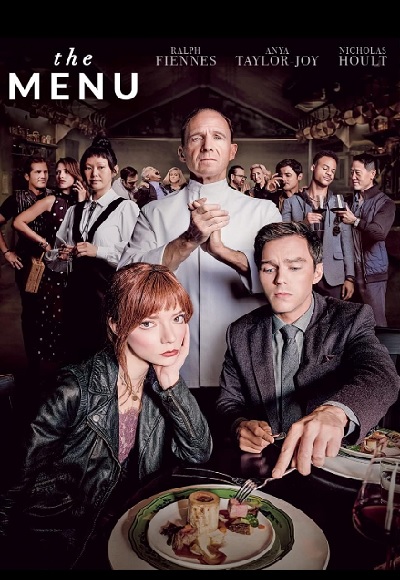
01. The Menu (2022)
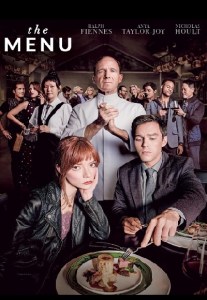
On the Menu
– Raw local oyster in a mignonette emulsion with lemon caviar and an oyster leaf.
– Amuse-bouche: Cucumber melon, milk snow and charred lace.
– First Course: ‘The Island’. Various plants from Hawthorn Island and fresh raw scallops. Served on a rock.
– Second Course: ‘No bread’. Just savory accompaniments.
– Third Course: ‘Memory’. House-smoked Bresse chicken thigh Al Pastor and tortillas made with heirloom masa.
– Fourth Course: ‘The Mess’. Pressure cooked vegetables, roasted filet, potato confit, beef jus, bone marrow.
– Palate Cleanser: Wild bergamot and red clover tea.
– Sixth Course: ‘Man’s Folly’. Dungeness crab, fermented yogurt whey, dried sea lettuce, umeboshi, kelp.
– Supplementary Course: A cheeseburger, crinkle cut fries.
– Dessert Dish: ‘S’mores’. Marshmallow, chocolate, Graham cracker, customers, staff, restaurant.
The Movie
The renowned chef Slowik (Ralph Fiennes) has twelve special guests over at his exclusive restaurant on Hawthorn Island for a unique tasting experience. The price tag is 1250 dollars a person, but for that they will get a night full of culinary surprises and more. If you don’t know what is going to happen yet, go see this movie. The elite is about to learn a few lessons and it’s very nourishing. The Menu is a beautiful work of art. The cast with Ralph Fiennes, Anya Taylor-Joy and Nicholas Hoult, the screenplay, the direction by Mark Mylod (Succession) and the art direction are as exquisite as the dishes served. Like Slowik is obsessed with his craft, so were the makers of this thriller in getting every little detail right. As a viewer, you become a part of the experience that Slowik has prepared and it’s an extremely memorable dining experience that is worth every penny. Bon appetit.






 FRAGMENTEN UIT HET SCHEMERLAND