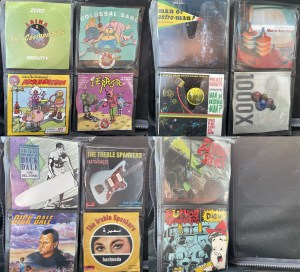
In my teenage years, I was crazy about surf music. With surf, I am of course referring to instrumental surf rock and not about vocal groups like The Beach Boys (although I happen to also love that band). Instrumental surf was pioneered in the early sixties by Dick Dale and the Del-Tones amongst others. It is distinguished by reverb-heavy electric guitars played to evoke the sound of crashing waves.
The nineties was another crucial decade for this musical genre. Tarantino repopularized it by using Dick Dale’s ‘Misirlou’ as opening track for his masterpiece Pulp Fiction, and there were other groups that came up with clever subcategories of surf rock, like Man… Or Astro-Man? with their science fiction blend and Laika & the Cosmonauts with their Scandinavian influences.
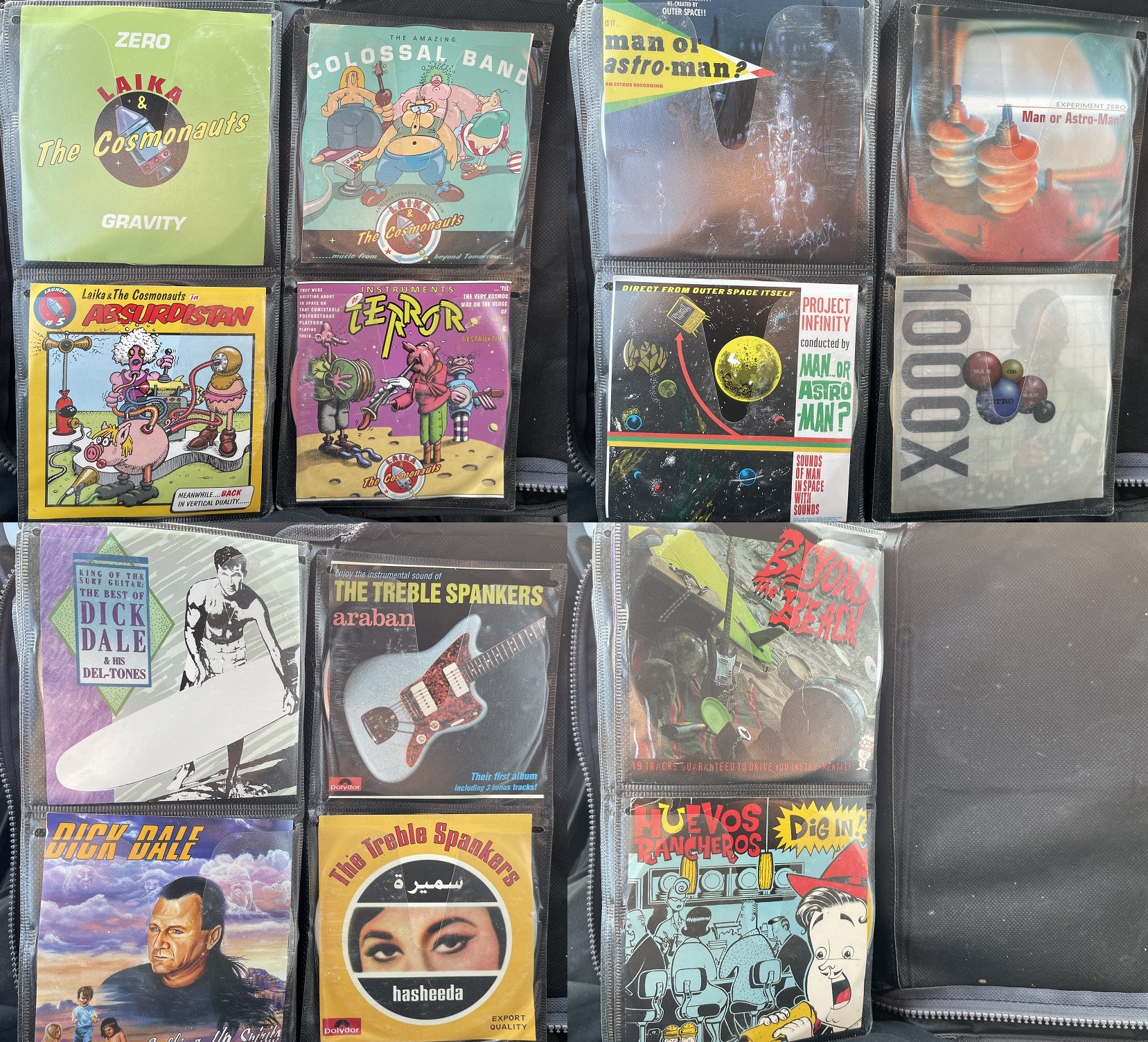
The list below covers the most worthy efforts in the genre currently found on Spotify:
10. Madhur by The Phantom Four

After his first surf band The Treble Spankers broke up after he got RSI and was out of the running for a while, lead man Frank Gerritsen started a new band called The Phantom Four. Their debut album ‘Madhur’ contains 14 original tracks. Gerritsen already flirted with the Arabic sound with The Treble Spankers, and ‘Madhur’ is played entirely in this distinct style. It opens with two brilliant compositions: ‘Kyma’ and ‘Bravado Blue’. This level is not achieved with the rest of the tracks, but it is still a strong album with a consistency in style that is rare to find.
Favorite track: ‘Kyma’
9. Laika & the Cosmonauts in Absurdistan by Laika & the Cosmonauts

The first half of this album is covered in ‘Cosmopolis’ (scroll down below), but the second half contains enough blasting power to make this list. ‘The Freefaller’ with its beautiful melody, the mental sounding videogame tune ‘Syncophant’ and especially the phenomenal ‘Hi & Lo’ make this probably the finest album by the legendary Finish band.
Favorite track: ‘Hi & Lo’
8. Intravenous Television Continuum by Man or Astro-Man?

Too bad the album ‘Is It … Man or Astro-Man?’ is not on Spotify: It would have made the top of this list for sure. But two of its most memorable tracks – ‘Nitrous Burn Out’ and ‘Invasion of the Dragonmen’ (alternative version) – and lot’s of other cool tracks make ‘Intravenous Television Continuum’ the next best thing. And where do they keep on finding all of these terrific sci-fi movie samples?
Favorite track: ‘Nitrous Burn Out’
7. Calling Up Spirits by Dick Dale

The 1996 album ‘Calling Up Spirits’ is far from perfect. It contains reworkings from Dale’s 60’s surf hits and a few weak non-surf tracks with vocals (never Dale’s greatest quality). However, it is saved by a number of great calls. ‘The Wedge Paradiso’, a remake of ‘The Wedge’ is a blast, some Eastern flavored originals, including the title track, rock pretty hard, a cover of Jimi Hendrix’ ‘Third Stone From the Sun’ is a worthy effort, and the final track ‘Gypsy Fire’ is an instant surf classic; it’s right up there with ‘Misirlou’.
Favorite track: ‘Gypsy Fire’
6. Hasheeda by The Treble Spankers

This follow-up to their debut album ‘Araban’ opens with three strong Frank Gerritsen originals. Then follows a fantastic surf version of ‘Popcorn’, a definite highlight of ‘Hasheeda’. The middle part of the album continues to be strong and consists mostly of original compositions. The finale is superb with a very atmospheric track with vocals by Arabic vocalist Abdeltif Chehdaoui, followed by ‘Vahim’, one of my favorite surf tracks ever. After this album, the band unfortunately broke up. Shame, because they definitely had something going there….
Favorite track: ‘Vahim’
5. Live In Japan ’65 by The Ventures

In Japan, the instrumental band The Ventures is more popular than… well certainly Jesus, but also more popular than The Beatles. They sold twice as many records there than the Fabulous Four. This compilation of tracks performed live in Japan in the Sixties contains classics like ‘The Cruel Sea’, ‘Walk, Don’t Run’ and ‘Telstar’, but also terrific instrumental versions of famous songs, such as ‘House of the Rising Sun’ and – talking about the Fab Four – ‘I Feel Fine’. Ends with a ten minute performance of ‘Caravan’. Fabulous stuff. The Japanese are 100% right to love this band.
Favorite track: ‘Slaughter On Tenth Avenue’
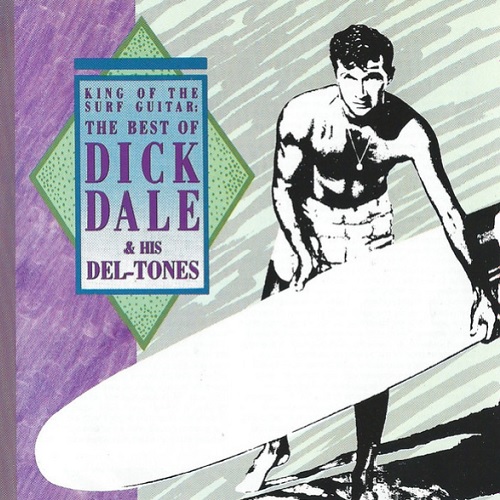
4. King Of The Surf Guitar: The Best Of Dick Dale & His Del-Tones by Dick Dale & His Del-Tones

The pioneer of instrumental surf music Dick Dale has been credited with popularizing tremolo picking on electric guitar, a technique he mastered and used to create a unique sound. Dale was known as the King of the Surf Guitar, which was the title of his second album in 1963 and this 2012 compilation. It contains most of his signature songs, including the surf classics ‘Misirlou’, ‘Let’s Go Tripping’, Shake N’ Stomp’ and ‘Hava Nagila’. Dale, who passed away in 2019, was one the greatest guitar players ever, and his heritage is captured perfectly on this excellent compilation album.
Favorite tracks: ‘The Wedge’ and ‘Misirlou’
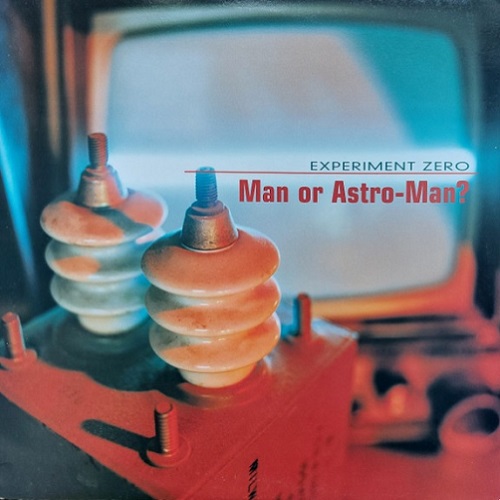
3. Experiment Zero by Man or Astro-Man?
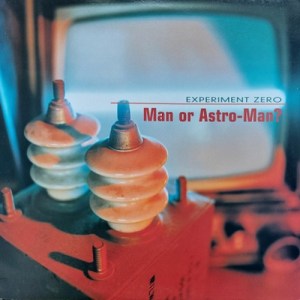
The greatest sci-fi surf rock band in the world returns with the rip-roaring album ‘Experiment Zero’. Man or Astro-Man is the only surf act of which I have seen a live performance. This was in Patronaat in Haarlem in 1996 when they had just released this album. It’s a record I can keep listening to. The sound is harder and louder than on their previous albums, almost close to heavy metal surf at times, but very good. Complimentary to the kick-ass music are the trademark samples from unknown science fiction movies (“I’m a cyborg!”). This formula works great. Even the few tracks that have vocals from lead man (or Astro-Man) Coco the Electronic Monkey Wizard, normally not my favorites, are alright on this album. Five stars.
Favorite track: ‘Planet Collision’
2. Araban by The Treble Spankers

‘Araban’ is the first album by the Amsterdam surf band The Treble Spankers, released in 1994 (on Spotify it incorrectly says 1996 and it’s listed after their second album ‘Hasheeda’). It is an exceptional album consisting of original compositions by lead guitarist ‘Phantom Frank’ Gerritsen and stylishly executed covers such as ‘Go West’, ‘Johnny Guitar’ and ‘The Good, The Bad and the Ugly’. Besides Western influences, Spanish and Arabic influences can also be heard. Phantom Frank can truly make his guitar sing. He is one of the finest surf guitarists and composers in the world.
Favorite track: ‘Brunhilde’
1. Cosmopolis 1988 – 2008 by Laika & the Cosmonauts

Mikko Lankinen, Matti Pitsinki, Janne Haavisto and Tom Nyman. That was the extremely talented line-up of the fabulous Finish surf band Laika & the Cosmonauts. There aren’t many Laika albums on Spotify; if there were, I’d have to include them all on this list. They truly had a unique sound and were masters at creating powerful symphonies, often featuring an organ played by Matti. This compilation contains a wide variety of their tunes: from their movie themes (‘Get Carter’, ‘Psyko’) to their trademark feel good surf rock tracks (‘Surfs You Right!’, ‘Land’s End’) to their mental album openers (‘C’mon Do the Laika!’, ‘Disconnected’) to their heavier, moody compositions (‘Experiments in Terror’, ‘Boris the Conductor’). This album was released preceding their final US tour in 2008 after which they sadly disbanded. It’s a fabulous overview of an impressive body-of-work of a band that never got the recognition they deserved.
Favorite track: ‘Delayrium’ (another mental album opener :-))








 FRAGMENTEN UIT HET SCHEMERLAND