Intermezzo #10

Some may come and some may go.
He will surely pass.
When the one that left us here.
Returns for us at last.
We are but a moment’s sunlight.
Fading in the grass.

Come on, people now.
Smile on your brother.
Everybody get together.
Try to love one another right now.

Get Together
The Youngbloods (1967), The Youngbloods

LET OP: Dit is een ‘lyrically questionable’ liedje volgens de 2001 Clear Channel memorandum.

(Van) vis naar man

De documentaire is alweer een oudje (2004), maar niet minder schokkend of actueel. ‘Darwin’s Nightmare’ is het verhaal van vissen en mensen. In het Victoriameer in Tanzania is ooit bij wijze van experiment de nijlbaars uitgezet. Deze wonderbaarlijke vis heeft 95 procent van de inheemse soorten vernietigd, waardoor het ecosysteem blijvend is verstoord.

Twee miljoen blanken eten dagelijks nijlbaars. De vliegtuigen komen uit Rusland, want dit is de goedkoopste maatschappij. Ze landen in de plaats Mwanza en worden volgeladen met vis. Wat brengen ze mee?, vraagt de filmmaker voortdurend aan de lokale bevolking. ‘Niks’, is meestal het antwoord, maar later blijkt dat de waarheid nog erger is. Ze brengen wapens voor burgeroorlogen in Congo, Soedan en Liberia.

De nijlbaars is goed voor 25 procent van de export van Tanzania. Niet alleen de vissers hebben werk, maar ook indirect levert het product banen op. Zo komt er een nachtwaker aan het woord die voor 1 dollar per nacht het visonderzoekcentrum bewaakt. Hij vertelt doodleuk dat hij de baan heeft gekregen omdat zijn voorganger met een machete in stukjes is gehakt. En waarmee bewaakt hij het gebouw? Een pijl en boog.

Het is niet alleen Darwin’s nachtmerrie. De titel slaat behalve de vis ook op de mensen. Een dorpeling merkt op; misschien zijn de Europeanen wel sterker; zij bezitten het IMF en de Wereldbank. Ondertussen eten de mensen in Tanzania door maden vergeven visresten van de vuilnisbelt en doen de Europese piloten zich te goed aan de aan AIDS lijdende prostituees van Mwanza. De verpakking van de vis wordt gesmolten tot lijm dat jongeren snuiven waardoor ze zo diep in coma raken dat ze anaal verkracht worden en het niet eens merken…

Kortom, een schokkend document van hoe wij aan eten komen en hoe de economie van landen 100 procent bepaalt hoe de supply chains zijn ingericht. Shit gaat daarin en al wat goed is, komt terug. Tanzanianen eten geen nijlbaars; het is veel te duur.

TV Dungeon: Romanzo Criminale

(2008 – 2010, Italy)

2 Seasons (22 Episodes)

Directed by:
Stefano Sollima

Cast:
Francesco Montanari, Vinicio Marchioni, Alessandro Roja, Daniela Virgilio

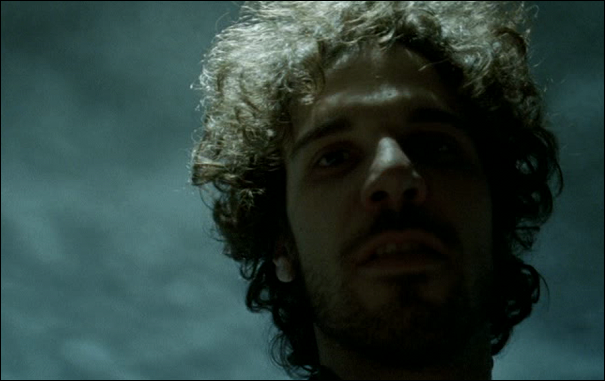
The story of the Magliana gang, who controlled organised crime in Rome between 1977 and 1992. We witness the establishment of the group by three ruthless criminals; Il Libanese, Il Dandi and Il Freddo (the cold one). Each one of the friends has a very different personality, but they share the same ambition; to take over Rome. No crime is too big for Banda Della Magliana: drugs, kidnapping, murder, prostitution, they are literally involved in all criminal activity in the city.

The series is based on true events and people. The Magliana’s were the first organised gang in Rome. After a successful kidnapping, the leader type; Il Libanese, initiates that he and his associates form a gang. The others agree, but Il Freddo insists that they are all equals and have no leader. This will turn out to be a tough ideal to hang on to later on.

Off course they have opponents to deal with; a competitive gangster called Terrible is their first major obstacle. Then there is a communist cop who is keen on tracking them down. Finally, the Mafia – who traditionally had no foot in Rome – stick their beak in. Once the gang reaches the top, the only direction they can go is down. This is what eventually happens. Like all criminal empires, it ends.

Perhaps the best thing about this series is the cast. Each one of the actors is extremely believable in his/her role. For a show about gangsters, there are also quite a few strong female characters. Another strong point is the production design; the recreation of the seventies and eighties is convincingly done, enhanced by a groovy soundtrack and stylish camera work and editing.

The biggest downside is the length of the series. It is told in two parts of about 10 hours each. This is too long. Especially in the first part, there is too little going to keep the tension on an adequate level. Surely it is realistic, but sometimes just boring. Also humor is missing; it could have taken a few pages out of The Sopranos’ book. Still, after La Piovra, this is the best series about organised crime to come out of Italy.