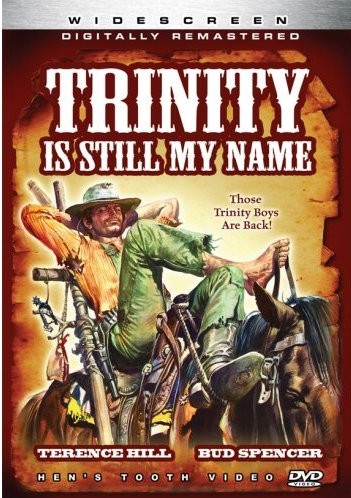
Trinity Is STILL My Name!


Director: Enzo Barboni
Written by: Enzo Barboni
Cast: Terence Hill, Bud Spencer, Yanti Somer, Enzo Tarascio

Year / Country: 1971, Italy
Running Time: 112 mins.

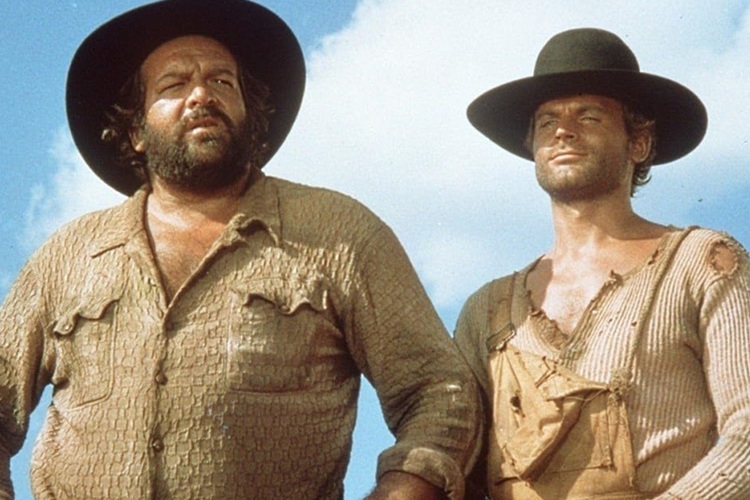
They Call Me Trinity, the first ‘Trinity’ film, was a major financial success and made Terence Hill and Bud Spencer international stars. This follow-up was an even greater success. It became the top-grossing Italian film of all time upon release.

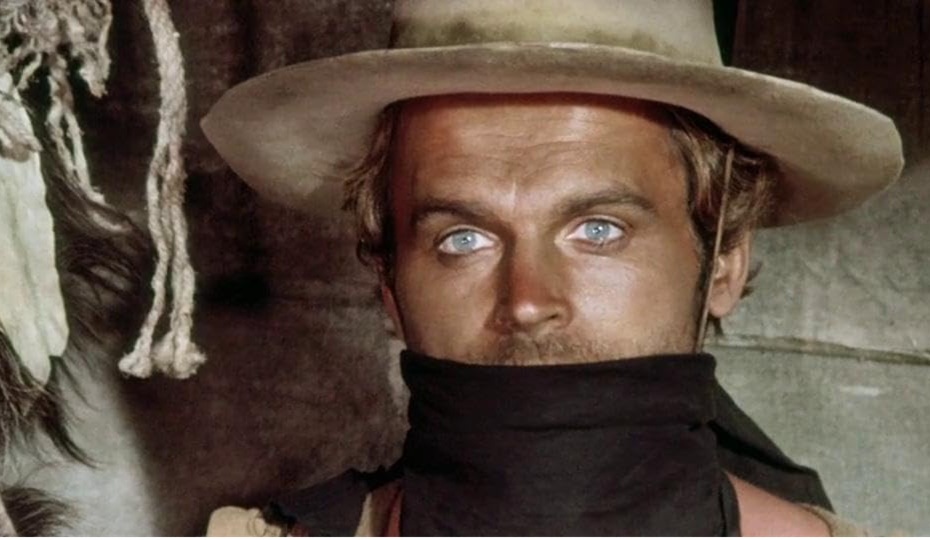
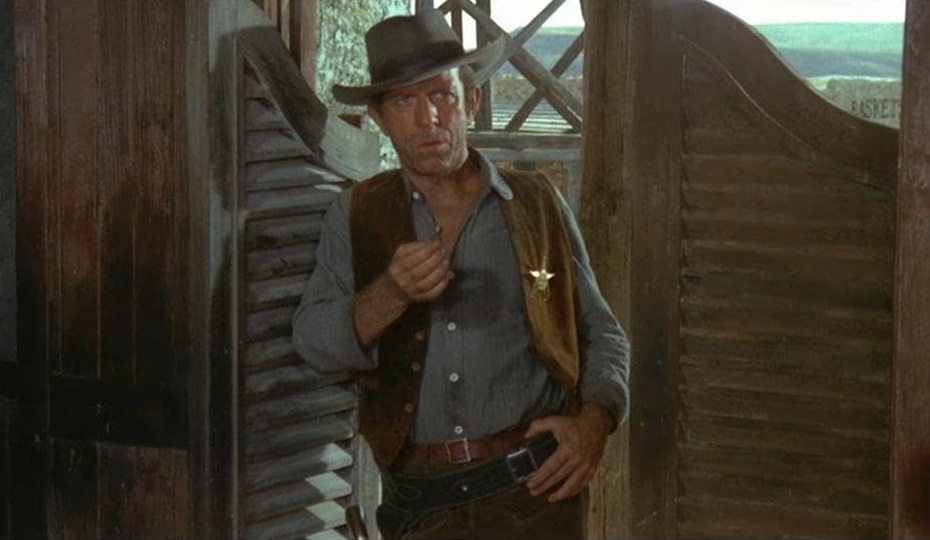
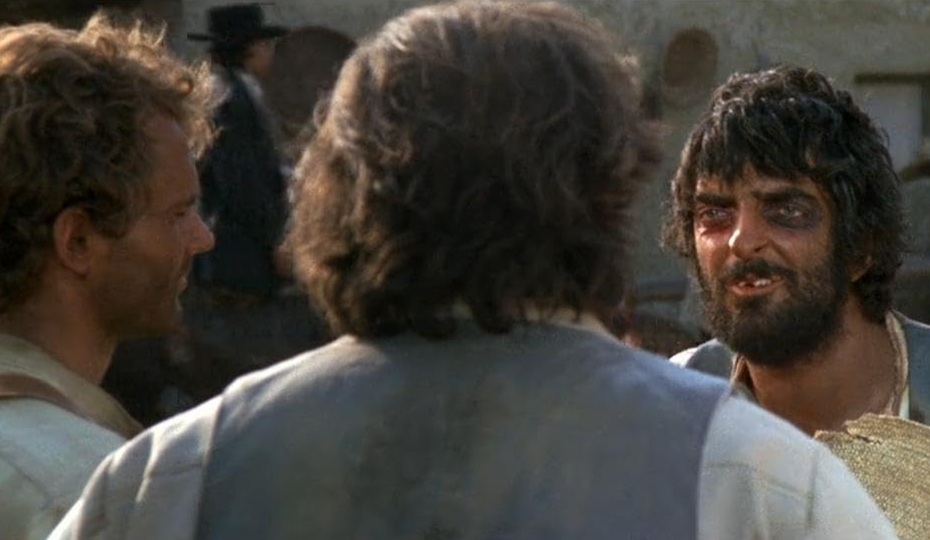
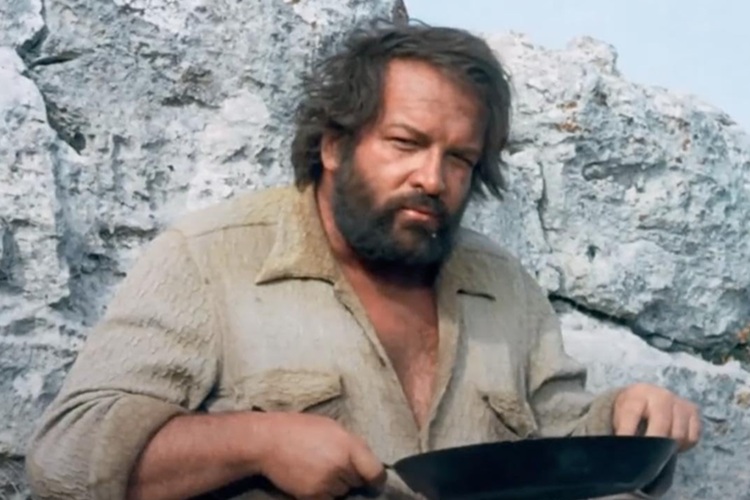
In this sequel, Trinity (Hill) and his older brother Bambino (Spencer) want to make name for themselves as outlaws. This is the last wish of their dying father. They also promise him to work together from that point on.

Bambino takes the lead and the two brothers head north. Their plan to become outlaws doesn’t go too smoothly. They get mixed up in unsuccessful robbery’s, crooked card games and a massive scheme involving a monastery. They also pretend to be federal agents, which is not good for their outlaw status.

The first ‘Trinity’ film was no Citizen Kane, but for a comedy-western it was fair enough. Trinity Is STILL My Name! isn’t all that great honestly. While Hill and Spencer function better and better as a comic duo, it’s the writers that drop the ball here. There is no story and the dialogues are weak.

Mostly, the writers depend on running gags to raise a few laughs. Some are okay: ‘don’t call me Bambino’, but some – like the farting baby – are terrible. There are also fewer of the slapstick fights that made the first movie entertaining, although it ends similarly with a major brawl.

Rating:

Biography: Enzo Barboni (1922, Rome – 2002, Rome) was originally a cinematographer, but later turned to writing and directing as well. In 1966 he shot Django, which became one of the archetypes of the spaghetti western. His second film They Call Me Trinity was also a massive trendsetter for the comedy-western and launched the careers of Bud Spencer and Terence Hill. He also directed the sequels Trinity Is STILL My Name! and Sons of Trinity, which was his final movie. Barboni is often credited under his pseudonym E.B. Clucher.

Filmography: The Unholy Four (1970), They Call Me Trinity (1970), Trinity is STILL My Name! (1971), A Man from the East (1972), Even Angels Eat Beans (1973), Charleston (1974), Crime Busters (1977), The Odd Squad (1982), Go for It (1983), Double Trouble (1984), They Call Me Renegade (1987), Speaking of the Devil (1991), Sons of Trinity (1995)

They Call Me Trinity

Director: Enzo Barboni
Written by: Enzo Barboni
Cast: 5, Farley Granger

Year / Country: 1970, Italy
Running Time: 106 mins.

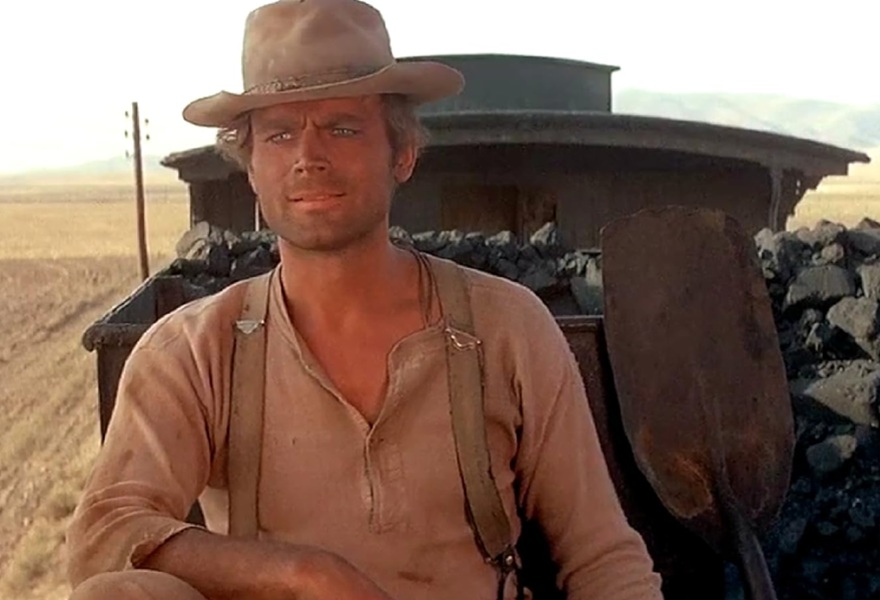
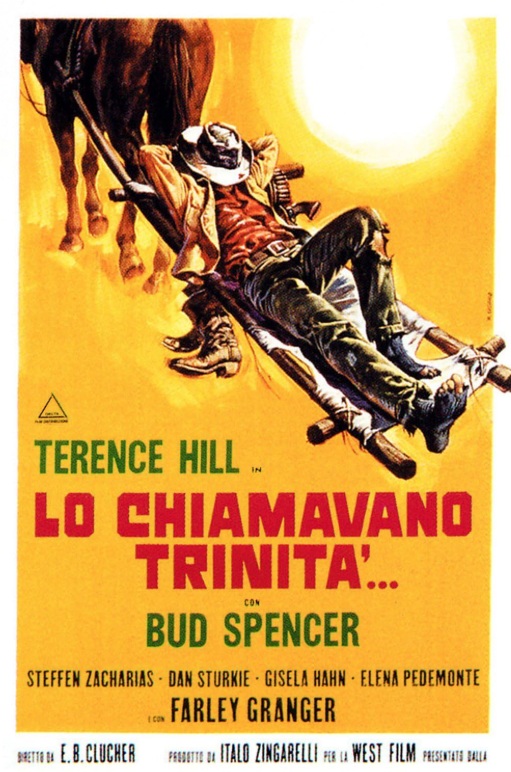
A man on a stretcher is carried through the desert by his horse. He doesn’t get up until he reaches Wells Fargo. This lazy bum is called Trinity. There is more to him than meets the eye. He is also known as the Devil’s right hand and he has the fastest gun in the West.

After saving a Mexican’s life, he goes to meet his brother Bambino, who is pretending to be the local sheriff. Bambino is the Devil’s left hand with a gun as fast as Trinity’s. Together they take on a band of outlaws that, under command of a corrupt mayor, want to drive a community of Mormon farmers from their land.

They Call Me Trinity is a significant movie for two reasons. Firstly, it initiated the Western-Comedy craze that swept Italy for a while. Secondly, this is the film that turned the duo Hill / Spencer into international stars, especially in Europe.

It also set the tone for many future Hill / Spencer collaborations: many brawls (with extremely LOUD sound effects), humorous dialogues and slapstick action. For its genre, it is pretty violent (Hill shoots a man in his crotch in one scene) and there is plenty of obscenity in the dialogues.

All in all, They Call Me Trinity is a fair vehicle for Spencer and Hill to show off their considerable (comedic) talents. Also features a fitting musical score by Franco Micalizzi.

Rating:

Biography: Enzo Barboni (1922, Rome – 2002, Rome) was originally a cinematographer, but later turned to writing and directing as well. In 1966 he shot Django, which became one of the archetypes of the spaghetti western. His second film They Call Me Trinity was also a massive trendsetter for the comedy-western and launched the careers of Bud Spencer and Terence Hill. He also directed the sequels Trinity is STILL My Name! and Sons of Trinity, which was his final movie. Barboni is often credited under his pseudonym E.B. Clucher.

Filmography: The Unholy Four (1970), They Call Me Trinity (1970), Trinity is STILL My Name! (1971), A Man from the East (1972), Even Angels Eat Beans (1973), Charleston (1974), Crime Busters (1977), The Odd Squad (1982), Go for It (1983), Double Trouble (1984), They Call Me Renegade (1987), Speaking of the Devil (1991), Sons of Trinity (1995)
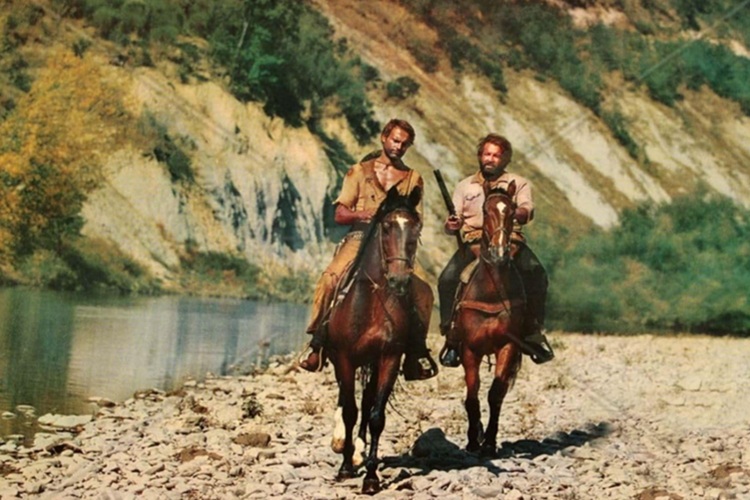
My Name is Nobody

Director: Tonino Valerii
Written by: Fulvio Morsella, Ernesto Gastaldi
Cast: Henry Fonda, Terence Hill, Jean Martin, R.G. Armstrong

Year / Country: 1973, Italy, France, West Germany
Running Time: 111 mins.

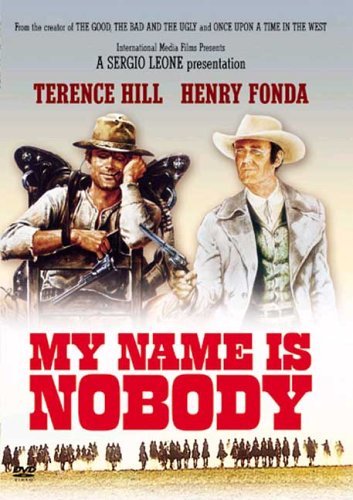
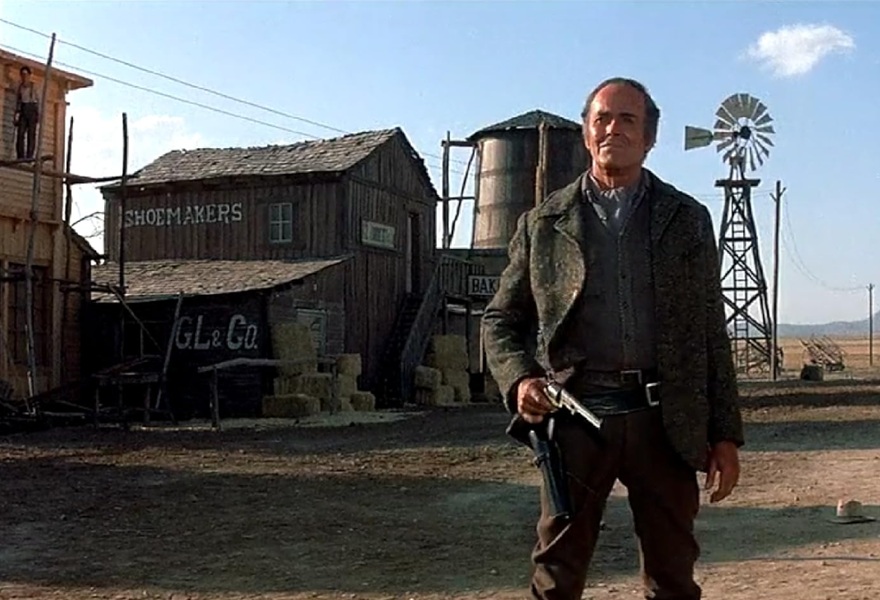
New Mexico, 1898. The Legendary gunslinger Jack Beauregard (Henry Fonda) wants to leave the Wild West behind him and retire to Europe. But the strange loner Nobody (Terence Hill) wants his personal hero to go out in style. He sets everything in motion, so Jack can take on the infamous Wild Bunch.

During the seventies, the Italian comedy-western became a way more popular genre than the more serious spaghetti’s. Master of the spaghetti western Sergio Leone and his team then decided to make the ultimate ‘joke’ western themselves. The casting of comedy man Hill and old westerner Ford, makes clear the contrast between the old dying West and the new West.

Although some of the slapstick comedy feels forced and somewhat copied from the ‘Trinity’ films, producer Leone and director Tonino Valerii still managed to create a successful homage to the genre. This is largely due to the excellent chemistry between the two leads and the classic musical score by Ennio Morricone. The brilliant composer parodies everything in his score, from Wagner’s Ride of the Valkyries to his own Harmonica theme. It became one of his most popular scores.

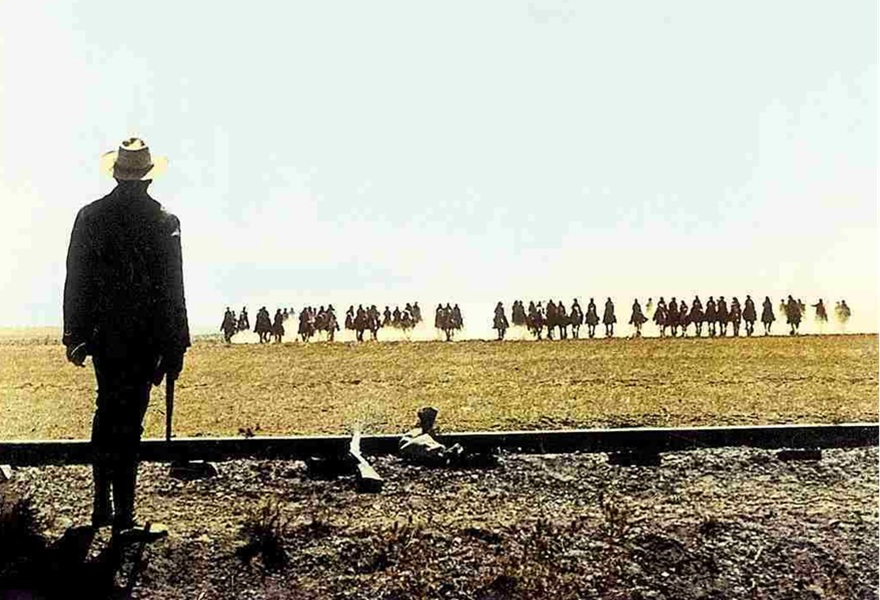
There are also plenty of inside jokes; the bad guys are named ‘The Wild Bunch’; Sam Peckinpah’s name is on a tombstone; the excessive use of duster coats; etc. Leone also directed the opening scene himself, which is a direct homage to the famous opening scene of his classic Once Upon a Time in the West.

Altogether, My Name is Nobody is a fine testament to the glory of the spaghetti western as well as the Hill / Spencer comedy days of the Italian Wild West.

Rating:

Biography: Tonino Valerii (1934, Teramo, Italy) was born as Antonio Valerii. In 1964, he worked as an uncredited assistant director for Sergio Leone on A Fistful of Dollars. In 1966 he made his directorial debut with spaghetti western Taste For Killing. He would direct about fifteen films in his career, but will be most remembered for his westerns, including My Name is Nobody and A Reason To Live, A Reason To Die!.

Filmography (a selection): Taste for Killing (1966), Days of Wrath (1967), The Price of Power (1969), A Girl Called Jules (1970), My Dear Killer (1972), A Reason to Live, a Reason to Die! (1972), My Name is Nobody (1973), The Hired Gun (1976), Sahara Cross (1977), T.I.R. (1984, TV-episodes), Savage Attack (1986), Unscrupulous (1986), Sicilian Connection (1987), Vacation in Hell (1997)

The Last Don II (1998, TV mini-series)


‘Power. Passion. Betrayal. It’s all in the family’

Directed by:
Graeme Clifford

Written by:
Mario Puzo (characters from the novel The Last Don)
Joyce Eliason (Teleplay)

Cast:
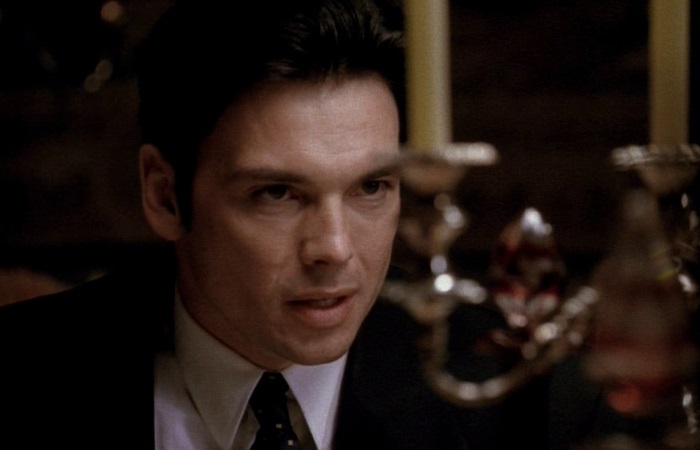
Jason Gedrick (Crucifixio ‘Cross’ De Lena), Patsy Kensit (Josie Cirolia), Kirstie Alley (Rose Marie Clericuzio), David Marciano (Giorgio Clericuzio), James Wilder (Billy D’Angelo), Conrad Dunn (Lia Vazzi), Jason Isaacs (Father Luca Tonarini), Michelle Burke (Claudia De Lena), Danny Aiello (Don Domenico Clericuzio), Joe Mantegna (Pippi De Lena)

When Don Domenico Clericuzio dies, his family has to face its many enemies. Son Petie gets killed soon after and an underworld war begins. Giorgio brings back Cross from Paris to lead the family. Cross only agrees to come back after his wife Athena Aquitane is blown up by a bomb meant for him.

You have to wonder how necessary a sequel to The Last Don really was. It is not like that film set the world on fire although it was a decent effort. There was no source material left from the Puzo novel, so the writers had to come up with an original story. They fail in this, as the story hardly contains anything new in the genre. They even copy The Godfather plotlines in a too obvious and non-convincing way.

Less prominent characters from the first film now have to carry this sequel. Aiello, who’s only in the first five minutes is sorely missed as the Don. Jason Gedrick simply does not have the acting skills to carry this film as leading man. The best character is probably Lia Vazzi, Cross’ murderous, Sicilian henchman who is out for revenge after his family gets killed.

Kirstie Alley has her moments as the tragic Rose Marie. Especially in the second half she is quite touching at times. Patsy Kensit does her best, but is not the spectacular addition to the cast that this film needed. Daryl Hannah obviously didn’t feel the urge to return, so her character Athena in her short screen time is played by unknown actress Mo Kelso. Joe Mantegna does come back and appears in some mediocre dream sequences as Cross’ father.

What really gives this film it’s deathblow is the ridiculous Hollywood side plot in which Cross’ sister Claudia runs a studio that produces the supposed hit movie The Fumigator, starring the terrible Schwarzenegger clone Dirk Von Schelburg who is named in the film as ‘the most famous actor in the world’. Really embarrassing. Action fans might find some value in this film, except that the acts of murder, betrayal and violence are stretched out over the too long three hour running time. Better use that time to watch The Godfather for the thirtieth time.

Rating:

Quote:
LIA VAZZI: “We can’t afford to be soft. This is not the time to be soft.”

Trivia:
Mario Puzo died on 2 July 1999 from heart failure. About a year after this film premiered.