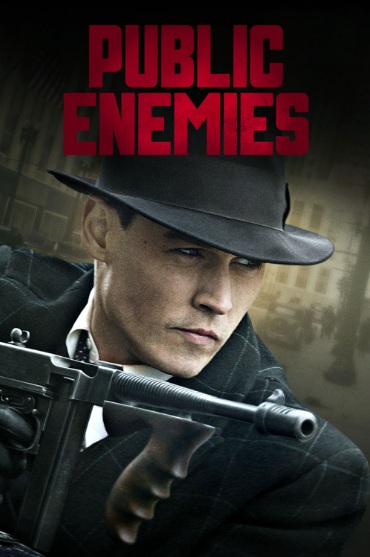
Public Enemies (2009)


‘America’s most wanted’

Directed by:
Michael Mann

Written by:
Ronan Bennett (screenplay)
Michael Mann (screenplay)
Ann Biderman (screenplay)
Bryan Burrough (book ‘Public Enemies: America’s Greatest Crime Wave and the Birth of the FBI’)

Cast:
Johnny Depp (John Dillinger), Christian Bale (Melvin Purvis), Marion Cotillard (Billie Frechette), Jason Clarke (John ‘Red’ Hamilton), Stephen Dorff (Homer Van Meter), David Wenham (Harry ‘Pete’ Pierpont), Billy Crudup (J. Edgar Hoover), Stephen Lang (Charles Winstead), Branka Katic (Anna Sage), Stephen Graham (Baby Face Nelson)
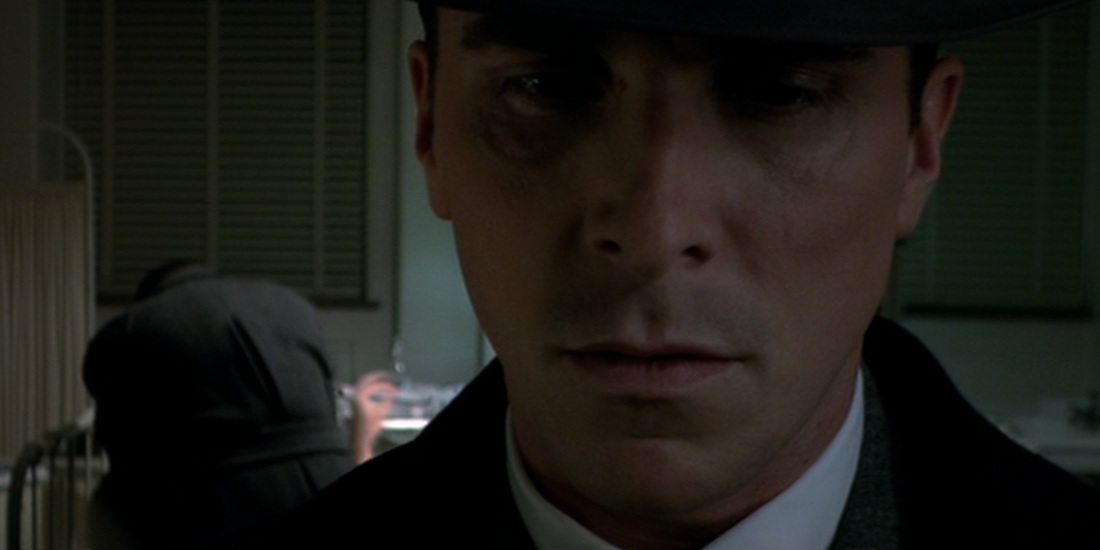

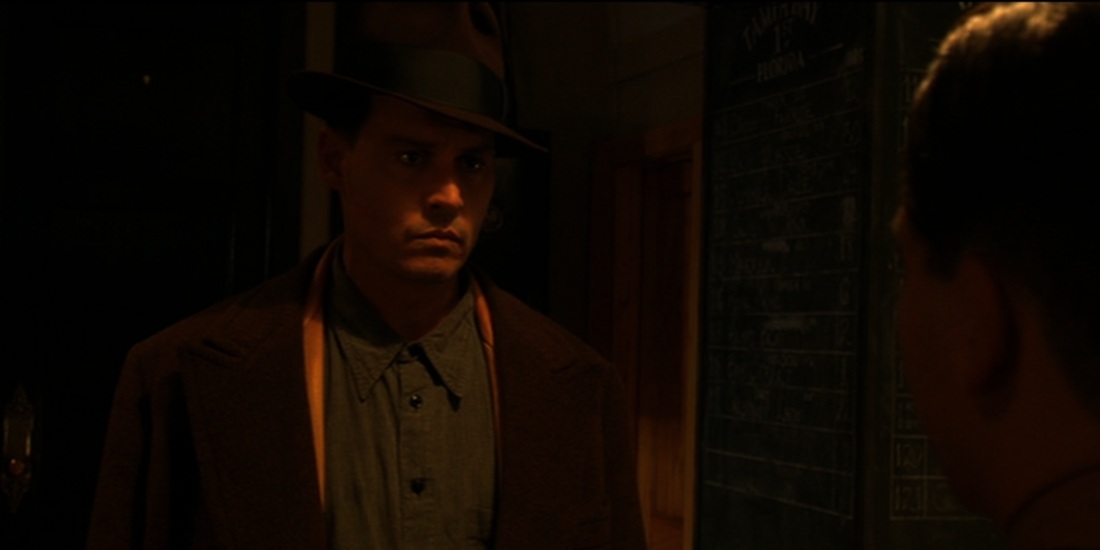
Michael Mann’s return to the gangster / crime genre could have been a second Heat. It is, however, not. How come? Despite the stellar cast, explosive action, and dazzling art direction, the movie is unable to captivate the viewer. Much attention has been paid to recreating a piece of American history, and too little to the psychology of the characters.

Why protagonist John Dillinger (Depp) robs banks is easy to explain: he is mainly a thrill seeker, exploiting the opportunities that the era of the Great Depression offers. But what draws his girlfriend, the gorgeous Cotillard, to this dangerous lifestyle is harder to explain.

The same goes for the determination with which special agent Purvis (Bale) chases Dillinger and his fellow criminals. We never get to know these characters nearly well enough.

Mann can certainly be trusted to deliver eye-popping visuals. The thirties feel very real. And don’t we all love the sight of a good old Tommy gun? Public Enemies contains more gunfights than a Peckinpah movie, and they are all stylishly directed, although the depiction of harsh violence sometimes feels unnecessary.

Depp brings his usual roguish charm to the screen, while Bale delivers his usual passion and intensity. But we have seen them do this too often. So although Public Enemies may feel historically accurate, some freshness would have been welcome. When the final gunshot sounds, we ain’t too sorry that it’s over. How different that was with Heat.

Rating:

Quote:
JOHN DILLINGER: “I was raised on a farm in Mooresville, Indiana. My mama ran out on us when I was three, my daddy beat the hell out of me cause he didn’t know no better way to raise me.”

Trivia:
Dillinger’s quote ‘we’re here for the bank’s money, not yours’ is based on a real statement he made during the course of a bank robbery in Greencastle, Indiana. Clyde Barrow would later use a similar quote in one of his gang’s robberies, as he reportedly idolized Dillinger. In Michael Mann’s Heat, Robert de Niro’s character uses a similar quote during a robbery.
Night of the Ghouls

Director: Edward D. Wood Jr.
Written by: Edward D. Wood Jr.
Cast: Kenne Duncan, Duke Moore, Tor Johnson, Valda Hansen

Year / Country: 1959, USA
Running Time: 69 mins.

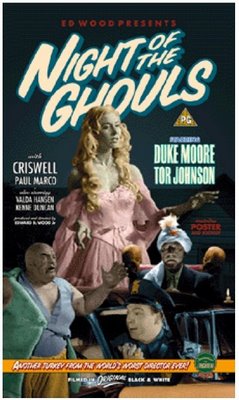
Boy, this is bad. Made in the same year as Plan 9 from Outer Space , this is another travesty by Ed Wood. It is the sequel to Bride of the Monster, which is actually pretty good compared to this.

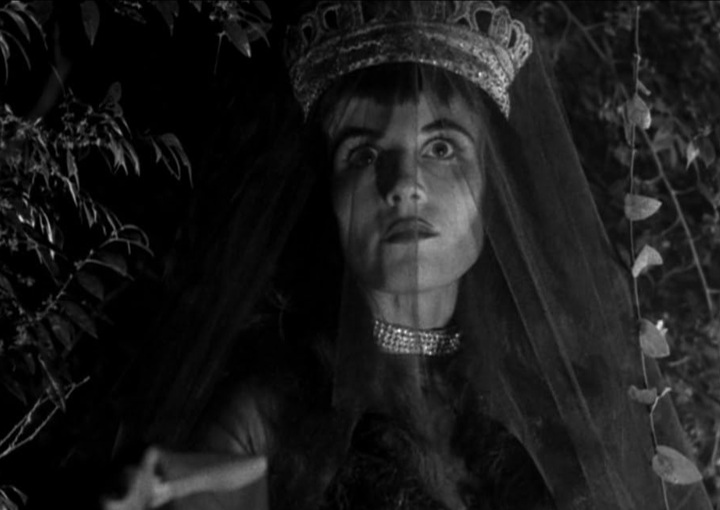
The ghouls from the title are initially just two women, one dressed in white and one in black, who act in service of the mad spiritualist Dr. Acula (clever name huh?). The police starts to investigate some strange occurrences in the woods around where the late Dr. Eric Vornoff (Bela Lugosi) conducted his crazy experiments in Bride of the Monster. His assistant Lobo (Tor Johnson) apparently survived and is now working for Dr. Acula.

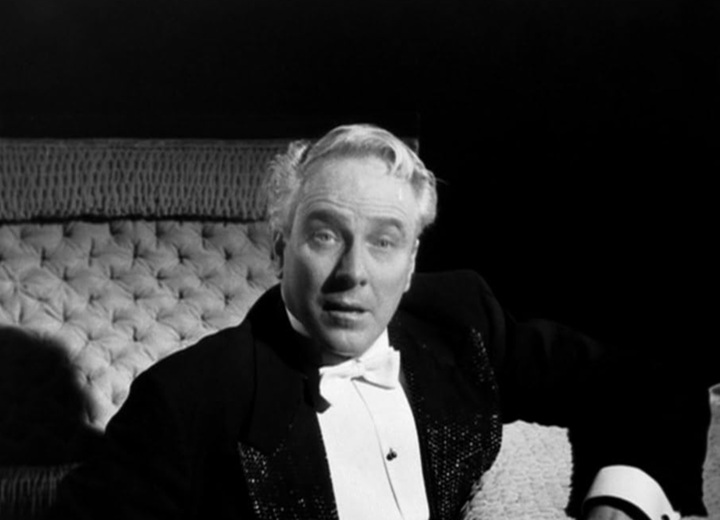
The hilarious Chriswell narrates the ‘story’ and a bunch of other Ed Wood regulars can be seen in small roles. Paul Marco for example plays patrolman Paul Kelton (same character as in Plan 9). He is supposed to be the comic relief, but is very annoying instead. Other performances are perhaps even more dreadful, especially Kenne Duncan in the villain role.

There is some typical Wood stuff that is entertaining. The sets for example are so minimalist that shots can only be taken from two or three angles and never in wide shot. The mise-en-scène is also hysterically funny. Film was probably too expensive so everything had to be done in one shot. The problem is that the scenes are stretched out way too long, so even though it only takes 69 minutes, it is hard to finish this flick.

Rating:

Biography: Edward D. Wood Jr. (1924, New York – 1978, Hollywood) is widely considered as the world’s worst filmmaker. His low-budget movies, usually mergers of science-fiction and horror, are mostly complete disasters in terms of production values and continuity. In 1994, Edward D. Wood Jr. became the subject of an amazing biopic directed by Tim Burton called Ed Wood.

Filmography: The Sun Was Setting (1951, TV short), Trick Shooting with Kenne Duncan (1953, short), Glen or Glenda (1953), Crossroad Avenger: The Adventures of the Tuscon Kid (1953, TV short), Boots (1953, short), Jail Bait (1954), Bride of the Monster (1955), The Night the Banshee Cried (1957, short), Final Curtain (1957, short), Plan 9 from Outer Space (1959), Night of the Ghouls (1959), The Sinister Urge (1960), Take It Out in Trade (1970), The Young Marrieds (1971), Necromania: A Tale of Weird Love (1971)

Martin

Director: George A. Romero
Written by: George A. Romero
Cast: John Amplas, Lincoln Maazel, Christine Forrest

Year / Country: 1977, USA
Running Time: 91 mins.

See it with someone you’re sure of…

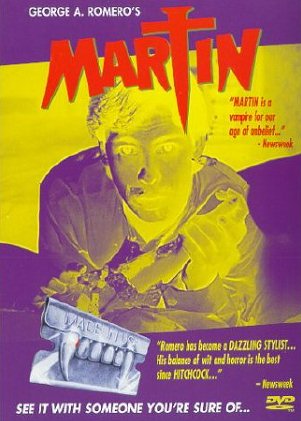
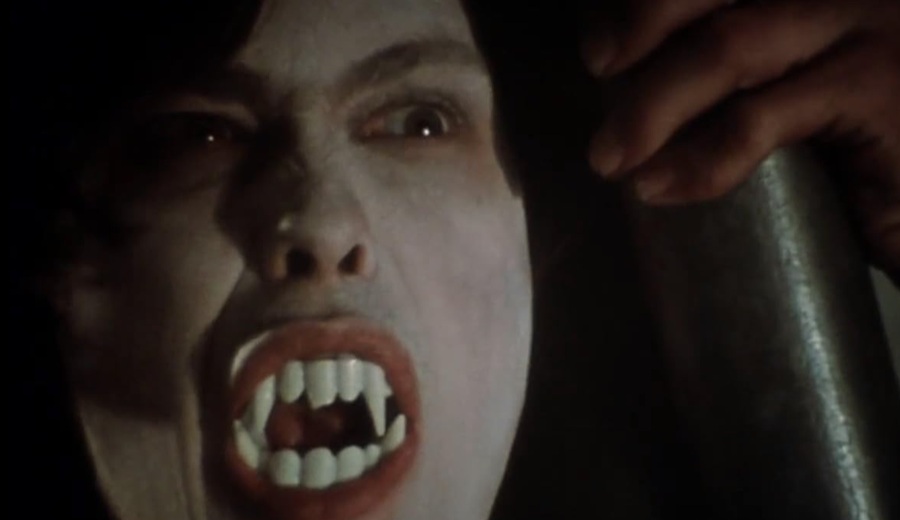
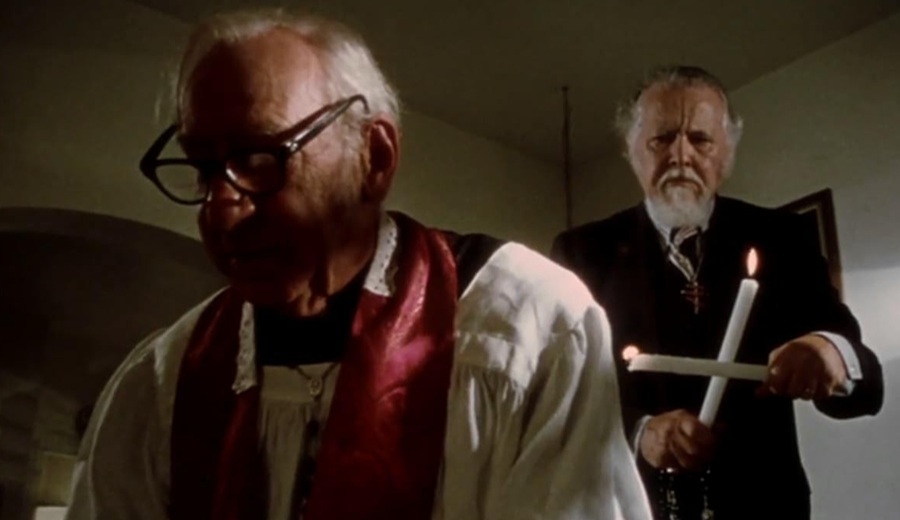
Martin is a vampire. At least that is what he appears to be. But why does he use a needle to put his victims to sleep? And why cut their wrists with a razor in order to drink their blood? Where are his fangs? There are answers to these questions. Because he slices their wrists he is able to stage a suicide. These logical explanations apply to everything Martin does. That way you can never be sure he is a real vampire. He could also be faking it or merely thinking he is one.

Martin’s eldest cousin Tada Cuda, where he goes to stay in Pittsburgh, certainly thinks he is a real nosferatu. He tells him that he will first save his soul and then destroy him. Vampirism is a family curse, we later learn, and Martin is one of the last living specimens. But the more we see of him, the less we believe he is for real. Every vampire myth is discarded by Martin. He eats garlic, can hold a crucifix and sunlight only mildly bothers him. He tells his cousin that there is no magic. It is just a sickness.

Black & white flashbacks later reveal that Martin is an old vampire, if he is not imagining it. In these flashbacks, Martin is chased by an angry mob after he gets caught feeding on human blood. This is where Romero’s point is becoming clearer. Monsters are created by man so they don’t have to deal with their own vileness. It is much more convenient to have a scapegoat like Martin. Romero himself said about Martin: “Man’s barbarism seems quick to rise, particularly when justified by some ‘cause’ of righteous society, as witness the heinous acts performed in wartime.”

That humans are more monsters than monsters is a theme that finds its way in almost all of Romero’s films. But rarely more successful than in Martin, which is considered his finest film besides the ‘Dead’ series. I agree. It is atmospheric as hell and especially when it reaches a horrible and confrontational ending, Romero’s point comes across perfectly.

Rating:

Biography: George A. Romero (1940, New York – 2017, Toronto), who lived in Pittsburgh, made his feature debut with Night of the Living Dead. It was a low budget zombie movie that was both groundbreaking and shocking in its time. Quickly, it became a major horror classic. He then directed some smaller, personal films in which he often combined horror and social commentary. In 1978 he topped the success of Night of the Living Dead with his brilliant follow-up Dawn of the Dead. In the eighties his career stagnated a bit when he created the third part in his zombie series Day of the Dead. It was a failure both commercially and critically. In 2005 Romero made a small comeback with Land of the Dead. Romero died in 2017.

Filmography (a selection): Night of the Living Dead (1968), There’s Always Vanilla (1971), Season of the Witch (1972), The Winners (1973, TV episodes), The Crazies (1973), O.J. Simpson: Juice on the Loose (1974, TV doc), Martin (1977), Dawn of the Dead (1978), Knightriders (1981), Creepshow (1982), Day of the Dead (1985), Monkey Shines (1988), Two Evil Eyes (1990) [with Dario Argento], The Dark Half (1993), Bruiser (2000), Land of the Dead (2005), Diary of the Dead (2007), Survival of the Dead (2009)

The Addiction

Director: Abel Ferrara
Written by: Nicholas St. John
Cast: Lili Taylor, Christopher Walken, Annabella Sciorra, Edie Falco

Year / Country: 1995, USA / Argentina
Running Time: 79 mins.

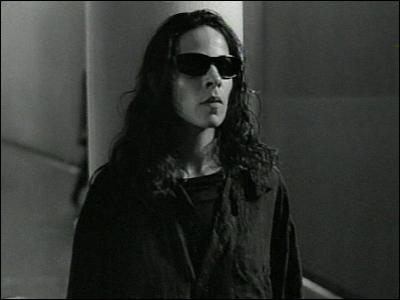
In Abel Ferrara’s take on the vampire genre, vampirism is a metaphor for drug addiction (and Aids). Together with regular collaborator Nicholas St. John, who wrote the screenplay, Ferrara explores the mean streets of New York once again. Amidst dope peddlers and junkies listening to Cypress Hill, the philosophy student Kathleen is bitten by the sardonic vampire Casanova (Annabella Sciorra).

Her turning into a hungry vampire is a path filled with suffering. While she is searching for relief from her addiction, she finds that her addiction is her only relief. In a memorable one-scene appearance, vampire Christopher Walken teaches here a few things about addictions (have you read ‘Naked Lunch’?). He practices abstinence and teaches Kathleen that like Tibetans, we can learn to survive on a little. But Kathleen must first go through a massive feeding frenzy at the end of the film before finally finding some relief through religion.

Besides being an unusual, but brilliantly effective genre film, this is also a work of art that deals with deeper questions. Most urgently it asks how we can resist evil. The movie features many references to historical acts of greater evil and – typical for Ferrara – deals with guilt, redemption and Catholicism. The black and white cinematography is beautiful and the cast, not in the least lead actress Lili Taylor, is impressive. But how much you will enjoy the final result will depend on your tolerance for philosophical and religious subject matter. Either way, this is one of Ferrara’s finest works to date.

Rating:

Biography: Abel Ferrara (1951, New York) is a New York artist and filmmaker. He started making amateur films on Super 8 in his teens before making his mark as independent film director with bloody underground films such as The Driller Killer. Ferrara has an independent way of working, uses low budgets, but is still able to attract Hollywood talent for his movies, such as Christopher Walken and Harvey Keitel. His raw, realistic style and controversial content has earned him a position as an important voice in American cult cinema.

Filmography (a selection): Nicky’s Film (1971, short) / 9 Lives of a Wet Pussy (1976) / Not Guilty: For Keith Richards (1977, short doc) / The Driller Killer (1979) / Ms. 45 (1981) / Fear City (1984) / Cat Chaser (1989) / King of New York (1990) / Bad Lieutenant (1992) / Body Snatchers (1993) / The Addiction (1995) / The Funeral (1996) / The Blackout (1997) / New Rose Hotel (1998) / ‘R Xmas (2001) / Mary (2005) / Go Go Tales (2007) / Chelsea on the Rocks (2008, doc) / Napoli, Napoli, Napoli (2009) / Welcome to New York (2014) / Pasolini (2014) / Alive in France (2017, doc) / Piazza Vittorio (2017, doc) / The Projectionist (2019, doc) / Tommaso (2019) / Siberia (2019)