
Director: Sergio Leone
Written by: Dario Argento, Bernardo Bertolucci, Sergio Leone, Sergio Donati
Cast: Claudia Cardinale, Henry Fonda, Jason Robards, Charles Bronson
Year / Country: 1968, Italy, USA
Running Time: 159 mins.
Sergio Leone, master of the spaghetti western, did it again. Only two years after completing the ‘Dollar Trilogy’ with the masterful The Good, The Bad and the Ugly, he is back with an equally impressive Wild West opera. His track record may be small with only seven features, but Leone is probably the only director who completed four masterpieces in a five-year time span. And what a way to end his brilliant streak: Once Upon a Time in the West is without a doubt the greatest testament that the Wild West ever got. It is my favorite movie of all time only after GoodFellas.
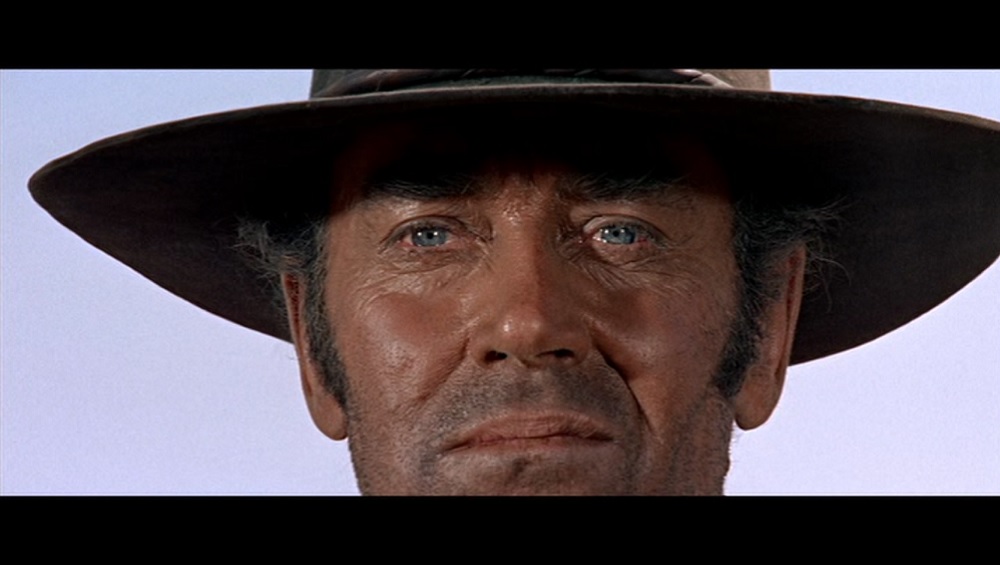
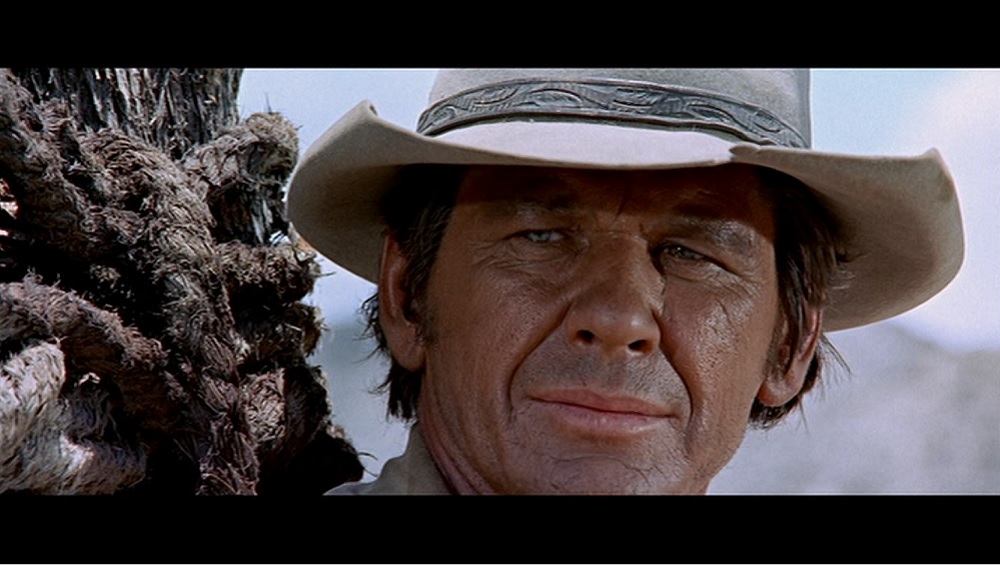
The classic opening scene is almost like a short film in itself, starring Jack Elam, Woody Strode and Al Mulock. The three men in dusters are killing time (and flies) on a train station while waiting for the arrival of the mysterious Harmonica (Bronson), who has unfinished business with their evil boss Frank (Fonda). When Harmonica finally arrives, he effectively rids himself of these three in a hyper tense Mexican standoff. Leone allegedly wanted to cast Clint Eastwood, Eli Wallach and Lee Van Cleef in these roles to symbolically end his ‘Dollar’ period.
Essentially, this is a revenge film, since Harmonica’s quest for vengeance is central to the plot. However, the screenplay is much richer than that. It is about the death of the old West and the birth of the new civilized frontier. Old hardened men, such as Harmonica and Cheyenne (Robards) are replaced by businessmen who build railroads all across the country. These innovations mark the arrival of civilization and culture to the West. But the old mythic heroes won’t go without a good fight. Harmonica spends a good deal of his time trying to seduce Frank to a duel. Their final ‘dance of death’ is one of the greatest pieces of cinema I have ever seen in my life. In a flashback we finally learn why Harmonica is after Frank and his entire identity suddenly makes perfect sense. The music is stunning and to this day can make me tremble. Truly beautiful.
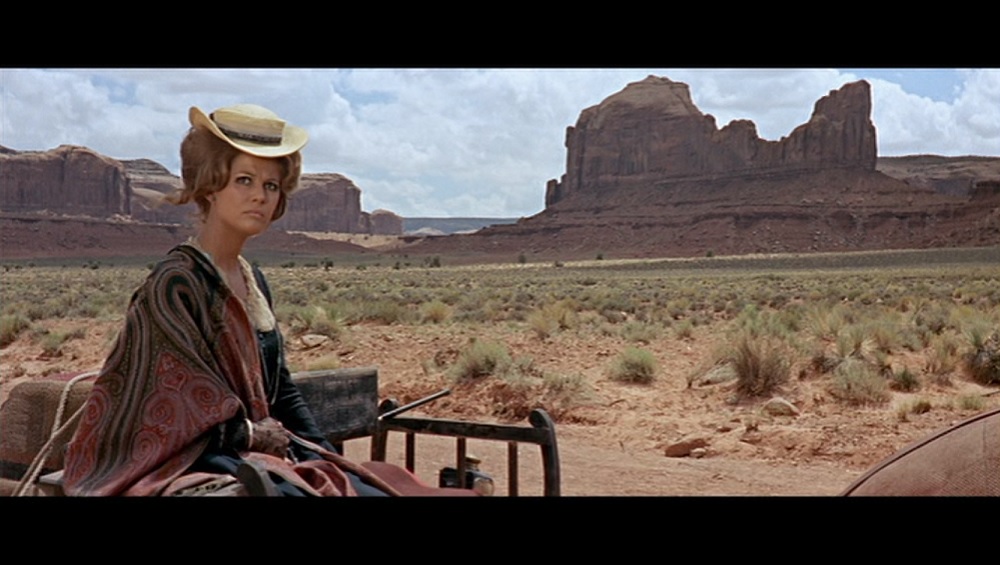
But the film contains many more memorable moments. The introduction of every character for example, is accompanied by their own personal musical score composed by Ennio Morricone, who is once again in top shape. Leone uses the music like a pro with impeccable timing. For example whenever a character dies, the beat stops instantly. As we would expect of Leone, the film also contains fantastic dialogues, peppered with the best oneliners the West has heard before or since. Locations are fantastic as well, ranging from minimalistic to extremely extensive, such as the town of Flagstone where Jill (Cardinale) arrives in the beginning of the film. The beautiful exterior scenes were shot in both Spain and the USA.
Unlike the films from the ‘Dollar Trilogy’, the story of Once Upon a Time in the West is almost entirely made up of references to classic American Westerns. Leone’s style is different as well. It is slower and more sombre in theme, but still very tongue-in-cheek. However successful in Europe upon release, it got negative critical response in the US and was a financial flop. Now it is generally acknowledged as a masterpiece and one of the best westerns ever made. So buy the ticket and take the ride, amigo. To the next station only.
Rating:



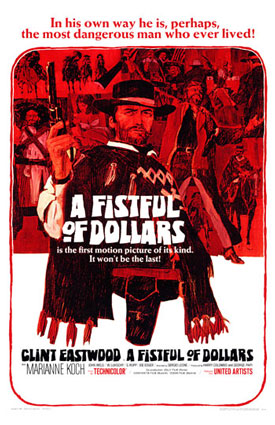
Biography: Sergio Leone (1929, Rome – 1989, Rome) made his debut in the cinema working as a voluntary assistant and extra, among other things, in The Bicycle Thieves by Vittorio de Sica. Later, he became assistant director to Mario Bonnard. In 1959, when Bonnard was ill, he took over from him on the set of The Last Days of Pompeii. In 1961 he directed his first full-length film: The Colossus of Rhodes. But the film that was to bring him to the general attention came out in 1964: A Fistful of Dollars. His next films, For a Few Dollars More and The Good, The Bad and the Ugly complete what came to be known as the Dollars Trilogy and were a great box-office success. He would only make three more films before tragically passing away in 1989. He was taken from us by a heart attack in his house in Rome, while working on an ambitious project for a film on the Siege of Leningrad.
Filmography: The Colossus of Rhodes (1961), A Fistful of Dollars (1964), For a Few Dollars More (1965), The Good, The Bad and the Ugly (1966), Once Upon a Time in the West (1968), A Fistful of Dynamite (1971), Once Upon a Time in America (1984)


 FRAGMENTEN UIT HET SCHEMERLAND