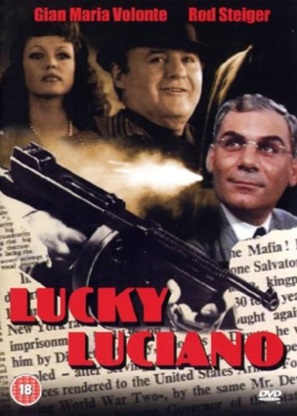
Lucky Luciano (1973)


‘The detailed account of the world’s most powerful gangster who built an empire on a sea of blood.’

Directed by:
Francesco Rosi

Written by:
Jerome Chodorov
Tonino Guerra
Lino Iannuzzi
Francesco Rosi

Cast:
Gian Maria Volonté (Charles ‘Lucky’ Luciano), Vincent Gardenia (Colonel Charles Poletti), Rod Steiger (Gene Giannini), Charles Cioffi (Vito Genovese), Larry Gates (Judge Herlands), Magda Konopka (Contessa), Dino Curcio (Don Ciccio), Karin Petersen (Igea Lissoni), Edmond O’Brien (Commissioner Harry J. Anslinger), Charles Siragusa (Himself)
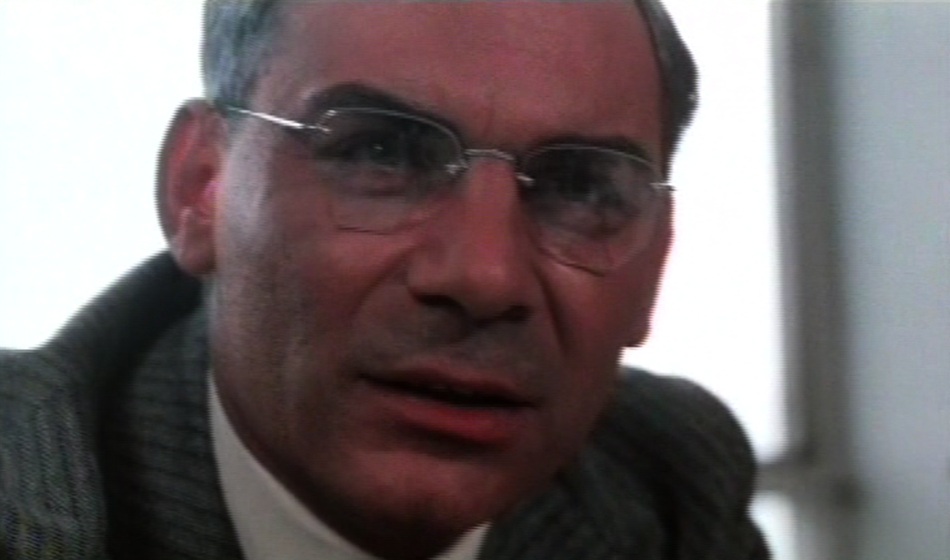
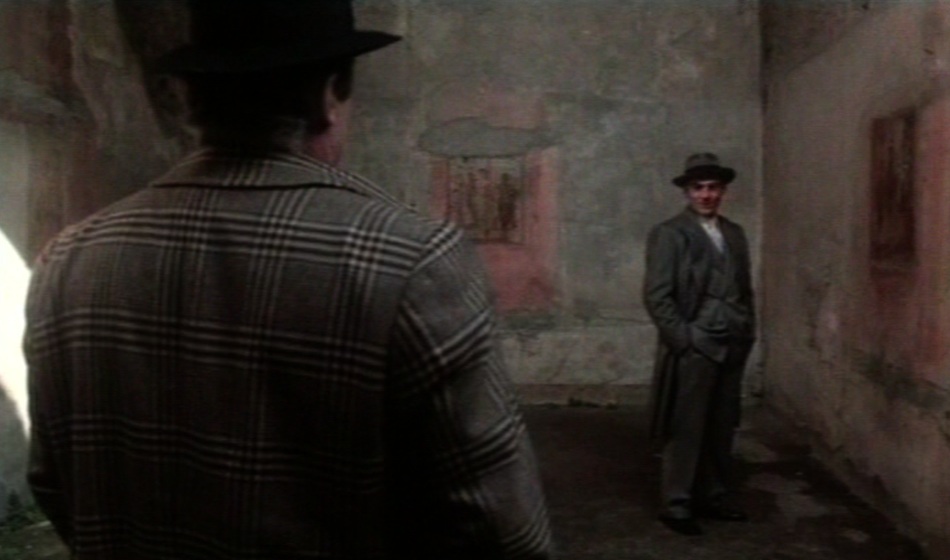
Biography of Charles ‘Lucky’ Luciano, perhaps the biggest mob leader in history. The film focuses on his Sicilian years. After serving a nine-year prison sentence, Luciano is pardoned in 1946 for services rendered to the United States, on the condition that he relocate to Sicily, where he is to spend the rest of his days.

The second part of his career is inevitably less thrilling than his earlier years, when he seized control from the old Sicilian bosses. That first chapter of his life was depicted in the 1991 film Mobsters – not a great film by any means, but far more action-packed than this one.

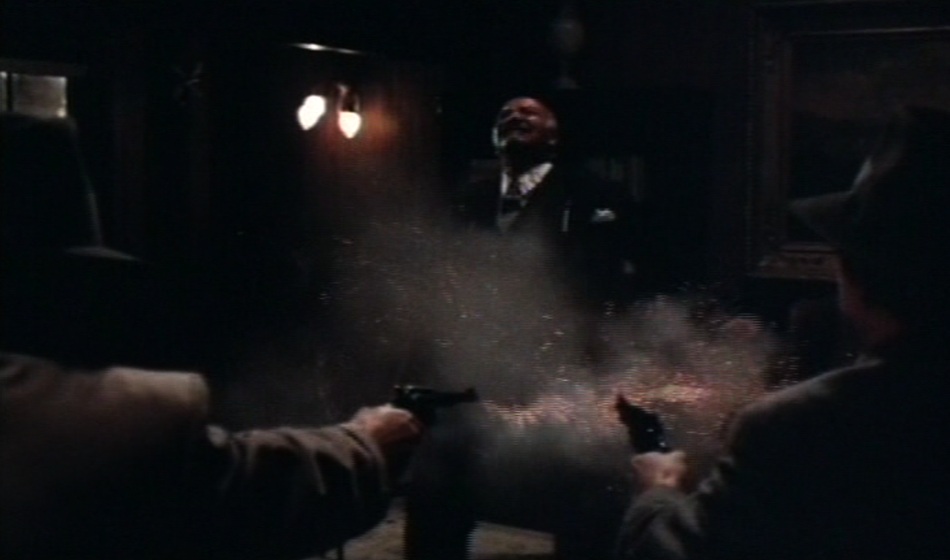
Its opening features a bloody shooting montage in which Luciano has his rivals assassinated during the Night of the Sicilian Vespers. The remainder of that film centers on the Anti-Narcotics Agency’s efforts to make Luciano’s life difficult, while he continues to run his criminal empire from Sicily.

Anyone expecting a typical Mafia plot will need to adjust their expectations. The film plays more like a documentary, with frequent and often confusing jumps in time.

On the positive side, the mobsters are not glamorized; they are shown for what they are. But the unfocused plot and sloppy storytelling offer little insight into what truly drove Luciano, making this not much of a biography at all. A shame, because with its decent cast and professional production design, something far better could have been achieved.

Rating:

Quote:
GENE GIANNINI: “I go to New York they’ll kill me.”

Trivia:
Charles Siragusa, the former chief of the U.S. Narcotics Bureau who tracked down the real Lucky Luciano, stars as himself.

Face to Face

Director: Sergio Sollima
Written by: Sergio Donati, Sergio Sollima
Cast: Tomas Milian, Gian Maria Volonté, William Berger

Year / Country: 1967, Italy / Spain
Running Time: 107 mins.

In Face to Face, director Sergio Sollima delivers a more intellectual take on the spaghetti western while still packing in thrilling action. The film stars Gian Maria Volonté – best known for his villainous roles in A Fistful of Dollars and For a Few Dollars More – as Boston professor Brad Fletcher. Suffering from a severe lung ailment, Fletcher moves to Texas for the warmer climate, only to be taken hostage by the ruthless bandit Solomon Bennet (Tomas Milian) during a daring escape from custody.

Bennet aims to reunite his old gang, including his former ally Siringo (William Berger). However, he’s being hunted by the Pinkertons – a private detective agency – of which Siringo is secretly a member. As Fletcher spends more time with Bennet, his passive nature erodes, and he gradually embraces a life of crime. Once the beast within him is unleashed, he proves to be even more ruthless than his captor.

Sollima weaves a deeper thematic layer into the film, using the western setting to explore the rise of fascism. When Bennet seizes control of a village, he governs it as though it were a single organism, using manipulation and torture to force everyone into submission. His authoritarian rule mirrors historical regimes, adding an unsettling resonance to the story.

However, Fletcher’s transformation isn’t entirely convincing, likely due to the film’s extensive edits – the original cut ran 2.5 hours. His shift from an educated, seemingly moral man to a cruel bandit happens too abruptly, making it feel somewhat unearned. That said, Sollima’s direction shines, especially in his handling of the actors. Volonté delivers a controlled and nuanced performance, while Milian exudes charisma in every scene.

Ennio Morricone’s score, while solid, doesn’t quite reach the brilliance of his work with Sergio Leone. However, the film’s opening credit sequence does capture the grandeur of Leone’s westerns, setting the stage for an absorbing experience. Despite some flaws, Face to Face remains an excellent film – thought-provoking, visually compelling, and anchored by strong performances.

Rating:

Biography: Sergio Sollima (1921, Rome) is an Italian filmmaker. Due to his trio of westerns starring Tomas Milian in the mid 60’s (The Big Gundown, Face to Face and Big Gundown 2: Run, Man, Run) he became known as ‘the other Sergio’ – the third most important director of spaghetti westerns, after Sergio Leone and Sergio Corbucci. Sollima began in cinema as a scriptwriter on Italian sword and sandal epics such as Ursus (1961) and The Ten Gladiators (1963). He directed two spy movies to capitalize on the popularity of the James Bond films. Then he started making spaghetti westerns and action / crime films such as The Family starring Charles Bronson and Telly Savalas. Later in his career he moved more towards television work.

Filmography (a selection): L’amore difficile (1962, segment ‘L’avventura di un soldato’), Agente 3S3, passaporto per l’inferno (1965), Agente 3S3, massacre al sole (1966), Requiem per un agente segreto (1966), The Big Gundown (1966), Face to Face (1967), Big Gundown 2: Run, Man, Run, The Family (1970), Devil in the Brain (1972), Revolver (1973), Sandokan (1976, TV-episodes), The Black Corsair (1976), Steps of Love (1989), Berlin ’39 (1993)

A Bullet for the General

Director: Damiano Damiani
Written by: Salvatore Laurani (story), Franco Solinas (adaptation)
Cast: Gian Maria Volonté, Klaus Kinski, Martine Beswick, Lou Castel

Year / Country: 1966, Italy
Running Time: 113 mins.

Zapata Westerns are a subgenre of the Spaghetti Western. They deal with political themes and play against the backdrop of the Mexican Revolution between around 1910 and 1920, the years of the famous Mexican revolutionary Emiliano Zapata, after whom the genre is named. Famous examples include; Sergio Curbucci’s Companeros and The Mercenary, and Sergio Leone’s A Fistful of Dynamite. A Bullet for the General is an early contribution to the genre and is regarded as one of the best.

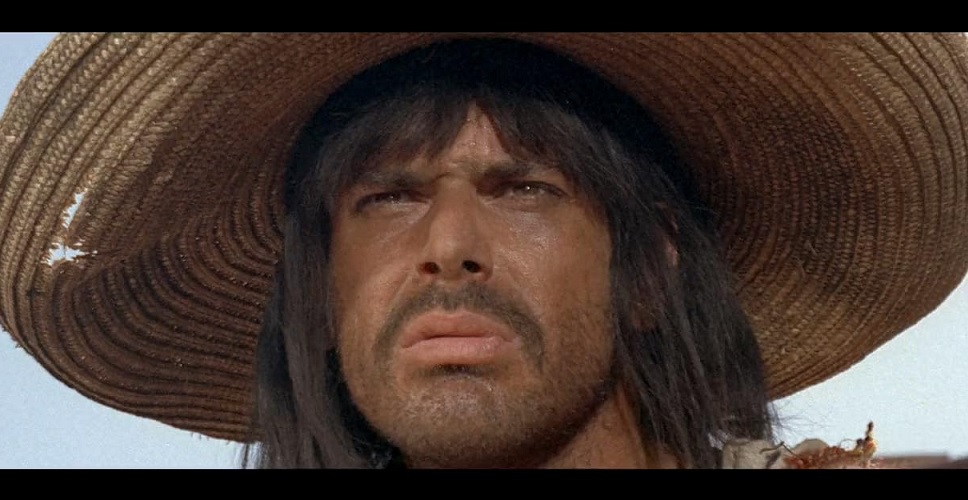
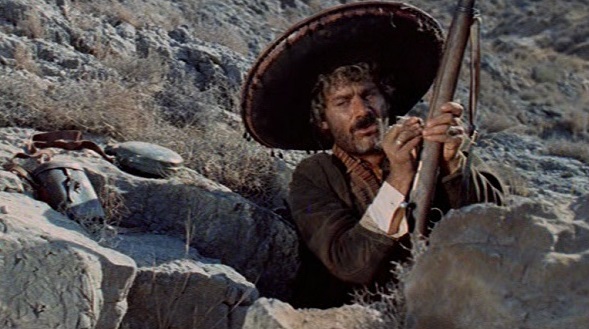
It deals with a group of cutthroat bandits, led by El Chuncho (Volonté). Their job is to steal guns for the revolutionary general Elias. During a violent train raid, they pick up young American Tate (Castel), who they take along with them as a welcome addition to their crew. What they don’t know is that Tate is secretly an assassin hired by the Mexican government to kill Elias with the golden bullet he carries with him.

Starring two actors familiar in the Spaghetti Western genre, namely the man with the characteristic laugh Gian Maria Volonté (Ramón Rojo in A Fistful of Dollars and El Indio in For a Few Dollars More) and, Klaus Kinski (The Great Silence, and also For a Few Dollars More), it became extremely popular in Europe, though butchered for both political and content reasons in overseas markets. The film makes many references to the Vietnam War. The character Tate for example is meant to represent the CIA’s interventions in Latin America.

A Bullet for the General is a fiesta with guns. Composer Luis Enriquez Bacalov (Django, Il Postino, Kill Bill) has provided a cheerful musical score, while El Chuncho and his bandits kill more Mexicans than The Wild Bunch. This is how a revolution works; misery and death contrast with joy and celebration. It is only difficult to sympathise with these hard characters. My general thought during the movie was therefore; ‘so, let’s kill this general and get it over with.’ A lot was made up by the excellent action and production design, and the final scene also delivers some heartfelt (and needed) emotion.

Rating:

Biography: Damiano Damiani (1922, Pasiano, Italy) is an Italian screenwriter, director and actor. He won awards for several of his films, such as the Mafia drama The Pizza Connection. In the eighties he also made the renowned mini-series La Piovra (The Octopus) about a prosecutor’s battle with the Mafia. This successful series ran for eight series on RAI Uno and turned out to be one of Italy’s best selling series abroad.

Filmography (a selection): The Hit Man (1960), Lipstick (1960), The Empty Canvas (1963), Strange Obsession (1966), A Bullet for the General (1966), The Day of the Owl (1968), The Most Beautiful Wife (1970), How to Kill a Judge (1974), A Genius, Two Partners and a Dupe (1975), Goodbye and Amen (1977), A Man on His Knees (1978), The Warning (1980), The Octopus (1984, mini-series), The Pizza Connection (1985), The Inquiry (1986), Massacre Play (1989), Angel With a Gun (1992), Killers on Holiday (2002)

For a Few Dollars More

Director: Sergio Leone
Written by: Fulvio Morsella, Sergio Leone, Luciano Vincenzoni
Cast: Clint Eastwood, Lee Van Cleef, Gian Maria Volontè

Year / Country: 1965, Italy, Spain, West Germany
Running Time: 126 mins.

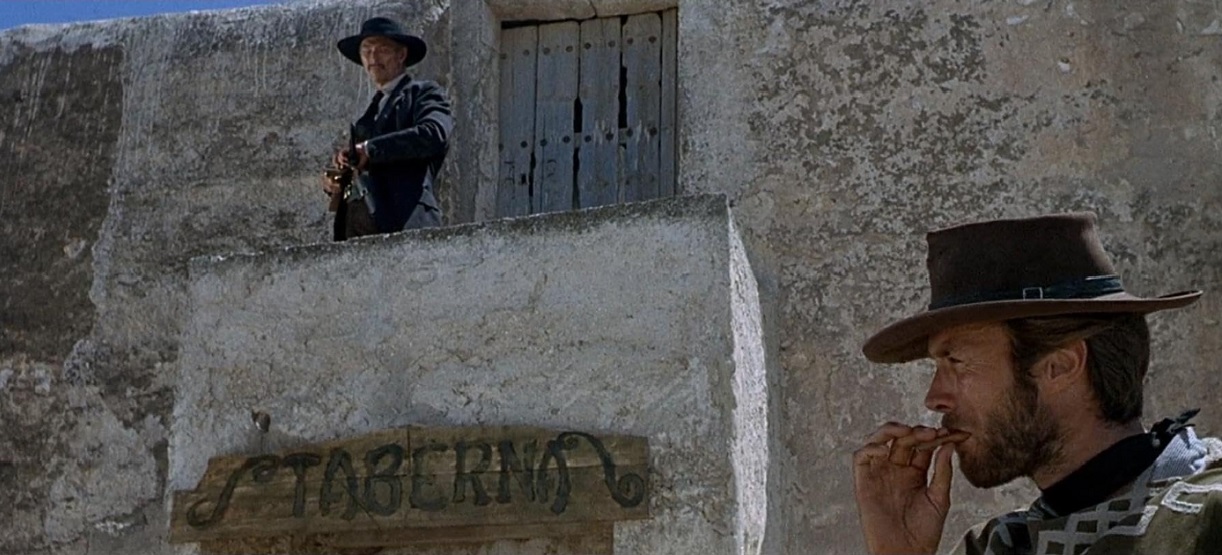
A credit sequence can make or break a movie, and I’ve always loved the one that opens For a Few Dollars More. A lone rider approaches in an extreme long shot. Suddenly, a rifle cracks, the rider falls, and the horse gallops off. Then Ennio Morricone’s score bursts in, and the credits roll. Simple, yet brilliant.

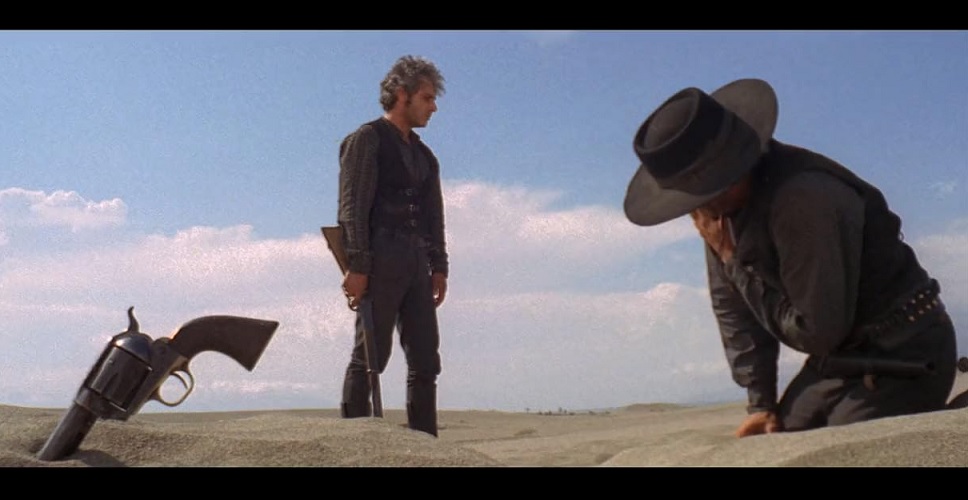
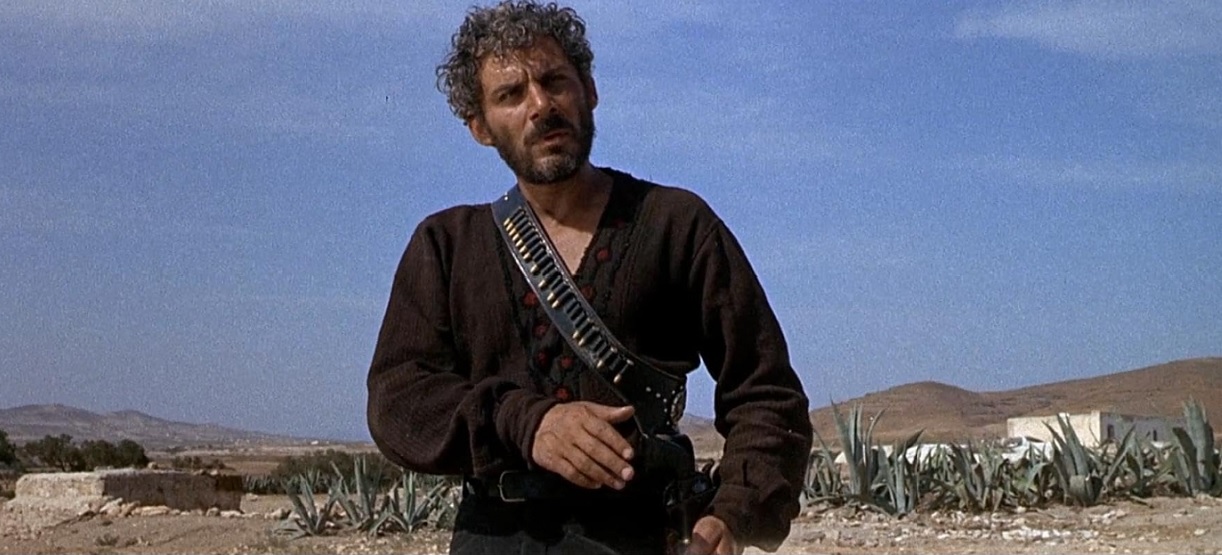
Next, a title card appears: “Where life had no value, death, sometimes, had its price. That is why the bounty killers appeared.” In the first half hour, we’re introduced to the film’s three central figures. Colonel Mortimer (Lee Van Cleef) and Monco (Clint Eastwood) are rival bounty hunters who form an uneasy alliance to take down the deranged bandit El Indio (Gian Maria Volontè).

This second installment in Sergio Leone’s world-famous ‘Dollars Trilogy’ is a tense, action-packed rollercoaster. Just one year after the excellent A Fistful of Dollars, Leone delivers an even more stylish and accomplished Western. It’s also the funniest film of his career.

The decision to cast Lee Van Cleef as Eastwood’s ultra-cool counterpart was inspired. Few actors could match Eastwood’s screen presence, but Van Cleef not only holds his own, he arguably matches him in sheer badassery. Volontè, already a memorable villain in A Fistful of Dollars, turns in an even more manic, menacing performance here. His gang of outlaws, including a wonderfully twitchy Klaus Kinski, adds further flavor to the mix.

If the film has a flaw, it’s that its pacing is occasionally uneven. Some sequences, like the El Paso bank heist, drag a bit. But this is a minor gripe in a film overflowing with memorable moments, sharp dialogue, and unforgettable characters. Leone’s blend of style, suspense, and morbid humor has rarely been better.

And the ending – well, no spoilers – but suffice to say, it’s one of those perfectly twisted moments that’s sure to leave a massive grin on your face.

Rating:

Biography: Sergio Leone (1929, Rome – 1989, Rome) made his debut in the cinema working as a voluntary assistant and extra, among other things, in The Bicycle Thieves by Vittorio de Sica. Later, he became assistant director to Mario Bonnard. In 1959, when Bonnard was ill, he took over from him on the set of The Last Days of Pompeii. In 1961 he directed his first full-length film: The Colossus of Rhodes. But the film that was to bring him to the general attention came out in 1964: A Fistful of Dollars. His next films, For a Few Dollars More and The Good, The Bad and the Ugly complete what came to be known as the Dollars Trilogy and were a great box-office success. He would only make three more films before tragically passing away in 1989. He was taken from us by a heart attack in his house in Rome, while working on an ambitious project for a film on the Siege of Leningrad.

Filmography: The Colossus of Rhodes (1961), A Fistful of Dollars (1964), For a Few Dollars More (1965), The Good, The Bad and the Ugly (1966), Once Upon a Time in the West (1968), A Fistful of Dynamite (1971), Once Upon a Time in America (1984)