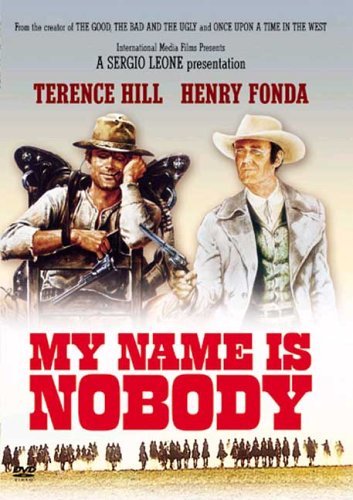
My Name is Nobody

Director: Tonino Valerii
Written by: Fulvio Morsella, Ernesto Gastaldi
Cast: Henry Fonda, Terence Hill, Jean Martin, R.G. Armstrong

Year / Country: 1973, Italy, France, West Germany
Running Time: 111 mins.

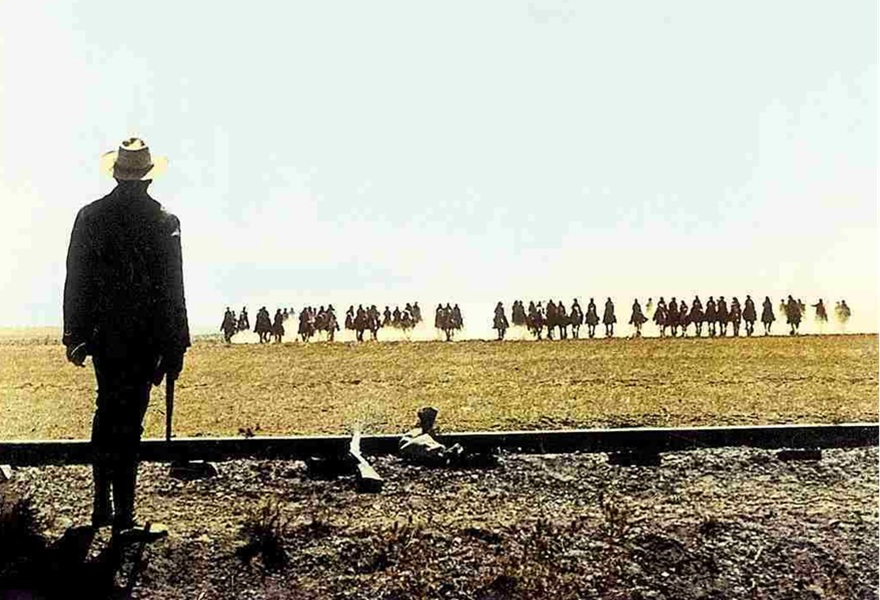
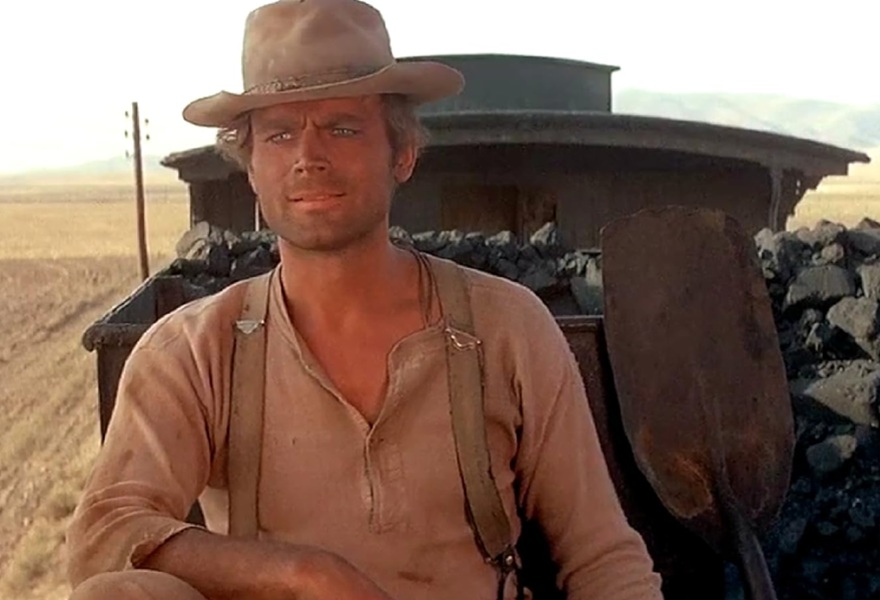
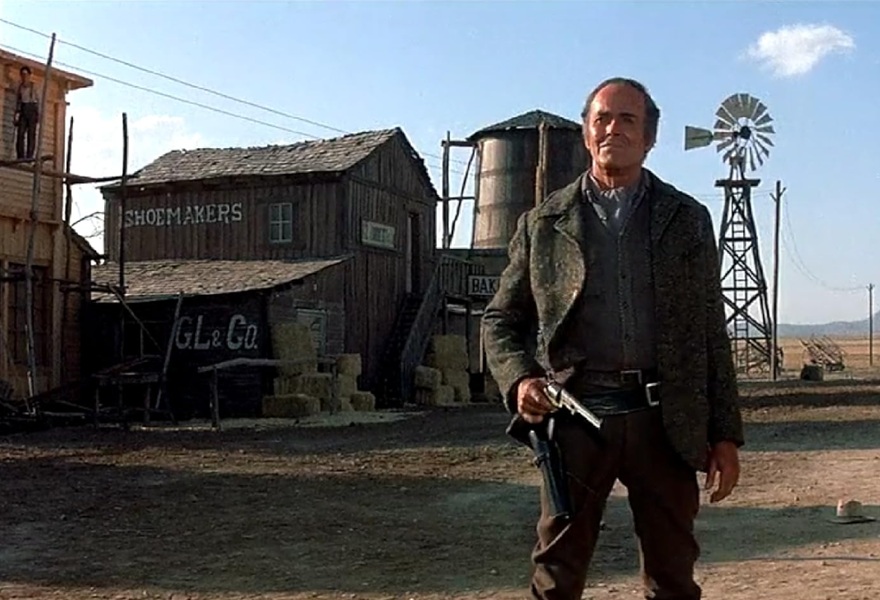
New Mexico, 1898. The Legendary gunslinger Jack Beauregard (Henry Fonda) wants to leave the Wild West behind him and retire to Europe. But the strange loner Nobody (Terence Hill) wants his personal hero to go out in style. He sets everything in motion, so Jack can take on the infamous Wild Bunch.

During the seventies, the Italian comedy-western became a way more popular genre than the more serious spaghetti’s. Master of the spaghetti western Sergio Leone and his team then decided to make the ultimate ‘joke’ western themselves. The casting of comedy man Hill and old westerner Ford, makes clear the contrast between the old dying West and the new West.

Although some of the slapstick comedy feels forced and somewhat copied from the ‘Trinity’ films, producer Leone and director Tonino Valerii still managed to create a successful homage to the genre. This is largely due to the excellent chemistry between the two leads and the classic musical score by Ennio Morricone. The brilliant composer parodies everything in his score, from Wagner’s Ride of the Valkyries to his own Harmonica theme. It became one of his most popular scores.

There are also plenty of inside jokes; the bad guys are named ‘The Wild Bunch’; Sam Peckinpah’s name is on a tombstone; the excessive use of duster coats; etc. Leone also directed the opening scene himself, which is a direct homage to the famous opening scene of his classic Once Upon a Time in the West.

Altogether, My Name is Nobody is a fine testament to the glory of the spaghetti western as well as the Hill / Spencer comedy days of the Italian Wild West.

Rating:

Biography: Tonino Valerii (1934, Teramo, Italy) was born as Antonio Valerii. In 1964, he worked as an uncredited assistant director for Sergio Leone on A Fistful of Dollars. In 1966 he made his directorial debut with spaghetti western Taste For Killing. He would direct about fifteen films in his career, but will be most remembered for his westerns, including My Name is Nobody and A Reason To Live, A Reason To Die!.

Filmography (a selection): Taste for Killing (1966), Days of Wrath (1967), The Price of Power (1969), A Girl Called Jules (1970), My Dear Killer (1972), A Reason to Live, a Reason to Die! (1972), My Name is Nobody (1973), The Hired Gun (1976), Sahara Cross (1977), T.I.R. (1984, TV-episodes), Savage Attack (1986), Unscrupulous (1986), Sicilian Connection (1987), Vacation in Hell (1997)
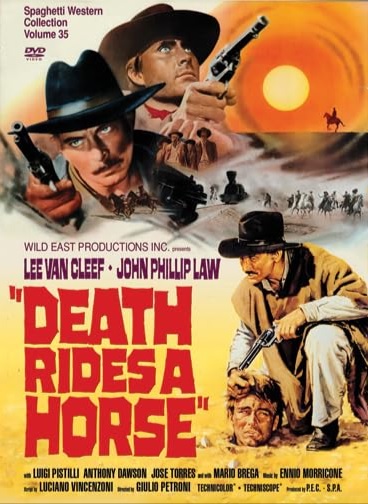
Death Rides a Horse

Director: Giulio Petroni
Written by: Luciano Vincenzoni
Cast: John Phillip Law, Lee Van Cleef, Mario Brega, Luigi Pistilli

Year / Country: 1967, Italy
Running Time: 110 mins.

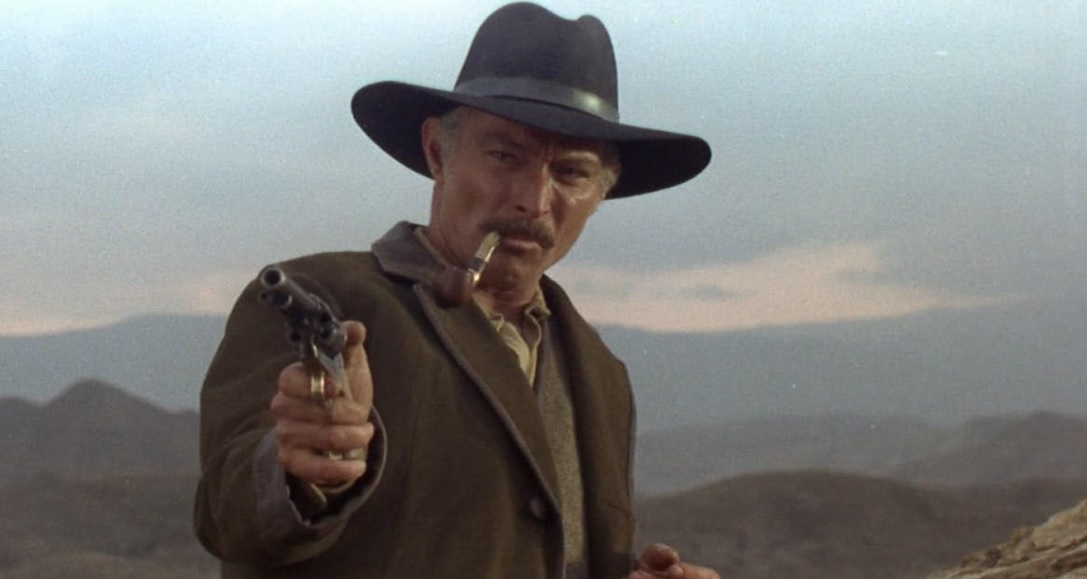
In this gritty spaghetti western, a violent band of outlaws robs and murders a family, leaving their young son Bill (John Phillip Law) scarred and thirsting for vengeance. Fifteen years later, Bill has honed his skills as a sharpshooter, ready to hunt down the men responsible. But he’s not the only one seeking retribution. Ryan (Lee Van Cleef), a former outlaw betrayed by the same gang and imprisoned for fifteen years, is after payback – not in blood, but in compensation for his lost time.

When Bill eliminates gang leader Burt Cavanaugh (Anthony Dawson), Ryan shifts his focus to the remaining members for his payout. However, they’re unwilling to part with the cash, forcing an uneasy alliance between the two avengers. Together, Bill and Ryan set out to settle the score, but Bill is still in the dark about a critical piece of the puzzle.

The film follows the classic spaghetti western recipe: sweeping desert vistas with looming cliffs, a great score by Ennio Morricone, and a steady stream of duels and shootouts. While it’s less violent than many of its contemporaries and lacks the visual flair of Sergio Leone’s masterpieces, the story holds its own with a solid plot, strong performances – Lee Van Cleef is always excellent – and well-executed action sequences.

The windswept town of El Viento serves as the backdrop for an intense, extended finale reminiscent of The Seven Samurai – though not as grandiose. It’s a satisfying conclusion that caps the film’s blend of gritty revenge and campy Italian charm.

Rating:

Biography: Giulio Petroni (1920, Rome) is an Italian director who made name with a number of spaghetti westerns of which Tepepa (starring Tomas Milian and Orson Welles!) and Death Rides a Horse are the most liked and well-known. He also made drama, comedy and horror films, sometimes working under the pseudonym Jeremy Scott.

Filmography: La centro chilometri (1959), I piaceri dello scapoli (1960), I soliti rapinatori a Milano (1961), Always On Sunday (1962), Death Rides a Horse (1967), Tepepa (1968), And for a Roof a Sky Full of Stars (1968), Night of the Serpent (1970), Non commettere atti impuri (1971), Crescete e moltiplicatevi (1972), Life is Tough, Eh Providence? (1972), Labbra di lurido blu (1975), La profezia (1978)

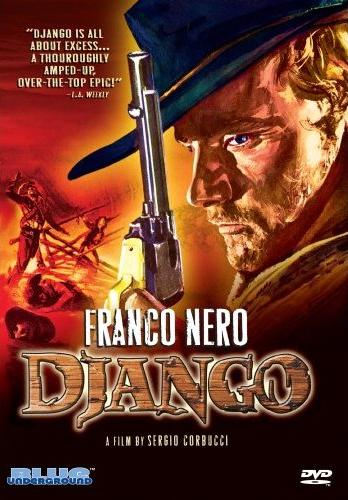
Django

Director: Sergio Corbucci
Written by: Sergio Corbucci, Bruno Corbucci, Franco Rossetti
Cast: Franco Nero, José Bódalo, Loredana Nusciak, Ángel Álvarez

Year / Country: 1966, Italy / Spain
Running Time: 88 mins.

In 1964, Sergio Leone, an Italian director, redefined the western genre with A Fistful of Dollars, a groundbreaking remake of Akira Kurosawa’s Yojimbo. Starring a then-unknown Clint Eastwood, the film introduced audiences to the now-iconic figure of the nameless gunslinger, a drifter who arrives in a town torn apart by a bitter private war. Playing both sides against each other, he emerges victorious, setting the template for the spaghetti western genre.

The overwhelming success of Leone’s film inspired a wave of imitations, varying in quality. Among these, Django (1966) by Sergio Corbucci stands out as one of the best and certainly the most famous. The film borrows heavily from A Fistful of Dollars but adds its own distinctive twist. Instead of a nameless drifter, we meet Django, a mysterious stranger trudging through a desolate landscape while dragging a coffin behind him. His identity is memorably introduced through Louis Bacalov’s haunting theme song, which passionately proclaims his name: Django!

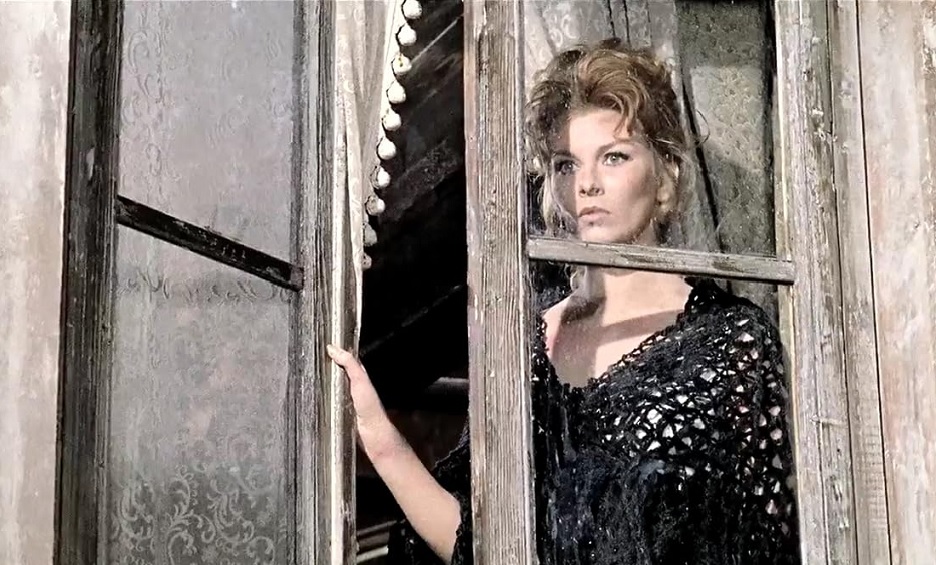
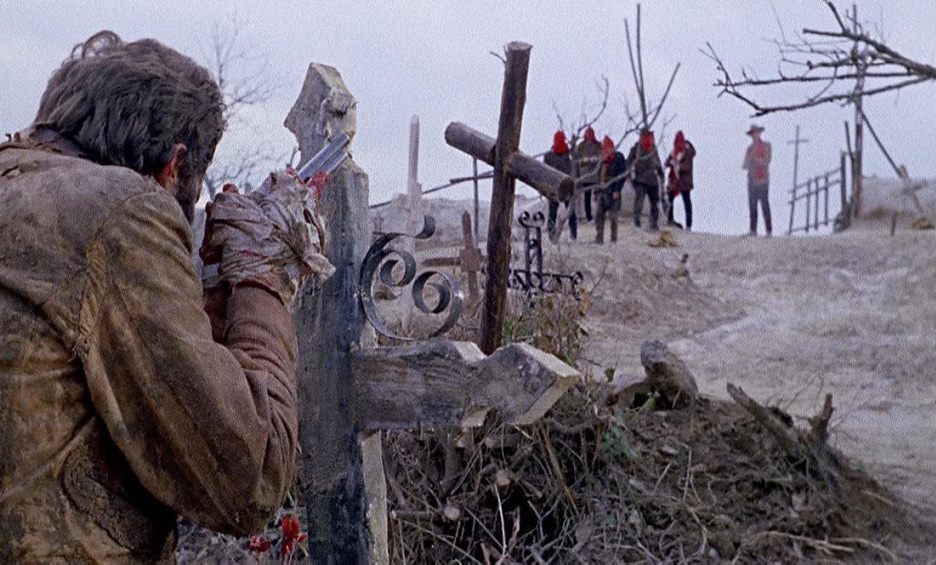
The story follows Django as he rescues a prostitute named Maria from a gang of ruthless outlaws. He escorts her to a ghostly, near-abandoned town where he intends to settle an old score. There, he finds himself caught in a deadly conflict between Mexican revolutionaries and a band of racist Southern renegades led by his arch-nemesis, Major Jackson. Initially siding with the Mexicans to deal a crippling blow to Jackson, Django’s motivations soon come to light, setting the stage for an explosive and tragic finale. By the film’s end, only Django and Maria are left standing amidst the carnage, with the rest buried – literally and figuratively.

What elevates Django almost to the level of Leone’s masterpiece is Corbucci’s skillful execution of the genre’s defining elements. Franco Nero delivers a magnetic performance as the titular anti-hero, rivaling Eastwood’s cool and detached gunslinger. Bacalov’s score, while perhaps not as iconic as Ennio Morricone’s, is equally evocative, setting the perfect tone for the film. The supporting cast adds depth to the world, and the stylish, gritty action sequences ensure the audience remains captivated throughout.

Of course, Django is also notorious for its graphic violence, which was shocking for its time. Though modern audiences might find it less visceral compared to contemporary standards, the film doesn’t shy away from bloodshed. That said, the lack of squibs – a result of budgetary constraints – dampens some of the impact, as the gunplay often lacks the visual punch of more modern films.

The film’s pacing does falter slightly in the middle act, where the tension and momentum dip after the gripping opening sequences. However, Corbucci makes up for this with a thrilling and memorable climax that reaffirms the film’s status as a cult classic.

In conclusion, Django is a quintessential spaghetti western and a must-watch for fans of the genre. With its unforgettable protagonist, striking visuals, and bleak tone, it stands as a testament to the creativity and enduring appeal of Italian westerns.

Rating:

Biography: Sergio Corbucci (1926, Rome – 1990, Rome) was, alongside Sergio Leone, one of the most prominent directors of spaghetti westerns. Born and raised in Rome, Corbucci played a crucial role in popularizing the genre, particularly through his iconic films Django (1966) and The Great Silence (Il Grande Silenzio, 1968). He frequently collaborated with actor Franco Nero, crafting memorable characters and stories that helped define the genre’s unique style. His B-movies are characterized by brutal violence, surrealist and apocalyptic production design, black humour and politically left symbolism. Corbucci was a fanatical Marxist and many of his films show the hopelessness of the revolution. He kept working in Italy throughout his career and most of his films were barely released abroad. He died in Rome in 1990.

Filmography (a selection): Foreign Earth (1954), Water’s Love (1954), Supreme Confession (1957), Angel’s Sky (1957), Duel of the Titans (1961), Toto, Peppino and La Dolce Vita (1961), The Son of Spartacus (1963), Grand Canyon Massacre (1963), Django (1966), Navajo Joe (1966), The Mercenary (1968), The Great Silence (1968), Compañeros (1970), Bandera Bandits (1972), The White, the Yellow, and the Black (1975), The Payoff (1978), Super Fuzz (1980), My Darling, My Dearest (1982), Days of Inspector Ambrosio (1988)

The Good, the Bad and the Ugly

Director: Sergio Leone
Written by: Agenore Incrocci, Furio Scarpelli, Luciano Vincenzoni, Sergio Leone
Cast: Clint Eastwood, Lee Van Cleef, Eli Wallach

Year / Country: 1966, Italy, Spain, West Germany
Running Time: 171 mins.

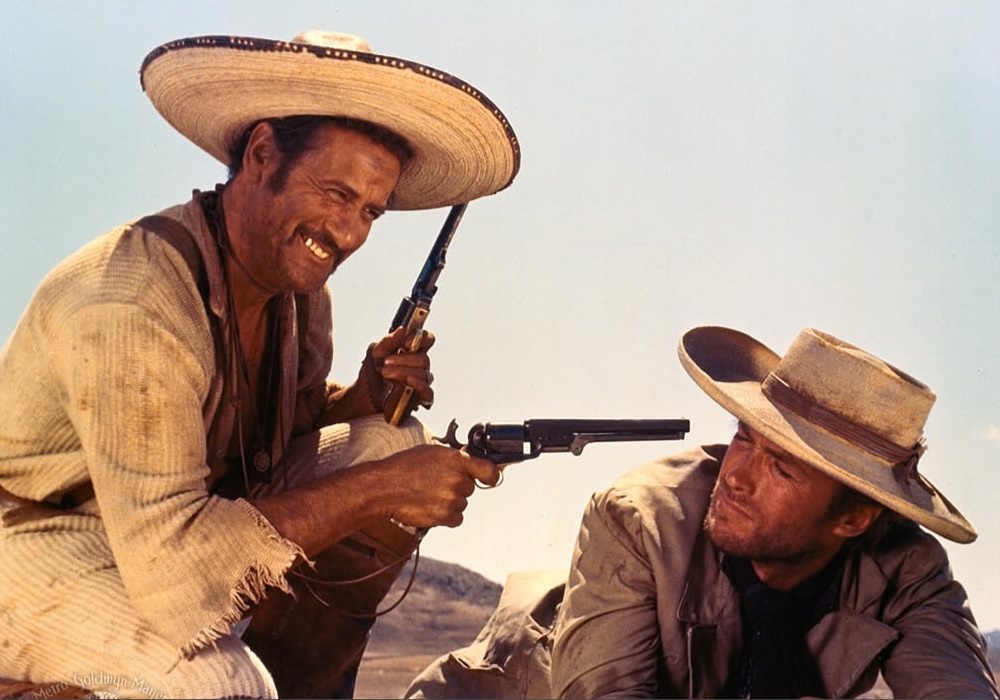
The final installment of Sergio Leone’s ‘Dollars Trilogy’ is a critically acclaimed masterpiece. Set against the backdrop of the American Civil War, three men are on a relentless quest for a fortune in hidden gold. While soldiers fight to determine the fate of a nation, these men pursue only their own interests. They are the Good, the Bad, and the Ugly. While the last two labels are fitting, the first is somewhat misleading – Eastwood’s character, Blondie, may be more principled than the others, but he doesn’t hesitate to kill when it serves his purpose.

Blondie and Tuco (the Ugly, played by Eli Wallach) form a crooked partnership built on mutual betrayal. After one double-cross nearly costs Blondie his life, they’re forced into a reluctant alliance when each comes into possession of a crucial piece of information that could lead them to the buried treasure. Meanwhile, Angel Eyes (the Bad, portrayed by Lee Van Cleef) is hot on their trail, determined to claim the gold for himself. The three men converge on a remote graveyard, where their fates – and the money – await.

Compared to the earlier two films in the trilogy, The Good, the Bad and the Ugly offers a surprisingly human touch. Eastwood’s Blondie reveals a gentler side, cradling a kitten in his hat and comforting a dying soldier with a cigar. Tuco, though undeniably a scoundrel, becomes unexpectedly poignant during a visit to the monastery where he confronts his estranged brother. This and other scenes flesh out Tuco into the trilogy’s most fully realized character, brought to life in a brilliant performance by Wallach. Despite the emotional depth, Leone doesn’t abandon his signature blend of dark humor and biting cynicism.

Visually, the film is a triumph. Leone’s mastery shines in the rhythmic interplay between intimate close-ups and sweeping, war-torn landscapes that seem to take on a character of their own – harsh and unforgiving, especially evident in the desert sequence where Blondie’s face is scorched by the sun. From the bold, stylized opening credits to the iconic, ritualistic cemetery shootout, the cinematography and editing are innovative and arresting. Add to that Ennio Morricone’s legendary score, and you have one of the most influential films of all time.

The Good, the Bad and the Ugly has been released in various versions, but nothing less than the full three-hour cut does it justice. Only in its complete form does this epic ‘horse opera’ truly come into its own. This is cinema as it was meant to be.

Rating:

Biography: Sergio Leone (1929, Rome – 1989, Rome) made his debut in the cinema working as a voluntary assistant and extra, among other things, in The Bicycle Thieves by Vittorio de Sica. Later, he became assistant director to Mario Bonnard. In 1959, when Bonnard was ill, he took over from him on the set of The Last Days of Pompeii. In 1961 he directed his first full-length film: The Colossus of Rhodes. But the film that was to bring him to the general attention came out in 1964: A Fistful of Dollars. His next films, For a Few Dollars More and The Good, The Bad and the Ugly complete what came to be known as the Dollars Trilogy and were a great box-office success. He would only make three more films before tragically passing away in 1989. He was taken from us by a heart attack in his house in Rome, while working on an ambitious project for a film on the Siege of Leningrad.

Filmography: The Colossus of Rhodes (1961), A Fistful of Dollars (1964), For a Few Dollars More (1965), The Good, The Bad and the Ugly (1966), Once Upon a Time in the West (1968), A Fistful of Dynamite (1971), Once Upon a Time in America (1984)