Martin

Director: George A. Romero
Written by: George A. Romero
Cast: John Amplas, Lincoln Maazel, Christine Forrest

Year / Country: 1977, USA
Running Time: 91 mins.

See it with someone you’re sure of…

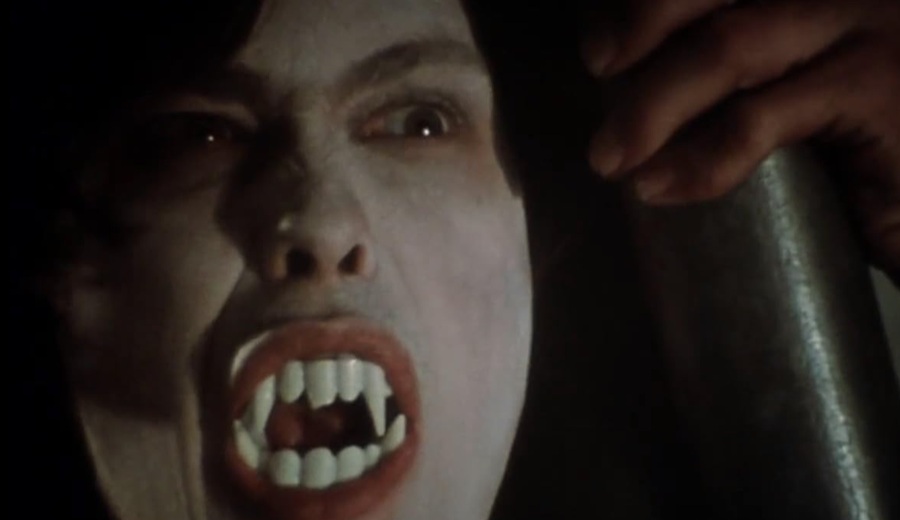
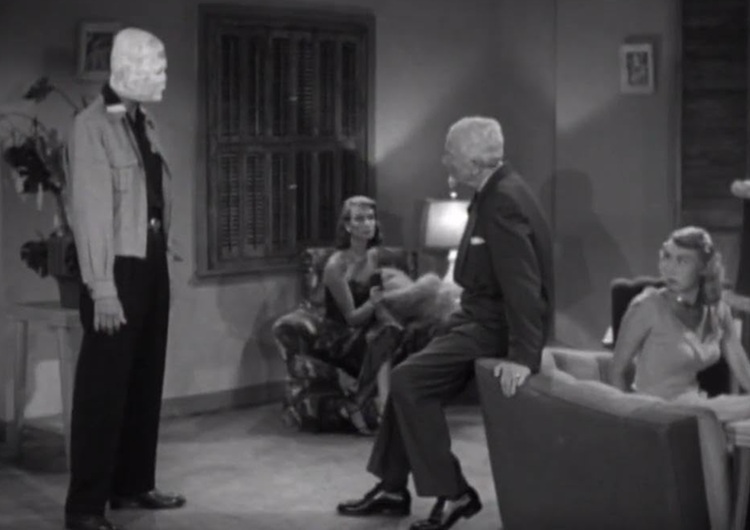
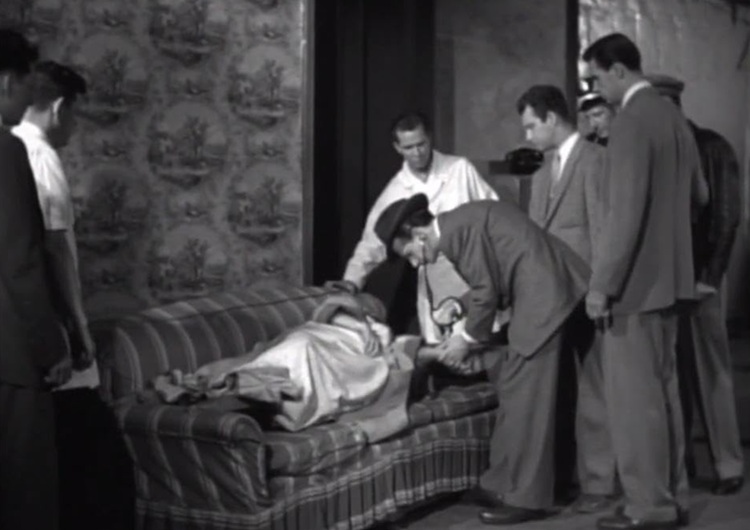
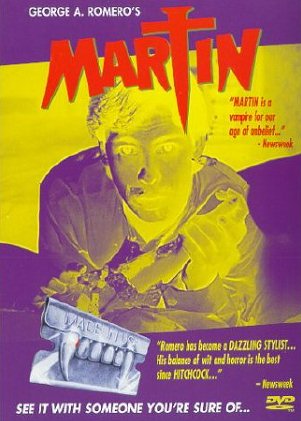
Martin is a vampire. At least that is what he appears to be. But why does he use a needle to put his victims to sleep? And why cut their wrists with a razor in order to drink their blood? Where are his fangs? There are answers to these questions. Because he slices their wrists he is able to stage a suicide. These logical explanations apply to everything Martin does. That way you can never be sure he is a real vampire. He could also be faking it or merely thinking he is one.

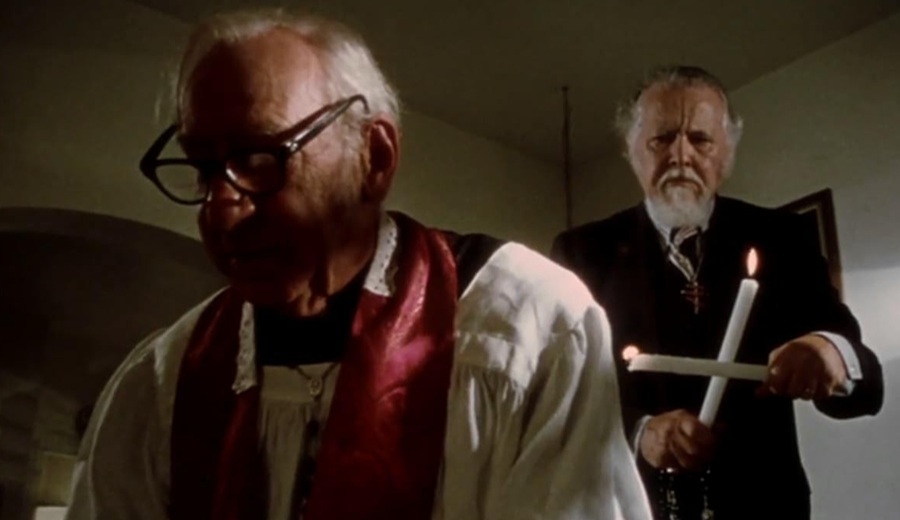
Martin’s eldest cousin Tada Cuda, where he goes to stay in Pittsburgh, certainly thinks he is a real nosferatu. He tells him that he will first save his soul and then destroy him. Vampirism is a family curse, we later learn, and Martin is one of the last living specimens. But the more we see of him, the less we believe he is for real. Every vampire myth is discarded by Martin. He eats garlic, can hold a crucifix and sunlight only mildly bothers him. He tells his cousin that there is no magic. It is just a sickness.

Black & white flashbacks later reveal that Martin is an old vampire, if he is not imagining it. In these flashbacks, Martin is chased by an angry mob after he gets caught feeding on human blood. This is where Romero’s point is becoming clearer. Monsters are created by man so they don’t have to deal with their own vileness. It is much more convenient to have a scapegoat like Martin. Romero himself said about Martin: “Man’s barbarism seems quick to rise, particularly when justified by some ‘cause’ of righteous society, as witness the heinous acts performed in wartime.”

That humans are more monsters than monsters is a theme that finds its way in almost all of Romero’s films. But rarely more successful than in Martin, which is considered his finest film besides the ‘Dead’ series. I agree. It is atmospheric as hell and especially when it reaches a horrible and confrontational ending, Romero’s point comes across perfectly.

Rating:

Biography: George A. Romero (1940, New York – 2017, Toronto), who lived in Pittsburgh, made his feature debut with Night of the Living Dead. It was a low budget zombie movie that was both groundbreaking and shocking in its time. Quickly, it became a major horror classic. He then directed some smaller, personal films in which he often combined horror and social commentary. In 1978 he topped the success of Night of the Living Dead with his brilliant follow-up Dawn of the Dead. In the eighties his career stagnated a bit when he created the third part in his zombie series Day of the Dead. It was a failure both commercially and critically. In 2005 Romero made a small comeback with Land of the Dead. Romero died in 2017.

Filmography (a selection): Night of the Living Dead (1968), There’s Always Vanilla (1971), Season of the Witch (1972), The Winners (1973, TV episodes), The Crazies (1973), O.J. Simpson: Juice on the Loose (1974, TV doc), Martin (1977), Dawn of the Dead (1978), Knightriders (1981), Creepshow (1982), Day of the Dead (1985), Monkey Shines (1988), Two Evil Eyes (1990) [with Dario Argento], The Dark Half (1993), Bruiser (2000), Land of the Dead (2005), Diary of the Dead (2007), Survival of the Dead (2009)

The Addiction

Director: Abel Ferrara
Written by: Nicholas St. John
Cast: Lili Taylor, Christopher Walken, Annabella Sciorra, Edie Falco

Year / Country: 1995, USA / Argentina
Running Time: 79 mins.

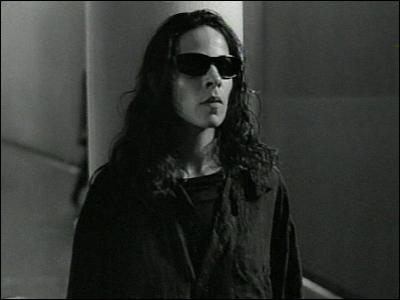
In Abel Ferrara’s take on the vampire genre, vampirism is a metaphor for drug addiction (and Aids). Together with regular collaborator Nicholas St. John, who wrote the screenplay, Ferrara explores the mean streets of New York once again. Amidst dope peddlers and junkies listening to Cypress Hill, the philosophy student Kathleen is bitten by the sardonic vampire Casanova (Annabella Sciorra).

Her turning into a hungry vampire is a path filled with suffering. While she is searching for relief from her addiction, she finds that her addiction is her only relief. In a memorable one-scene appearance, vampire Christopher Walken teaches here a few things about addictions (have you read ‘Naked Lunch’?). He practices abstinence and teaches Kathleen that like Tibetans, we can learn to survive on a little. But Kathleen must first go through a massive feeding frenzy at the end of the film before finally finding some relief through religion.

Besides being an unusual, but brilliantly effective genre film, this is also a work of art that deals with deeper questions. Most urgently it asks how we can resist evil. The movie features many references to historical acts of greater evil and – typical for Ferrara – deals with guilt, redemption and Catholicism. The black and white cinematography is beautiful and the cast, not in the least lead actress Lili Taylor, is impressive. But how much you will enjoy the final result will depend on your tolerance for philosophical and religious subject matter. Either way, this is one of Ferrara’s finest works to date.

Rating:

Biography: Abel Ferrara (1951, New York) is a New York artist and filmmaker. He started making amateur films on Super 8 in his teens before making his mark as independent film director with bloody underground films such as The Driller Killer. Ferrara has an independent way of working, uses low budgets, but is still able to attract Hollywood talent for his movies, such as Christopher Walken and Harvey Keitel. His raw, realistic style and controversial content has earned him a position as an important voice in American cult cinema.

Filmography (a selection): Nicky’s Film (1971, short) / 9 Lives of a Wet Pussy (1976) / Not Guilty: For Keith Richards (1977, short doc) / The Driller Killer (1979) / Ms. 45 (1981) / Fear City (1984) / Cat Chaser (1989) / King of New York (1990) / Bad Lieutenant (1992) / Body Snatchers (1993) / The Addiction (1995) / The Funeral (1996) / The Blackout (1997) / New Rose Hotel (1998) / ‘R Xmas (2001) / Mary (2005) / Go Go Tales (2007) / Chelsea on the Rocks (2008, doc) / Napoli, Napoli, Napoli (2009) / Welcome to New York (2014) / Pasolini (2014) / Alive in France (2017, doc) / Piazza Vittorio (2017, doc) / The Projectionist (2019, doc) / Tommaso (2019) / Siberia (2019)

The Violent Years

Director: William Morgan
Written by: Edward D. Wood Jr.
Cast: Jean Moorhead, Barbara Weeks, Arthur Millan

Year / Country: 1956, USA
Running Time: 57 mins.

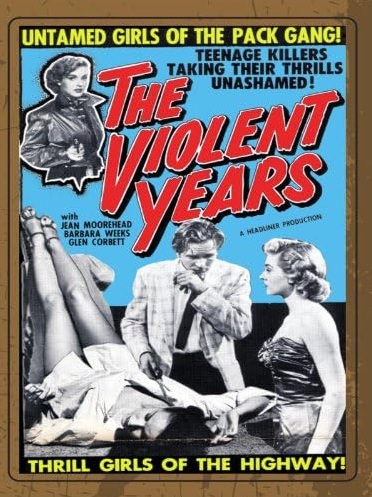
The Violent Years is about a gang of four girls that commit violent robberies and take their thrills unashamed! The script was written by none other than the famed Ed Wood. Although he didn’t direct this himself, it has certainly got his signature all over it. Especially, the patronising voice-over is typical of Mr. Wood.

The theme of the movie is juvenile delinquency. Parents should bring up good children as their duty to society. Kids should strive for good citizenship, self restraint, politeness and loyalty. The way in which this message is delivered is laughable though. It reminds of Reefer Madness with the condescending tone that is insulting to the viewer. And then I haven’t even mentioned the terrible acting and clumsy direction.

At the end of the movie, when the leader of the gang Paula is in front of the judge, you realise the true ridiculousness of the film. The speech of the judge goes something like this; ‘The Thrillseeker is much like the drug addict. With his continual increase of dosage until its climax: a murder.’ I had expected more from Wood than a piece of propaganda about juvenile delinquency sold as an exploitation movie. Don’t waste your time on this one folks.

Rating:

Biography: William Morgan (1899, London – 1964) worked as an editor from the early thirties till the late fifties. His resume contains films of many different genres, including science fiction movies like Tarantula and the TV-show Lassie. In the forties he directed quite a few features, including a series of westerns starring Gene Autry. His final film as a director was the Ed Wood scripted film The Violent Years.

Filmography: Bowery Boy (1940), Mr. District Attorney (1941), The Gay Vagabond (1941), Sunset in Wyoming (1941), Mercy Island (1941), Sierra Sue (1941), Cowboy Serenade (1942), Heart of the Rio Grande (1942), Home in Wyomin’ (1942), Stardust on the Sage (1942), Bells of Capistrano (1942), Secrets of the Underground (1942), Headin’ for God’s Country (1943), Fun & Fancy Free (1947), The Violent Years (1956)

Jail Bait

Director: Edward D. Wood Jr.
Written by: Alex Gordon, Edward D. Wood Jr.
Cast: Lyle Talbot, Dolores Fuller, Herbert Rawlinson, Steve Reeves

Year / Country: 1954, USA
Running Time: 71 mins.

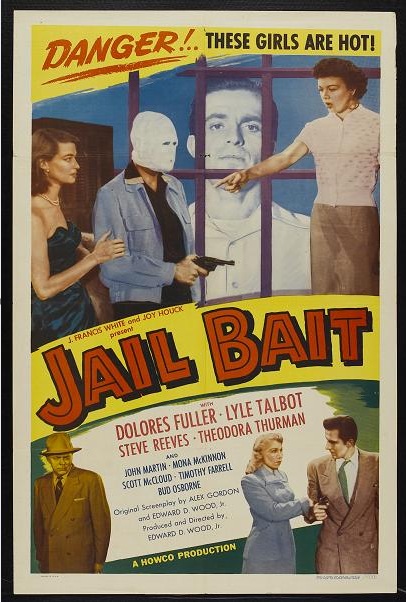
Marilyn Gregor bails out her brother Don who was caught carrying a gun. It appears that Don is under the influence of the hardened gangster Vic Brady. After Don’s release, he and Vic commit another robbery that ends with the death of an ex-cop. Don is now a murderer. His father, who is a plastic surgeon, wants to help him, but Vic has plans of his own.

Jail Bait is one of the least Ed Woodish films Ed Wood made. It is a crime movie for one thing, rather than a sci-fi / monster flick. There is also no Lugosi, less wooden acting and a whole lot less mistakes, although there are still plenty. One typical Wood element is still there: the message. This time it is ‘Never carry a gun or you will use it.’

The story gets kind of ridiculous as it unfolds, but hardly fails to amuse. The cast holds up well too. Fuller, who appears in many of Wood’s movies, is an enjoyable presence and the ending is really hilarious. Those elements together make this second feature film directed by Wood, one of his finer achievements.

Rating:

Biography: Edward D. Wood Jr. (1924, New York – 1978, Hollywood) is widely considered as the world’s worst filmmaker. His low-budget movies, usually mergers of science-fiction and horror, are mostly complete disasters in terms of production values and continuity. In 1994, Edward D. Wood Jr. became the subject of an amazing biopic directed by Tim Burton called Ed Wood.

Filmography: The Sun Was Setting (1951, TV short), Trick Shooting with Kenne Duncan (1953, short), Glen or Glenda (1953), Crossroad Avenger: The Adventures of the Tuscon Kid (1953, TV short), Boots (1953, short), Jail Bait (1954), Bride of the Monster (1955), The Night the Banshee Cried (1957, short), Final Curtain (1957, short), Plan 9 from Outer Space (1959), Night of the Ghouls (1959), The Sinister Urge (1960), Take It Out in Trade (1970), The Young Marrieds (1971), Necromania: A Tale of Weird Love (1971)