A Bullet for the General

Director: Damiano Damiani
Written by: Salvatore Laurani (story), Franco Solinas (adaptation)
Cast: Gian Maria Volonté, Klaus Kinski, Martine Beswick, Lou Castel

Year / Country: 1966, Italy
Running Time: 113 mins.

Zapata Westerns are a subgenre of the Spaghetti Western. They deal with political themes and play against the backdrop of the Mexican Revolution between around 1910 and 1920, the years of the famous Mexican revolutionary Emiliano Zapata, after whom the genre is named. Famous examples include; Sergio Curbucci’s Companeros and The Mercenary, and Sergio Leone’s A Fistful of Dynamite. A Bullet for the General is an early contribution to the genre and is regarded as one of the best.

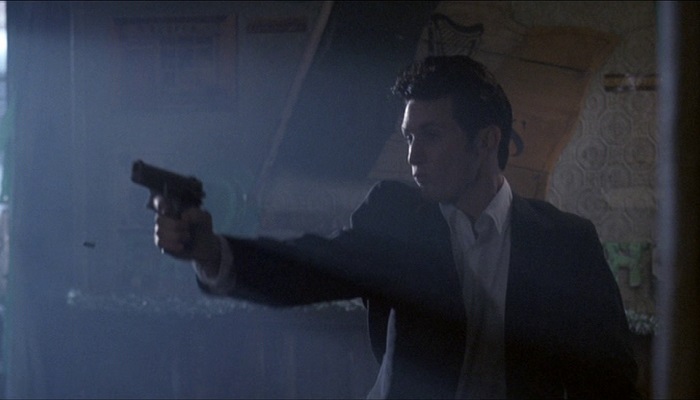
It deals with a group of cutthroat bandits, led by El Chuncho (Volonté). Their job is to steal guns for the revolutionary general Elias. During a violent train raid, they pick up young American Tate (Castel), who they take along with them as a welcome addition to their crew. What they don’t know is that Tate is secretly an assassin hired by the Mexican government to kill Elias with the golden bullet he carries with him.

Starring two actors familiar in the Spaghetti Western genre, namely the man with the characteristic laugh Gian Maria Volonté (Ramón Rojo in A Fistful of Dollars and El Indio in For a Few Dollars More) and, Klaus Kinski (The Great Silence, and also For a Few Dollars More), it became extremely popular in Europe, though butchered for both political and content reasons in overseas markets. The film makes many references to the Vietnam War. The character Tate for example is meant to represent the CIA’s interventions in Latin America.

A Bullet for the General is a fiesta with guns. Composer Luis Enriquez Bacalov (Django, Il Postino, Kill Bill) has provided a cheerful musical score, while El Chuncho and his bandits kill more Mexicans than the Wild Bunch. This is how a revolution works; misery and death contrast with joy and celebration. It is only difficult to sympathise with these hard characters. My general thought during the movie was therefore; ‘so, let’s kill this general and get it over with.’ A lot was made up by the excellent action and production design, and the final scene also delivers some heartfelt (and needed) emotion.

Rating:

Biography: Damiano Damiani (1922, Pasiano, Italy) is an Italian screenwriter, director and actor. He won awards for several of his films, such as the Mafia drama The Pizza Connection. In the eighties he also made the renowned mini-series La Piovra (The Octopus) about a prosecutor’s battle with the Mafia. This successful series ran for eight series on RAI Uno and turned out to be one of Italy’s best selling series abroad.

Filmography (a selection): The Hit Man (1960), Lipstick (1960), The Empty Canvas (1963), Strange Obsession (1966), A Bullet for the General (1966), The Day of the Owl (1968), The Most Beautiful Wife (1970), How to Kill a Judge (1974), A Genius, Two Partners and a Dupe (1975), Goodbye and Amen (1977), A Man on His Knees (1978), The Warning (1980), The Octopus (1984, mini-series), The Pizza Connection (1985), The Inquiry (1986), Massacre Play (1989), Angel With a Gun (1992), Killers on Holiday (2002)

The Great Silence


Director: Sergio Corbucci
Written by: Mario Amendola, Bruno Corbucci, Sergio Corbucci, Vittoriano Petrilli
Cast: Jean-Louis Trintignant, Klaus Kinski, Frank Wolff, Luigi Pistilli

Year / Country: 1968, Italy / France
Running Time: 101 mins.

A spaghetti western in the snow? Now that is distinctive and that’s exactly what The Great Silence is. Besides its Fargo-like landscape, the ending is another element that sets it miles apart from its contemporaries. You definitely don’t see that one coming!

Director Sergio Corbucci clearly has a political streak, as he already demonstrated in earlier films and does again here. The misuse of the law by populists to eliminate the people they hate forms the core of the story. That said, Corbucci never neglects style. Right from the opening – a brutally bloody ambush shoot-out in the snow – it’s obvious this is going to be a kick-ass western. Corbucci’s films are certainly comparable to Sergio Leone’s, only with more blood, grit, and brains splattering across the screen.

Storywise, The Great Silence is essentially a revenge movie. The ‘Silence’ of the title is a mute ranger who hunts the vulturous bounty killers profiting from the ‘dead or alive’ law of the time. Silence always provokes his enemies into drawing first, ensuring the law can’t touch him. The truly ‘great’ character, however, is Tigrero, played by the terrific Klaus Kinski. This evil, weaselly bastard is impossible not to love to hate, and he alone already lifts the film above the average B-western. Beautiful cinematography and Ennio Morricone’s haunting score do the rest.

Rating:

Biography: Sergio Corbucci (1926, Rome – 1990, Rome) was, alongside Sergio Leone, one of the most prominent directors of spaghetti westerns. Born and raised in Rome, Corbucci played a crucial role in popularizing the genre, particularly through his iconic films Django (1966) and The Great Silence (Il Grande Silenzio, 1968). He frequently collaborated with actor Franco Nero, crafting memorable characters and stories that helped define the genre’s unique style. His B-movies are characterized by brutal violence, surrealist and apocalyptic production design, black humour and politically left symbolism. Corbucci was a fanatical Marxist and many of his films show the hopelessness of the revolution. He kept working in Italy throughout his career and most of his films were barely released abroad. He died in Rome in 1990.

Filmography (a selection): Foreign Earth (1954), Water’s Love (1954), Supreme Confession (1957), Angel’s Sky (1957), Duel of the Titans (1961), Toto, Peppino and La Dolce Vita (1961), The Son of Spartacus (1963), Grand Canyon Massacre (1963), Django (1966), Navajo Joe (1966), The Mercenary (1968), The Great Silence (1968), Compañeros (1970), Bandera Bandits (1972), The White, the Yellow, and the Black (1975), The Payoff (1978), Super Fuzz (1980), My Darling, My Dearest (1982), Days of Inspector Ambrosio (1988)

Turkey Shoot

Director: Brian Trenchard-Smith
Written by: Jon George, Neill D. Hicks
Cast: Steve Railsback, Olivia Hussey, Michael Craig

Year / Country: 1982, Australia
Running Time: 90 mins.

If you are in the mood for some real Ozzy exploitation (ozploitation), you should definitely check out Turkey Shoot. Ridiculously bloody kills? Check. Boobs? Check. Campy humour? Check. Turkey Shoot, also known as Escape 2000, definitely scores quite high on the benchmark for exploitation value.

The screenplay for this movie was not a contender for the Academy Awards. Because of the overpopulation, society has plunged into chaos. To regain control, the government sets up tightly run camps. Whoever doesn’t conform to society’s rules is sent to one of these DEATHCAMPS (Well, that is what it comes down to anyway).

Three innocents are sent to Camp 97 for re-education and behaviour modification. Their stay there is supposed to make them ‘better assets to society’. However, the main dude (Railsback) keeps on challenging the sadistic camp chief Thatcher, so he and four others are selected for the ‘Turkey Shoot’ in which deviants are hunted by the rich and cruel in the forest surrounding the camp. Railsback’s character turns out to be quite a hard target for the hunters.

The first half of this film is a little boring, but as soon as the Turkey Shoot begins, it gets a lot better. The fun of these manhunt movies is that the hunters (real bastards of course) start out all confident and end up as scared prey. Therefore it is a shame that several of the hunted in this movie make immensely stupid and illogical decisions. Railsback for example leaves a gun behind after defeating a baddie twice!! Still some satisfying kills on both sides ensure a very entertaining second half.

Rating:

Biography: Brian Trenchard-Smith (1946, UK) is an English film and television producer, writer and director. He made a large contribution to the ozploitation era in the mid seventies and eighties. Notable examples of these contributions are BMX Bandits, Turkey Shoot, Death Cheaters and the Australian martial arts (!) movie The Man From Hong Kong. In his long career he made around 40 movies and in addition directed about 35 episodes of TV-shows. He currently lives in Los Angeles.

Filmography (a selection): The Marty Feldman Show (1972, TV), Dare Devils (1973, short), Kung Fu Killers (1974, TV doc), The Man from Hong Kong (1975), Death Cheaters (1976), Stunt Rock (1978), BMX Bandits (1983), Day of the Assassin (1979), Turkey Shoot (1982), Frog Dreaming (1986), Dead-End Drive In (1986), Day of the Panther (1988), Strike of the Panther (1988), Out of the Body (1989), The Siege of Firebase Gloria (1989), Silk Stalkings (1991-92, TV episodes), Night of the Demons 2 (1994), Leprechaun 3 (1995), Flipper (1995-2000, TV episodes), Leprechaun 4: In Space (1997), Britannic (2000, TV), DC 9/11: Time of Crisis (2003, TV), Long Lost Son (2006, TV)

Cult Radar: Part 7

FilmDungeon is glad to explore the video trenches to find that oddball treasure between the piles of crap out there. Of Course, a treasure in this context can also be a film that’s so shockingly bad it’s worth a look, or something so bizarre that cult fans just have to see it. Join us on our quest and learn what we learn. Hopefully we’ll uncover some well-hidden cult gems.

Researched by: Jeppe Kleijngeld

Hell Ride (USA, 2008)

Directed by: Larry Bishop
Written by: Larry Bishop
Cast: Larry Bishop, Michael Madsen, Eric Balfour

Larry Bishop, who played in trashy biker films in the sixties and seventies such as The Savage Seven, Angel Unchained and Chrome and Hot Leather writes, directs and stars in a Tarantinoesque homage to the biker film. In it, a decade long battle between two biker gangs takes place; the Victors, lead by Pistolero (Bishop) Vs. the 666ers, lead by Billy Wings (Vinnie Jones). The concept and promising cast (Michael Madsen, Dennis Hopper, David Carradine) raises expectations, but the execution is far below par. Tarantino should have rewritten the script apart from producing. The dialogues appear to have been written by a 14 year old. There is some humor to be found, but it can hardly make up for the terrible script. Also Bishop is unfit to play the lead role. Interesting trivia: Madsen and Bishop share a scene in Kill Bill: Vol. 2 (2004). Madsen plays Budd and Bishop plays his boss in the strip club scene.

The Host (South Korea, 2006)
OT: Gwoemul

Directed by: Bong Joon-ho
Written by: Baek Chul-hyun, Bong Joon-ho, Ha Jun-won
Cast: Song Kang-ho, Byeon Hie-bong, Ko Ah-sung

On orders of a US doctor, a toxic substance is dumped in the Han River. Four years later in Seoul, ordinary Korean folk are enjoying a leisurely day along the river when the final result reveals itself. In 2006, this entertaining monster movie made a successful journey along the important international film festivals and the tentacles of the host soon attained a large cult following. The Host effectively balances between comedy and campy horror. Only with nearly two hours running time and a main character who screams too much the fun is somewhat lessened. Also a monster that looks like sewer calamari can be hardly called scary. Still, a couple of really good jokes and scenes and its undeniable cult appeal make The Host a worthy contender for the Mega Monster Mash.

Bronson (UK, 2008)

Directed by: Nicolas Winding Refn
Written by: Brock Norman Brock, Nicolas Winding Refn
Cast: Tom Hardy, James Lance, Matt King, Amanda Burton

The wacky British indie flick Bronson gives you the life story of Charles Bronson. No not the movie star YOU CUNT! We’re talking about Britain’s most violent prisoner. Since it is directed by Danish director Nicolas Winding Refn from the violent and brilliant Pusher trilogy, I was kind of expecting a gut-wrenching gorefest. It is not that bad, in fact this is more like a comedy. Crucial to the film is the central character who wants to become famous. He can’t sing and he can’t fucking act. So what does he do? This original idea is brought to the screen with Winding Refn’s usual sense of style. Tom Hardy delivers a knock-out performance as the protagonist. Don’t expect a cliché prison drama and you might find a place in your heart for Bronson. Special mention goes to the soundtrack which includes gems such as ‘It’s a sin’ by Pet Shop Boys.

Zombie Self-Defense Force (Japan, 2006)

Directed by: Naoyuki Tomomatsu
Written by: Chisato Oogawara, Naoyuki Tomomatsu
Cast: Kenji Arai, Norman England, Masayuki Hase, Yû Machimura

On the cover of Zombie Self-Defense Force, this movie is compared to Peter Jackson’s Bad Taste. Although the extreme gore is sometimes similar – though far less creative – this is nothing like Jackson’s first movie. It totally misses a master’s touch – this is amateur night and they know it. Poor acting, horrible no budget FX and very little to enjoy overall. During the first half hour, a few nice character touches promise some cult delight, but as soon as a zombie baby appears (a homage to another Jackson classic), things start to look really bad. Pretty much a disgrace anyway you look at it.

Black Devil Doll (USA, 2007)

Directed by: Jonathan Lewis
Written by: Shawn Lewis, Mitch Mayes
Cast: Heather Murphy, Natasha Talonz, Christine Svendsen

He’s a lover! He’s a killer! He’s a muthafu**in’ puppet! ‘A Lewis Brothers fiasco’, credits state after Mubia, a member of the black power movement, is executed. His last words: ‘I like to eat white butt’. We’re up for something special that is for sure. Mubia is brought back to life by big boob teenager Heather while she is messing around with a Ouija Board. Guess what? The dangerous rapist and murderer returns in puppet form! So, the sexploitation version of Child’s Play begins. Not subtle, but sleazy, nasty and offensive. Black Devil Doll does exactly what it promises to do on the cover. At times it is too dirty, but quite often it is pretty hilarious.


Tom Hardy as Charles Bronson in Bronson