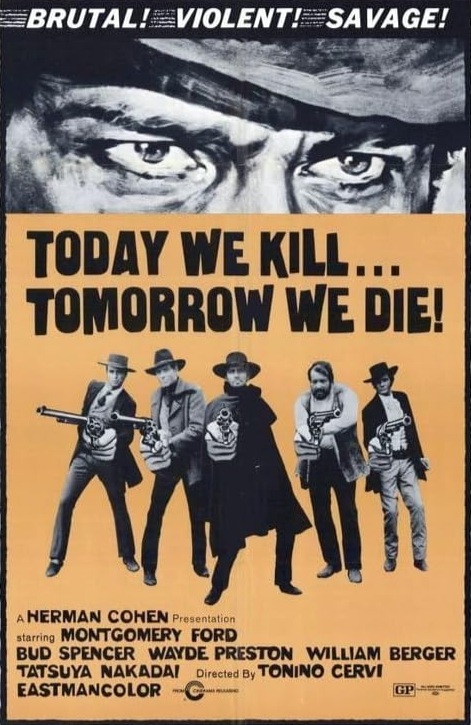
Today We Kill, Tomorrow We Die!

Director: Tonino Cervi
Written by: Dario Argento, Tonino Cervi
Cast: Montgomery Ford, William Berger, Tatsuya Nakadai, Bud Spencer

Year / Country: 1968, Italy
Running Time: 90 mins.

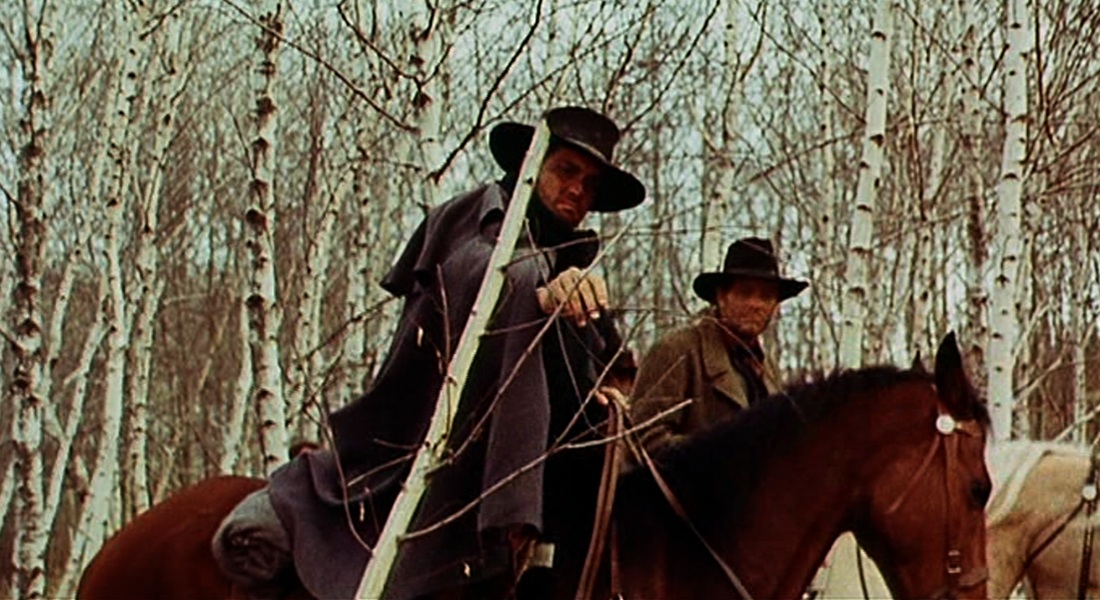
The angry Bill Kiowa (Montgomery Ford) has been in a jail cell for five years, practicing his gun draw with a self made wooden gun. “I don’t have any feelings, except maybe hate”, he tells the sheriff upon his release.

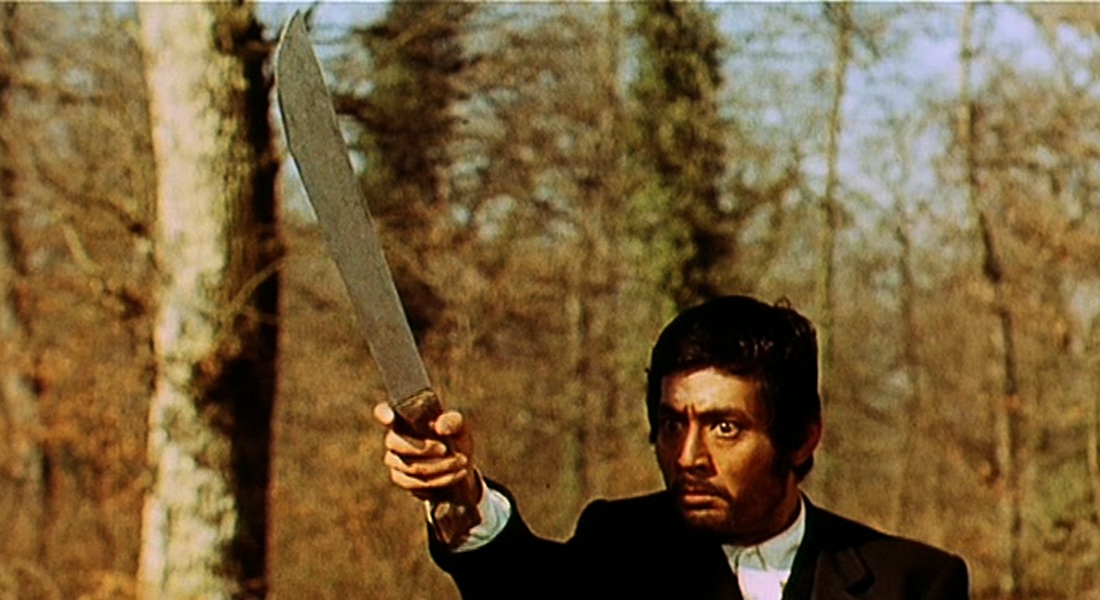
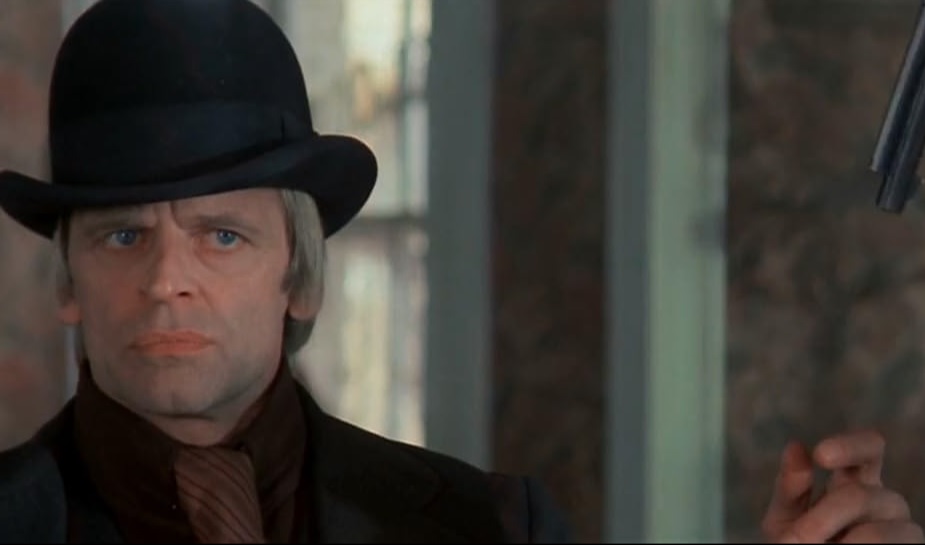
The man Kiowa is after is the evil Elfego (Kurosawa actor Tatsuya Nakadai), who leads a gang of Comancheros, half breeds of Comanche and Mexican descent. Kiowa musters four mercenaries to take on Elfego’s gang, including the giant O’Bannion (an early role from Bud Spencer) and a homosexual card playing gunslinger played by William Berger.

Halfway through the movie, we learn in a black and white flashback why Kiowa wants revenge on Elfego. Sounds familiar? That’s because horror maestro Dario Argento, writer of Once Upon a Time in the West is responsible for the screenplay. The vendetta between the two gangs ends in a beautiful autumn forest. The Comancheros meet a violent end one by one before Kiowa and Elfego have their final confrontation.

Although the story is not very original, the casting, locations and gritty atmosphere make Today We Kill, Tomorrow We Die! an enjoyable feature. Ford makes a good hero, with enough attention paid to his darker personality traits, while Nakadai seemingly enjoys his role as melancholic and perverted villain. The budget was obviously modest, but the excellent cinematography hides this fact well.

Producer Tonino Cervi, who directs his only western here, may not be Leone. But then again who is? He accomplished a stylish and entertaining B-film in the finest revenge tradition.

Rating:

Biography: Tonino Cervi (1929, Milan, Italy – 2002, Siena, Italy) is an Italian writer, producer and director. He collaborated with many famous Italian filmmakers throughout his career, including Federico Fellini and Vittorio De Sica on Boccaccio ‘70.

Filmography: Today We Kill, Tomorrow We Die! (1968), Queens of Evil (1970), La nottata (1974), Chi dice donna, dice donna (1976), Nest of Vipers (1977), The Imaginary Invalid (1979), Il turno (1981), The Naked Sun (1984), The Miser (1990), Looking for Madame Butterfly (1995, TV), Household Accounts (2003)
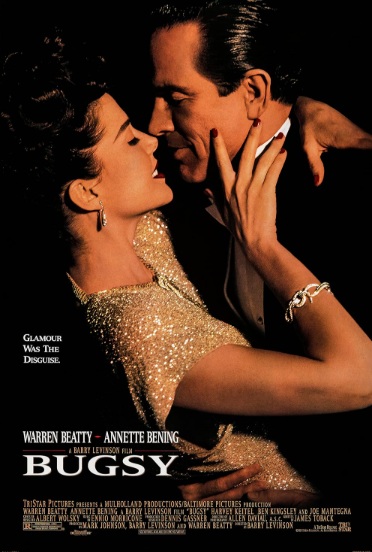
Bugsy (1991)


‘Glamour Was The Disguise’

Directed by:
Barry Levinson

Written by:
Dean Jennings (book)
James Toback (written by)

Cast:
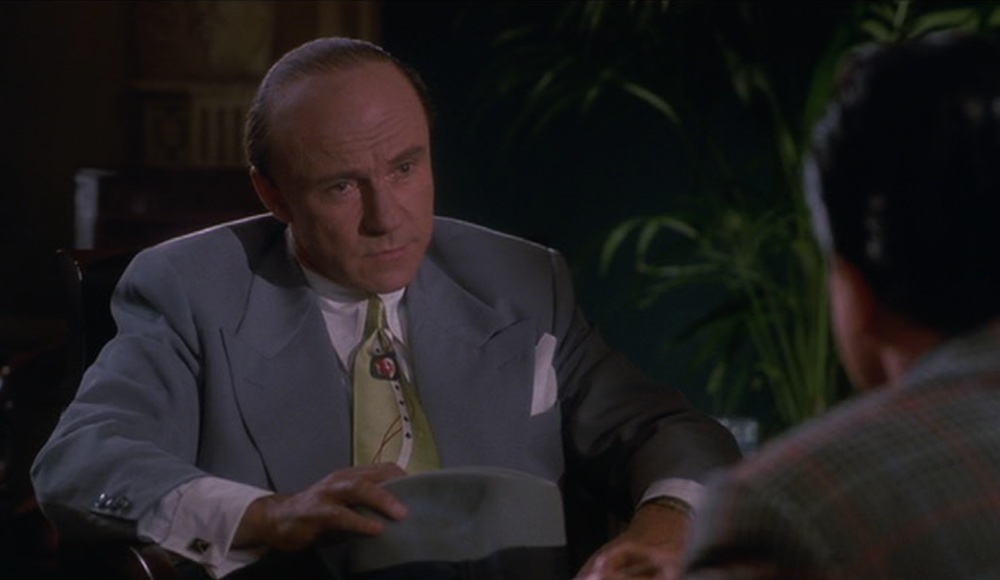
Warren Beatty (Benjamin ‘Bugsy’ Siegel), Annette Bening (Virginia Hill), Harvey Keitel (Mickey Cohen), Ben Kingsley (Meyer Lansky), Elliott Gould (Harry Greenberg), Joe Mantegna (George Raft), Richard Sarafian (Jack Dragna), Bebe Neuwirth (Countess di Frasso), Gian-Carlo Scandiuzzi (Count di Frasso), Wendy Phillips (Esta Siegel)

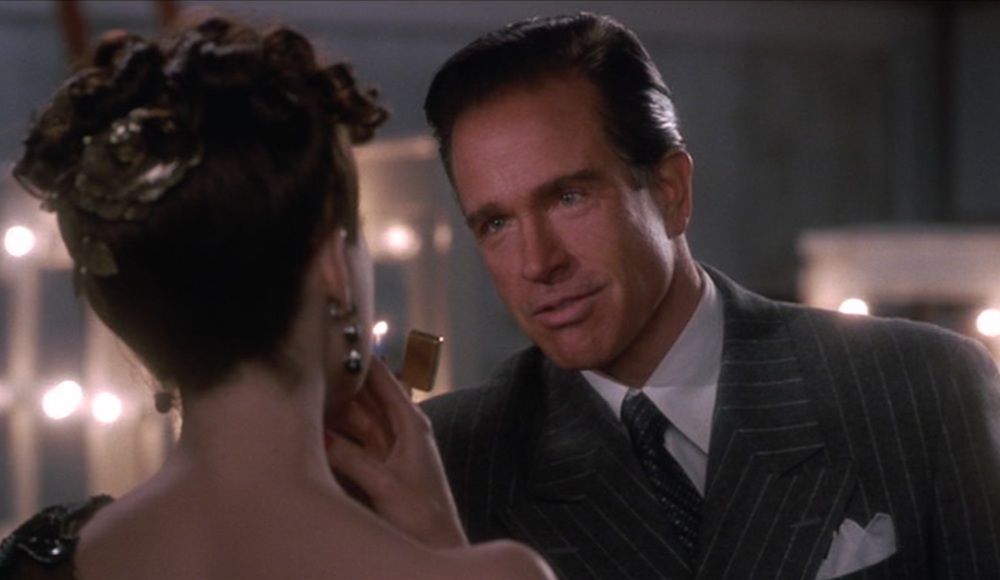
Benjamin ‘Bugsy’ Siegel is a successful member of the largest crime family in the United States. Known as a charismatic killer with a reputation for volatile outbursts, especially when he’s called Bugsy.

He travels to California on behalf of his partners, Lucky Luciano and his loyal, long-time friend Meyer Lansky (Ben Kingsley), to expand their business. He first contends with local racketeers Jack Dragna (Richard Sarafian) and Mickey Cohen (Harvey Keitel), but before long, he has both on his payroll.

Soon after, Ben meets Virginia Hill, a promiscuous actress for whom he quickly develops a burning passion. During a visit to the desert town of Las Vegas, he conceives a plan to open a hotel where gambling is legal. After consulting his partners, Ben begins building the Flamingo with his new fiancée, Virginia. Soon, however, construction costs spiral out of control due to Bugsy’s indifference toward money and Virginia’s secret Swiss bank accounts. His partners cannot tolerate theft, and Bugsy’s downfall draws nearer.

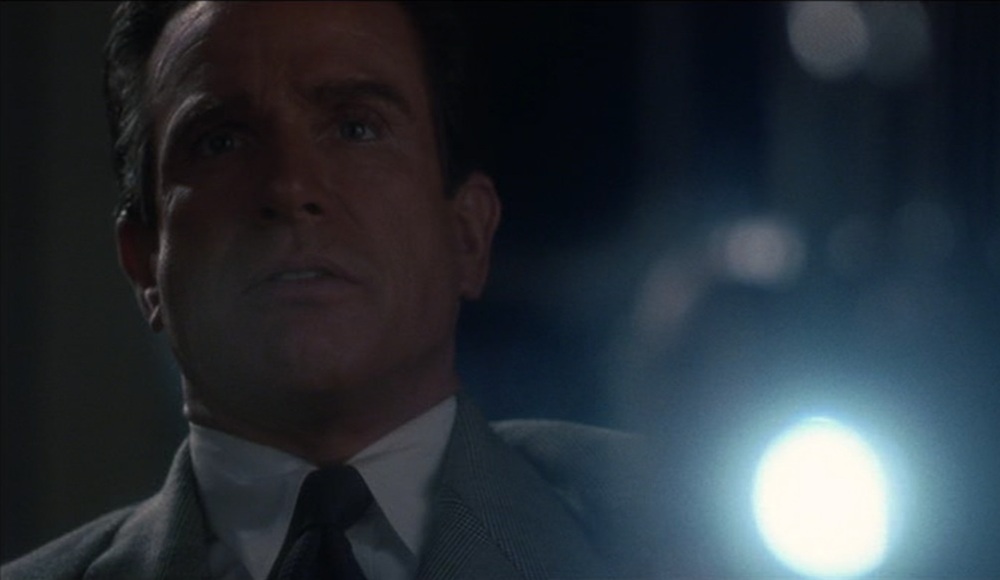
Bugsy is a strong biographical story about one of America’s most legendary gangsters, the man credited with inventing Las Vegas. Beatty is convincing as the protagonist, slowly descending into madness. We come to know Bugsy as a sympathetic figure (at least: for a murderer) who simply holds different values than most. We feel for him as he loses his grip and heads toward his inevitable downfall. His fatal flaw is also one of his endearing traits in the film: his disregard for money – something fundamentally incompatible with gangster life.

Visually, Bugsy authentically captures the mid-1940s, thanks in large part to Allen Daviau’s magnificent cinematography. The supporting cast delivers strong performances, with Annette Bening always a pleasure to watch and Ben Kingsley making a great Meyer Lansky.

Overall, this is a worthy gangster film, most admirable for its strong biographical elements. We truly understand this character and his motivations. Those seeking hard gangster violence may appreciate it less, as there are only three murders of which one occurs off-screen.

Rating:

Quote:
BUGSY’ SIEGEL: “I only talk this much before I kill someone.”

Trivia:
Warren Beatty and Annette Bening married after meeting during this production.

A Genius, Two Partners and a Dupe

Director: Damiano Damiani
Written by: Damiano Damiani, Ernesto Gastaldi, Fulvio Morsella
Cast: Terence Hill, Miou-Miou, Robert Charlebois, Patrick McGoohan

Year / Country: 1975, Italy, France, West Germany
Running Time: 118 mins.

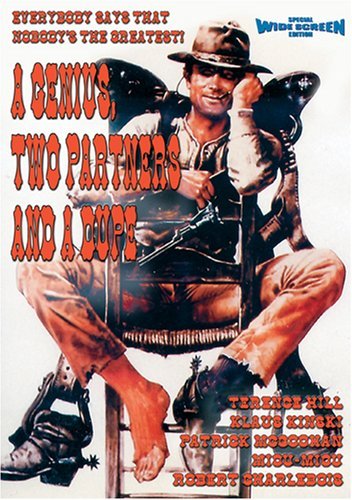
By the 70’s, the spaghetti western had almost become a parody of itself. The serious violent westerns were barely released outside of Italy, while comedy-westerns such as the ‘Trinity’ movies were immensely popular internationally. Genre originator Sergio Leone decided to make the ultimate parody himself in 1973. This became My Name is Nobody, starring Terence Hill. It was a box office hit. In 1975 Leone produced the loose sequel called A Genius, Two Partners and a Dupe, also known as Nobody’s the Greatest. While it was once again popular at the box office due to Hill and Leone’s involvement, the critics didn’t like it. And understandably so.

Hill essentially reprises his Nobody role. His character Joe Thanks is a genius conman. Together with his friends Steam Engine Bill (Robert Charlebois) and Lucy (Miou-Miou) he cooks up an elaborate plan to steal 300.000 dollars from the Indian-hating Major Cabot (Patrick McGoohan). Whenever things are about to go wrong, Joe, the genius, knows exactly what to do.

Leone came up with the idea for the plot after seeing Las Valseuses, starring Miou-Miou, who he then cast as Lucy. Besides producing, Leone also directed the opening scene. The rest of the film is directed by Damiano Damiani, who made one of the greatest spaghetti’s in 1966: A Bullet For the General. This was the last western Leone worked on. He was disappointed with the result and chose to remain uncredited. I can’t blame him. This is pretty much a mess and most of the jokes miss their mark.

Like in all of Leone’s projects, the original score is composed by Ennio Morricone. The very electric score in this film is one of the few things it has going for it. His adaptation of Für Elise, combined with the wailing from The Good, the Bad and the Ugly is a beautifully constructed highlight. That is basically it though. One can only conclude that by this time, the spaghetti western was truly dead.

Rating:

Biography: Damiano Damiani (1922, Pasiano, Italy) is an Italian screenwriter, director and actor. He won awards for several of his films, such as the Mafia drama The Pizza Connection. In the eighties he also made the renowned mini-series La Piovra (The Octopus) about a prosecutor’s battle with the Mafia. This successful series ran for eight series on RAI Uno and turned out to be one of Italy’s bestselling series abroad.

Filmography (a selection): The Hit Man (1960), Lipstick (1960), The Empty Canvas (1963), Strange Obsession (1966), A Bullet for the General (1966), The Day of the Owl (1968), The Most Beautiful Wife (1970), How to Kill a Judge (1974), A Genius, Two Partners and a Dupe (1975), Goodbye and Amen (1977), A Man on His Knees (1978), The Warning (1980), The Octopus (1984, mini-series), The Pizza Connection (1985), The Inquiry (1986), Massacre Play (1989), Angel With a Gun (1992), Killers on Holiday (2002)

Fist of Honour (1993)


‘There is no honour in death…only in war’

Directed by:
Richard Pepin

Written by:
Charles T. Kanganis

Cast:
Sam J. Jones (Fist Sullivan), Joey House (Gina), Harry Guardino (Dino Diamond), Abe Vigoda (Victor Malucci), Nicholas Worth (Tucchi), Bubba Smith (Detective Johnson), Frank Sivero (Frankie Pop), Scott Getlin (Eddie the Zipper), Jaime Alba (Sammy Malucci), Ali Humiston (Alex)

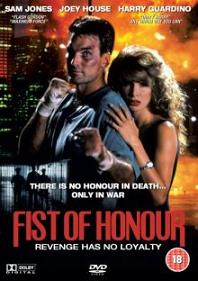
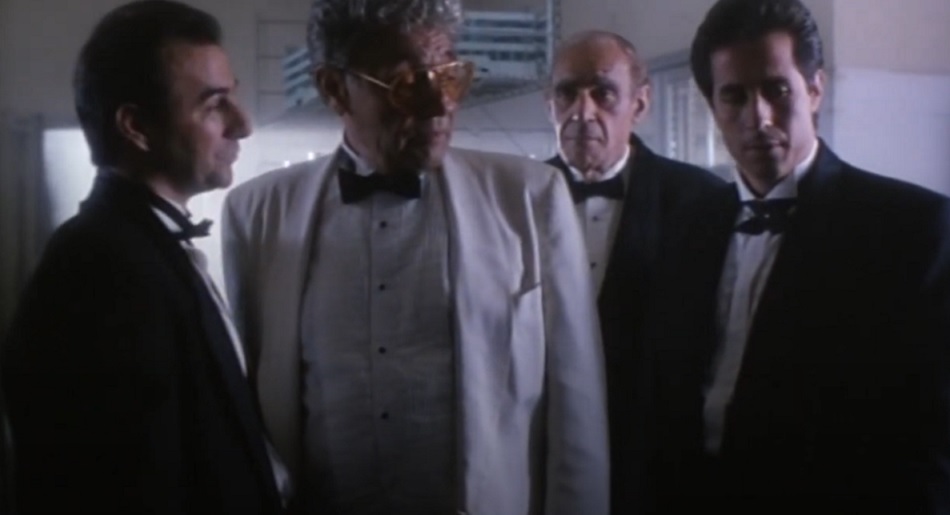
A party is held to celebrate the truce made between two godfathers; Dino Diamond (Harry Guardino) and Victor Malucci (Abe Vigoda). After two of Malucci’s men switch sides, Diamond decides to take out Malucci anyway. The fall guy is Fist Sullivan, who works as a debt collector for Diamond.

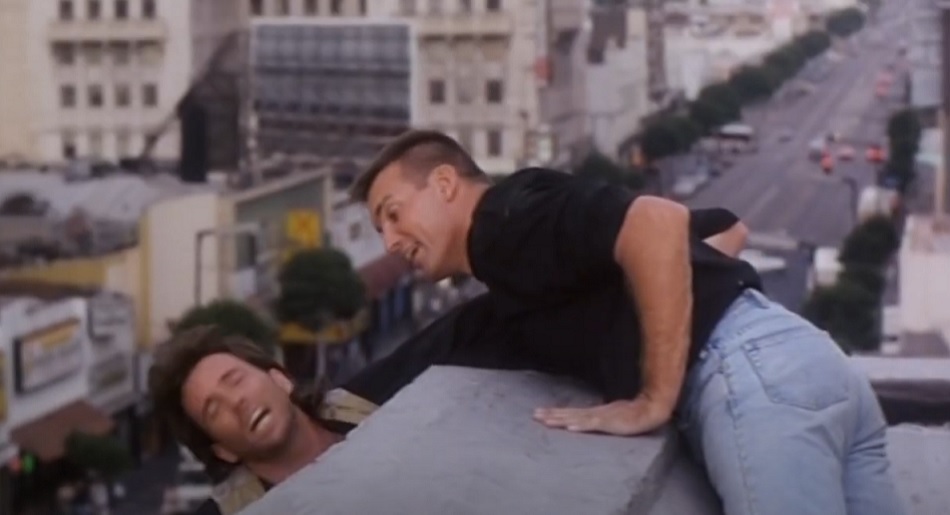
Attempt to cross a mob film and a fight film which basically fails in both genres. The crime story is filled with cliches and gratuitous violence and the fight scenes are horribly choreographed. Sam J. Jones gives a wooden performance as the lead character and the production value looks low.

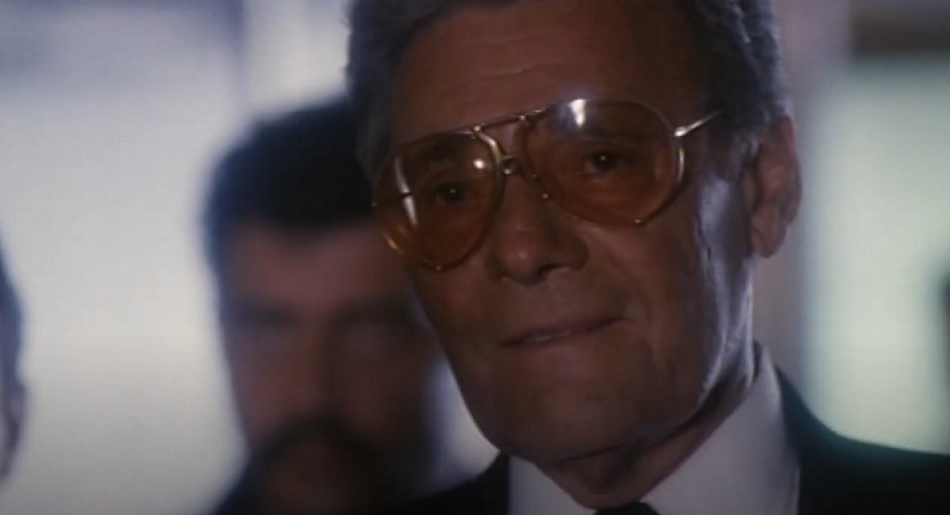
Somehow it is still an entertaining viewing. It is strangely fun to watch stupid gangsters kill and be killed and to watch Jones kick the crap out of some ignorant debtors. It’s also enjoyable to watch Harry Guardino as the evil mob boss Dino Diamond.

Typical exploitation gangster flick so know what you can expect.

Rating:

Quote:

DETECTIVE JOHNSON: “You broke the truce in the worst way – I need a body.”

Trivia:

This was Harry Guardino’s final film. He died in 1995 of lung-cancer.