Once Upon a Time in the West

Director: Sergio Leone
Written by: Dario Argento, Bernardo Bertolucci, Sergio Leone, Sergio Donati
Cast: Claudia Cardinale, Henry Fonda, Jason Robards, Charles Bronson

Year / Country: 1968, Italy, USA
Running Time: 159 mins.

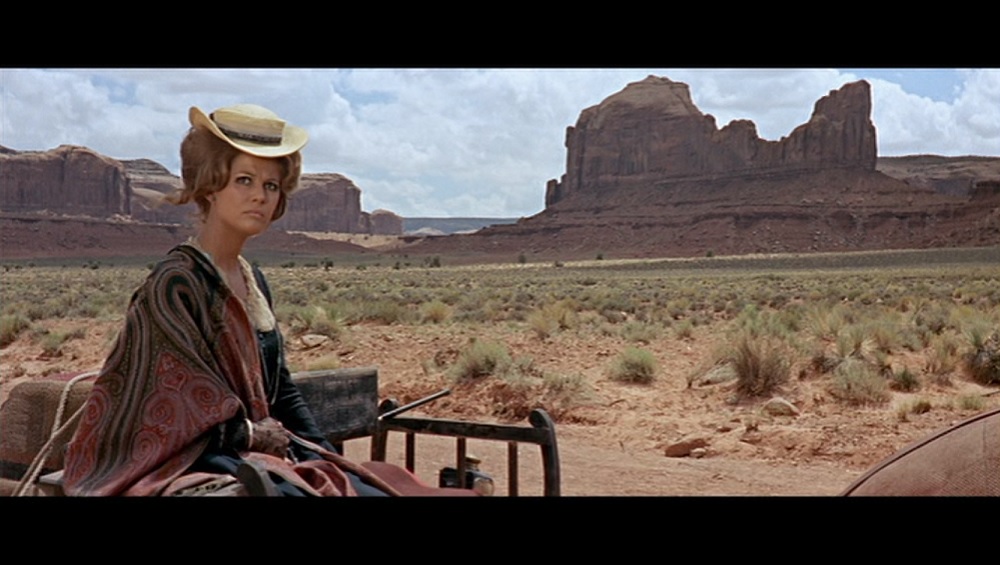
Sergio Leone, master of the spaghetti western, did it again. Only two years after completing the ‘Dollar Trilogy’ with the masterful The Good, The Bad and the Ugly, he is back with an equally impressive Wild West opera. His track record may be small with only seven features, but Leone is probably the only director who completed four masterpieces in a five-year time span. And what a way to end his brilliant streak: Once Upon a Time in the West is without a doubt the greatest testament that the Wild West ever got. It is my favorite movie of all time only after GoodFellas.

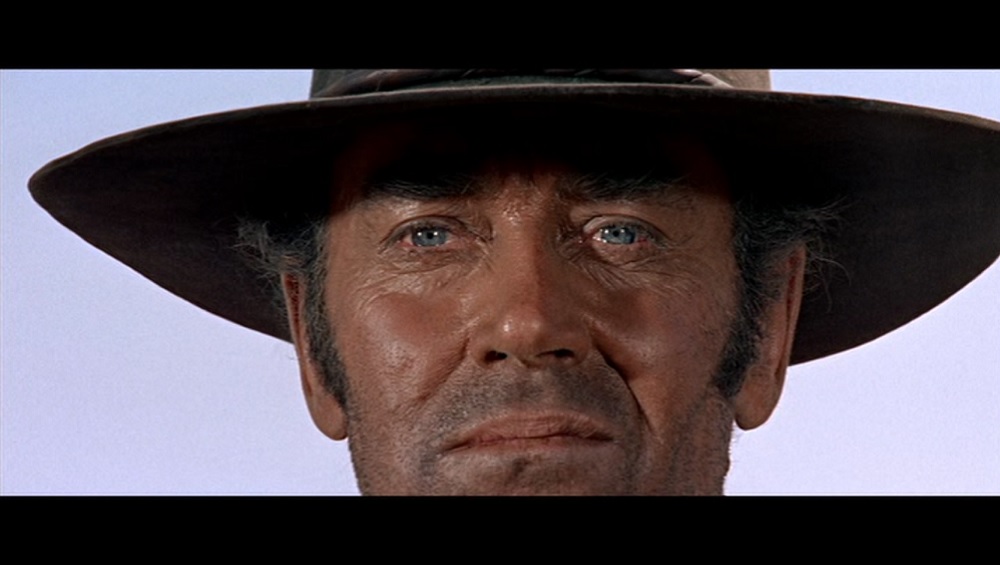
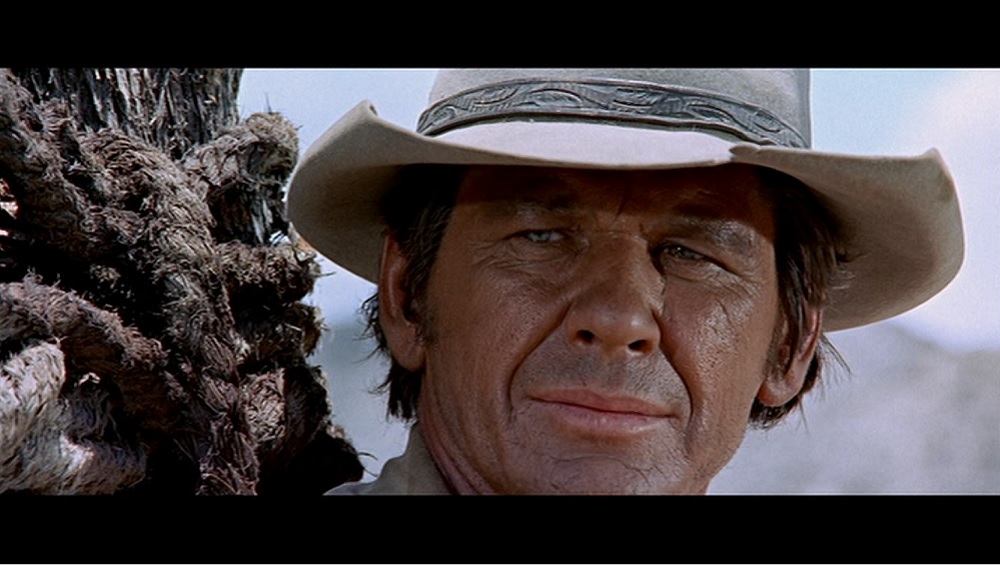
The classic opening scene is almost like a short film in itself, starring Jack Elam, Woody Strode and Al Mulock. The three men in dusters are killing time (and flies) on a train station while waiting for the arrival of the mysterious Harmonica (Bronson), who has unfinished business with their evil boss Frank (Fonda). When Harmonica finally arrives, he effectively rids himself of these three in a hyper tense Mexican standoff. Leone allegedly wanted to cast Clint Eastwood, Eli Wallach and Lee Van Cleef in these roles to symbolically end his ‘Dollar’ period.

Essentially, this is a revenge film, since Harmonica’s quest for vengeance is central to the plot. However, the screenplay is much richer than that. It is about the death of the old West and the birth of the new civilized frontier. Old hardened men, such as Harmonica and Cheyenne (Robards) are replaced by businessmen who build railroads all across the country. These innovations mark the arrival of civilization and culture to the West. But the old mythic heroes won’t go without a good fight. Harmonica spends a good deal of his time trying to seduce Frank to a duel. Their final ‘dance of death’ is one of the greatest pieces of cinema I have ever seen in my life. In a flashback we finally learn why Harmonica is after Frank and his entire identity suddenly makes perfect sense. The music is stunning and to this day can make me tremble. Truly beautiful.

But the film contains many more memorable moments. The introduction of every character for example, is accompanied by their own personal musical score composed by Ennio Morricone, who is once again in top shape. Leone uses the music like a pro with impeccable timing. For example whenever a character dies, the beat stops instantly. As we would expect of Leone, the film also contains fantastic dialogues, peppered with the best oneliners the West has heard before or since. Locations are fantastic as well, ranging from minimalistic to extremely extensive, such as the town of Flagstone where Jill (Cardinale) arrives in the beginning of the film. The beautiful exterior scenes were shot in both Spain and the USA.

Unlike the films from the ‘Dollar Trilogy’, the story of Once Upon a Time in the West is almost entirely made up of references to classic American Westerns. Leone’s style is different as well. It is slower and more sombre in theme, but still very tongue-in-cheek. However successful in Europe upon release, it got negative critical response in the US and was a financial flop. Now it is generally acknowledged as a masterpiece and one of the best westerns ever made. So buy the ticket and take the ride, amigo. To the next station only.

Rating:

Biography: Sergio Leone (1929, Rome – 1989, Rome) made his debut in the cinema working as a voluntary assistant and extra, among other things, in The Bicycle Thieves by Vittorio de Sica. Later, he became assistant director to Mario Bonnard. In 1959, when Bonnard was ill, he took over from him on the set of The Last Days of Pompeii. In 1961 he directed his first full-length film: The Colossus of Rhodes. But the film that was to bring him to the general attention came out in 1964: A Fistful of Dollars. His next films, For a Few Dollars More and The Good, The Bad and the Ugly complete what came to be known as the Dollars Trilogy and were a great box-office success. He would only make three more films before tragically passing away in 1989. He was taken from us by a heart attack in his house in Rome, while working on an ambitious project for a film on the Siege of Leningrad.

Filmography: The Colossus of Rhodes (1961), A Fistful of Dollars (1964), For a Few Dollars More (1965), The Good, The Bad and the Ugly (1966), Once Upon a Time in the West (1968), A Fistful of Dynamite (1971), Once Upon a Time in America (1984)

Rogue

Director: Greg McLean
Written by: Greg McLean
Cast: Radha Mitchell, Michael Vartan, Sam Worthington

Year / Country: 2007, Australia / USA
Running Time: 99 mins.

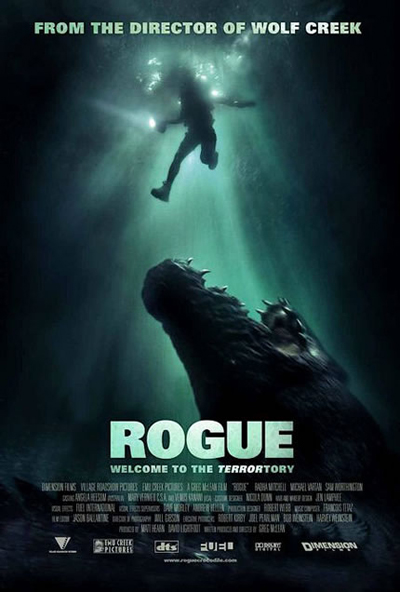
Hot and sultry climates tend to produce gigantic monsters. Northern Territory in Australia certainly fits this description. Yet, Ozzywood Horror flicks seldom make it to the mainland. Rogue did. Perhaps due to the involvement of executive producers Bob and Harvey Weinstein? It can’t be the original concept. Then again, movies about oversized creatures with a taste for human flesh will always find a market.

Truth be told: I got a thing with crocodiles. The fact that this species’ origins go way back to prehistoric times fascinates me. I have often wondered what it must be like to be snatched by this massive reptile predator. Because of this fascination, movies about killer crocs can easily do right for me.

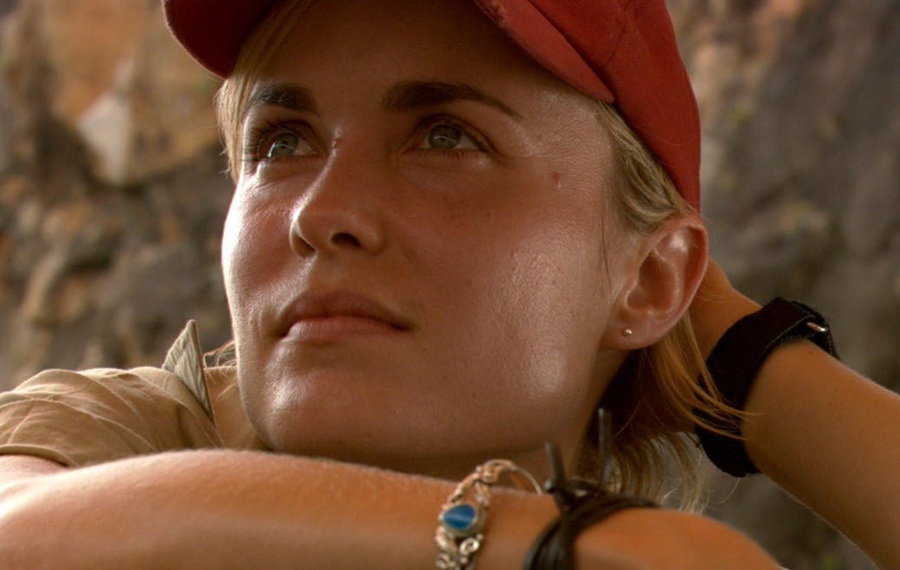
Rogue does – be it in a little formulaic fashion – do what it is supposed to do. A group of tourists takes a cruise down a river in a modestly sized boat. Nothing too big happens in the first half hour, but it is nevertheless not boring. That is because we get treated with beautiful nature images, pretty music and some crocodile wisdom: the typical ingredients of a wicked creature flick.

The characters also get properly introduced. One of the cruisers is an American travel journalist who brags a bit too much about his work to the tour guide. Another is obviously a widower as we watch him empty an urn in the river and cry a little bit. These subtle gestures work well in acquainting the audience with these characters, so when shit hits the fan, they will actually care when somebody gets torn to shreds.

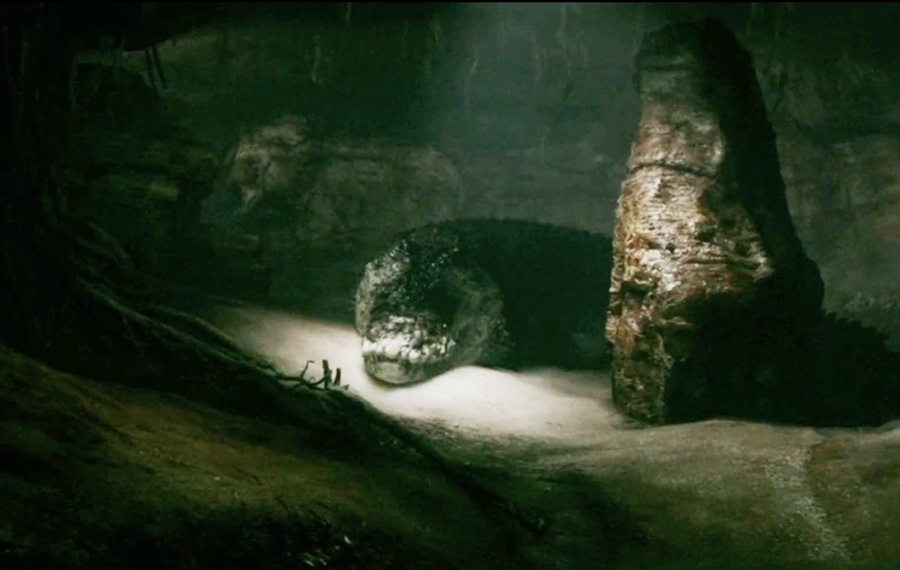
The group gets into trouble when their boat breaks down and they have to take shelter on a small island before help will arrive. The problem is the flood. Due to the rising water level, the entire island is about to disappear. In the water, a massive seven foot crocodile awaits them. So far, so good. The action that follows is not spectacular per se, but – much like the build-up – works well enough. Tourists get gruesomely killed and the American hero eventually takes on the killer croc in its own lair.

Rogue may not be an award winning film. Nor is it the best in its kind. However it still offers an enjoyable little piece of escapism. Exactly what its target audience is undoubtedly looking for.

Rating:

Biography: Greg McLean attended the National Institute of Dramatic Art (NIDA) in Sydney, where he graduated in directing. He started his career with theatre productions, including the highly acclaimed Hamlet by theatre director Neil Armfield. He then started his movie career with various shorts, television commercials and corporate videos. In 2005 he made his first feature film: Wolf Creek, and followed it with Rogue in 2007.

Filmography: ICQ (2001, short), Wolf Creek (2005), Rogue (2007)

The Faculty

Director: Robert Rodriguez
Written by: Kevin Williamson, Bruce Kimmel, David Wechter
Cast: Jordana Brewster, Clea DuVall, Josh Hartnett, Elijah Wood

Year / Country: 1998, USA
Running Time: 104 mins.

If aliens want to take over the world, would they come blasting Independence Day-style or sneak in the backdoor? In The Faculty they obviously choose for the second strategy. At a high school in Ohio, Casey Connor (Elijah Wood) finds a small mysterious organism on the football field that seems to love water. Simultaneously, the school’s staff is starting to act increasingly weird.

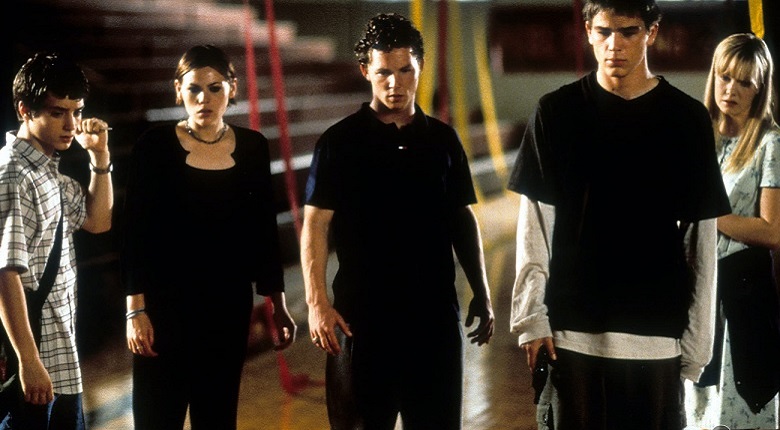
Within a day, the entire faculty is taken over by the parasites. Then they start to take over the entire school. A small group of mostly outcast students discover the conspiracy. They decide to strike back before the entire world is taken over. In theory, they should be able to stop the threat if they find and destroy the mother alien. The question is, who did the mother choose as a host? Could it be the school’s principal? Or is it the crazed football coach?

The Faculty is an enjoyable homage to the Body Snatchers-legacy. The screenplay by Kevin Willamson (Scream) contains all his trademark qualities; postmodern movie references; humor; and a surprising twist at the end. It also has camp value, supported by a killer cast including Salma Hayek, Famke Janssen and Robert Patrick.

Rodriguez is doing a fine job directing. This sort of Carpenter / Stephen King material suits him well. He gets decent performances out of his stellar cast. Mostly, he is a brilliant editor; plot, action and tension are combined in a dynamic mix that moves just fast enough to entertain throughout its duration. Robert Patrick steals the show as the possessed football coach. He effectively portrays an alien-host, using creepy and hilarious body language to perfection. The Faculty never received the appreciation of similar modern sci-fi horrors. Unjustly so. Its ‘problems’ are far outweighed by its strong points. Therefore, I must conclude that this is an underrated flick that definitely deserves to be re-evaluated.

Rating:

Biography: Robert Rodriguez (1988, Texas) saw John Carpenter’s Escape From New York in 1981 and proclaimed “I am going to make movies”. Ten years later, Rodriguez made his feature debut with El Mariachi, an almost single handedly made action film that cost him only 7.000 dollars. It made Rodriguez a legend of independent, ultra-low budget filmmaking. His further career is a sign for young filmmakers that even the wildest dreams may come true if you are brave enough to follow your own path. He has directed many movies since, often collaborating with Quentin Tarantino. Besides directing, he frequently acts as cinematographer like he did on El Mariachi.

Filmography (a selection): Bedhead (1991, short) / El Mariachi (1992), Roadracers (1994, TV), Desperado (1995), Four Rooms (1996, segment ‘The Misbehavors’), From Dusk Till Dawn (1996), The Faculty (1998), Spy Kids (2001), Spy Kids 2: Island of Lost Dreams (2002), Spy Kids 3-D: Game Over (2003), Once Upon a Time in Mexico (2003), Sin City (2005), The Adventures of Sharkboy and Lavagirl 3-D (2005), Grindhouse (2007, segment ‘Planet Terror’), Machete (2010), Machete Kills (2013), Sin City: A Dame to Kill For (2014), Alita: Battle Angel (2019), The Mandalorian (2020, TV episode)

The Good, the Bad and the Ugly

Director: Sergio Leone
Written by: Agenore Incrocci, Furio Scarpelli, Luciano Vincenzoni, Sergio Leone
Cast: Clint Eastwood, Lee Van Cleef, Eli Wallach

Year / Country: 1966, Italy, Spain, West Germany
Running Time: 171 mins.

The final installment of Sergio Leone’s ‘Dollars Trilogy’ is a critically acclaimed masterpiece. Set against the backdrop of the American Civil War, three men are on a relentless quest for a fortune in hidden gold. While soldiers fight to determine the fate of a nation, these men pursue only their own interests. They are the Good, the Bad, and the Ugly. While the last two labels are fitting, the first is somewhat misleading – Eastwood’s character, Blondie, may be more principled than the others, but he doesn’t hesitate to kill when it serves his purpose.

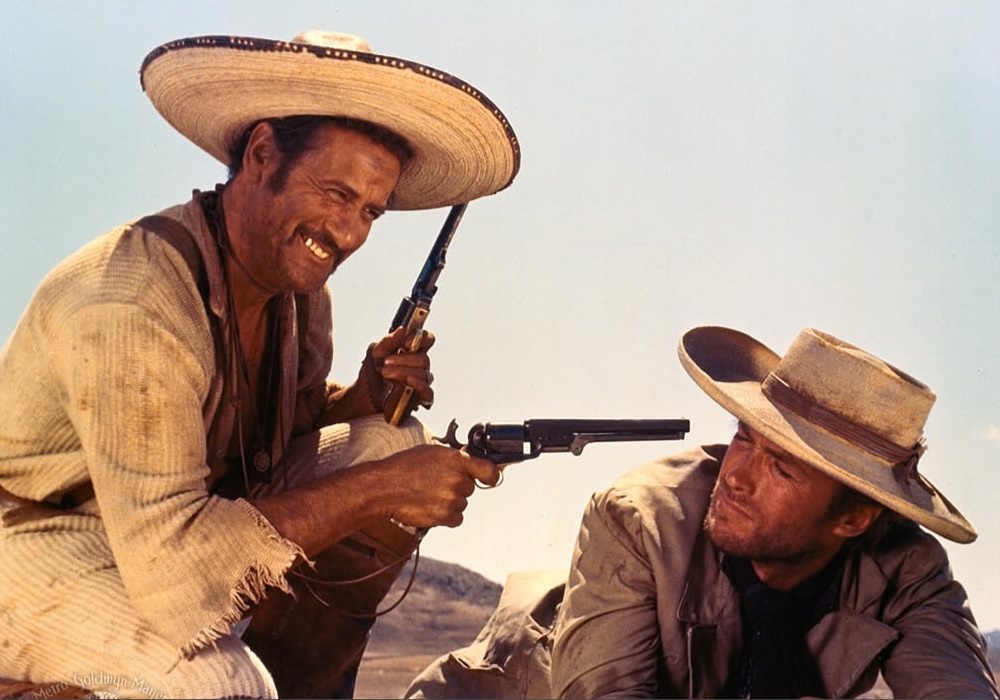
Blondie and Tuco (the Ugly, played by Eli Wallach) form a crooked partnership built on mutual betrayal. After one double-cross nearly costs Blondie his life, they’re forced into a reluctant alliance when each comes into possession of a crucial piece of information that could lead them to the buried treasure. Meanwhile, Angel Eyes (the Bad, portrayed by Lee Van Cleef) is hot on their trail, determined to claim the gold for himself. The three men converge on a remote graveyard, where their fates – and the money – await.

Compared to the earlier two films in the trilogy, The Good, the Bad and the Ugly offers a surprisingly human touch. Eastwood’s Blondie reveals a gentler side, cradling a kitten in his hat and comforting a dying soldier with a cigar. Tuco, though undeniably a scoundrel, becomes unexpectedly poignant during a visit to the monastery where he confronts his estranged brother. This and other scenes flesh out Tuco into the trilogy’s most fully realized character, brought to life in a brilliant performance by Wallach. Despite the emotional depth, Leone doesn’t abandon his signature blend of dark humor and biting cynicism.

Visually, the film is a triumph. Leone’s mastery shines in the rhythmic interplay between intimate close-ups and sweeping, war-torn landscapes that seem to take on a character of their own – harsh and unforgiving, especially evident in the desert sequence where Blondie’s face is scorched by the sun. From the bold, stylized opening credits to the iconic, ritualistic cemetery shootout, the cinematography and editing are innovative and arresting. Add to that Ennio Morricone’s legendary score, and you have one of the most influential films of all time.

The Good, the Bad and the Ugly has been released in various versions, but nothing less than the full three-hour cut does it justice. Only in its complete form does this epic ‘horse opera’ truly come into its own. This is cinema as it was meant to be.

Rating:

Biography: Sergio Leone (1929, Rome – 1989, Rome) made his debut in the cinema working as a voluntary assistant and extra, among other things, in The Bicycle Thieves by Vittorio de Sica. Later, he became assistant director to Mario Bonnard. In 1959, when Bonnard was ill, he took over from him on the set of The Last Days of Pompeii. In 1961 he directed his first full-length film: The Colossus of Rhodes. But the film that was to bring him to the general attention came out in 1964: A Fistful of Dollars. His next films, For a Few Dollars More and The Good, The Bad and the Ugly complete what came to be known as the Dollars Trilogy and were a great box-office success. He would only make three more films before tragically passing away in 1989. He was taken from us by a heart attack in his house in Rome, while working on an ambitious project for a film on the Siege of Leningrad.

Filmography: The Colossus of Rhodes (1961), A Fistful of Dollars (1964), For a Few Dollars More (1965), The Good, The Bad and the Ugly (1966), Once Upon a Time in the West (1968), A Fistful of Dynamite (1971), Once Upon a Time in America (1984)