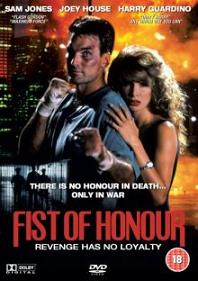
Fist of Honour (1993)


‘There is no honour in death…only in war’

Directed by:
Richard Pepin

Written by:
Charles T. Kanganis

Cast:
Sam J. Jones (Fist Sullivan), Joey House (Gina), Harry Guardino (Dino Diamond), Abe Vigoda (Victor Malucci), Nicholas Worth (Tucchi), Bubba Smith (Detective Johnson), Frank Sivero (Frankie Pop), Scott Getlin (Eddie the Zipper), Jaime Alba (Sammy Malucci), Ali Humiston (Alex)

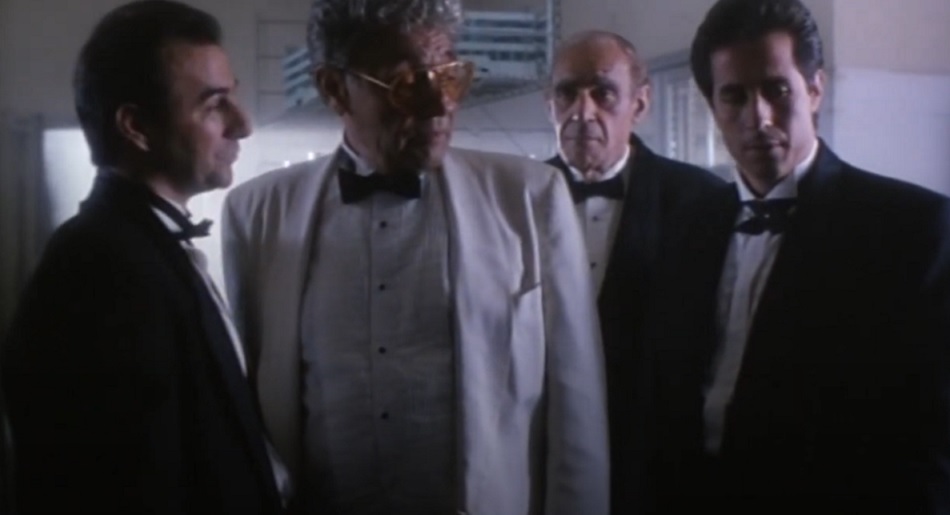
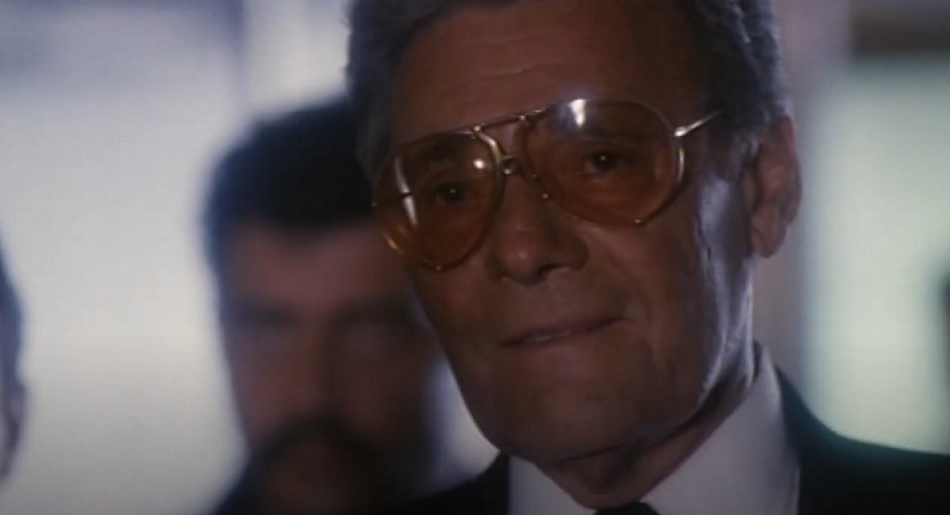
A party is held to celebrate the truce made between two godfathers; Dino Diamond (Harry Guardino) and Victor Malucci (Abe Vigoda). After two of Malucci’s men switch sides, Diamond decides to take out Malucci anyway. The fall guy is Fist Sullivan, who works as a debt collector for Diamond.

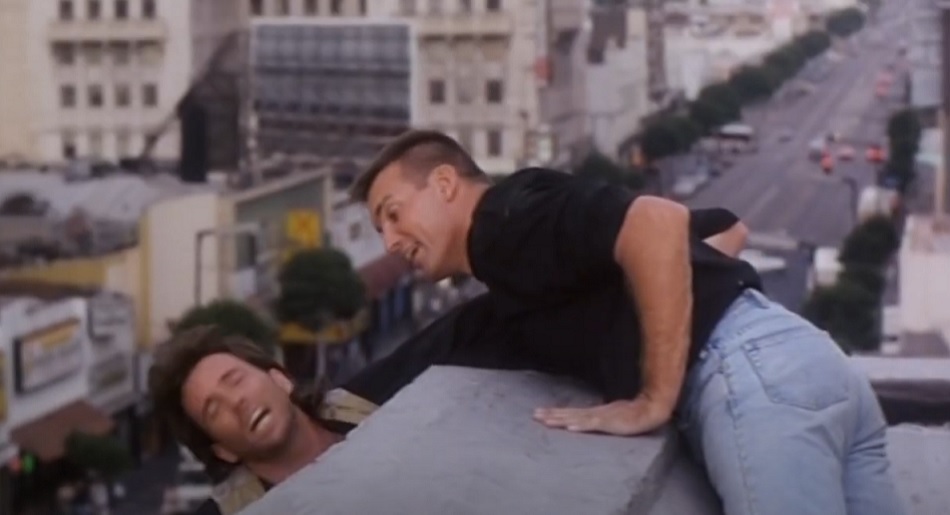
Attempt to cross a mob film and a fight film which basically fails in both genres. The crime story is filled with cliches and gratuitous violence and the fight scenes are horribly choreographed. Sam J. Jones gives a wooden performance as the lead character and the production value looks low.

Somehow it is still an entertaining viewing. It is strangely fun to watch stupid gangsters kill and be killed and to watch Jones kick the crap out of some ignorant debtors. It’s also enjoyable to watch Harry Guardino as the evil mob boss Dino Diamond.

Typical exploitation gangster flick so know what you can expect.

Rating:

Quote:

DETECTIVE JOHNSON: “You broke the truce in the worst way – I need a body.”

Trivia:

This was Harry Guardino’s final film. He died in 1995 of lung-cancer.

The Asphalt Jungle (1950)


‘The City Under the City’

Directed by:
John Huston

Written by:
W.R. Burnett (novel)
Ben Maddow (screenplay)

Cast:
Sterling Hayden (Dix Handley), Sam Jaffe (Doc Riedenschneider), Louis Calhern (Alonzo Lon’ Emmerich), Jean Hagen (Doll Conovan), Marc Lawrence (Cobby), James Whitmore (Gus Minissi), John McIntire (Police Commisioner Hardy), Barry Kelley (Lt. Ditrich), Anthony Caruso (Louis Ciavelli), Marilyn Monroe (Angela Phinlay)

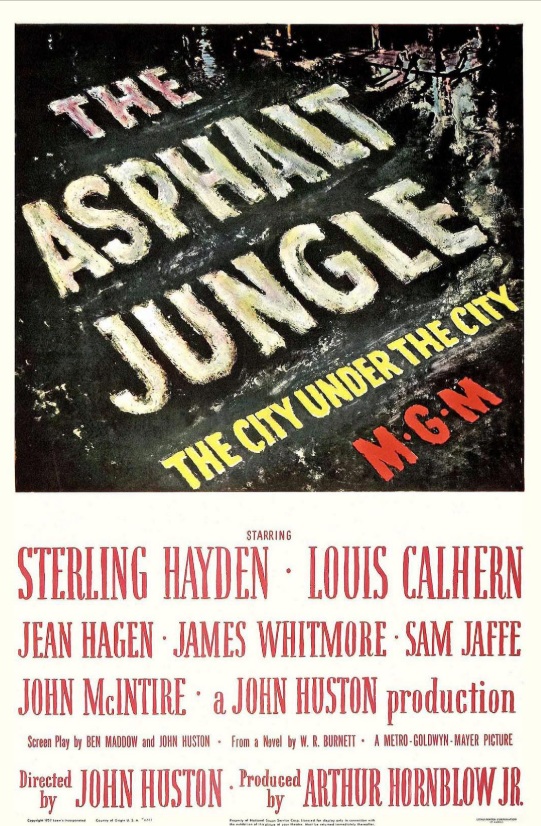
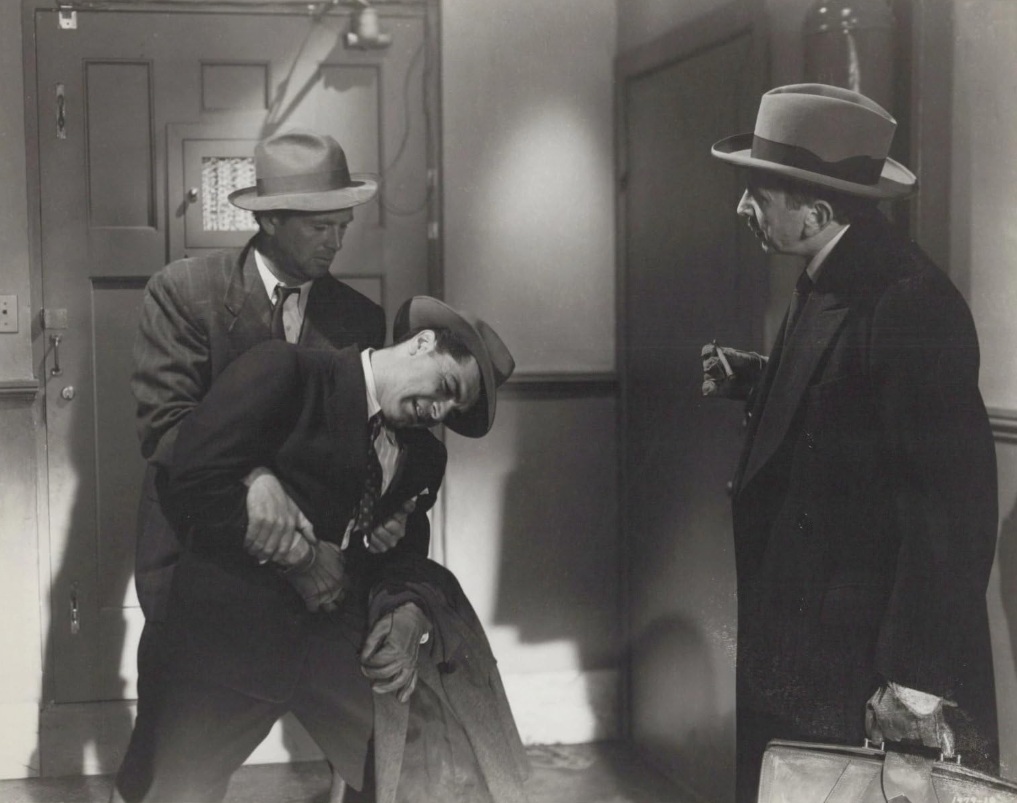
John Huston’s The Asphalt Jungle (1950) opens with haunting images of a bleak, grey city; a deserted street where a police car prowls for a hold-up man. The scene sets the tone: a decaying urban jungle, teeming with hooligans, corrupt cops, racketeers, and desperate hustlers. It’s a world now lost to time, but one Huston brings to life with unflinching realism.

At the center of the story is master criminal Doc Riedenschneider, freshly released from prison and eager to orchestrate one last major heist. He enlists the help of Emmerich, a crooked lawyer with deep pockets, and together they assemble a crew. Among them is Dix Handley (Sterling Hayden), a former farmer turned criminal and a man of brute strength, sharp wit, and an unexpected sense of honor.

Huston delves into the greed driving these men, each chasing the promise of a life-changing score. Their dreams of what comes after the heist echo themes Huston explored in The Treasure of the Sierra Madre. But as a classic Film Noir, fate turns against them when Emmerich betrays his accomplices, absconding with the loot. The tragedy unfolds from there, compounded by the relentless pursuit of the police, who are just as hungry for their own ‘big score’. Huston underscores this irony early on, as cops raid a gambling den, knowing full well it’s a drop in the bucket of the city’s corruption.

The Asphalt Jungle is a gripping crime film, marked by Huston’s signature direction and standout performances. Hayden is particularly compelling as Dix, a man who is both intimidating in his criminal resolve and tender in his moments with Doll, his devoted girlfriend. The heist itself is a masterclass in tension, and the film’s denouement is tragic yet refreshingly free of heavy-handed moralizing. And for a fleeting moment, a young Marilyn Monroe graces the screen, radiant as ever in a small but memorable role.

A timeless noir, The Asphalt Jungle remains a stark, unforgettable portrait of ambition, betrayal, and the crushing weight of fate.

Rating:

Quote:

EMMERICH: After all, crime is only a left-handed form of human endeavour.

Trivia:

The third Film Noir effort from director Huston after The Maltese Falcon (1941) and Key Largo (1948). This is the first one without Humphrey Bogart.

A Bronx Tale (1993)


‘One man lives in the neighbourhood, another man owns it’

Directed by:
Robert De Niro

Written by:
Chazz Palminteri (based on his play)

Cast:
Robert De Niro (Lorenzo Anello), Chazz Palminteri (Sonny), Lillo Brancato Calogero ‘C’ Anello (age 17), Francis Capra (Calogero ‘C’ Anello (age 9), Taral Hicks (Jane Williams), Kathrine Narducci (Rosina Anello), Clem Caserta (Jimmy Whispers)
Dave Salerno (Frankie Coffeecake), Joe Pesci (Carmine)

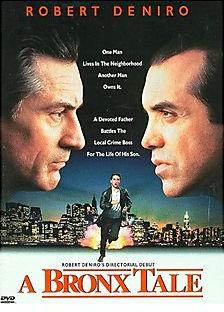
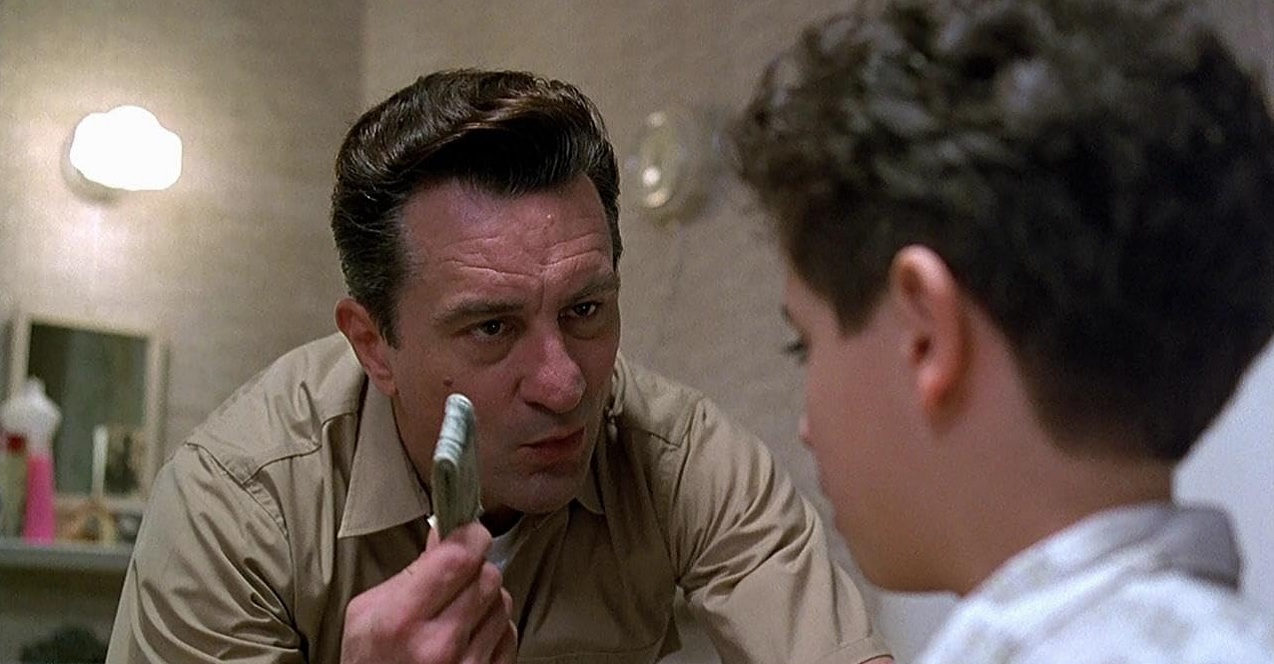
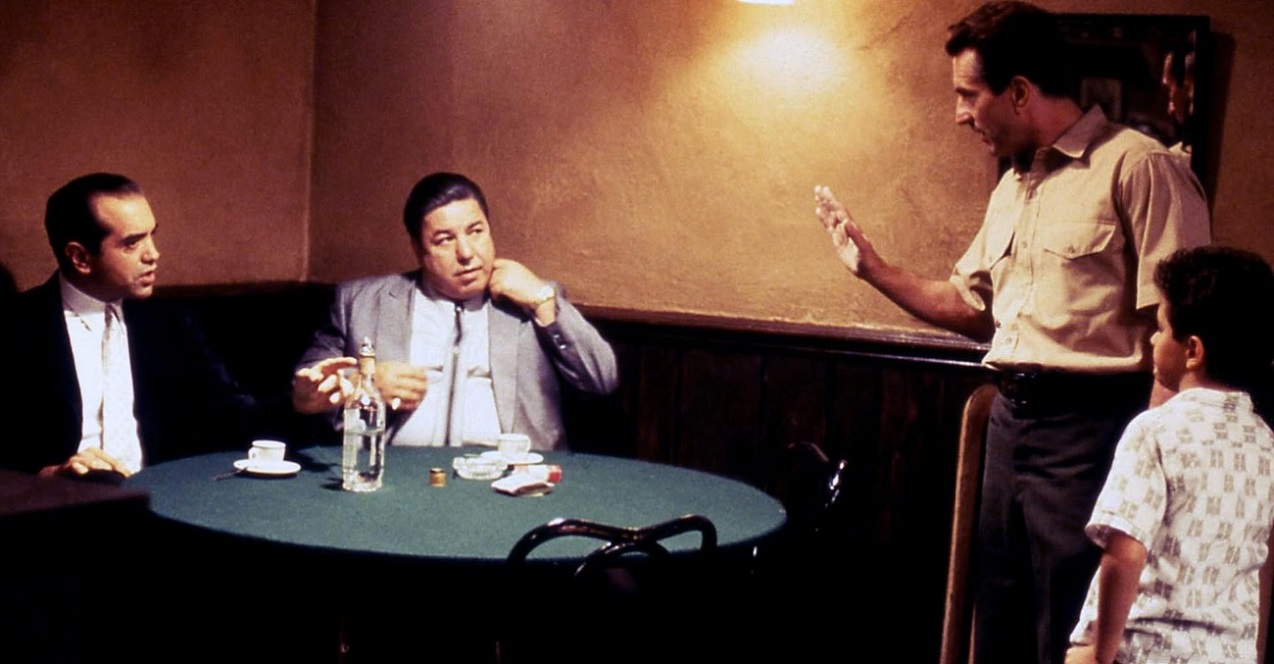
Set in the Bronx during the early 1960s, A Bronx Tale follows Calogero Anello, a young boy torn between two father figures: his honest, working-class dad Lorenzo, a bus driver who takes him to Yankees games, and Sonny, the local mob boss who rules the neighborhood from the bar next door. Though Lorenzo warns his son to stay away from the bar and its criminal elements, Calogero becomes increasingly fascinated by Sonny’s power and charisma.

When Calogero witnesses Sonny commit a murder outside their home, he chooses not to identify him to the police. From that moment on, Sonny takes the boy under his wing. Despite his father’s disapproval, Calogero begins to spend time with Sonny and his crew, learning street smarts that complement his formal education.

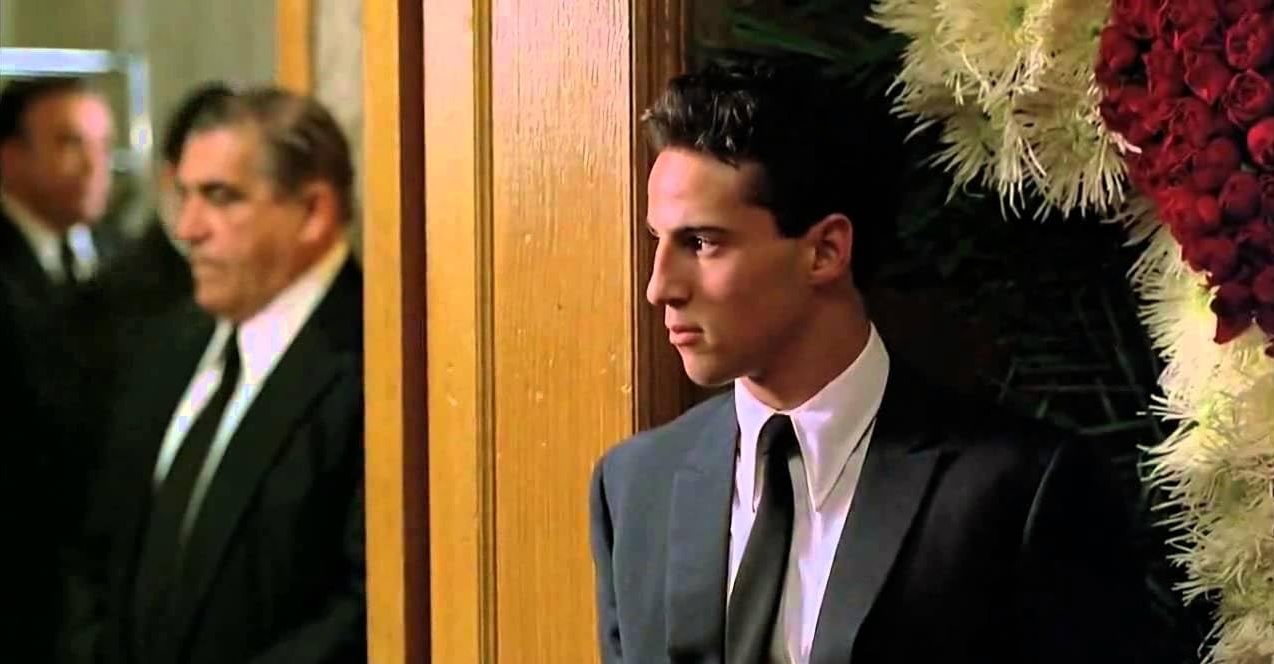
As he enters his teenage years, Calogero walks a fine line between two worlds. He avoids falling into a life of crime, but still associates with a group of reckless, racist friends. His life takes a turn when he falls in love with Jane, a Black girl from his school, just as racial tensions in the neighborhood begin to escalate. Faced with rising conflict and peer pressure, Calogero must decide who he wants to be – drawing on the contrasting life lessons imparted by his two mentors.

Robert De Niro’s directorial debut is a modest yet heartfelt film that captures the spirit of the 1960s Bronx with warmth and authenticity. Though it starts off resembling a mob drama like GoodFellas, it evolves into a thoughtful coming-of-age story about identity, morality, and the power of choice. The period soundtrack – featuring The Impressions, The Four Tops, Dion & The Belmonts, and Dean Martin – enhances the film’s nostalgic charm.

While the film tackles racial issues with sincerity, the relationship between Calogero and Jane feels underdeveloped and at times unconvincing. Nevertheless, the performances are solid across the board. Chazz Palminteri delivers a compelling portrayal of the tough yet complex Sonny, while De Niro plays against type as the principled, soft-spoken Lorenzo. Joe Pesci also makes a brief but memorable appearance.

Overall, A Bronx Tale is a touching and nuanced film that blends the grit of street life with the warmth of a coming-of-age story. It may not hit every note perfectly, but its heart is in the right place.

Rating:

Quote:
LORENZO: “The saddest thing in life is wasted talent.”

Trivia:
The story, written by Chazz Palminteri, is semi-autobiographical. His real name is Calogero Lorenzo Palminteri.

Reservoir Dogs (1992)


‘Let’s go to work’

Directed by:
Quentin Tarantino

Written by:
Quentin Tarantino

Cast:
Harvey Keitel (Mr. White / Larry Dimmick), Tim Roth (Mr. Orange / Freddy Newandyke), Michael Madsen (Mr. Blonde / Vic Vega), Steve Buscemi (Mr. Pink), Lawrence Tierney (Joe Cabot), Chris Penn (Nice Guy Eddie Cabot), Eddie Bunker (Mr. Blue), Quentin Tarantino (Mr. Brown), Randy Brooks (Holdaway), Kirk Baltz (Marvin Nash)
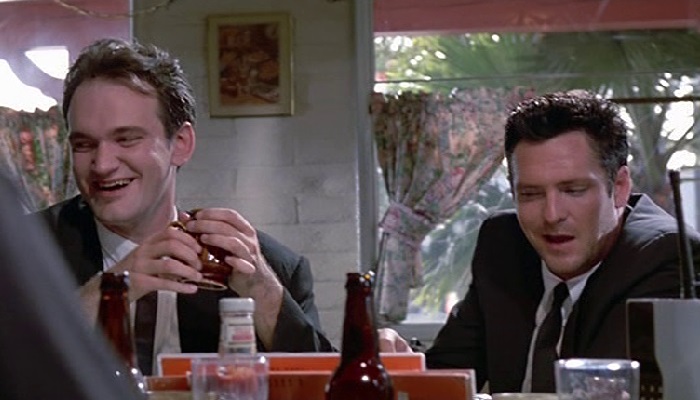
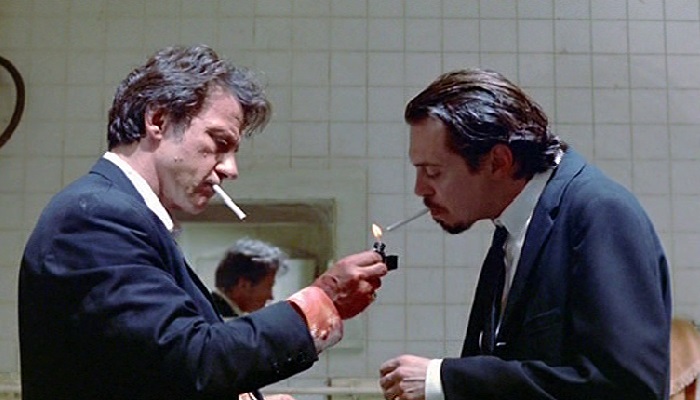
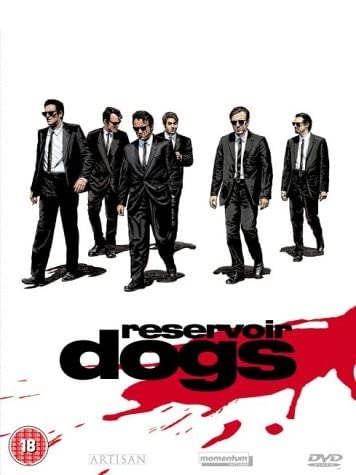
‘Mr. Brown, Mr. White, Mr. Blonde, Mr. Blue, Mr. Orange, and Mr. Pink.’
‘Why am I Mr. Pink?’
‘Because you’re a faggot, all right!’

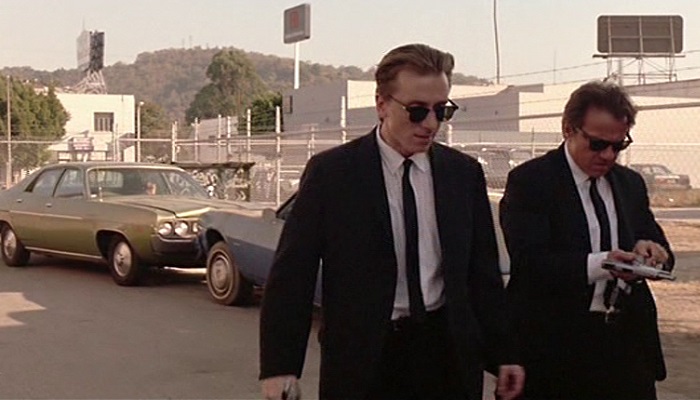
Meet the Reservoir Dogs. It’s 1992, and cinema firebrand Quentin Tarantino has just exploded onto the scene. Reservoir Dogs is easily the most impressive directorial debut of the 1990s – arguably of all time.

Joe Cabot and his son, Nice Guy Eddie, assemble a six-man crew for a daring diamond heist. None of the men have met before. To maintain anonymity and protect against betrayal, each is given an alias. Despite meticulous planning, the robbery goes catastrophically wrong. Someone talked. At the rendezvous point – an abandoned warehouse – the crew turns on each other in a deadly showdown.

This relatively simple premise is executed with striking ingenuity. Tarantino crafts a masterful nonlinear narrative, shifting back and forth in time between the heist’s setup and its bloody aftermath – yet never showing the actual robbery. Background details are revealed with precision, each revelation tightening the suspense until the traitor is unmasked and tensions reach a violent climax. It’s absolutely riveting cinema.

Since its release, Reservoir Dogs has inspired countless indie filmmakers hoping to capture the same low-budget brilliance, but few have come close. Why? Because they can’t write a screenplay this sharp, that’s why. Tarantino delivers more than just clever structure – he populates his film with complex, vividly drawn characters. And then there’s the dialogue: razor-sharp, darkly funny, and endlessly quotable.

At times, the film plays like a black comedy of the highest order. Yet it never loses its edge as a hyper-tense thriller. “My heart is beating so fast I’m about to have a heart attack”, Mr. Blonde says at one point and the same could be said for the audience. Whether it’s Mr. Pink’s frantic getaway, the desperate escape attempts, or the slow-burn mystery of the undercover cop, the tension never lets up.

The atmosphere swings from effortlessly cool – see the iconic opening credits—to grim and downright brutal. The casual banter gives way to explosive violence with little warning. The warehouse itself becomes a chamber of horrors: Mr. Orange bleeding out for most of the film, the infamous torture scene – it’s disturbing and hard to watch, and that’s exactly the point.

The cast seals the deal. With actors like Harvey Keitel and Steve Buscemi delivering Tarantino’s dialogue with perfect rhythm, even conversations about Madonna or tipping become electric. Chris Penn gives what might be his best performance, and Lawrence Tierney is unforgettable in his final tough-guy role.

Tarantino’s debut might still be his finest work. Pulp Fiction may be equally brilliant, but it occasionally meanders. Reservoir Dogs, in contrast, never loses momentum. It’s lean, vicious, and near-perfect – a film so good it’s almost a curse. Tarantino didn’t just enter the scene with a bang; he set the bar impossibly high from the very start.

Rating:

Quote:

MR. WHITE: “What you’re supposed to do is act like a fucking professional. A psychopath ain’t a professional. You can’t work with a psychopath. You don’t know what these sick assholes are gonna do next.”

Trivia:

Michael Madsen auditioned for the part of Mr. Pink. But Tarantino told him: “Here’s the thing: you’re not Mr. Pink, you’re Mr. Blonde. And if you’re not Mr. Blonde, then you’re not in the fucking movie.”