Night of the Living Dead

Director: George A. Romero
Written by: John A. Russo, George A. Romero
Cast: Duane Jones, Judith O’Dea, Karl Hardman, Marilyn Eastman

Year / Country: 1968, USA
Running Time: 96 mins.

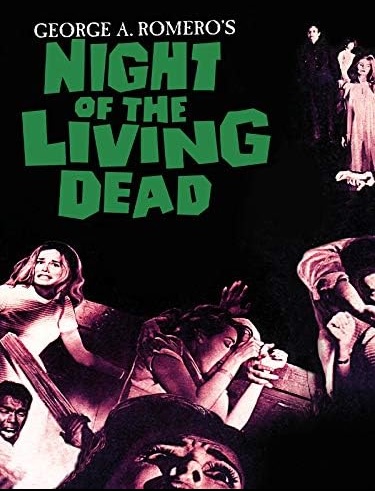
Director George A. Romero, who would dedicate most of his film career to making zombie movies, lays much of the groundwork right here. His feature debut would become an example of how to make a low budget horror movie; unknown actors, one central location and elements of social satire that appeal to the more intellectual viewer.

John and Barbra are visiting a graveyard where their father is buried, when John notices a strange phenomenon in the sky. Soon after they are attacked by a living dead man. Barbra manages to flee to a seemingly deserted farmhouse, leaving the annoying John behind as a zombie snack. In the farmhouse, Barbra soon gets company from both the living and the dead.

A possible explanation for the catastrophe is radiation that was released as a result from a NASA operation whereby a satellite was blown into bits. Romero’s message comes to the surface: not only are humans the cause of the major crisis, they are unable to deal with it once it’s there.

What works so well about this concept is the notion of crisis that erupts once the zombies are there. Their insatiable lust for human flesh and their large numbers make them a major threat. However, they are not nearly as scary as humans can be; narrow-minded, cruel and incapable of collaboration. A crisis of this scope would undoubtedly destroy us all.

There are many other elements that Romero would repeat and elaborate on in the zombie sequels that would follow. These include a lot of infighting among the ethnically mixed group of survivors, many panicky TV- and radio broadcasts, and quite a lot of graphic violence. Certainly considering the time in which this film was released.

Then there is the unexpected twist at the end that contributes to Night of the Living Dead’s status as a groundbreaking classic. The only thing I found lacking was the humour that its sequels contained. However this is still a film that is as tense as it is relevant. Maybe even more so in present times than back in 68’.

Rating:

Biography: George A. Romero (1940, New York – 2017, Toronto), who lived in Pittsburgh, made his feature debut with Night of the Living Dead. It was a low budget zombie movie that was both groundbreaking and shocking in its time. Quickly, it became a major horror classic. He then directed some smaller, personal films in which he often combined horror and social commentary. In 1978 he topped the success of Night of the Living Dead with his brilliant follow-up Dawn of the Dead. In the eighties his career stagnated a bit when he created the third part in his zombie series Day of the Dead. It was a failure both commercially and critically. It is more appreciated nowadays. In a recent feature by Empire – The 25 Best Zombie Movies Of All Time – it is ranked second only after Dawn of the Dead. In 2005 Romero made a small comeback with Land of the Dead. He died in 2017.

Filmography (a selection): Night of the Living Dead (1968), There’s Always Vanilla (1971), Season of the Witch (1972), The Winners (1973, TV episodes), The Crazies (1973), O.J. Simpson: Juice on the Loose (1974, TV doc), Martin (1977), Dawn of the Dead (1978), Knightriders (1981), Creepshow (1982), Day of the Dead (1985), Monkey Shines (1988), Two Evil Eyes (1990) [with Dario Argento], The Dark Half (1993), Bruiser (2000), Land of the Dead (2005), Diary of the Dead (2007), Survival of the Dead (2009)
Diary of the Dead

Director: George A. Romero
Written by: George A. Romero
Cast: Michelle Morgan, Joshua Close, Shawn Roberts, Amy Lalonde

Year / Country: 2007, USA
Running Time: 95 mins.

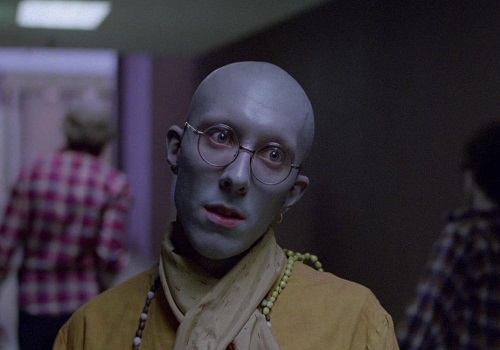
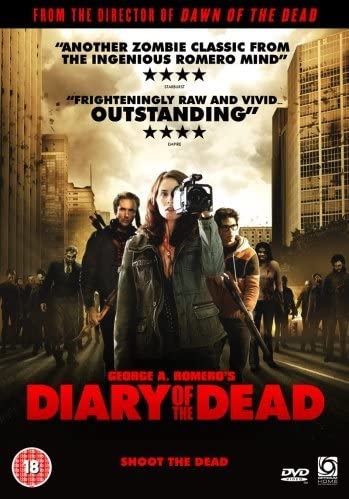
Romero is back in form after the mixed reception of Land of the Dead. Once again he successfully combines social satire with zombie horror. Diary of the Dead is not part of the timeline established in Romero’s earlier ‘Dead’ films. It stands on its own as the new millennium update of his zombie world in which media is the central theme.

The movie starts with a common news story that has an uncommon outcome. A man has killed his wife and daughter and then turned the gun on himself. As their bodies are carried out on stretchers, filmed by a TV-crew, they come back to life and start attacking the social workers and media present at the scene. This is the beginning of a new living dead outbreak.

The movie continues with a group of film students who are shooting a low-budget horror flick. Their accompanying tutor describes it as a stupid horror movie with a social satire red line (as in a Romero movie). During the shoot, the first signs of crisis start showing and the crew decides to drive back home to Pittsburgh (Romero’s home and regular film setting). Soon after, they end up in a massive crisis that is as bloody as it is devastating.

Diary of the Dead brings back some of the elements that made Romero’s older movies so brilliant. The scenes in which zombies and humans are killed off in inventive and gruesome ways haven’t been done this well since Romero’s ultimate masterpiece Dawn of the Dead. It also contains hilarious lines and situations which make this probably Romero’s funniest film to date.

The underlying social satire is also fairly well communicated. The media controls our lives. Everybody now has the means to display their vision using cameras and the internet. But as we see in this film, footage is easily manipulated (this movie is edited during the story), so how can we ever know what’s really going on? And even if we can, does it even matter? The media makes us insensitive to the world around us and cruelty rapidly becomes normal.

Are we worth saving? Decide for yourself.

Rating:

Biography: George A. Romero (1940, New York – 2017, Toronto), who lived in Pittsburgh, made his feature debut with Night of the Living Dead. It was a low budget zombie movie that was both groundbreaking and shocking in its time. Quickly, it became a major horror classic. He then directed some smaller, personal films in which he often combined horror and social commentary. In 1978 he topped the success of Night of the Living Dead with his brilliant follow-up Dawn of the Dead. In the eighties his career stagnated a bit when he created the third part in his zombie series Day of the Dead. It was a failure both commercially and critically. It is more appreciated nowadays. In a recent feature by Empire – The 25 Best Zombie Movies Of All Time – it is ranked second only after Dawn of the Dead. In 2005 Romero made a small comeback with Land of the Dead. He died in 2017.

Filmography (a selection): Night of the Living Dead (1968), There’s Always Vanilla (1971), Season of the Witch (1972), The Winners (1973, TV episodes), The Crazies (1973), O.J. Simpson: Juice on the Loose (1974, TV doc), Martin (1977), Dawn of the Dead (1978), Knightriders (1981), Creepshow (1982), Day of the Dead (1985), Monkey Shines (1988), Two Evil Eyes (1990) [with Dario Argento], The Dark Half (1993), Bruiser (2000), Land of the Dead (2005), Diary of the Dead (2007), Survival of the Dead (2009)
Dawn of the Dead

Director: George A. Romero
Written by: George A. Romero
Cast: David Emge, Ken Foree, Scott H. Reiniger, Gaylen Ross

Year / Country: 1978, Italy / USA
Running Time: 139 mins.

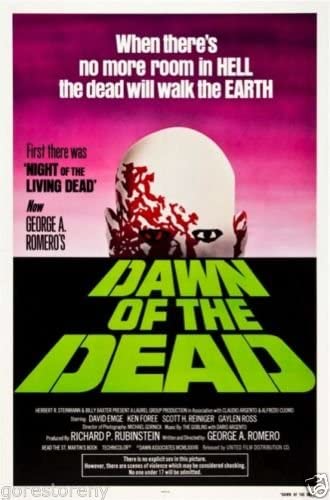
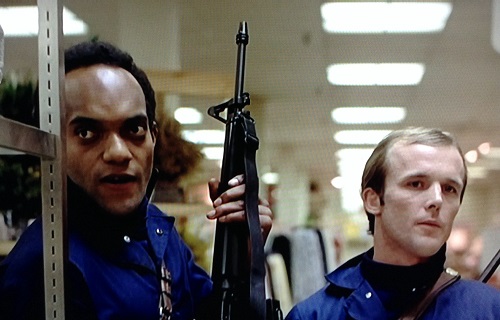
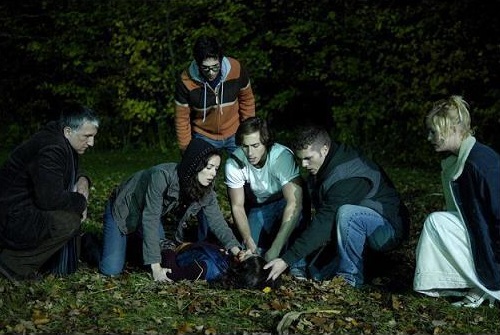
Ten years after the towering success of low-budget zombie flick Night of the Living Dead, its director George A. Romero finally delivered a follow-up. And when he did it exceeded all expectations. In this appropriately titled sequel, the zombie threat has grown alarmingly. There are barely places left that are zombie-free. In this apocalyptic nightmare, we follow a group of four survivors that want to fly to safety by helicopter.

They manage to land on the roof of a zombie infested shopping mall. Once they have sealed off a ‘living room’, they realize this isn’t such a bad location considering the times. After all, a shopping mall offers them plenty of supplies and relative protection against the flesh eating things outside. But new problems arrive. Tensions within the group are a constant factor and a gang of sadistic bikers, armed to the teeth, want to invade the shopping mall.

Never before (and after) were zombie movies this tense, entertaining and metaphorically rich. Its basic concept works incredibly well. We have the heroes, the location and the multiple threats that ensure an amazing two-and-a-half hours. Typically for Romero, the group consists of two white men, one black man and a pregnant woman who together form an interesting Utopia in the barricaded shopping mall.

The zombies, a metaphor for consumerist society, are great in evoking a varied set of emotions. They can be scary, funny and sad. That the humans are more frightening than the monsters is shown through the constant infighting of the heroes, the bloodthirsty rednecks and the bikers pointless torturing of zombies. Romero effectively makes the point that humans are incapable of dealing with crises. The extremely gory effects by Tom Savini require a strong stomach – especially during the finale – and the Italian rock band Goblin provides the fitting musical score. All the wonderful elements combined ensure a movie experience that is both intelligent and a lot of fun.

Rating:

Biography: George A. Romero (1940, New York – 2017, Toronto), who lived in Pittsburgh, made his feature debut with Night of the Living Dead. It was a low budget zombie movie that was both groundbreaking and shocking in its time. Quickly, it became a major horror classic. He then directed some smaller, personal films in which he often combined horror and social commentary. In 1978 he topped the success of Night of the Living Dead with his brilliant follow-up Dawn of the Dead. In the eighties his career stagnated a bit when he created the third part in his zombie series Day of the Dead. It was a failure both commercially and critically. It is more appreciated nowadays. In a recent feature by Empire – The 25 Best Zombie Movies Of All Time – it is ranked second only after Dawn of the Dead. In 2005 Romero made a small comeback with Land of the Dead. He died in 2017.

Filmography (a selection): Night of the Living Dead (1968), There’s Always Vanilla (1971), Season of the Witch (1972), The Winners (1973, TV episodes), The Crazies (1973), O.J. Simpson: Juice on the Loose (1974, TV doc), Martin (1977), Dawn of the Dead (1978), Knightriders (1981), Creepshow (1982), Day of the Dead (1985), Monkey Shines (1988), Two Evil Eyes (1990) [with Dario Argento], The Dark Half (1993), Bruiser (2000), Land of the Dead (2005), Diary of the Dead (2007), Survival of the Dead (2009)
Army of Darkness

Director: Sam Raimi
Written by: Sam Raimi, Ivan Raimi
Cast: Bruce Campbell, Embeth Davidtz, Marcus Gilbert, Richard Grove

Year / Country: 1992, USA
Running Time: 85 mins.

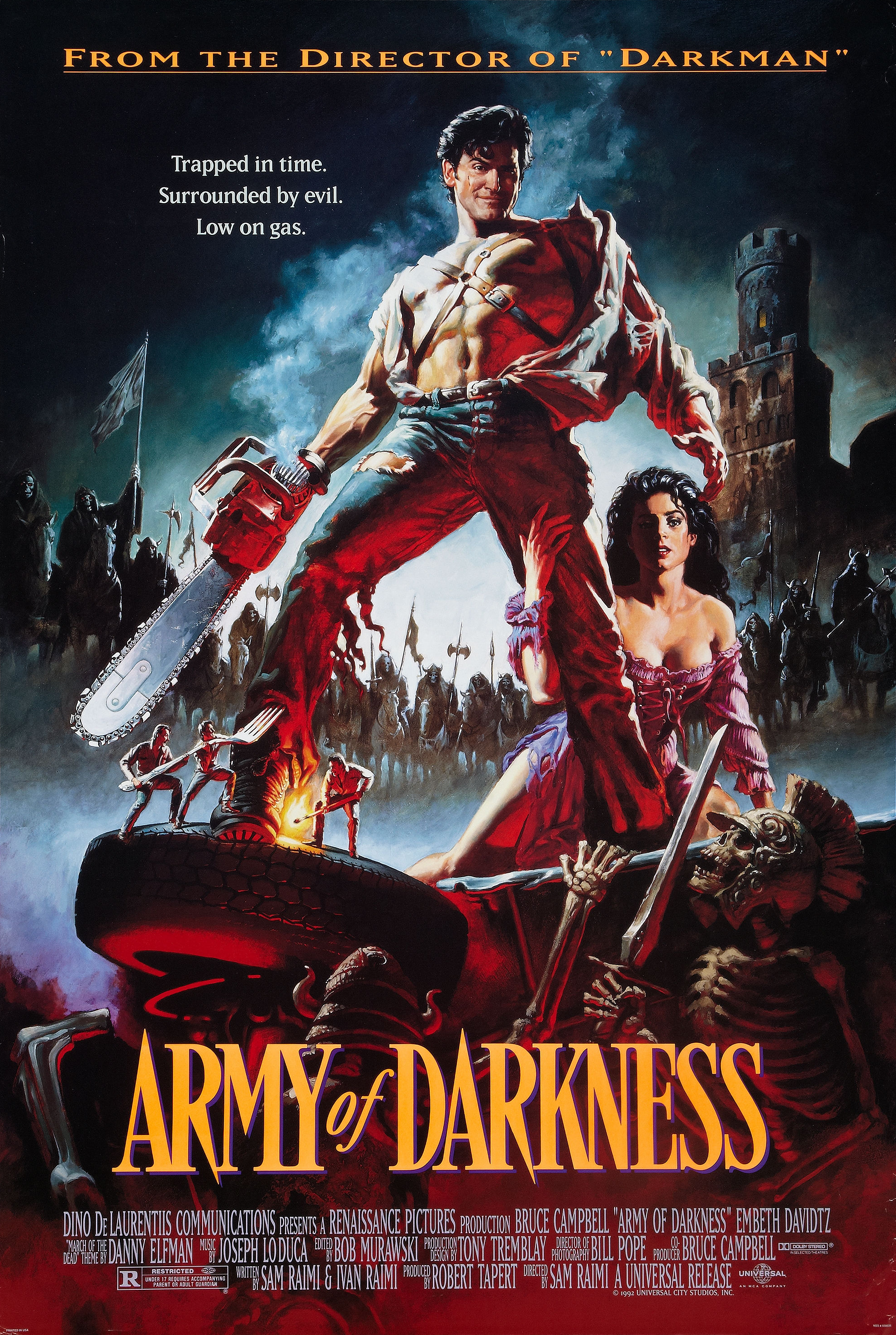
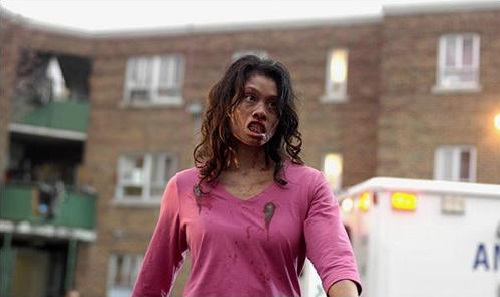
You want some more Evil Dead? Come get some! Ash is back with a chainsaw attached to his wrist and a boomstick on his back. This time around he’s kicking Evil’s ass in medieval times. Isn’t it groovy? Well, yes it is.

Some horror fans have argued that this third and final entry in the Evil Dead series is too comical to be considered horror. While this notion might be true, Raimi should be applauded for taking his franchise in this direction. This movie is hilarious! And there is plenty of horror as well.

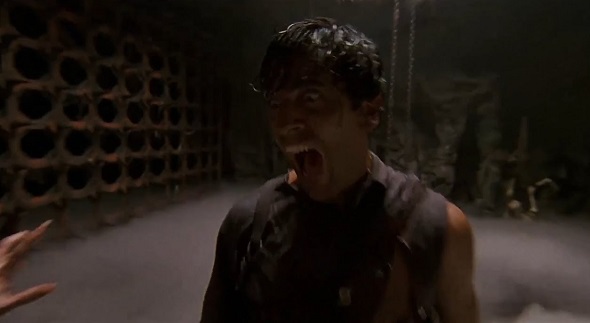
We literally get sucked into the action when our hero Ash disappears into a vortex. He is transported to the age of King Arthur where he is captured and mistaken for an ally of Arthur’s enemy Henry the Red. Arthur sentences him to a one-way ticket to ‘the pit’. After he has shown the primates some of his fancy tricks and gadgets they believe him to be the chosen one, who is to deliver them from evil.

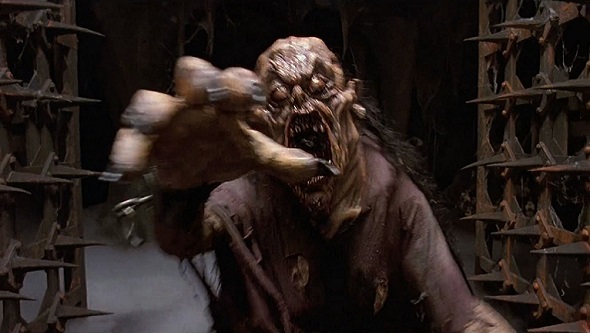
Ash is sent on a holy quest to find the occult book Necronomicon. He finds it, but screws up the book lifting procedure and Evil is awoken. An army of deadites head towards Arthur’s castle to retrieve the book. Now Ash has to lead Arthur’s men into battle while he simultaneously has to rescue his girlfriend Sheila, who has been kidnapped by the evil forces.

Army of Darkness contains some fantastic set-pieces around which dynamic action scenes take place. My personal favorites are the pit and the S-Mart finale. The skeleton army is also an impressive accomplishment. Stop-motion pioneer Ray Harryhausen would certainly approve.

Besides Raimi’s action-packed script and trademark camera tricks, fans can enjoy a brilliant double turn from B-Movie star Bruce Campbell as Good Ash and Bad Ash. With his masterful comic timing, loads of one-liners and his lady man skills, he makes Ash a truly lovable hero. Not to mention a horror icon. Hail to the King baby!

Rating:

Biography: Sam Raimi (1959, Royal Oak, Michigan) started making 8mm films when he was around ten years old. In his teenage years he first collaborated with his good friend Bruce Campbell, who would later appear in almost all of his films. The style of Raimi is influenced by the Three Stooges, of whom he is a huge fan. By making the short movie Within the Woods he managed to raise the required funds to make his first feature; the outrageous horror flick The Evil Dead. After that he made similar films with varying commercial success. In his films Raimi displays a great talent for creating inventive visuals. Most of his movies also feature slapstick and comic book elements. In 2002 Raimi made Spiderman, his biggest film to date. It was an enormous box-office success and Raimi would go on to make two sequels. Throughout his career Raimi has also produced many films and TV-series, mostly in the horror/fantasy genre. He remains a director with a huge fan base and many exciting future prospects.

Filmography (a selection): It’s Murder! (1977, short), Within the Woods (1978, short), Clockwork (1978, short), The Evil Dead (1981), Crimewave (1985), Evil Dead II (1987),  Darkman (1990), Army of Darkness (1992), The Quick and the Dead (1995), A Simple Plan (1998), For Love of the Game (1999), The Gift (2000), Spider-Man (2002), Spider-Man 2 (2004), Spider-Man 3 (2007)