The Midnight Meat Train

Director: Ryûhei Kitamura
Written by: Jeff Buhler (screenplay), Clive Barker (short story)
Cast: Bradley Cooper, Vinnie Jones, Leslie Bibb, Brooke Shields

Year / Country: 2008, USA
Running Time: 98 mins.

A big city is like a human body. The central train station is like the heart, the subway tunnels are the arteries and the trains themselves are blood cells. But just like a human body, a city can carry a disease through its blood vessels; a cancer or a deadly virus.

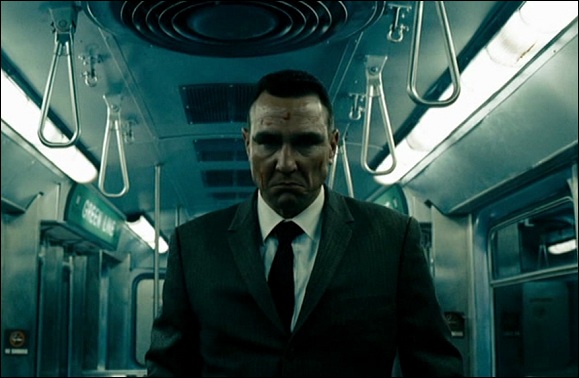
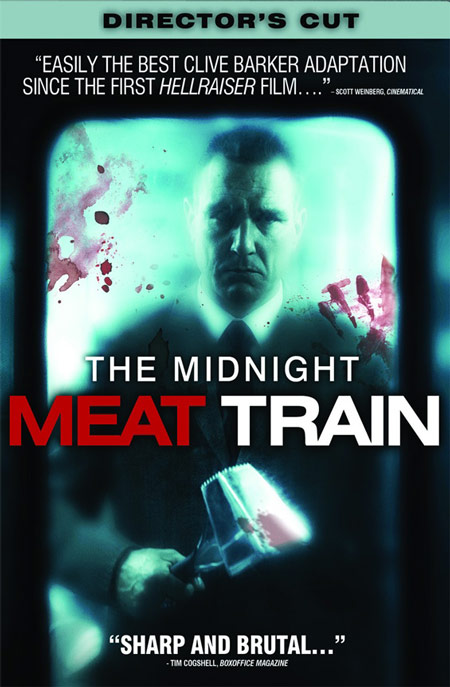
A struggling photographer (Cooper) wants to capture the real city as it has never been done before. He starts having horrible visions of a butcher (Jones), who slays people on the midnight subway. To impress an influential photo guru, a ridiculous role by Brooke Shields, he starts making more dangerous photos, including those of the butcher himself.

Movies based on Clive Barker novels are not guaranteed to be great films. In fact, only the original Hellraiser can be called great. The rest range from mediocre to poor. The Midnight Meat Train does a better job than most. Although it never becomes scary, it does have a sense of dread, something all novels by Barker definitely possess.

The signature of director Kitamura is very visible. The cleverly edited slayings are typical of Japanese horrors and make The Midnight Meat Train a purely graphical experience. It is hard to take it seriously; the hero jumps on a riding train in one scene. The cast is also not exactly grade A. Shields was already mentioned, Jones fits his role like a glove, but is not scary at all. Then there is the boring Cooper and his girlfriend Bibb, who is not the most convincing actress.

Apart from the images, what makes The Midnight Meat Train a worthy ride to take is where the train eventually comes to a halt. There is actually an ending to this tale that is Hellraiserishly fantastic. Better to watch it long after dinner though.

Rating:

Biography: Ryûhei Kitamura (1969, Osaka) briefly studied film making in Australia. The first ten years he spent in Japan making horror, action and monster movies, all starring Tak Sakaguchi. Well-known successes include Azumi and Versus. In 2008 he made his American debut with The Midnight Meat Train.

Filmography: Heat After Dark (1996), Down to Hell (1997), Versus (2000), Jam Films (2002, segment ‘The Messenger – Requiem for the Dead’), Sukai hai (2003, TV episodes), Azumi (2003), The Messenger (2003, short), Sakurajima (2004, doc), LoveDeath (2006), Romance Novel (2006, TV), The Midnight Meat Train (2008), Baton (2009)1
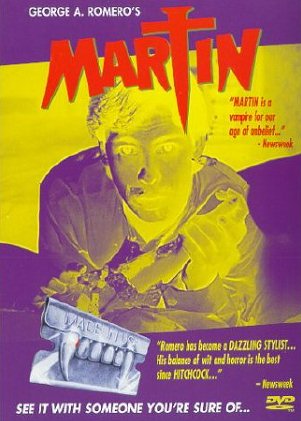
Martin

Director: George A. Romero
Written by: George A. Romero
Cast: John Amplas, Lincoln Maazel, Christine Forrest

Year / Country: 1977, USA
Running Time: 91 mins.

See it with someone you’re sure of…

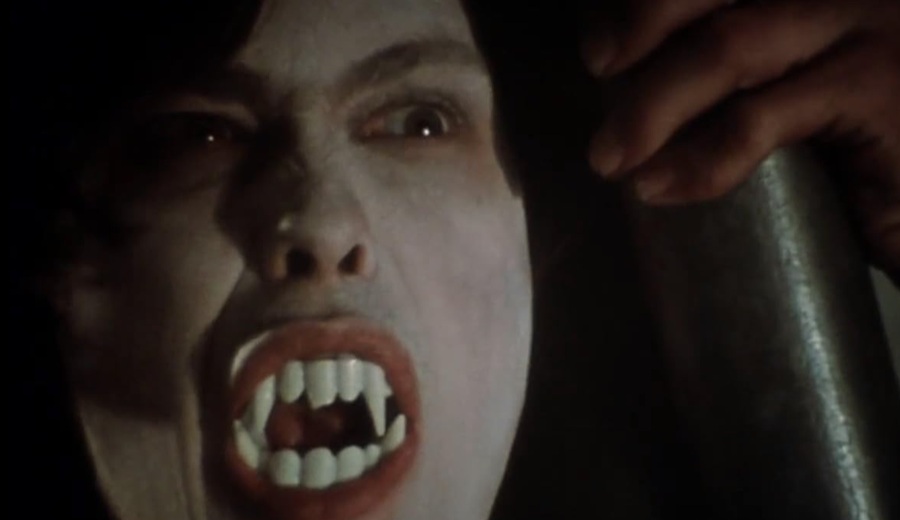
Martin is a vampire. At least that is what he appears to be. But why does he use a needle to put his victims to sleep? And why cut their wrists with a razor in order to drink their blood? Where are his fangs? There are answers to these questions. Because he slices their wrists he is able to stage a suicide. These logical explanations apply to everything Martin does. That way you can never be sure he is a real vampire. He could also be faking it or merely thinking he is one.

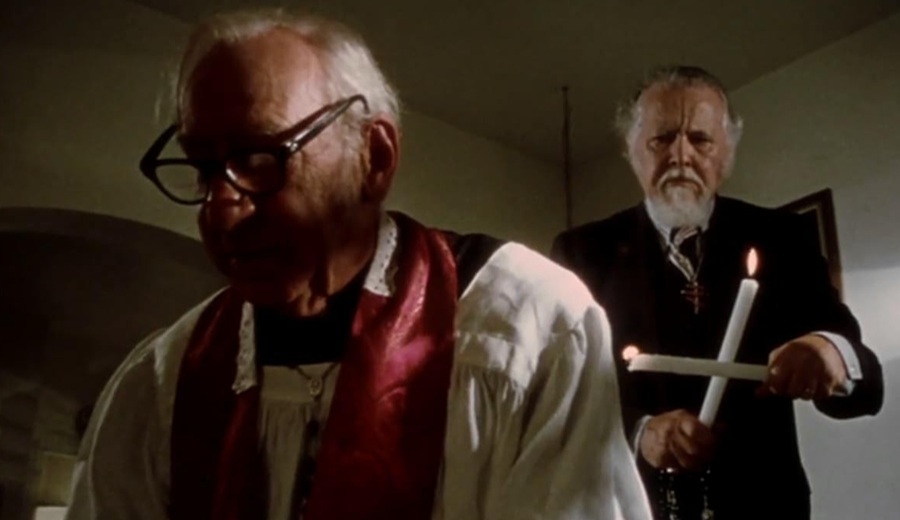
Martin’s eldest cousin Tada Cuda, where he goes to stay in Pittsburgh, certainly thinks he is a real nosferatu. He tells him that he will first save his soul and then destroy him. Vampirism is a family curse, we later learn, and Martin is one of the last living specimens. But the more we see of him, the less we believe he is for real. Every vampire myth is discarded by Martin. He eats garlic, can hold a crucifix and sunlight only mildly bothers him. He tells his cousin that there is no magic. It is just a sickness.

Black & white flashbacks later reveal that Martin is an old vampire, if he is not imagining it. In these flashbacks, Martin is chased by an angry mob after he gets caught feeding on human blood. This is where Romero’s point is becoming clearer. Monsters are created by man so they don’t have to deal with their own vileness. It is much more convenient to have a scapegoat like Martin. Romero himself said about Martin: “Man’s barbarism seems quick to rise, particularly when justified by some ‘cause’ of righteous society, as witness the heinous acts performed in wartime.”

That humans are more monsters than monsters is a theme that finds its way in almost all of Romero’s films. But rarely more successful than in Martin, which is considered his finest film besides the ‘Dead’ series. I agree. It is atmospheric as hell and especially when it reaches a horrible and confrontational ending, Romero’s point comes across perfectly.

Rating:

Biography: George A. Romero (1940, New York – 2017, Toronto), who lived in Pittsburgh, made his feature debut with Night of the Living Dead. It was a low budget zombie movie that was both groundbreaking and shocking in its time. Quickly, it became a major horror classic. He then directed some smaller, personal films in which he often combined horror and social commentary. In 1978 he topped the success of Night of the Living Dead with his brilliant follow-up Dawn of the Dead. In the eighties his career stagnated a bit when he created the third part in his zombie series Day of the Dead. It was a failure both commercially and critically. In 2005 Romero made a small comeback with Land of the Dead. Romero died in 2017.

Filmography (a selection): Night of the Living Dead (1968), There’s Always Vanilla (1971), Season of the Witch (1972), The Winners (1973, TV episodes), The Crazies (1973), O.J. Simpson: Juice on the Loose (1974, TV doc), Martin (1977), Dawn of the Dead (1978), Knightriders (1981), Creepshow (1982), Day of the Dead (1985), Monkey Shines (1988), Two Evil Eyes (1990) [with Dario Argento], The Dark Half (1993), Bruiser (2000), Land of the Dead (2005), Diary of the Dead (2007), Survival of the Dead (2009)

The Addiction

Director: Abel Ferrara
Written by: Nicholas St. John
Cast: Lili Taylor, Christopher Walken, Annabella Sciorra, Edie Falco

Year / Country: 1995, USA / Argentina
Running Time: 79 mins.

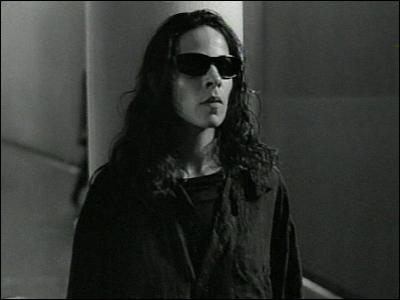
In Abel Ferrara’s take on the vampire genre, vampirism is a metaphor for drug addiction (and Aids). Together with regular collaborator Nicholas St. John, who wrote the screenplay, Ferrara explores the mean streets of New York once again. Amidst dope peddlers and junkies listening to Cypress Hill, the philosophy student Kathleen is bitten by the sardonic vampire Casanova (Annabella Sciorra).

Her turning into a hungry vampire is a path filled with suffering. While she is searching for relief from her addiction, she finds that her addiction is her only relief. In a memorable one-scene appearance, vampire Christopher Walken teaches here a few things about addictions (have you read ‘Naked Lunch’?). He practices abstinence and teaches Kathleen that like Tibetans, we can learn to survive on a little. But Kathleen must first go through a massive feeding frenzy at the end of the film before finally finding some relief through religion.

Besides being an unusual, but brilliantly effective genre film, this is also a work of art that deals with deeper questions. Most urgently it asks how we can resist evil. The movie features many references to historical acts of greater evil and – typical for Ferrara – deals with guilt, redemption and Catholicism. The black and white cinematography is beautiful and the cast, not in the least lead actress Lili Taylor, is impressive. But how much you will enjoy the final result will depend on your tolerance for philosophical and religious subject matter. Either way, this is one of Ferrara’s finest works to date.

Rating:

Biography: Abel Ferrara (1951, New York) is a New York artist and filmmaker. He started making amateur films on Super 8 in his teens before making his mark as independent film director with bloody underground films such as The Driller Killer. Ferrara has an independent way of working, uses low budgets, but is still able to attract Hollywood talent for his movies, such as Christopher Walken and Harvey Keitel. His raw, realistic style and controversial content has earned him a position as an important voice in American cult cinema.

Filmography (a selection): Nicky’s Film (1971, short) / 9 Lives of a Wet Pussy (1976) / Not Guilty: For Keith Richards (1977, short doc) / The Driller Killer (1979) / Ms. 45 (1981) / Fear City (1984) / Cat Chaser (1989) / King of New York (1990) / Bad Lieutenant (1992) / Body Snatchers (1993) / The Addiction (1995) / The Funeral (1996) / The Blackout (1997) / New Rose Hotel (1998) / ‘R Xmas (2001) / Mary (2005) / Go Go Tales (2007) / Chelsea on the Rocks (2008, doc) / Napoli, Napoli, Napoli (2009) / Welcome to New York (2014) / Pasolini (2014) / Alive in France (2017, doc) / Piazza Vittorio (2017, doc) / The Projectionist (2019, doc) / Tommaso (2019) / Siberia (2019)

Rogue

Director: Greg McLean
Written by: Greg McLean
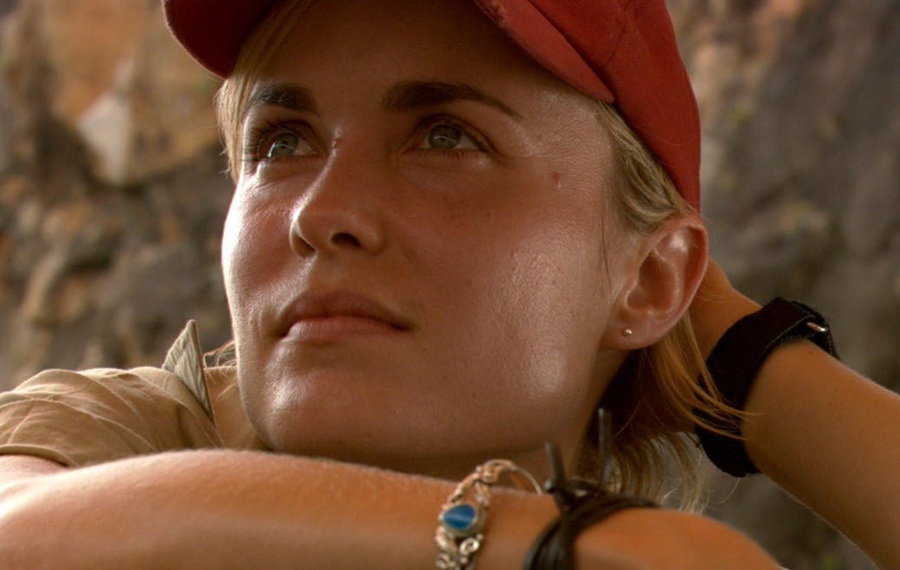
Cast: Radha Mitchell, Michael Vartan, Sam Worthington

Year / Country: 2007, Australia / USA
Running Time: 99 mins.

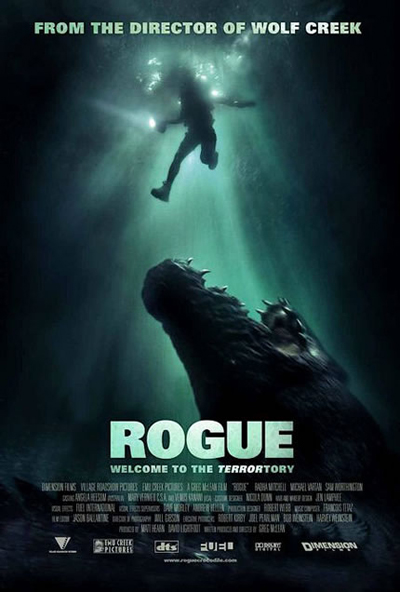
Hot and sultry climates tend to produce gigantic monsters. Northern Territory in Australia certainly fits this description. Yet, Ozzywood Horror flicks seldom make it to the mainland. Rogue did. Perhaps due to the involvement of executive producers Bob and Harvey Weinstein? It can’t be the original concept. Then again, movies about oversized creatures with a taste for human flesh will always find a market.

Truth be told: I got a thing with crocodiles. The fact that this species’ origins go way back to prehistoric times fascinates me. I have often wondered what it must be like to be snatched by this massive reptile predator. Because of this fascination, movies about killer crocs can easily do right for me.

Rogue does – be it in a little formulaic fashion – do what it is supposed to do. A group of tourists takes a cruise down a river in a modestly sized boat. Nothing too big happens in the first half hour, but it is nevertheless not boring. That is because we get treated with beautiful nature images, pretty music and some crocodile wisdom: the typical ingredients of a wicked creature flick.

The characters also get properly introduced. One of the cruisers is an American travel journalist who brags a bit too much about his work to the tour guide. Another is obviously a widower as we watch him empty an urn in the river and cry a little bit. These subtle gestures work well in acquainting the audience with these characters, so when shit hits the fan, they will actually care when somebody gets torn to shreds.

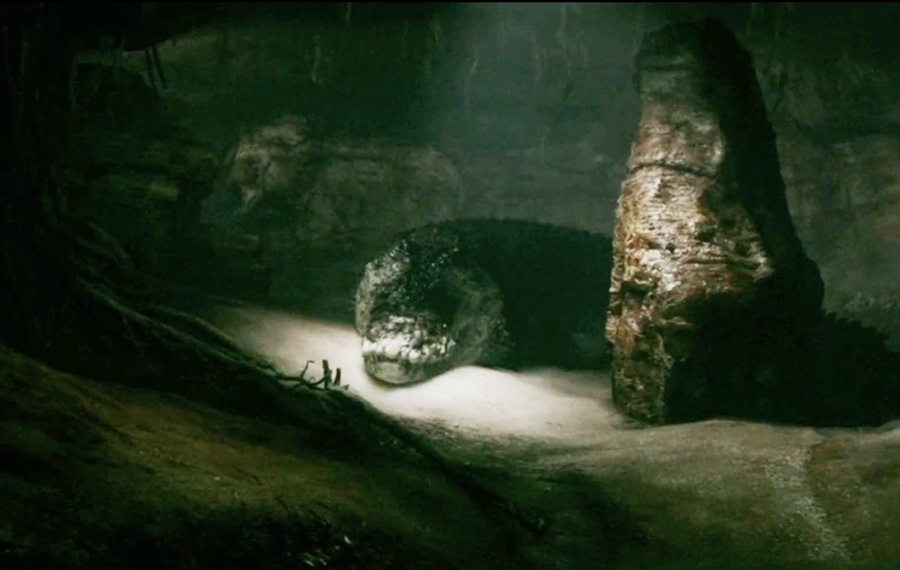
The group gets into trouble when their boat breaks down and they have to take shelter on a small island before help will arrive. The problem is the flood. Due to the rising water level, the entire island is about to disappear. In the water, a massive seven foot crocodile awaits them. So far, so good. The action that follows is not spectacular per se, but – much like the build-up – works well enough. Tourists get gruesomely killed and the American hero eventually takes on the killer croc in its own lair.

Rogue may not be an award winning film. Nor is it the best in its kind. However it still offers an enjoyable little piece of escapism. Exactly what its target audience is undoubtedly looking for.

Rating:

Biography: Greg McLean attended the National Institute of Dramatic Art (NIDA) in Sydney, where he graduated in directing. He started his career with theatre productions, including the highly acclaimed Hamlet by theatre director Neil Armfield. He then started his movie career with various shorts, television commercials and corporate videos. In 2005 he made his first feature film: Wolf Creek, and followed it with Rogue in 2007.

Filmography: ICQ (2001, short), Wolf Creek (2005), Rogue (2007)