Mean Streets (1974)


‘You don’t make up for your sins in church. You do it in the streets…’

Directed by:
Martin Scorsese

Written by:
Martin Scorsese
Mardik Martin

Cast:
Harvey Keitel (Charlie Cappa), Robert De Niro (John ‘Johnny Boy’ Civello), David Proval (Tony DeVienazo), Richard Romanus (Michael Longo), Amy Robinson (Teresa Ronchelli), Cesare Danova (Giovanni Cappa), Victor Argo (Mario), George Memmoli (Joey ‘Clams’ Scala), Lenny Scaletta (Jimmy), Jeannie Bell (Diane)
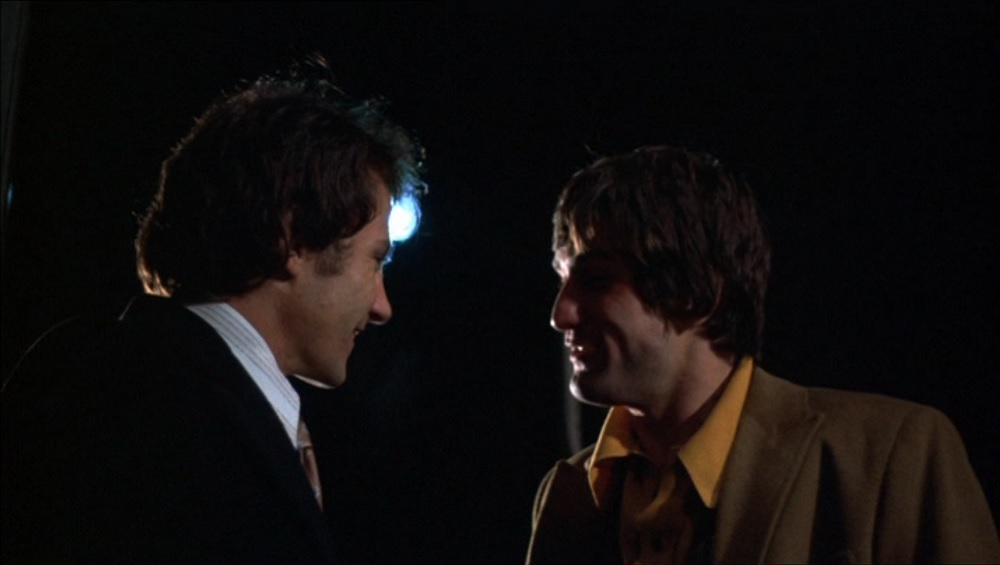
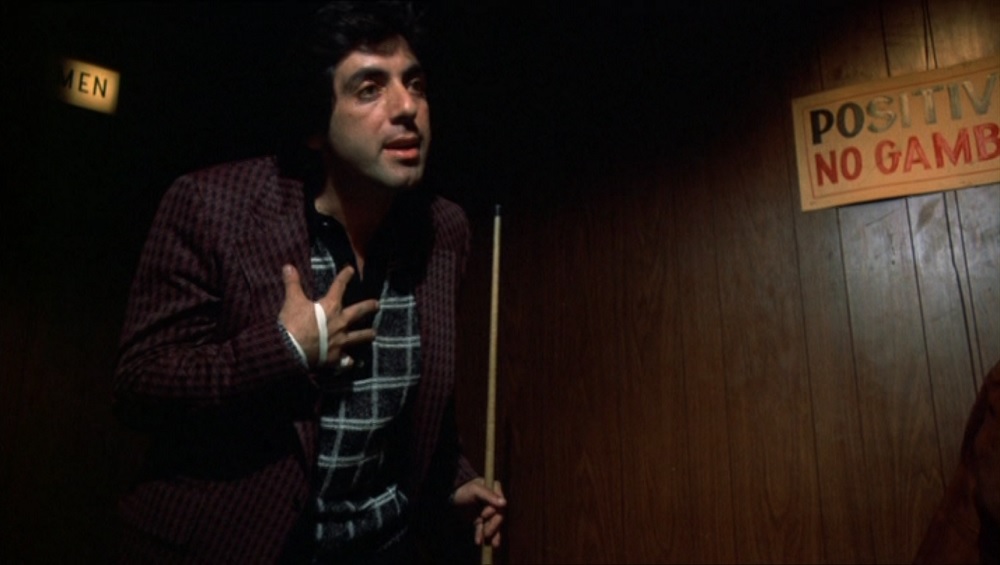
Mean Streets marks the first collaboration between Martin Scorsese and Robert De Niro and right out of the gate, it’s a masterpiece. Set in the tight-knit world of Little Italy, the film follows four small-time hustlers: the conflicted Charlie (Harvey Keitel), hot-tempered bar owner Tony (David Proval), dim-witted loan shark Michael (Richard Romanus), and the reckless wildcard Johnny Boy (Robert De Niro).

Although it isn’t technically Scorsese’s debut, it feels like it. This is the movie in which his voice fully emerges for the first time. It showcases early yet commanding performances by Keitel and De Niro, two actors who would become his most trusted collaborators. Many of the hallmarks of Scorsese’s later masterpieces are already present: the gritty New York setting, the soundtrack full of sixties pop classics, the collision of religion and crime. This isn’t exactly a gangster film – it’s about small-time crooks – but it plays like a prelude to GoodFellas, with dialogues and moral tensions that already sound familiar.

Scorsese immediately sets the tone with a Super 8 projection of Charlie wandering the streets, underscored by the Ronettes’ ‘Be My Baby’. From there, we trail Charlie through his daily routine: drinking in bars, running minor cons, wrestling with Catholic guilt in church visits, and trying to reconcile his moral compass with his ambition.

Charlie wants to rise in the underworld by aligning with his mob-connected uncle, but his loyalty to Johnny Boy – a man drowning in debt and chaos – pulls him down a dangerous path. That loyalty is both touching and toxic, and Scorsese makes it clear early on that violence is never far away. A brutal barroom shooting foreshadows the storm gathering around these characters.

The film’s raw power lies in its atmosphere. Scorsese layers the story with a soundtrack of rock ’n’ roll classics – the Stones’ ‘Jumpin’ Jack Flash’ among them – injecting energy and immediacy into every scene. His restless camera, the naturalistic dialogue laced with profanity, and the lived-in performances combine to create a world that feels authentic and alive.

De Niro is magnetic as Johnny Boy, unpredictable and dangerous yet oddly charming, while Keitel gives a deeply human performance as Charlie, a man torn between sin and salvation. Their chemistry is the film’s beating heart. Scene after scene burns into memory: a drunken spree, a hilariously chaotic bar fight, an explosive confrontation on the street. The pacing is electric, and the details are so rich you’ll want to revisit it just to soak up more of Scorsese’s vision.

The film still feels fresh today. It is utterly original, with no real comparison except some of Scorsese’s later work. Mean Streets doesn’t just hint at the brilliance to come; it announces the arrival of one of cinema’s great storytellers.

Rating:

Quote:
CHARLIE: “You know something? She is really good-lookin’. I gotta say that again. She is really good-lookin’. But she’s black. You can see that real plain, right? Look, there isn’t much of a difference anyway, is there. Well, is there?”

Trivia:
The opening words are actually spoken by Martin Scorsese, not Harvey Keitel as we are led to believe.
My Voyage to Italy

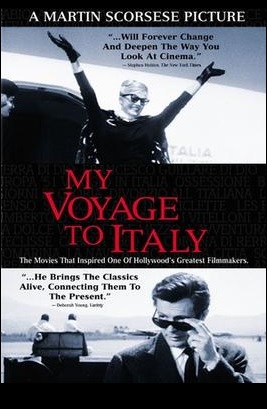
During the recent vacation to Italy with my family, I finally watched Scorsese’s four hour documentary on Italian cinema called Il mio viaggio in Italia, or My Voyage to Italy (1999).

In it, he describes how he fell in love with Italian cinema: “Because so many Italians lived in New York, one channel showed Italian movies on Friday night with subtitles.” Together with his family, he watched as many of them as he could.

When he was a child, Italy was just emerging from World War II, and the aftermath became the central theme of many films from that period. Movies that contained powerful images like nazi soldiers occupying Rome in Rome, Open City (1945, Roberto Rossellini). Despite the often bad quality of the prints, all the essential messages came through, Scorsese recalls.

“Some images were so powerful that they made my grandparents cry”, says Scorsese. “They saw the country they left behind and what became of it. They were feeling protected in the US, but guilty at the same time. These movies could have been about them.”

The first Italian film Scorsese saw was Paisan (1946, Roberto Rossellini). Rossellini’s follow-up to Rome Open City consists of six episodes set during the liberation of Italy. It follows the allied forces as they move through Italy, from Sicily to the northern Po Valley, to drive out the Nazi’s. What impressed him the most were the episodes about people who make the ultimate sacrifices to achieve freedom.

The third part of Rossellini’s post-war trilogy is Germany, Year Zero (1948, Roberto Rossellini). Sacrifice is again a major theme in this movie. “It seems that Rossellini begs the allied forces to look with compassion at their former enemies, so that they could go on together.”

My Voyage to Italy shows long movie fragments, accompanied by Scorsese’s comments. He really takes the time to dissect them, and after each discussion you almost have the feeling as if you have seen them. He covers two main ‘extremes’ of Italian cinema: the epic and the neorealist drama.

The first epic he encountered was Fabiola (1947, Alessandro Blasetti). Its monumental imagery inspired him so much that he drew storyboards for Roman epics of his own. Later, he discovered silent masterpieces such as Cabiria (1914, Giovanni Pastrone), which he describes as “like watching a journal from ancient Rome.”

After World War II, the Italian film industry lay in ruins. With minimal resources to express themselves, filmmakers created the neorealist movement. They depicted the struggles of their nation with stark honesty, relying on non-professional actors and real locations. “Illusion took a backseat to reality”, Scorsese explains.

Neorealism had tremendous influence over cinema that is still felt today in cinematic movements all over the world. It gives audiences raw, human experience – and shows us the heroes and heroines of everyday life.

The most famous example is probably Bicycle Thieves (1948, Vittorio De Sica) about an unemployed man who desperately needs work to support his wife Maria, his son Bruno and his small baby. When everything he tries fails, he steals a bicycle, which leads to dire consequences. It’s an extremely touching film, a specialism of its director Vittorio De Sica.

An earlier film De Sica made is also discussed. It is called Shoeshine (1946) and it triggers much of the same emotions as Bicycle Thieves. Two boys who shine shoes (does the famous GoodFellas line come from here?) end up in prison, which is depicted as hell on earth. Here they are eventually forced to betray each other. Like Bicycle Thieves it has very moving moments involving children. Orson Welles once said that he could never do what De Sica did with Shoeshine, which is making the camera disappear.

In 1952, De Sica made Umberto D., which Scorsese finds an even better film than Bicycle Thieves. This time the story follows an elderly man who, penniless, cares only for his beloved dog. It contains many heartbreaking moments. After seeing Umberto D., the Italian Minister of Culture wrote in an open letter that he hated neorealism, and he asked the filmmakers to be more optimistic.

Perhaps in response, De Sica’s next film, The Gold of Naples (1954), embraced a lighter tone. Though comedic in spirit, it still carried an undercurrent of tragedy. This seamless interplay between drama and comedy, Scorsese notes, is a defining quality of Italian cinema: “Actors can walk the razor-thin line between comedy and drama.”

In the third part of the documentary, Scorsese discussed a different kind of filmmaker: Luchino Visconti. Visconti came from a prominent, wealthy Italian family. But he was also a lifelong member of the communist party. He didn’t have to work, so he felt a little aimless. In the 1930’s he worked for French director Jean Renoir and this influenced him greatly. A hallmark of his films would be exploring the European aristocracy.

But his first film is not about that. Obsession (1943, Luchino Visconti) is seen as a forerunner of the neorealism movement. But, Scorsese says, it is a very stylized movie. “It’s a melodrama with a very earthy sensual feel to it. All Visconti’s gifts were already there: His eye for detail, his mastery of the camera and most of all his operatic sense for action and emotion.”

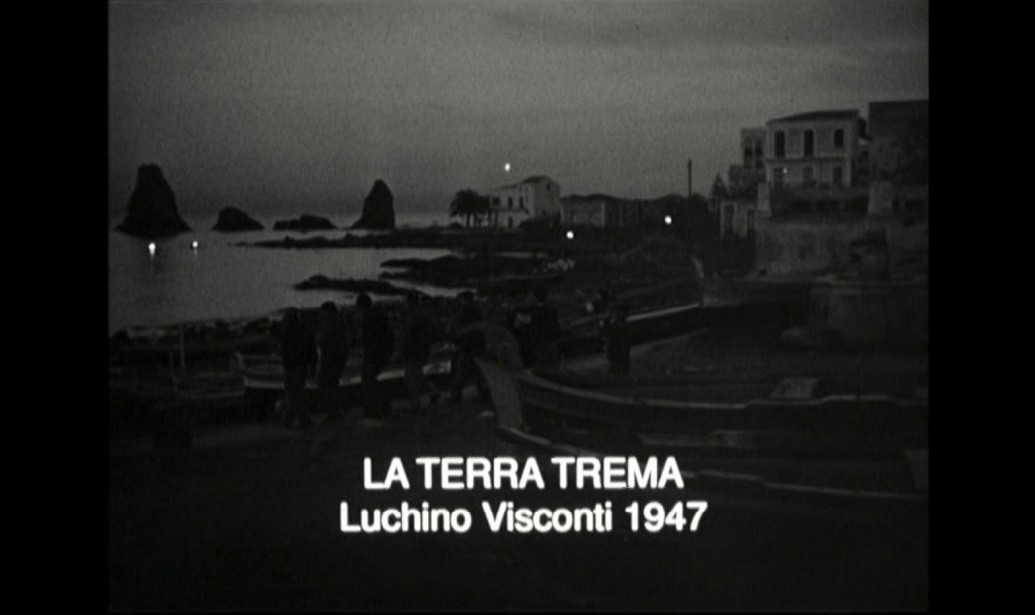
His follow up was The Earth Trembles (1948, Luchino Visconti) about a group of Sicilian fishermen who rebel against northern middlemen. Besides film, Visconti also started a theatre group that included a young Marcello Mastroianni. This experience is clearly put to good use for Visconti’s next film: Senso (1954). Set during the Italian-Austrian war of 1866, it vividly recreates the 19th century. “He really brought the era to life”, says Scorsese, “not just in how it looked, but in how it felt.”

Finally, Scorsese turns to Federico Fellini, often regarded as the Italian filmmaker. Fellini’s early film I Vitelloni (1953) is an autobiographical tale of five young men in Rimini, torn between staying home and pursuing their dreams. Scorsese deeply identified with them, drawing inspiration for his breakthrough film Mean Streets (1973).

Fellini’s international breakthrough came with La Dolce Vita (1960), a modern reflection on freedom and decadence in the shadow of the Cold War. To escape dread, people plunge into endless pleasures and distractions. This was Fellini’s first collaboration with Marcello Mastroianni, with whom he would make five films – an artistic partnership akin to Scorsese’s with Robert De Niro and later Leonardo DiCaprio.

His follow-up, (1963), became a personal touchstone for Scorsese. “La Dolce Vita was only the calm before the storm”, he says. “With he reinvented himself, and in doing so, reinvented cinema.”

The film boldly dramatizes Fellini’s own artistic crisis. Mastroianni plays Guido, a director unable to complete his next project, searching in vain for inspiration. The film becomes a tapestry of dreams, memories, and anxieties, unfolding as a stream of consciousness rather than a conventional plot. For Scorsese, “ is the purest expression of love for the cinema that I know.”

The documentary ends with this tribute, leaving us with great words of inspiration from one of the greatest living filmmakers.

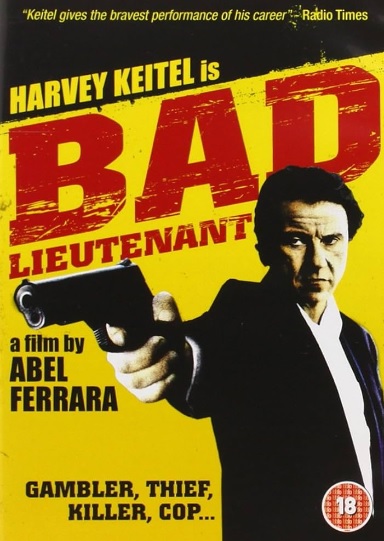
Bad Lieutenant

Director: Abel Ferrara
Written by: Zoë Lund, Abel Ferrara
Cast: Harvey Keitel, Victor Argo, Paul Calderón

Year / Country: 1992, USA
Running Time: 96 mins.

Harvey Keitel is the Bad Lieutenant in Abel Ferrara’s disturbing cop drama. He’s the kind of guy who starts snorting cocaine in his car right after he has dropped his two boys off at school. LT, as he’s credited, is a hopeless addict. He’s addicted to alcohol, crack, smack and gambling. He is also a walking time bomb.

Harvey Keitel was on a roll this year. First he appeared in Reservoir Dogs and then in this, probably the most well known and appreciated movies by New York artist and filmmaker Abel Ferrara. His performance in Bad Lieutenant is very raw, angry and animallike. LT is like a whacked out version of Keitel’s Mean Streets character.

Speaking of that movie, there are some definite links there, and with Scorsese in general. New York plays a big role, and so does religion. In his most desperate moment, LT even hallucinates of Jesus.

So how bad is LT? Pretty bad. He steals illegal drugs from evidence and puts them in the market and he steals money from two guys who just robbed a store owner while he sends the poor guy over to the station to file a report. He uses his badge only to blackmail two underaged girls to perform sexual acts, and his gun is strictly for blowing out his car radio after he lost another basebal bet.

Like Ferrara’s other drug movie The Addiction, Bad Lieutenant is a very effective film about addiction as it shows the constant hunger and the madness of it. LT is just going around frantically feeding the beast, but it’s never going to be enough. We know he is never going to fill that void and his inevitable downfall draws ever nearer. The despair that Keitel expresses is very well acted. The level of self destruction and self hatred is at times hard to watch though.

Rating:

Biography: Abel Ferrara (1951, New York) is a New York artist and filmmaker. He started making amateur films on Super 8 in his teens before making his mark as independent film director with bloody underground films such as The Driller Killer. Ferrara has an independent way of working, uses low budgets, but is still able to attract Hollywood talent for his movies, such as Christopher Walken and Harvey Keitel. His raw, realistic style and controversial content has earned him a position as an important voice in American cult cinema.

Filmography (a selection): Nicky’s Film (1971, short) / 9 Lives of a Wet Pussy (1976) / Not Guilty: For Keith Richards (1977, short doc) / The Driller Killer (1979) / Ms. 45 (1981) / Fear City (1984) / Cat Chaser (1989) / King of New York (1990) / Bad Lieutenant (1992) / Body Snatchers (1993) / The Addiction (1995) / The Funeral (1996) / The Blackout (1997) / New Rose Hotel (1998) / ‘R Xmas (2001) / Mary (2005) / Go Go Tales (2007) / Chelsea on the Rocks (2008, doc) / Napoli, Napoli, Napoli (2009) / Welcome to New York (2014) / Pasolini (2014) / Alive in France (2017, doc) / Piazza Vittorio (2017, doc) / The Projectionist (2019, doc) / Tommaso (2019) / Siberia (2019) / Padre Pio (2022)

VIDEO: Trailer Nicky & Mugs (1999)

Ik heb een nieuwe video op mijn YouTube-kanaal gezet: een trailer van één van mijn vroegste video’s. Nicky & Mugs is een nooit afgemaakte amateur gangster film. Voor deze trailer heb ik ook geput uit de wel afgemaakte korte video Half 6 waarin de personages Nicky en Mugs geïntroduceerd worden.

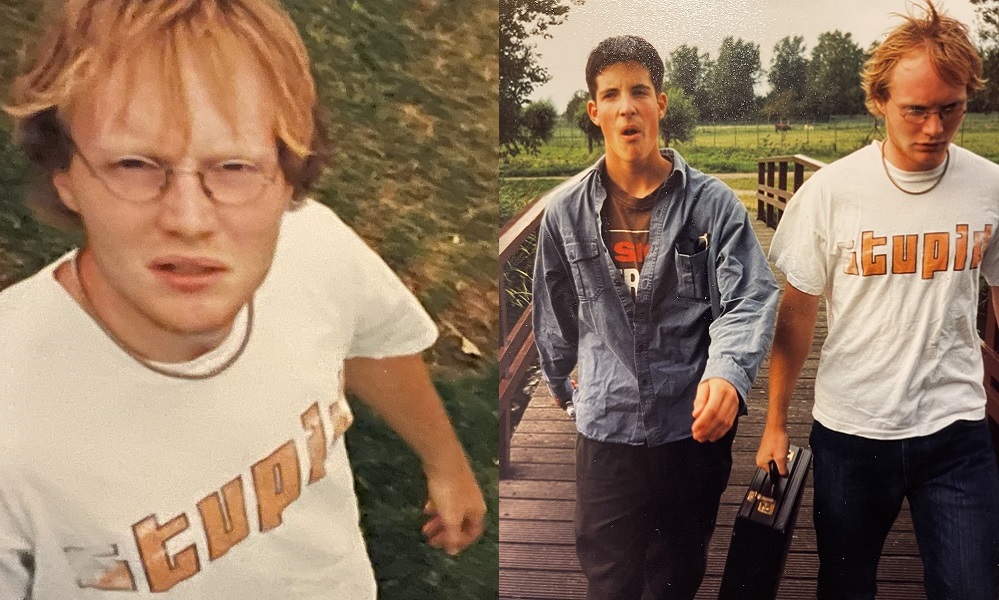
Het zes minuten durende Half 6 heb ik samen met mijn oude maat Max gemaakt op de videocursus Open Studio in Charme, Frankrijk. Het gaat over de twee jonge criminelen Mugs en Nicky (gespeeld door Max en ikzelf) die door de straten van een klein Frans dorpje zwalken. Mugs steelt een set jeu de boules ballen en de twee vrienden doen een potje in een steegje. Een Franse toerist vraagt de weg (logisch!) en de gangsters slaan hem finaal in elkaar.

In de volgende scène lopen ze door een bos. Nicky beledigt Mugs door te zeggen dat hij er als een wijf bijloopt. Mugs gooit hem voor straf van een heuvel af. Vervolgens komen ze bij een bar waar Mugs alleen een biertje voor zichzelf besteld. Nicky gooit woedend zijn brandende peuk in het biertje en de twee kemphanen beginnen te knokken. Als Mugs met een bloedneus op de grond ligt ziet hij dat het half zes is (“shit, half zes man!”) en de twee vrienden zetten het op een rennen.

Na een keiharde spint komen ze bij een huisje, bergen hun pistolen op en gaan naar binnen. Nu komt de punchline. Een vrouw die hun moeder blijkt te zijn vraagt of ze hun handen al hebben gewassen en begint ze te meppen als ze toegeven van niet. De harde criminelen blijken niets meer dan puberjongens te zijn.

Half 6 is duidelijk geïnspireerd door Scarface (mijn kapsel is hetzelfde als Tony Montana), GoodFellas (er zit een heuse freeze frame in!) en Reservoir Dogs (gangsters wandelend over straat met coole muziek). Helaas kan ik het niet online zetten, want er zit gelicenseerde muziek onder.

De bedoeling van het vervolg getiteld Nicky & Mugs was om er een échte gangster film van te maken met drugs, rip deals en liquidaties, maar omdat het mijn eerste zelfstandige videoproject was maakte ik een aantal grote beginnersfouten. Zo begon ik met filmen voordat ik een script geschreven had, zodat ik slechts een vaag idee had van waar het verhaal heen ging. Ook filmde ik op plekken, zoals de McDonalds (geïnspireerd door Pulp Fiction?), waar achtergrondmuziek opstond, zodat montage achteraf niet mogelijk bleek.

De trailer is dus eigenlijk een fake trailer (want er is geen film en die zal er ook niet komen), maar ik vond het fijn om nog iets met het – vaak best grappige – materiaal te doen. Kijk dus hier mijn regiedebuut, mijn eigen Mean Streets:

Bekijk hier: Trailer Nicky & Mugs (1999)