
Dan Brown’s ‘The Secret of Secrets’ Explores a Radical New Paradigm of Consciousness

Is the world headed to a new scientific mindset? I think this might be happening, even though with the current political hellscape in the USA, the Ukraine war still raging, the genocide in Gaza, and countless other atrocities unfolding across the globe, it can feel as if human evolution is running backwards.

Yet online – in discussion forums, academic debates, and emerging intellectual communities – there are signs that the long-standing dominance of materialism may be beginning to fade.

Changing the collective ‘mega-mind’ of the public is no small feat; such shifts often take generations. Quantum mechanics brought the mind into the realm of physics as early as the twentieth century, and yet public understanding of consciousness has remained largely unchanged.

What is a huge contributor to a new mindset is popular culture. New ways of thinking can spread virus-like, thanks to books, movies, television series, social media, and now also A.I. The material mindset – that sees the universe as unintelligent, and life and consciousness as having no relation to the physical world – has been largely resistant to change.

For that to change, the biocentric ideas researched on my website Free-Consciousness.com have to reach a contagion level, so that they can replicate like a virus. It cannot be predicted when this will happen, but products of popular culture can help to speed up the transition. The latest of such products is a brand new novel by best selling author Dan Brown (‘The Da Vinci Code’). It is called ‘The Secret of Secrets’ and it’s the sixth novel in the Robert Langdon series.

The book opens with the near-death experience of a neuroscientist. She explains to herself in clear terms that what she is experiencing – floating above the city of Prague, massless, and formless – cannot be happening. In the materialist perspective, death is the end and all experience, which is created by chemical compounds held in suspension by electrical charges in our brains, dissolve into nothing. The afterlife is a shared illusion… created to make our actual lives more bearable.

This is the typical materialist mindset. Brown immediately invites the reader to question that assumption…
Read the Entire Essay on Free-Consciousness (Free-Access)

Thinking, Fast & Slow: Dialogues on Reality (1)

By J.H. Kash

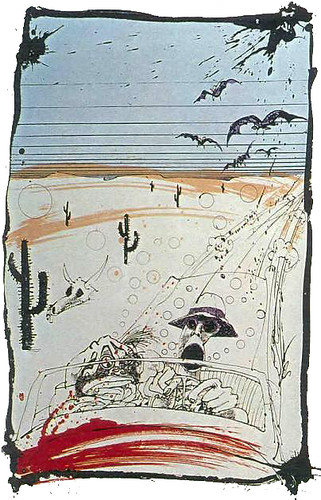
I was on my way to Vegas for a conference on quantum mechanics and the nature of reality with the famous Dr. Lanza. He was driving our fire red convertible as we discussed the difference between mind and brain.

“If the mind is not the brain, then what is it?” I asked.
“The mind is that which experiences. That which perceives. By definition, that means it cannot perceive itself”, he answered.
“But here’s the problem”, I objected. “How can it do anything if it is not physical? You say it’s some sort of super turbine creating reality as we know it.”
“Right.”
“Right. So if it is an engine, but it’s not made of anything, then how can it function? And this is not just me asking, but anyone being skeptical of the mind being anything other than the brain.”
He took a sip of his coffee.
“You ask good questions, Kash. You see, the mind is part of the non-local domain, that is powered by zero point energy. That is energy so powerful a teaspoonful could easily blow Nevada to smithereens. This mind field also possesses phenomenality. Because of this energy, of which we cannot even comprehend how powerful it is, it can create worlds without breaking a sweat. Including our world.”
“You’re a fucking lunatic”, I said. “I love it.”

“So how do you look at this mind-at-large concept?” I continued. “That what we experience is merely a fragment of the potential mind that encapsulates the cosmos?”
“It makes perfect sense. If the brain localises the consciousness to the body, it means it only uses a insignificantly small piece of the mind power that exists.”
“Many people who’ve had near-death experiences say they experienced this mind-at-large. When their consciousness was temporarily detached from their brain, due to say… cardiac arrest, they all of a sudden understood… quantum mechanics.”
“That’s very possible. The brain slows our thought processes way down to accommodate our experience on earth. Would we be in a different dimension, our conscious experience could be entirely different. Perhaps unbounded, completely free from filters.”
“Imagine that.”
“We can’t. Our slow brains normally prevent us from experiencing that.”
“Let’s drop some acid then.”
He laughed. “Yeah, let’s.”

Fragment from what might one day become a novel called ObserverWorld. Right now it merely exists in the ocean of possibilities we call the quantum realm. But it might be in the future manifested by a number of conscious agents, including me, Lanza and you dear readers.