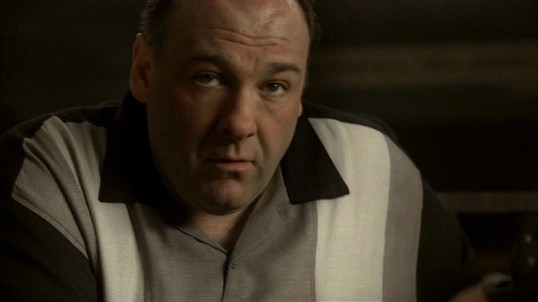
The Sopranos – A Quantum Mechanical Ending (Video)

‘There are only two endings for a high profile guy like me, dead or in the can, big percent of the time.’
– Tony Soprano in ‘For All Debts Public and Private’ (SE4, EP1)

In retrospect, this quote already told us how the show would end. Except it wasn’t one or the other. Rather, Tony Soprano got both. The New Jersey mob boss ended up like physicist Schrödinger’s cat, both dead and alive at the same time.

In this new video on Jeppy’s Video Circus, we see the ending for what it truly is: a kaleidoscope of all possibilities existing simultaneously.

Einstein Vs. Bohr: The Great Debate

For my upcoming new platform Free-Consciousness, I am publishing some video fragments on the accompanying Youtube channel. One of these is a sequence from the Discovery series Genius in which Albert Einstein (Geoffrey Rush) and Niels Bohr (David Dencik) discuss the meaning of quantum physics for reality.

This is one of the most famous debates in science. Bohr played a huge role in formulating the Copenhagen Interpretation of Quantum Mechanics, which states that one cannot know anything about an object prior to a measurement, which means that the universe is indeterministic. Einstein did not like this. He was a realist, meaning that he believed that spacetime is real and exists independently of whether it is observed or not.

Einstein spent most of the second half of his career trying to disprove the Copenhagen Interpretation, most notably by coming up with the Einstein–Podolsky–Rosen (EPR) paradox in 1935. This thought experiment involves a pair of entangled particles that are sent in opposite directions through space. According to Copenhagen, if you measure the position of one particle, you could instantly predict the position of the other entangled particle. This would violate Einstein’s laws of special relativity, because information between particles one and two would have to travel faster than light.

Of course, later experiments first conducted by Alain Aspect, Anton Zeilinger and John Clauser demonstrated that this is exactly what happens. The inescapable conclusion is that quantum entanglement exists and is non-local. Einstein’s locality is on shaky ground nowadays…. Anyway, If you regularly read my fragments, you know on whose side I am standing in this debate.

In the clip below, you can see that although Bohr’s view seems illogical and counter intuitive, it is 100% compatible with the findings of quantum physics.

Review Observer (2023, Robert Lanza, Nancy Kress)

“You are the observer. You create the universe every day, every hour, every nano-second. Everything that can exist, will exist, somewhere, including your beloved dead. They can once again be alive, walking around, solid as the chair you sit in now, solid as this book you hold in your hand.”

In the new science fiction novel ‘Observer’ – written by an actual scientist and a sci-fi writer – the mindblowing implications of quantum mechanics are taken to the next level.

The scientist is Robert Lanza, who in 2009 published his masterpiece ‘Biocentrism’, a non-fiction book about his theory based solely on science that concludes that life and consciousness create the universe, not the other way around. The writer is American science fiction author Nancy Kress, who won several awards for her work, which includes ‘After the Fall, Before the Fall, During the Fall’ and ‘Fountain of Age’.

In ‘Biocentrism’, and its sequels ‘Beyond Biocentrism’ and ‘The Grand Biocentric Design’, Lanza explained how observers (humans and other animals) create physical reality. Without observers, the universe (spacetime and matter) would remain in a state of superposition. Being alive means you are collapsing wavefunctions and you are transforming a cloud of probabilities into one manifest reality.

The premise of ‘Observer’ is that this is indeed how reality works, and a group of scientists has developed new technology which changes the algorithms by which the brain processes information. This enables the characters to create alternative branches of the universe in which their deceased loved ones can once again be alive.

It happens often that new scientific views are communicated to the general public through popular culture. ‘Biocentrism’ has not yet transformed the mainstream scientific view that sees the universe as a huge space filled with marbles that accidentally also contains life and consciousness. ‘Observer’ is a solid attempt to translate the ideas of ‘Biocentrism’ into a compelling science fiction story. It was a smart move to team up with a writer because it has believable characters and reads like a bullet train.

One of the characters is physicist George Weigert who is basically a fictionalized version of Lanza himself. It is he who has developed the biocentric theory which he calls ‘the primacy of the observer’. His main motivation to do it is to see his dead wife Rose again. The main character is surgeon Caroline Soames-Walkins who joins the team on Cayman Brac to perform the operations needed to install the brain-chips that participants need in order to create other branches of the universe. She remains in doubt the whole time about the project and suspects that what the participants see is just an elaborate hallucination. What could convince her of the truth?

The book contains many of the same explanations that ‘Biocentrism’ first pioneered about the true nature of space, time and reality. Sometimes, they have characters explain these concepts in a way that’s not entirely believable. It is obviously Lanza talking. But this is a minor critique. What ‘Observer’ does very well is explaining real, revolutionary science in an understandable way. This doesn’t mean it becomes easy, because as Lanza has pointed out many times; language is a limited tool when it comes to explaining fundamental truths like the illusion of time.

Luckily, you don’t have to fully understand all the science to enjoy the story. If observers indeed create reality, this opens up many staggering possibilities. Some of these are explored in this book, but the writers didn’t overdo it. There is definitely a sequel suspended in superposition in which the future possibilities are explored further. Perhaps ‘Creator’ is a suitable title for this sequel?

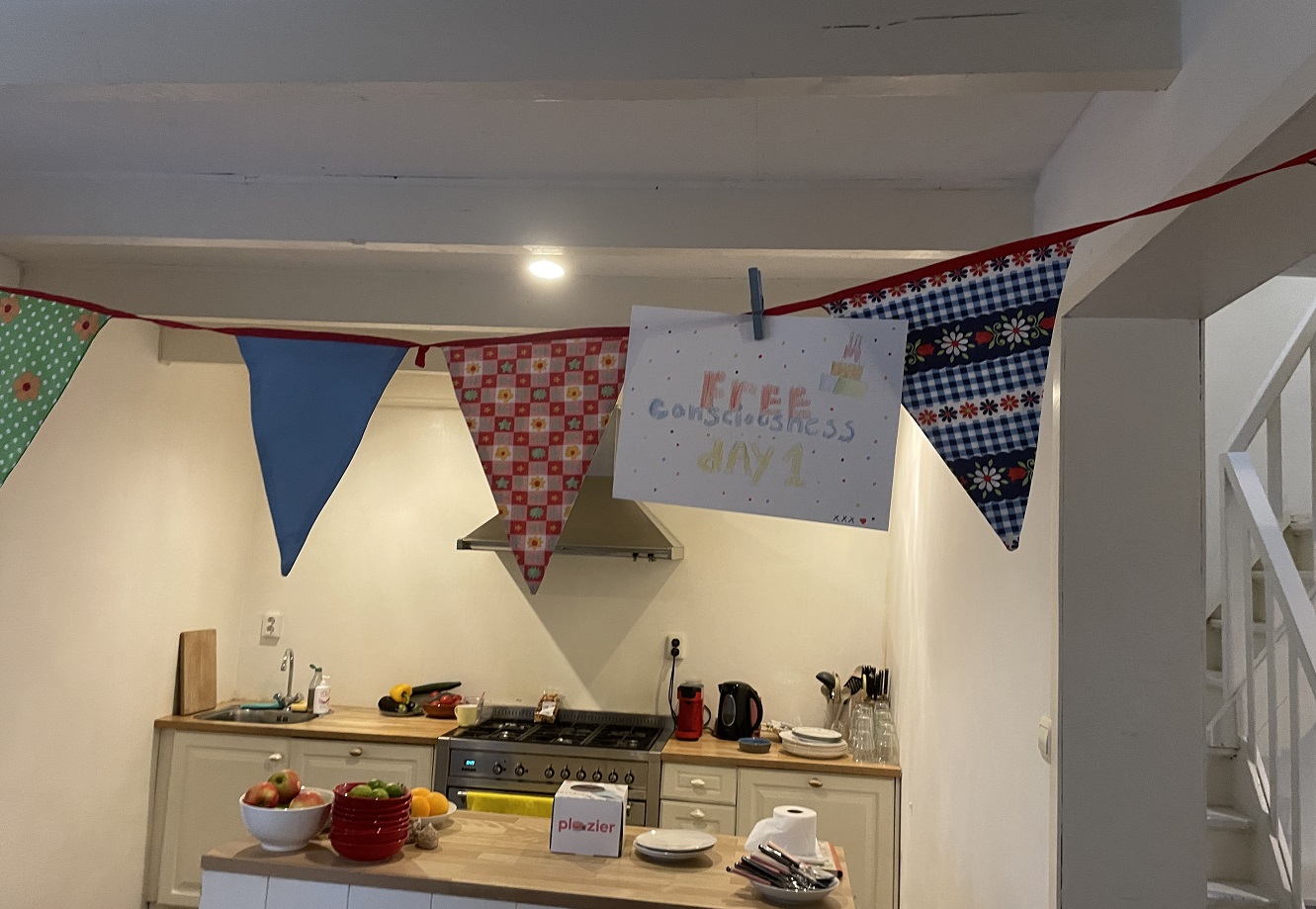
More about biocentrism, quantum physics and the true nature of reality: Check out my new platform Free-Consciousness.
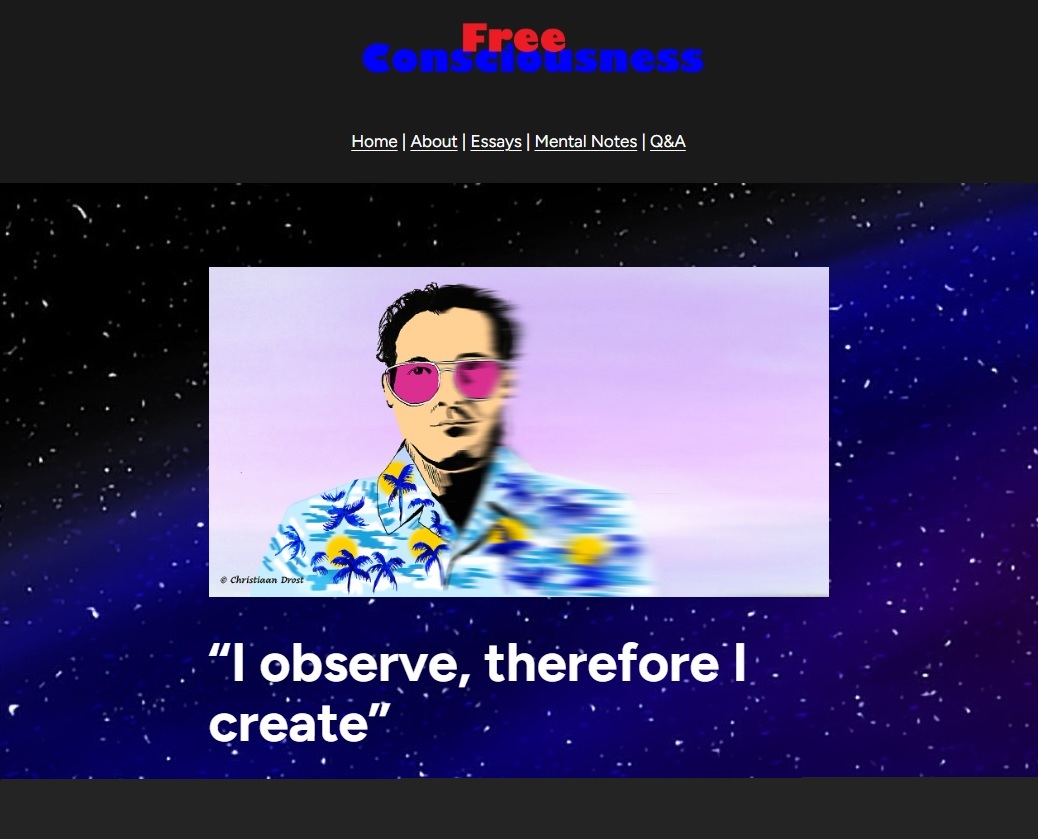
Reality As an Act of Dreaming

Our reality is like a waking dream. It has rules, those we can study objectively (science). But they are not as steady as we may think. Quantum mechanics has revealed that beyond a steady appearance, there is only probability. It takes the act of observing to construct reality out of potentiality.

We used to think that God was the creator of our world and God resided outside of nature. Then Western science removed God, and we were left with nature without cause. Everything was explained as resulting from an extremely large series of random accidents. This worked partly, but many problems remained. Life and consciousness cannot be explained away by random accidents. Nor can randomness be a proper explanation for the immense ordered complexity we observe around us.

The solution was already present all along. Turns out that Eastern philosophy was closest to the edges of truth we can ever hope to get. God is not outside of nature. God IS nature. And since we are part of nature, we are also part of God. We are the mental hubs in a participatory universe.

According to the famous physicist John Wheeler, the universe is a self-referential ‘strange loop’ in which physics gives rise to observers, who then give rise to meaning – establishing observers – participants who grant a meaningful existence to the universe. The world and consciousness are intermingled in such a way that they mutually co-arise in a deeper unified sphere of being. It is impossible to say which initially caused the other, as their relationship has no beginning in time. Their relationship is reciprocal – now one side and then the other acts as a cause. Through the conscious observer in the dreamlike reality, the universe becomes a lucid dreamer.*


From: The Goldilocks Enigma by Paul Davies

Uncountable small acts of observer-participancy have over eons built up the tangible appearance of the material world. As observers, there is no getting around the fact that each of us are participants in bringing reality into being. Wheeler: “I can’t make something out of nothing, and you can’t, but together we can”. The universe is a collective shared dream that is too seemingly dense and solidified for any one person’s change in perspective to transform, but when a critical mass of people get into alignment and consciously put together what I call our “sacred power of dreaming” we can, literally change the waking dream we are having.”*

As agents of cosmic evolution, we are being invited to contribute to the growing edge of the universe’s creative unfoldment into uncharted territory. This is truly evolution in action, as we discover that we can actively participate in our own evolution, and in fact are being called to do so. We become (or maybe we always have been, but just didn’t know it) a channel for the universe to automatically re-create itself in a novel and evolutionary way. Or maybe I am just dreaming.*

*Segments taken from: The Quantum Revelation by Paul Levy

Read also: How The Goldilocks Enigma Is Another Major Indication For A Consciousness-Based Universe