Pulp Fiction (1994)


‘Girls like me don’t make invitations like this to just anyone!’

Directed by:
Quentin Tarantino

Written by:
Quentin Tarantino (stories / screenplay)
Roger Avary (stories)

Cast:
John Travolta (Vincent Vega), Samuel L. Jackson (Jules Winnfield), Uma Thurman (Mia Wallace), Tim Roth (Pumpkin), Amanda Plummer (Honey Bunny), Bruce Willis (Butch Coolidge), Ving Rhames (Marsellus Wallace), Eric Stoltz (Lance), Rosanna Arquette (Jody), Harvey Keitel (Winston Wolf)

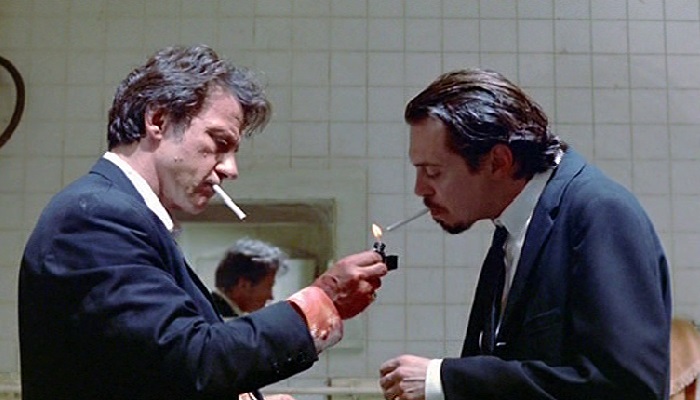
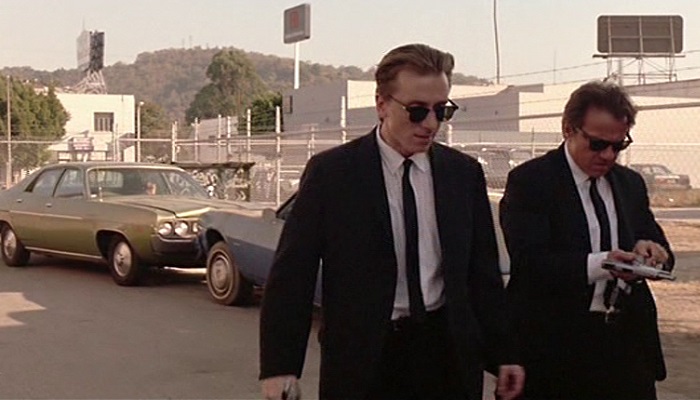
After Quentin Tarantino’s insanely cool debut in 1992, Reservoir Dogs – which he wrote and directed – the expectations of him in movieland were quite high. Two years later he delivered. When Pulp Fiction premièred at Cannes in 1994, they didn’t know what hit them. Tarantino’s L.A.-based crime opus, inspired by the Black Mask pulp magazine, blew them all away.

The three intersecting stories that are told non-chronologically in Pulp Fiction are all amazing in their own way. The first one about two hitmen Vincent Vega (John Travolta) and Jules Winnfield (Samuel L. Jackson) that have to dispose of a headless body and blood-soaked car is both mean and hysterical. The second one in which Vega takes gangster boss Marcellus Wallace’s wife Mia (Uma Thurman) out on a date (“it’s not a date!”) is druggy, cool, sensual and exciting. The third story about boxer Butch (Bruce Willis) who swindles Marcellus Wallace is romantic, ironic and twisted. The whole plot is tied together by a crazy short about a young couple in love who decide to rob the restaurant they are having breakfast in.Whether a person knows about movies or not, it is hard to miss that this is an amazingly clever movie. The screenplay is out of this world and so is the cast (5 million dollars of the 8 million budget went to the cast). The non-chronological structure to which Tarantino holds the patent is never done better. And although not his most mature, the dialogues about foot massages, piercings, TV-pilots and uncomfortable silences are unforgettable. Especially the exchanges between Vega and Winnfield are absolutely hilarious.

Of course, this being Tarantino’s early masterpiece, it contains a trainload of movie references. One could even call it his ultimate homage to cinema. But what makes it richer and cleverer than just a highly entertaining crime flick stuffed with pop-culture dialogues and references, is the biblical thread that runs through it. It is truly remarkable how the separate stories intertwine and destiny comes into play the whole time. For example, Butch and Marcellus Wallace walk into the most terrible place on earth, but it does put them square in the end. And what becomes a life changing event for Winnfield, is ignored by Vega for whom things soon end badly. All the characters get a lesson in some sort of way. Some get a second chance and some don’t. The viewer can keep looking into this and discover new things all the time. In this respect, the screenwriters did a wonderful job and justly won an Oscar for it.

The nineties was a glorious time for cinema, when surprises like Pulp Fiction would still appear once in a while. Although, we can only hope for this period to return, we can also re-live the beautiful movie experiences from the past. Like the content of the mysterious briefcase in the movie, Pulp Fiction is a treasure that will undoubtedly still be viewed and honored long into the future.

Rating:

Quote:
JULES:  “Marcellus Wallace don’t like to be fucked by anybody except Mrs. Wallace.”

Trivia:
Samuel L. Jackson auditioned for the part of Mr. Orange in Reservoir Dogs (1992), but it went to Tim Roth. Tarantino enjoyed Jackson’s work so much that he wrote the part of Jules specifically for him.
Reservoir Dogs (1992)


‘Let’s go to work’

Directed by:
Quentin Tarantino

Written by:
Quentin Tarantino

Cast:
Harvey Keitel (Mr. White / Larry Dimmick), Tim Roth (Mr. Orange / Freddy Newandyke), Michael Madsen (Mr. Blonde / Vic Vega), Steve Buscemi (Mr. Pink), Lawrence Tierney (Joe Cabot), Chris Penn (Nice Guy Eddie Cabot), Eddie Bunker (Mr. Blue), Quentin Tarantino (Mr. Brown), Randy Brooks (Holdaway), Kirk Baltz (Marvin Nash)

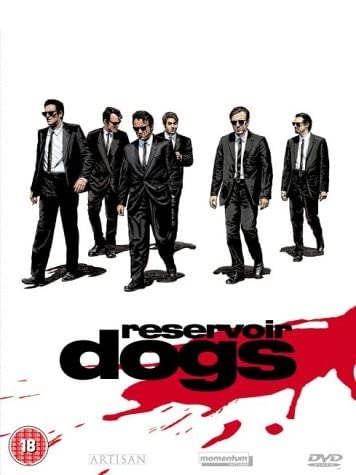
‘Mr. Brown, Mr. White, Mr. Blonde, Mr. Blue, Mr. Orange, and Mr. Pink.’
‘Why am I Mr. Pink?’
‘Because you’re a faggot, all right!’

Meet the Reservoir Dogs. It’s 1992, and cinema firebrand Quentin Tarantino has just exploded onto the scene. Reservoir Dogs is easily the most impressive directorial debut of the 1990s – arguably of all time.

Joe Cabot and his son, Nice Guy Eddie, assemble a six-man crew for a daring diamond heist. None of the men have met before. To maintain anonymity and protect against betrayal, each is given an alias. Despite meticulous planning, the robbery goes catastrophically wrong. Someone talked. At the rendezvous point – an abandoned warehouse – the crew turns on each other in a deadly showdown.

This relatively simple premise is executed with striking ingenuity. Tarantino crafts a masterful nonlinear narrative, shifting back and forth in time between the heist’s setup and its bloody aftermath – yet never showing the actual robbery. Background details are revealed with precision, each revelation tightening the suspense until the traitor is unmasked and tensions reach a violent climax. It’s absolutely riveting cinema.

Since its release, Reservoir Dogs has inspired countless indie filmmakers hoping to capture the same low-budget brilliance, but few have come close. Why? Because they can’t write a screenplay this sharp, that’s why. Tarantino delivers more than just clever structure – he populates his film with complex, vividly drawn characters. And then there’s the dialogue: razor-sharp, darkly funny, and endlessly quotable.

At times, the film plays like a black comedy of the highest order. Yet it never loses its edge as a hyper-tense thriller. “My heart is beating so fast I’m about to have a heart attack”, Mr. Blonde says at one point and the same could be said for the audience. Whether it’s Mr. Pink’s frantic getaway, the desperate escape attempts, or the slow-burn mystery of the undercover cop, the tension never lets up.

The atmosphere swings from effortlessly cool – see the iconic opening credits—to grim and downright brutal. The casual banter gives way to explosive violence with little warning. The warehouse itself becomes a chamber of horrors: Mr. Orange bleeding out for most of the film, the infamous torture scene – it’s disturbing and hard to watch, and that’s exactly the point.

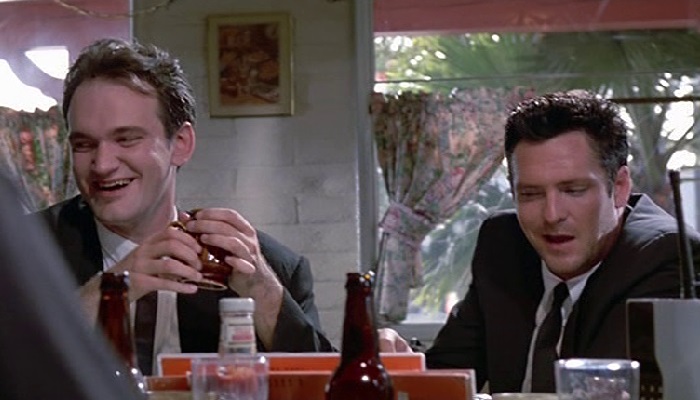
The cast seals the deal. With actors like Harvey Keitel and Steve Buscemi delivering Tarantino’s dialogue with perfect rhythm, even conversations about Madonna or tipping become electric. Chris Penn gives what might be his best performance, and Lawrence Tierney is unforgettable in his final tough-guy role.

Tarantino’s debut might still be his finest work. Pulp Fiction may be equally brilliant, but it occasionally meanders. Reservoir Dogs, in contrast, never loses momentum. It’s lean, vicious, and near-perfect – a film so good it’s almost a curse. Tarantino didn’t just enter the scene with a bang; he set the bar impossibly high from the very start.

Rating:

Quote:

MR. WHITE: “What you’re supposed to do is act like a fucking professional. A psychopath ain’t a professional. You can’t work with a psychopath. You don’t know what these sick assholes are gonna do next.”

Trivia:

Michael Madsen auditioned for the part of Mr. Pink. But Tarantino told him: “Here’s the thing: you’re not Mr. Pink, you’re Mr. Blonde. And if you’re not Mr. Blonde, then you’re not in the fucking movie.”