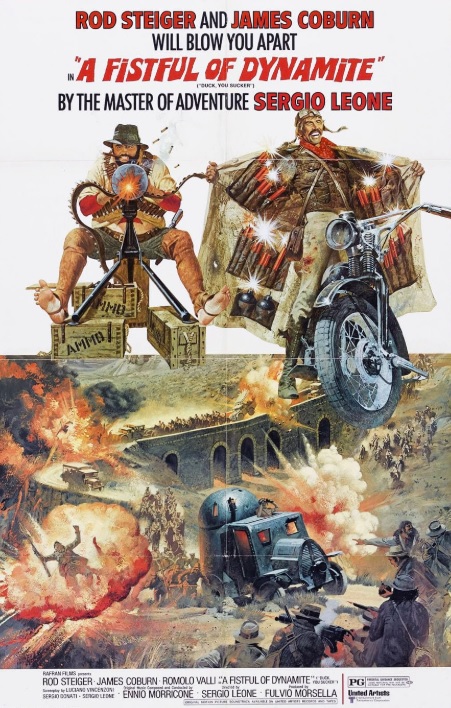
A Fistful of Dynamite

Director: Sergio Leone
Written by: Sergio Donati, Sergio Leone, Luciano Vincenzoni
Cast: Rod Steiger, James Coburn, Romolo Valli, Maria Monti

Year / Country: 1971, Italy
Running Time: 147 mins.

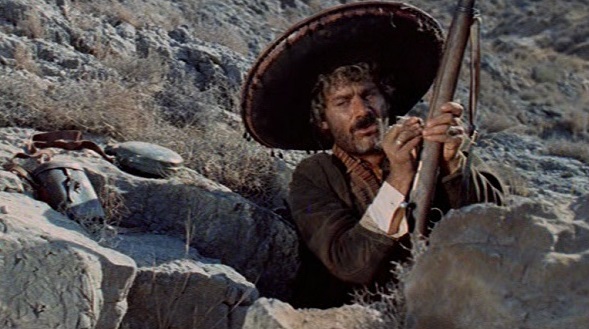
A Fistful of Dynamite (also known as Duck, You Sucker!) is the second entry in Sergio Leone’s loose trilogy of epic films, sandwiched between Once Upon a Time in the West and Once Upon a Time in America. It is Leone’s final spaghetti western and his most overlooked film. But frankly, that is because it is his weakest. That’s not to say it’s without merit, but it lacks the tight storytelling and grandeur of his greatest works.

Set against the backdrop of the Mexican Revolution in 1913, the film follows an unlikely duo: the cigar chewing hick Juan Miranda and the dynamite juggling Irishman John Mallory. Their partnership begins with a planned bank robbery, only for them to discover that the bank is actually a political prison. Juan is unexpectedly thrust into the role of a revolutionary hero, and together, he and John take on the formidable Mexican army, led by a sadistic officer.

The film’s opening is striking. Juan shares a stagecoach ride with a group of wealthy elites who openly insult him and his people, branding them as animals while indulging in gluttonous excess. This immediately earns Juan some sympathy – until his six sons arrive to rob and humiliate the passengers, with Juan even committing an off-screen rape. Leone challenges the audience’s perceptions, presenting prejudice and social injustice while also revealing Juan’s own flaws. Enter John Mallory, an Irish dynamite expert who quite literally blasts onto the scene in a moment of cultural stereotyping played for dark humor.

Rod Steiger’s performance as Juan is divisive. While the character is intentionally unsympathetic, Steiger’s over-the-top acting makes him difficult to watch. Originally, Leone wanted Eli Wallach for the role, but the studio refused. While Wallach’s casting might have risked echoing his Tuco character from The Good, the Bad and the Ugly, it’s hard not to wonder if he would have been a better fit.

Leone claimed the film is ultimately about friendship rather than revolution. This isn’t immediately convincing, given Juan and John’s rocky introduction, but by the end, their relationship develops into something genuine and poignant. John’s journey, revealed through flashbacks, makes the bond between them all the more meaningful.

Despite its flaws – an overlong runtime, a less sweeping feel than Leone’s other Once Upon a Time films, and an Ennio Morricone score that, while good, doesn’t reach the heights of their other collaborations – the film still has standout moments. The ambush at the bridge is classic cinema, boasting one of the greatest explosions ever filmed. The panning shot along the execution ditches is haunting, and the climactic train collision is truly spectacular. Overall, the film is just not the revolution Leone’s earlier westerns were.

Rating:

Biography: Sergio Leone (1929, Rome – 1989, Rome) made his debut in the cinema working as a voluntary assistant and extra, among other things, in The Bicycle Thieves by Vittorio de Sica. Later, he became assistant director to Mario Bonnard. In 1959, when Bonnard was ill, he took over from him on the set of The Last Days of Pompeii. In 1961 he directed his first full-length film: The Colossus of Rhodes. But the film that was to bring him to the general attention came out in 1964: A Fistful of Dollars. His next films, For a Few Dollars More and The Good, The Bad and the Ugly complete what came to be known as the Dollars Trilogy and were a great box-office success. He would only make three more films before tragically passing away in 1989. He was taken from us by a heart attack in his house in Rome, while working on an ambitious project for a film on the Siege of Leningrad.

Filmography: The Colossus of Rhodes (1961), A Fistful of Dollars (1964), For a Few Dollars More (1965), The Good, The Bad and the Ugly (1966), Once Upon a Time in the West (1968), A Fistful of Dynamite (1971), Once Upon a Time in America (1984)


A Bullet for the General

Director: Damiano Damiani
Written by: Salvatore Laurani (story), Franco Solinas (adaptation)
Cast: Gian Maria Volonté, Klaus Kinski, Martine Beswick, Lou Castel

Year / Country: 1966, Italy
Running Time: 113 mins.

Zapata Westerns are a subgenre of the Spaghetti Western. They deal with political themes and play against the backdrop of the Mexican Revolution between around 1910 and 1920, the years of the famous Mexican revolutionary Emiliano Zapata, after whom the genre is named. Famous examples include; Sergio Curbucci’s Companeros and The Mercenary, and Sergio Leone’s A Fistful of Dynamite. A Bullet for the General is an early contribution to the genre and is regarded as one of the best.

It deals with a group of cutthroat bandits, led by El Chuncho (Volonté). Their job is to steal guns for the revolutionary general Elias. During a violent train raid, they pick up young American Tate (Castel), who they take along with them as a welcome addition to their crew. What they don’t know is that Tate is secretly an assassin hired by the Mexican government to kill Elias with the golden bullet he carries with him.

Starring two actors familiar in the Spaghetti Western genre, namely the man with the characteristic laugh Gian Maria Volonté (Ramón Rojo in A Fistful of Dollars and El Indio in For a Few Dollars More) and, Klaus Kinski (The Great Silence, and also For a Few Dollars More), it became extremely popular in Europe, though butchered for both political and content reasons in overseas markets. The film makes many references to the Vietnam War. The character Tate for example is meant to represent the CIA’s interventions in Latin America.

A Bullet for the General is a fiesta with guns. Composer Luis Enriquez Bacalov (Django, Il Postino, Kill Bill) has provided a cheerful musical score, while El Chuncho and his bandits kill more Mexicans than the Wild Bunch. This is how a revolution works; misery and death contrast with joy and celebration. It is only difficult to sympathise with these hard characters. My general thought during the movie was therefore; ‘so, let’s kill this general and get it over with.’ A lot was made up by the excellent action and production design, and the final scene also delivers some heartfelt (and needed) emotion.

Rating:

Biography: Damiano Damiani (1922, Pasiano, Italy) is an Italian screenwriter, director and actor. He won awards for several of his films, such as the Mafia drama The Pizza Connection. In the eighties he also made the renowned mini-series La Piovra (The Octopus) about a prosecutor’s battle with the Mafia. This successful series ran for eight series on RAI Uno and turned out to be one of Italy’s best selling series abroad.

Filmography (a selection): The Hit Man (1960), Lipstick (1960), The Empty Canvas (1963), Strange Obsession (1966), A Bullet for the General (1966), The Day of the Owl (1968), The Most Beautiful Wife (1970), How to Kill a Judge (1974), A Genius, Two Partners and a Dupe (1975), Goodbye and Amen (1977), A Man on His Knees (1978), The Warning (1980), The Octopus (1984, mini-series), The Pizza Connection (1985), The Inquiry (1986), Massacre Play (1989), Angel With a Gun (1992), Killers on Holiday (2002)

The Great Silence


Director: Sergio Corbucci
Written by: Mario Amendola, Bruno Corbucci, Sergio Corbucci, Vittoriano Petrilli
Cast: Jean-Louis Trintignant, Klaus Kinski, Frank Wolff, Luigi Pistilli

Year / Country: 1968, Italy / France
Running Time: 101 mins.

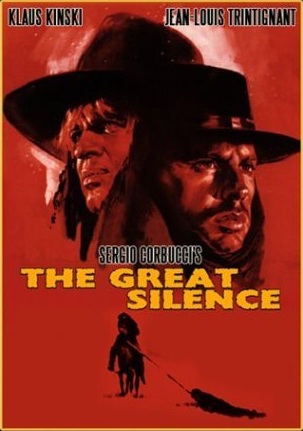
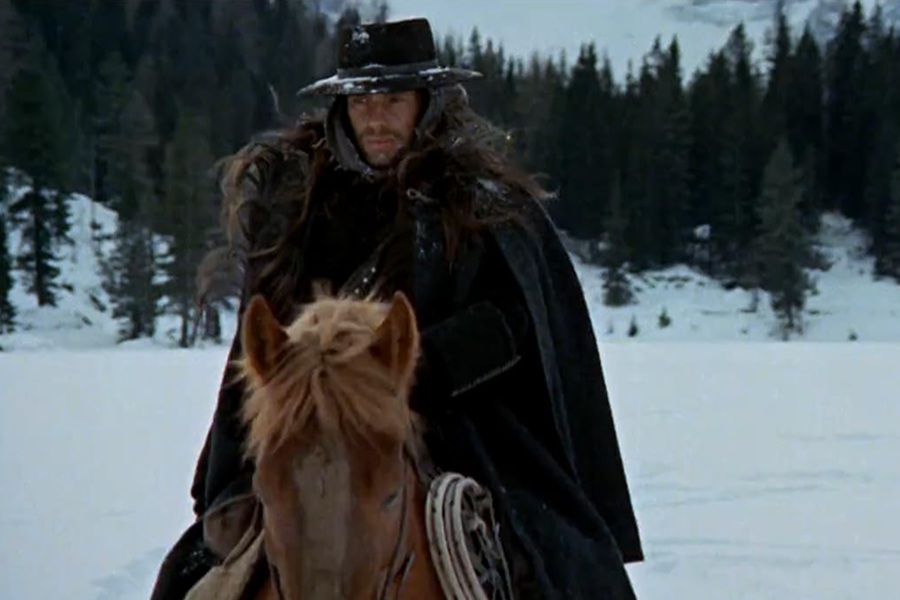
A spaghetti western in the snow? Now that is distinctive and that’s exactly what The Great Silence is. Besides its Fargo-like landscape, the ending is another element that sets it miles apart from its contemporaries. You definitely don’t see that one coming!

Director Sergio Corbucci clearly has a political streak, as he already demonstrated in earlier films and does again here. The misuse of the law by populists to eliminate the people they hate forms the core of the story. That said, Corbucci never neglects style. Right from the opening – a brutally bloody ambush shoot-out in the snow – it’s obvious this is going to be a kick-ass western. Corbucci’s films are certainly comparable to Sergio Leone’s, only with more blood, grit, and brains splattering across the screen.

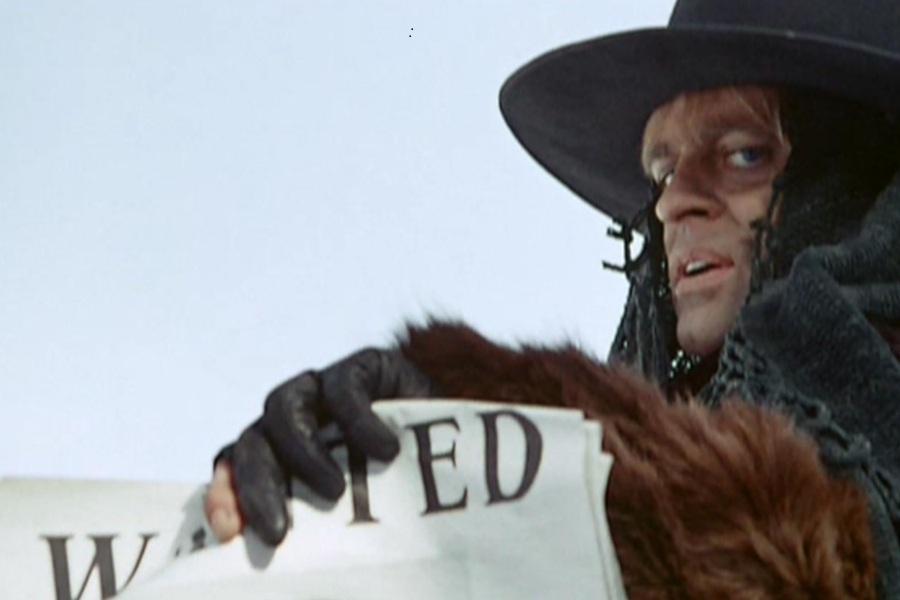
Storywise, The Great Silence is essentially a revenge movie. The ‘Silence’ of the title is a mute ranger who hunts the vulturous bounty killers profiting from the ‘dead or alive’ law of the time. Silence always provokes his enemies into drawing first, ensuring the law can’t touch him. The truly ‘great’ character, however, is Tigrero, played by the terrific Klaus Kinski. This evil, weaselly bastard is impossible not to love to hate, and he alone already lifts the film above the average B-western. Beautiful cinematography and Ennio Morricone’s haunting score do the rest.

Rating:

Biography: Sergio Corbucci (1926, Rome – 1990, Rome) was, alongside Sergio Leone, one of the most prominent directors of spaghetti westerns. Born and raised in Rome, Corbucci played a crucial role in popularizing the genre, particularly through his iconic films Django (1966) and The Great Silence (Il Grande Silenzio, 1968). He frequently collaborated with actor Franco Nero, crafting memorable characters and stories that helped define the genre’s unique style. His B-movies are characterized by brutal violence, surrealist and apocalyptic production design, black humour and politically left symbolism. Corbucci was a fanatical Marxist and many of his films show the hopelessness of the revolution. He kept working in Italy throughout his career and most of his films were barely released abroad. He died in Rome in 1990.

Filmography (a selection): Foreign Earth (1954), Water’s Love (1954), Supreme Confession (1957), Angel’s Sky (1957), Duel of the Titans (1961), Toto, Peppino and La Dolce Vita (1961), The Son of Spartacus (1963), Grand Canyon Massacre (1963), Django (1966), Navajo Joe (1966), The Mercenary (1968), The Great Silence (1968), Compañeros (1970), Bandera Bandits (1972), The White, the Yellow, and the Black (1975), The Payoff (1978), Super Fuzz (1980), My Darling, My Dearest (1982), Days of Inspector Ambrosio (1988)

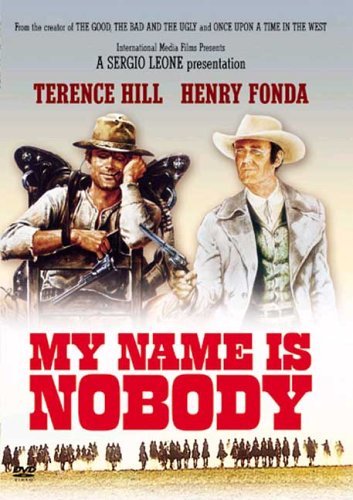
My Name is Nobody

Director: Tonino Valerii
Written by: Fulvio Morsella, Ernesto Gastaldi
Cast: Henry Fonda, Terence Hill, Jean Martin, R.G. Armstrong

Year / Country: 1973, Italy, France, West Germany
Running Time: 111 mins.

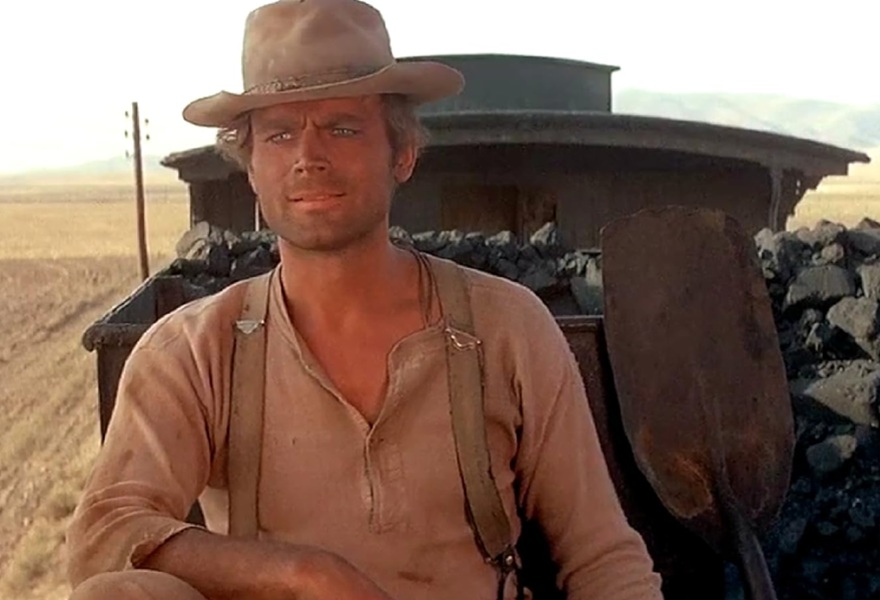
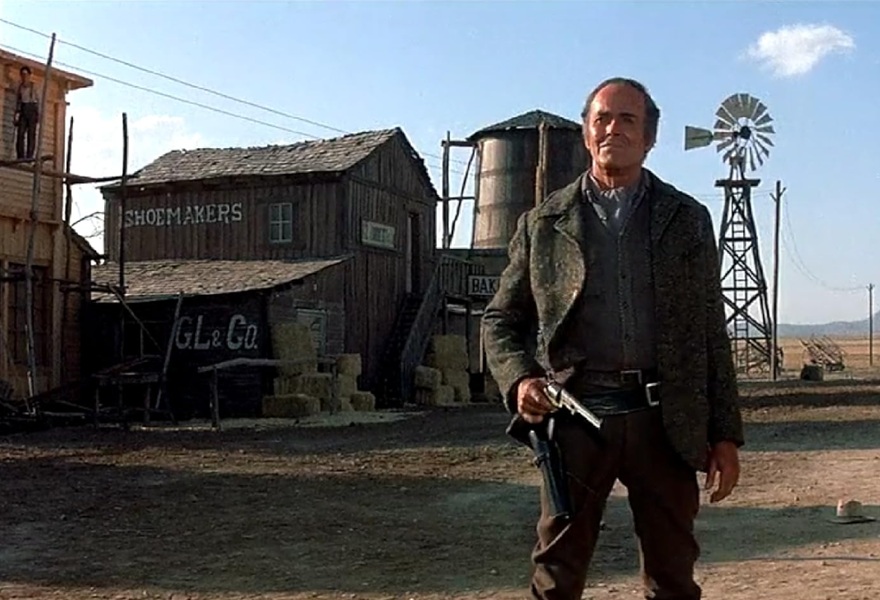
New Mexico, 1898. The Legendary gunslinger Jack Beauregard (Henry Fonda) wants to leave the Wild West behind him and retire to Europe. But the strange loner Nobody (Terence Hill) wants his personal hero to go out in style. He sets everything in motion, so Jack can take on the infamous Wild Bunch.

During the seventies, the Italian comedy-western became a way more popular genre than the more serious spaghetti’s. Master of the spaghetti western Sergio Leone and his team then decided to make the ultimate ‘joke’ western themselves. The casting of comedy man Hill and old westerner Ford, makes clear the contrast between the old dying West and the new West.

Although some of the slapstick comedy feels forced and somewhat copied from the ‘Trinity’ films, producer Leone and director Tonino Valerii still managed to create a successful homage to the genre. This is largely due to the excellent chemistry between the two leads and the classic musical score by Ennio Morricone. The brilliant composer parodies everything in his score, from Wagner’s Ride of the Valkyries to his own Harmonica theme. It became one of his most popular scores.

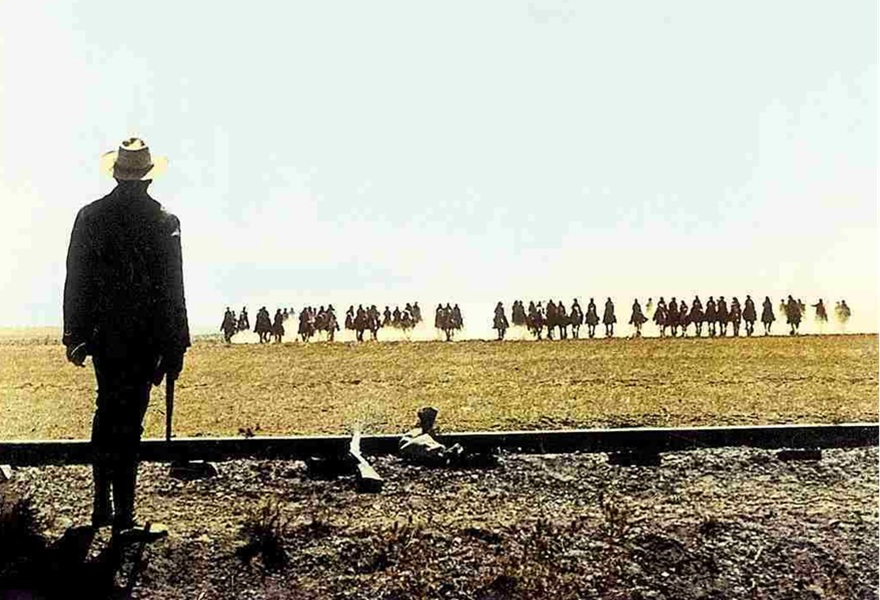
There are also plenty of inside jokes; the bad guys are named ‘The Wild Bunch’; Sam Peckinpah’s name is on a tombstone; the excessive use of duster coats; etc. Leone also directed the opening scene himself, which is a direct homage to the famous opening scene of his classic Once Upon a Time in the West.

Altogether, My Name is Nobody is a fine testament to the glory of the spaghetti western as well as the Hill / Spencer comedy days of the Italian Wild West.

Rating:

Biography: Tonino Valerii (1934, Teramo, Italy) was born as Antonio Valerii. In 1964, he worked as an uncredited assistant director for Sergio Leone on A Fistful of Dollars. In 1966 he made his directorial debut with spaghetti western Taste For Killing. He would direct about fifteen films in his career, but will be most remembered for his westerns, including My Name is Nobody and A Reason To Live, A Reason To Die!.

Filmography (a selection): Taste for Killing (1966), Days of Wrath (1967), The Price of Power (1969), A Girl Called Jules (1970), My Dear Killer (1972), A Reason to Live, a Reason to Die! (1972), My Name is Nobody (1973), The Hired Gun (1976), Sahara Cross (1977), T.I.R. (1984, TV-episodes), Savage Attack (1986), Unscrupulous (1986), Sicilian Connection (1987), Vacation in Hell (1997)