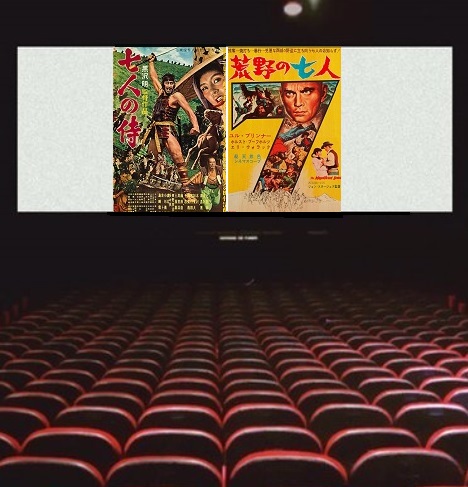
The Japanese classic and its American Western remake. Akira Kurasawa’s Seven Samurai (1954) – about a farming village in 16th century Japan which is about to be robbed by bandits and the honorable men who choose to protect it – can be considered as the birth of action cinema. It is very nearly a perfect film: a fantastic cast, brilliantly executed shots, kinetic editing, and a real sense of adventure. These samurai, farmers and even bandits are living on the edge. Every day could very well be their last. This tense clash of opposing forces is never done better and inspired countless other movies. Seven Samurai established many action cinema traditions, such as the assembly of a team of heroes, including a character for comic relief (Toshiro Mifune). And although Mifune steals many scenes, he doesn’t outshine the other characters who equally come to their right. The Magnificent Seven (1960) is not as great a Western remake as A Fistful of Dollars (1964) is of Kurosawa’s Yojimbo (1961), but it is still a pretty solid Western by director John Sturges (The Great Escape). The plot is exactly the same. Seven gunslingers vow to protect a farming village against a pack of thirty or so bandits, led by Eli Wallach (‘Ugly’ from The Good, The Bad and the Ugly). Yul Brunner and Steve McQueen, two major movie stars at the time, lead the posse, which also includes a young Charles Bronson and James Coburn. The script has less dramatic beats than its Japanse predecessor, but the moments are still there: that feeling that everything is at stake for these characters. An unexpected plot twist that is not in the original, raises the odds even higher. A great move surely. The finale, though, cannot hold a candle to the virtuoso finale of Seven Samurai. Much of the action looks extremely unconvincing with one death scene in particular being an embarrassment. Of course, you might ask yourself: why a remake at all? But that is just Hollywood. And seeing these great American actors doing their hero thing is not so bad at all.

 FRAGMENTEN UIT HET SCHEMERLAND