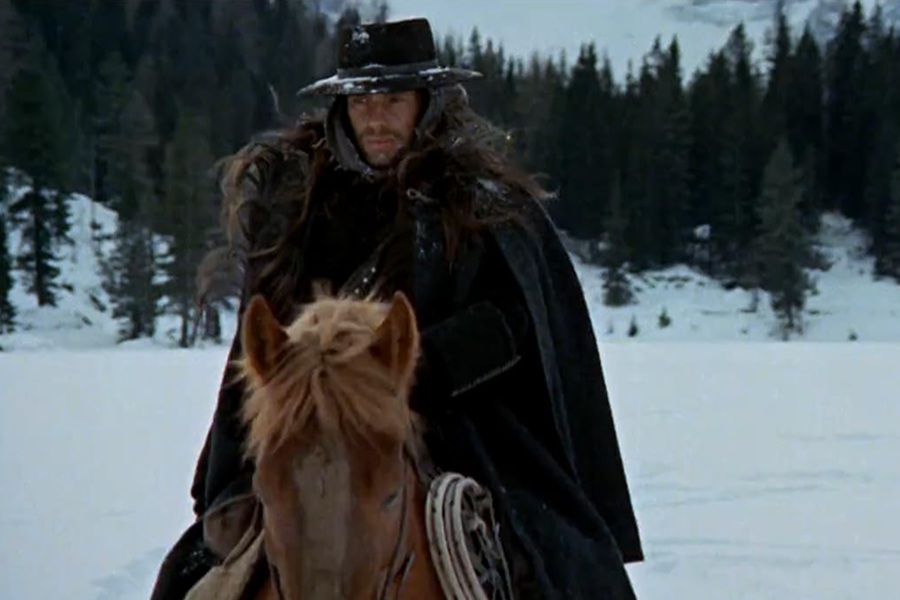
A Bullet for the General

Director: Damiano Damiani
Written by: Salvatore Laurani (story), Franco Solinas (adaptation)
Cast: Gian Maria Volonté, Klaus Kinski, Martine Beswick, Lou Castel

Year / Country: 1966, Italy
Running Time: 113 mins.

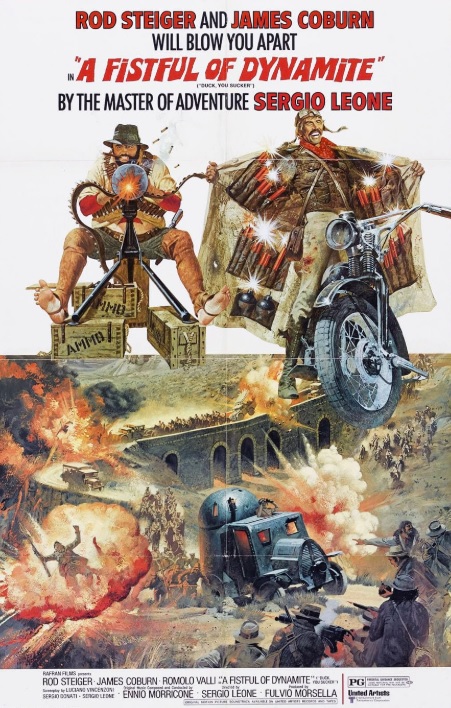
Zapata Westerns are a subgenre of the Spaghetti Western. They deal with political themes and play against the backdrop of the Mexican Revolution between around 1910 and 1920, the years of the famous Mexican revolutionary Emiliano Zapata, after whom the genre is named. Famous examples include; Sergio Curbucci’s Companeros and The Mercenary, and Sergio Leone’s A Fistful of Dynamite. A Bullet for the General is an early contribution to the genre and is regarded as one of the best.

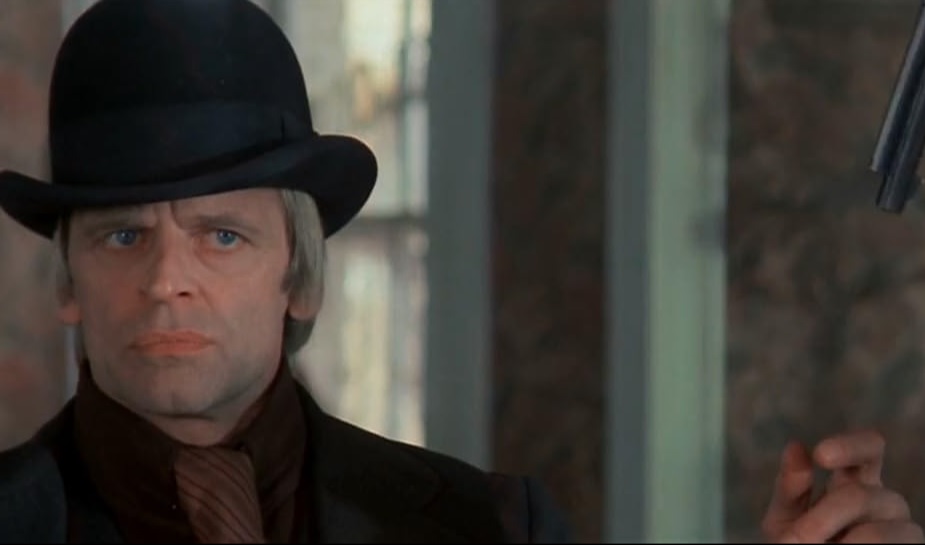
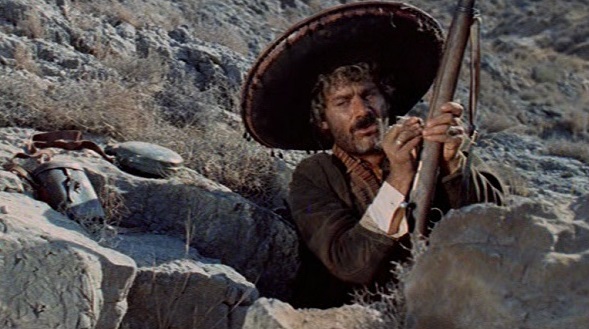
It deals with a group of cutthroat bandits, led by El Chuncho (Volonté). Their job is to steal guns for the revolutionary general Elias. During a violent train raid, they pick up young American Tate (Castel), who they take along with them as a welcome addition to their crew. What they don’t know is that Tate is secretly an assassin hired by the Mexican government to kill Elias with the golden bullet he carries with him.

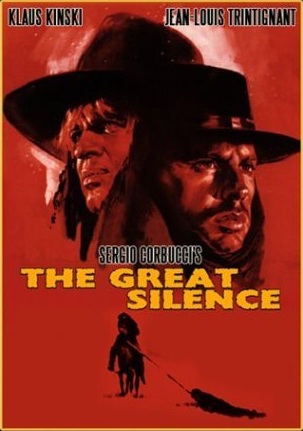
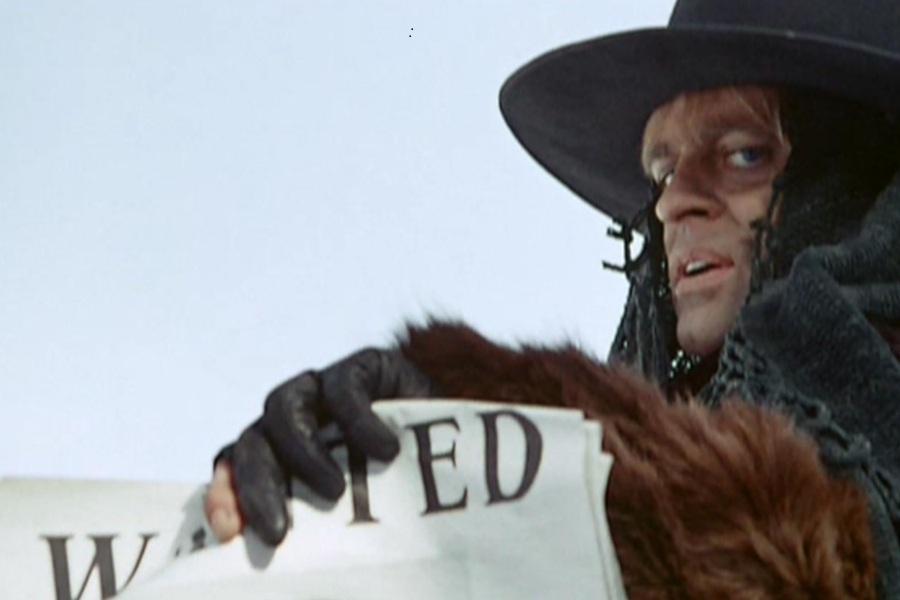
Starring two actors familiar in the Spaghetti Western genre, namely the man with the characteristic laugh Gian Maria Volonté (Ramón Rojo in A Fistful of Dollars and El Indio in For a Few Dollars More) and, Klaus Kinski (The Great Silence, and also For a Few Dollars More), it became extremely popular in Europe, though butchered for both political and content reasons in overseas markets. The film makes many references to the Vietnam War. The character Tate for example is meant to represent the CIA’s interventions in Latin America.

A Bullet for the General is a fiesta with guns. Composer Luis Enriquez Bacalov (Django, Il Postino, Kill Bill) has provided a cheerful musical score, while El Chuncho and his bandits kill more Mexicans than the Wild Bunch. This is how a revolution works; misery and death contrast with joy and celebration. It is only difficult to sympathise with these hard characters. My general thought during the movie was therefore; ‘so, let’s kill this general and get it over with.’ A lot was made up by the excellent action and production design, and the final scene also delivers some heartfelt (and needed) emotion.

Rating:

Biography: Damiano Damiani (1922, Pasiano, Italy) is an Italian screenwriter, director and actor. He won awards for several of his films, such as the Mafia drama The Pizza Connection. In the eighties he also made the renowned mini-series La Piovra (The Octopus) about a prosecutor’s battle with the Mafia. This successful series ran for eight series on RAI Uno and turned out to be one of Italy’s best selling series abroad.

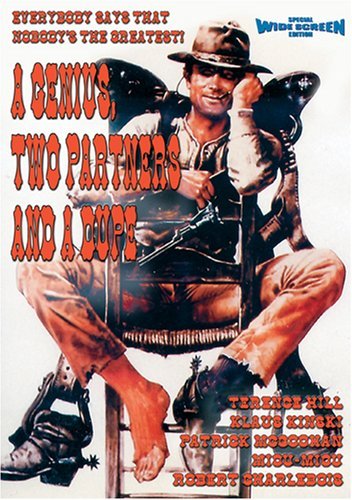
Filmography (a selection): The Hit Man (1960), Lipstick (1960), The Empty Canvas (1963), Strange Obsession (1966), A Bullet for the General (1966), The Day of the Owl (1968), The Most Beautiful Wife (1970), How to Kill a Judge (1974), A Genius, Two Partners and a Dupe (1975), Goodbye and Amen (1977), A Man on His Knees (1978), The Warning (1980), The Octopus (1984, mini-series), The Pizza Connection (1985), The Inquiry (1986), Massacre Play (1989), Angel With a Gun (1992), Killers on Holiday (2002)
Death Rides a Horse

Director: Giulio Petroni
Written by: Luciano Vincenzoni
Cast: John Phillip Law, Lee Van Cleef, Mario Brega, Luigi Pistilli

Year / Country: 1967, Italy
Running Time: 110 mins.

In this gritty spaghetti western, a violent band of outlaws robs and murders a family, leaving their young son Bill (John Phillip Law) scarred and thirsting for vengeance. Fifteen years later, Bill has honed his skills as a sharpshooter, ready to hunt down the men responsible. But he’s not the only one seeking retribution. Ryan (Lee Van Cleef), a former outlaw betrayed by the same gang and imprisoned for fifteen years, is after payback – not in blood, but in compensation for his lost time.

When Bill eliminates gang leader Burt Cavanaugh (Anthony Dawson), Ryan shifts his focus to the remaining members for his payout. However, they’re unwilling to part with the cash, forcing an uneasy alliance between the two avengers. Together, Bill and Ryan set out to settle the score, but Bill is still in the dark about a critical piece of the puzzle.

The film follows the classic spaghetti western recipe: sweeping desert vistas with looming cliffs, a great score by Ennio Morricone, and a steady stream of duels and shootouts. While it’s less violent than many of its contemporaries and lacks the visual flair of Sergio Leone’s masterpieces, the story holds its own with a solid plot, strong performances – Lee Van Cleef is always excellent – and well-executed action sequences.

The windswept town of El Viento serves as the backdrop for an intense, extended finale reminiscent of The Seven Samurai – though not as grandiose. It’s a satisfying conclusion that caps the film’s blend of gritty revenge and campy Italian charm.

Rating:

Biography: Giulio Petroni (1920, Rome) is an Italian director who made name with a number of spaghetti westerns of which Tepepa (starring Tomas Milian and Orson Welles!) and Death Rides a Horse are the most liked and well-known. He also made drama, comedy and horror films, sometimes working under the pseudonym Jeremy Scott.

Filmography: La centro chilometri (1959), I piaceri dello scapoli (1960), I soliti rapinatori a Milano (1961), Always On Sunday (1962), Death Rides a Horse (1967), Tepepa (1968), And for a Roof a Sky Full of Stars (1968), Night of the Serpent (1970), Non commettere atti impuri (1971), Crescete e moltiplicatevi (1972), Life is Tough, Eh Providence? (1972), Labbra di lurido blu (1975), La profezia (1978)

Django

Director: Sergio Corbucci
Written by: Sergio Corbucci, Bruno Corbucci, Franco Rossetti
Cast: Franco Nero, José Bódalo, Loredana Nusciak, Ángel Álvarez

Year / Country: 1966, Italy / Spain
Running Time: 88 mins.

In 1964, Sergio Leone, an Italian director, redefined the western genre with A Fistful of Dollars, a groundbreaking remake of Akira Kurosawa’s Yojimbo. Starring a then-unknown Clint Eastwood, the film introduced audiences to the now-iconic figure of the nameless gunslinger, a drifter who arrives in a town torn apart by a bitter private war. Playing both sides against each other, he emerges victorious, setting the template for the spaghetti western genre.

The overwhelming success of Leone’s film inspired a wave of imitations, varying in quality. Among these, Django (1966) by Sergio Corbucci stands out as one of the best and certainly the most famous. The film borrows heavily from A Fistful of Dollars but adds its own distinctive twist. Instead of a nameless drifter, we meet Django, a mysterious stranger trudging through a desolate landscape while dragging a coffin behind him. His identity is memorably introduced through Louis Bacalov’s haunting theme song, which passionately proclaims his name: Django!

The story follows Django as he rescues a prostitute named Maria from a gang of ruthless outlaws. He escorts her to a ghostly, near-abandoned town where he intends to settle an old score. There, he finds himself caught in a deadly conflict between Mexican revolutionaries and a band of racist Southern renegades led by his arch-nemesis, Major Jackson. Initially siding with the Mexicans to deal a crippling blow to Jackson, Django’s motivations soon come to light, setting the stage for an explosive and tragic finale. By the film’s end, only Django and Maria are left standing amidst the carnage, with the rest buried – literally and figuratively.

What elevates Django almost to the level of Leone’s masterpiece is Corbucci’s skillful execution of the genre’s defining elements. Franco Nero delivers a magnetic performance as the titular anti-hero, rivaling Eastwood’s cool and detached gunslinger. Bacalov’s score, while perhaps not as iconic as Ennio Morricone’s, is equally evocative, setting the perfect tone for the film. The supporting cast adds depth to the world, and the stylish, gritty action sequences ensure the audience remains captivated throughout.

Of course, Django is also notorious for its graphic violence, which was shocking for its time. Though modern audiences might find it less visceral compared to contemporary standards, the film doesn’t shy away from bloodshed. That said, the lack of squibs – a result of budgetary constraints – dampens some of the impact, as the gunplay often lacks the visual punch of more modern films.

The film’s pacing does falter slightly in the middle act, where the tension and momentum dip after the gripping opening sequences. However, Corbucci makes up for this with a thrilling and memorable climax that reaffirms the film’s status as a cult classic.

In conclusion, Django is a quintessential spaghetti western and a must-watch for fans of the genre. With its unforgettable protagonist, striking visuals, and bleak tone, it stands as a testament to the creativity and enduring appeal of Italian westerns.

Rating:

Biography: Sergio Corbucci (1926, Rome – 1990, Rome) was, alongside Sergio Leone, one of the most prominent directors of spaghetti westerns. Born and raised in Rome, Corbucci played a crucial role in popularizing the genre, particularly through his iconic films Django (1966) and The Great Silence (Il Grande Silenzio, 1968). He frequently collaborated with actor Franco Nero, crafting memorable characters and stories that helped define the genre’s unique style. His B-movies are characterized by brutal violence, surrealist and apocalyptic production design, black humour and politically left symbolism. Corbucci was a fanatical Marxist and many of his films show the hopelessness of the revolution. He kept working in Italy throughout his career and most of his films were barely released abroad. He died in Rome in 1990.

Filmography (a selection): Foreign Earth (1954), Water’s Love (1954), Supreme Confession (1957), Angel’s Sky (1957), Duel of the Titans (1961), Toto, Peppino and La Dolce Vita (1961), The Son of Spartacus (1963), Grand Canyon Massacre (1963), Django (1966), Navajo Joe (1966), The Mercenary (1968), The Great Silence (1968), Bandera Bandits (1972), The White, the Yellow, and the Black (1975), The Payoff (1978), Super Fuzz (1980), My Darling, My Dearest (1982), Days of Inspector Ambrosio (1988)

Once Upon a Time in the West

Director: Sergio Leone
Written by: Dario Argento, Bernardo Bertolucci, Sergio Leone, Sergio Donati
Cast: Claudia Cardinale, Henry Fonda, Jason Robards, Charles Bronson

Year / Country: 1968, Italy, USA
Running Time: 159 mins.

Sergio Leone, master of the spaghetti western, did it again. Only two years after completing the ‘Dollar Trilogy’ with the masterful The Good, The Bad and the Ugly, he is back with an equally impressive Wild West opera. His track record may be small with only seven features, but Leone is probably the only director who completed four masterpieces in a five-year time span. And what a way to end his brilliant streak: Once Upon a Time in the West is without a doubt the greatest testament that the Wild West ever got. It is my favorite movie of all time only after GoodFellas.

The classic opening scene is almost like a short film in itself, starring Jack Elam, Woody Strode and Al Mulock. The three men in dusters are killing time (and flies) on a train station while waiting for the arrival of the mysterious Harmonica (Bronson), who has unfinished business with their evil boss Frank (Fonda). When Harmonica finally arrives, he effectively rids himself of these three in a hyper tense Mexican standoff. Leone allegedly wanted to cast Clint Eastwood, Eli Wallach and Lee Van Cleef in these roles to symbolically end his ‘Dollar’ period.

Essentially, this is a revenge film, since Harmonica’s quest for vengeance is central to the plot. However, the screenplay is much richer than that. It is about the death of the old West and the birth of the new civilized frontier. Old hardened men, such as Harmonica and Cheyenne (Robards) are replaced by businessmen who build railroads all across the country. These innovations mark the arrival of civilization and culture to the West. But the old mythic heroes won’t go without a good fight. Harmonica spends a good deal of his time trying to seduce Frank to a duel. Their final ‘dance of death’ is one of the greatest pieces of cinema I have ever seen in my life. In a flashback we finally learn why Harmonica is after Frank and his entire identity suddenly makes perfect sense. The music is stunning and to this day can make me tremble. Truly beautiful.

But the film contains many more memorable moments. The introduction of every character for example, is accompanied by their own personal musical score composed by Ennio Morricone, who is once again in top shape. Leone uses the music like a pro with impeccable timing. For example whenever a character dies, the beat stops instantly. As we would expect of Leone, the film also contains fantastic dialogues, peppered with the best oneliners the West has heard before or since. Locations are fantastic as well, ranging from minimalistic to extremely extensive, such as the town of Flagstone where Jill (Cardinale) arrives in the beginning of the film. The beautiful exterior scenes were shot in both Spain and the USA.

Unlike the films from the ‘Dollar Trilogy’, the story of Once Upon a Time in the West is almost entirely made up of references to classic American Westerns. Leone’s style is different as well. It is slower and more sombre in theme, but still very tongue-in-cheek. However successful in Europe upon release, it got negative critical response in the US and was a financial flop. Now it is generally acknowledged as a masterpiece and one of the best westerns ever made. So buy the ticket and take the ride, amigo. To the next station only.

Rating:

Biography: Sergio Leone (1929, Rome – 1989, Rome) made his debut in the cinema working as a voluntary assistant and extra, among other things, in The Bicycle Thieves by Vittorio de Sica. Later, he became assistant director to Mario Bonnard. In 1959, when Bonnard was ill, he took over from him on the set of The Last Days of Pompeii. In 1961 he directed his first full-length film: The Colossus of Rhodes. But the film that was to bring him to the general attention came out in 1964: A Fistful of Dollars. His next films, For a Few Dollars More and The Good, The Bad and the Ugly complete what came to be known as the Dollars Trilogy and were a great box-office success. He would only make three more films before tragically passing away in 1989. He was taken from us by a heart attack in his house in Rome, while working on an ambitious project for a film on the Siege of Leningrad.

Filmography: The Colossus of Rhodes (1961), A Fistful of Dollars (1964), For a Few Dollars More (1965), The Good, The Bad and the Ugly (1966), Once Upon a Time in the West (1968), A Fistful of Dynamite (1971), Once Upon a Time in America (1984)