TV Dungeon: Kung Fu

(1972 – 1975, USA)

Creators: Ed Spielman, Herman Miller
Cast: David Carradine (Kwai Chang Caine), Radames Pera (Young Caine), Keye Luke (Master Po), Philip Ahn (Master Kan)

3 Seasons (63 Episodes)

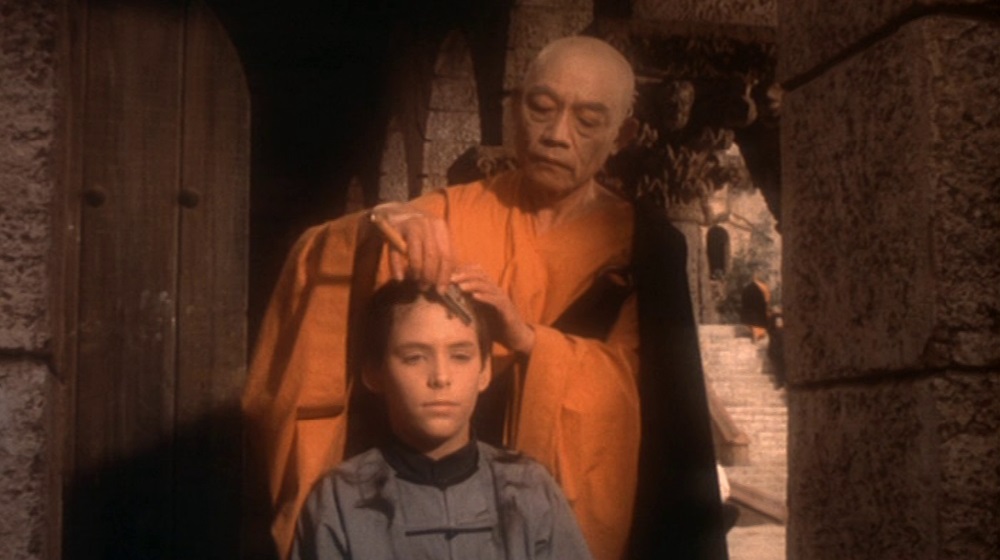
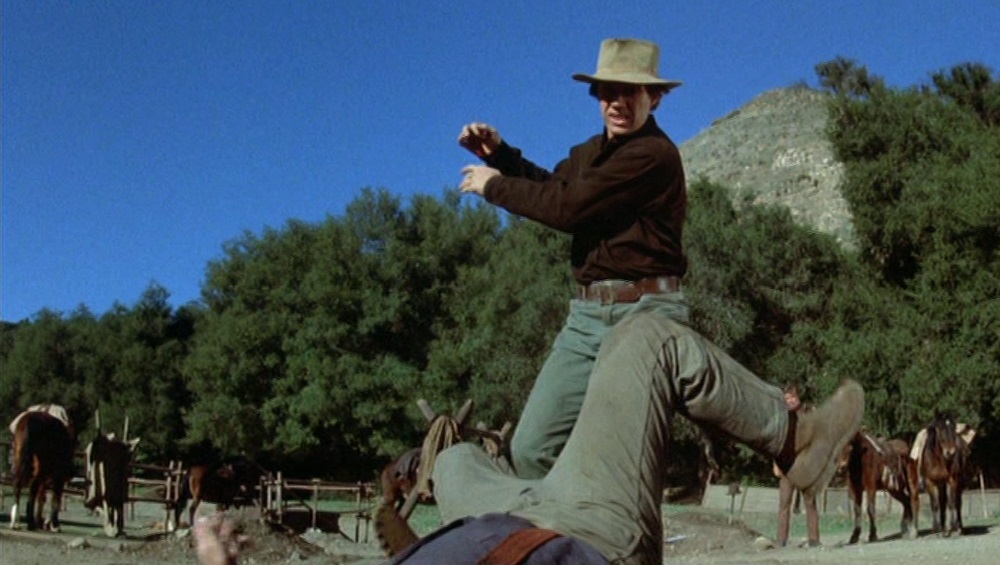
Kwai Chang Caine, a soft-spoken Shaolin priest exiled from China, wanders the savage American West of the mid-19th century. In each episode, he faces conflicts and hardships – whether injustice, violence, or intolerance – and relies on the teachings of his Shaolin monastery to navigate them. Through meditation, wisdom, and only when necessary, martial arts, Caine brings a sense of peace to a world ruled by chaos.

The show’s brilliance lies in its concept: placing a man trained in Taoist philosophy and Shaolin kung fu in the lawless, brutal Old West. The contrast is striking – while the West is filled with bandits, bigotry, and corruption, Caine embodies patience, serenity, and justice. His presence suggests that even a land steeped in violence can be redeemed through wisdom. The Taoist teachings interwoven throughout the show are its greatest strength, offering insights into paradoxes, balance, and a way of seeing the world differently. This depth of philosophy is what makes Kung Fu one of my all-time favorite series.

Yet, there is even more to appreciate. The sweeping American landscapes provide a breathtaking backdrop, immersing viewers in the setting. David Carradine, though regrettably not of Chinese descent (a disappointing yet unsurprising casting decision for the time), delivers a performance that is both mesmerizing and quietly powerful. His portrayal of Caine is nuanced, capturing both his gentleness and his underlying strength.

The series also boasts an impressive lineup of guest stars, many of whom later became household names, such as Jodie Foster, Harrison Ford, Barbara Hershey, Don Johnson, Carl Weathers, and many others. Their early appearances add to the show’s charm, making each episode a delight to revisit.

In today’s turbulent and uncertain world, Kung Fu remains a source of comfort and inspiration. While we may not be able to solve all of the world’s problems, Caine’s approach teaches us how to handle our own struggles with patience and wisdom. He fights only when absolutely necessary and never to kill, making this series a rare example of an action show that is fundamentally about non-violence.

Watching Kung Fu is an enlightening experience – it calms the mind, expands the spirit, and offers a guiding philosophy for life. It’s a show that doesn’t just entertain; it makes you wiser. I’m forever grateful for the lessons it has taught me, and I remain a lifelong student of Taoist philosophy because of it.
Read also: The Tao of Kwai Chang Caine

The Tao of Kwai Chang Caine

The Shaolin priest Kwai Chang Caine is the protagonist of the legendary tv-show Kung Fu from 1972. In every episode, the half Chinese and half American martial arts expert (played by David Carradine) experiences an adventure in the old West. To succeed in helping others and resolving situations, he uses the ancient wisdom he has learned in the Shaolin Monastery in China where he has spent his childhood and early adult years. Below are fifteen aphorisms from the first season that I really like. Many are adapted from or derived directly from the Tao Te Ching, a book of ancient Taoist philosophy attributed to the sage Lao Tzu.

“If one words are no better than silence… one should keep silent.”
— Caine

“All creatures, the low and the high, are one with nature. If we have the wisdom to learn they may teach us their virtues. Between the fragile beauty of the praying mantis and the fire and passion of the winged dragon, there is no discord. Between the supple silence of the snake and the eagles claw there is only harmony as no two elements of nature are in conflict. So when we perceive the ways of nature, we remove conflicts within ourselves and discover a harmony of body and mind in accord with the flow of the universe.”
— Master Kan

“Life sustains life. And all living creatures need nourishment. Yet, with wisdom, the body learns to sustain in ways that all may live.”
— Master Kan

“I do not eat meat. I do not believe in killing to eat.”
— Caine

“Weakness prevails over strength. Gentleness conquers. Become the calm and restful breeze that tames the violent sea.”
— Master Kan

“In one lifetime, a man knows many pleasures: a mother’s smile in waking hours, a young woman’s searing touch and the laughter of grandchildren in the twilight years. To deny these in ourselves is to deny that which makes us one with nature. Acknowledge them and satisfaction will follow. To suppress a truth is to give it force beyond endurance.”
— Master Kan

“Before we wake, we cannot know that what we dream does not exist. Before we die, we cannot know that death is not the greatest joy.”
— Caine

“If a man dwells on the past, then he robs the present. But if a man ignores the past, he may rob the future. The seeds of our destiny are nurtured by the roots of our past.”
— Master Po

“It does not end. The journey goes on, from one time to another. Nothing dies that was ever something.”
— Caine

“Young Caine, when I was a boy I fell into a hole in the ground and I was broken and could not climb out. I might have died there, but a stranger came along and saved me. He said it was his obligation that for help he had once received he must in return help ten others. So that good deeds would spread out like the ripples from the pebble in a pond. I was one of his ten. And you become one of mine. And now I pass this obligation on to you.”
— Master Po

“Peace lies not in the world, but in the man who walks the path.”
— Master Po

“I have three treasures which I hold and keep. The first is mercy, for from mercy comes courage. The second is frugality, from which comes generosity to others. The third is humility, for from it comes leadership. Hold and keep them not in memory, but in your deeds.”
— Master Po

“We are one. Yet we are not the same. Ten million living things have as many different worlds.”
— Master Kan

“See the way of life as a stream. A man floats, and his way is smooth. The same man turning to fight upstream exhausts himself. To be one with the universe, each must find his true path, and follow it.”
— Master Po

“Between father and son there is a bridge which neither time nor death can shatter. Each stands at one end needing to cross and meet. The bridge of which I speak is love.”
— Master Po