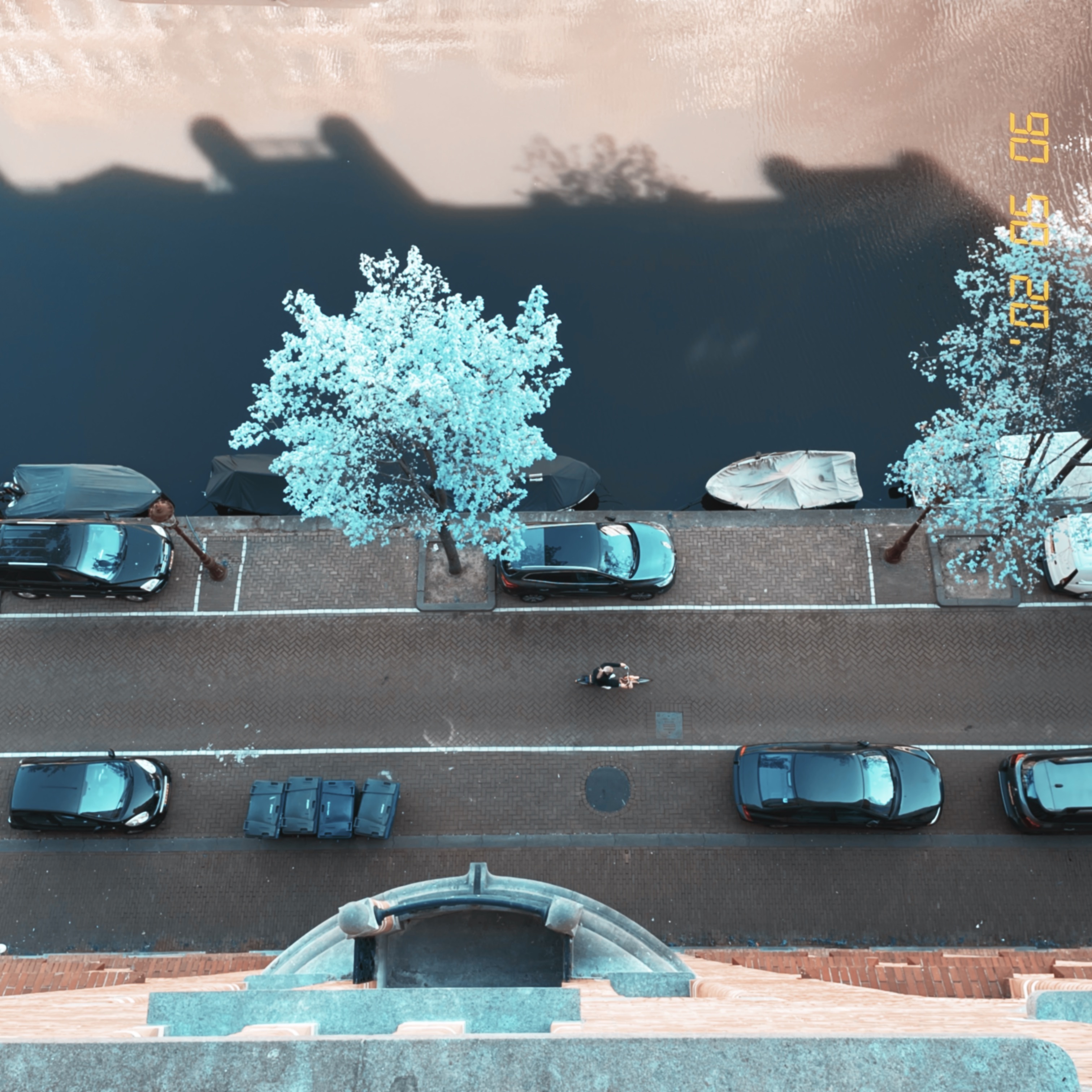
“Urbanite 27”
A Hipstamatic shot by Jeppy K.
Our reality is like a waking dream. It has rules, those we can study objectively (science). But they are not as steady as we may think. Quantum mechanics has revealed that beyond a steady appearance, there is only probability. It takes the act of observing to construct reality out of potentiality.
We used to think that God was the creator of our world and God resided outside of nature. Then Western science removed God, and we were left with nature without cause. Everything was explained as resulting from an extremely large series of random accidents. This worked partly, but many problems remained. Life and consciousness cannot be explained away by random accidents. Nor can randomness be a proper explanation for the immense ordered complexity we observe around us.
The solution was already present all along. Turns out that Eastern philosophy was closest to the edges of truth we can ever hope to get. God is not outside of nature. God IS nature. And since we are part of nature, we are also part of God. We are the mental hubs in a participatory universe.
According to the famous physicist John Wheeler, the universe is a self-referential ‘strange loop’ in which physics gives rise to observers, who then give rise to meaning – establishing observers – participants who grant a meaningful existence to the universe. The world and consciousness are intermingled in such a way that they mutually co-arise in a deeper unified sphere of being. It is impossible to say which initially caused the other, as their relationship has no beginning in time. Their relationship is reciprocal – now one side and then the other acts as a cause. Through the conscious observer in the dreamlike reality, the universe becomes a lucid dreamer.*

From: The Goldilocks Enigma by Paul Davies
Uncountable small acts of observer-participancy have over eons built up the tangible appearance of the material world. As observers, there is no getting around the fact that each of us are participants in bringing reality into being. Wheeler: “I can’t make something out of nothing, and you can’t, but together we can”. The universe is a collective shared dream that is too seemingly dense and solidified for any one person’s change in perspective to transform, but when a critical mass of people get into alignment and consciously put together what I call our “sacred power of dreaming” we can, literally change the waking dream we are having.”*

As agents of cosmic evolution, we are being invited to contribute to the growing edge of the universe’s creative unfoldment into uncharted territory. This is truly evolution in action, as we discover that we can actively participate in our own evolution, and in fact are being called to do so. We become (or maybe we always have been, but just didn’t know it) a channel for the universe to automatically re-create itself in a novel and evolutionary way. Or maybe I am just dreaming.*
*Segments taken from: The Quantum Revelation by Paul Levy
Read also: How The Goldilocks Enigma Is Another Major Indication For A Consciousness-Based Universe
After Quentin Tarantino and Robert Rodriguez both had personal success with Pulp Fiction and Desperado, in 1996 they announced their collaboration on a horror movie, called From Dusk Till Dawn.
Tarantino wrote the script and would play one of the lead roles and Rodriguez would direct. The horror-part was saved for the second half of the film, a strategy inspired by Stephen King, explains Tarantino. “First you let the audience get to know the characters, like them, and then you put them through hell.”
“Many horrors deliver too soon”, says Rodriguez in Full Tilt Boogie, a documentary about the movie’s production released a year after the film in 1997. “There are no clues that the vampires will show up, so the audience members – like the characters – are totally surprised. All of a sudden they’re just there.”
Full Tilt Boogie spends a lot of time interviewing the people that normally don’t get attention; the assistant directors, the personal assistants, the drivers, the best boys, the gaffers, the special effects people, the stunt guys, the caterers… Even the extras get their few minutes of fame. Like Bob Ruth who was also in Pulp Fiction (“I was the coffeeshop manager; ‘I am not a hero’”).
What’s interesting is that while for the creative team (writer, director, cinematographer) it is all about the creative process, for most of the others it is just a job. Sure, they all like movies, but they could easily switch to another industry if it would pay better. They are all mostly concerned with getting overtime paid and complaining about the food, the accommodation and millions of other things.
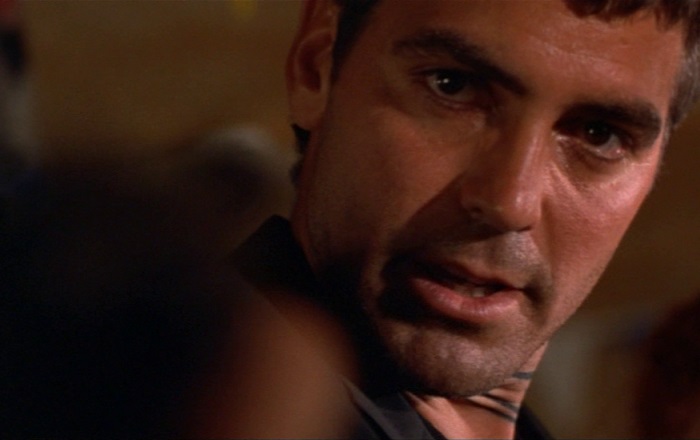
Still, if you are gonna work on a film then From Dusk Till Dawn is a good choice. It has hot new directors and a hot new star (George Clooney in his first big movie film role after many successful years in television) and lots of groovy special effects and stunts. There were also a lot of parties obviously.
But there were problems as well like sand storms, permits, extreme heat and the union going after the 18 million dollar independent film. Not because there were complaints from workers, but – according to the makers – because of the success of Tarantino and producer Lawrence Bender. And because Rodriguez did almost everything himself. The unions weren’t used to that.
Full Tilt Boogie is ultimately a disappointing documentary, because you learn surprisingly little about the filmmakers. I would rather listen to Tarantino and Rodriguez talking for 90 minutes than watch a lot of film people that don’t have a lot to say about the beauty of the medium.
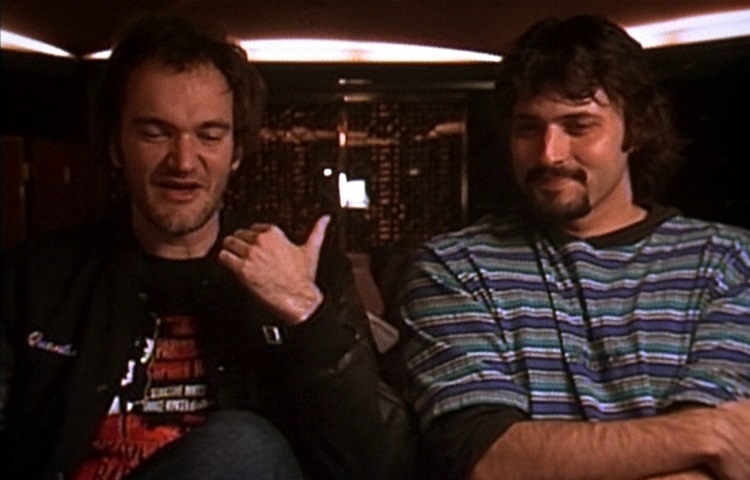


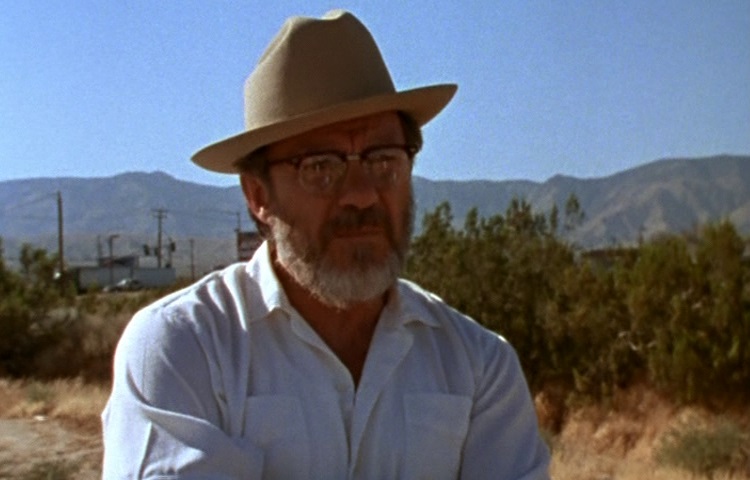
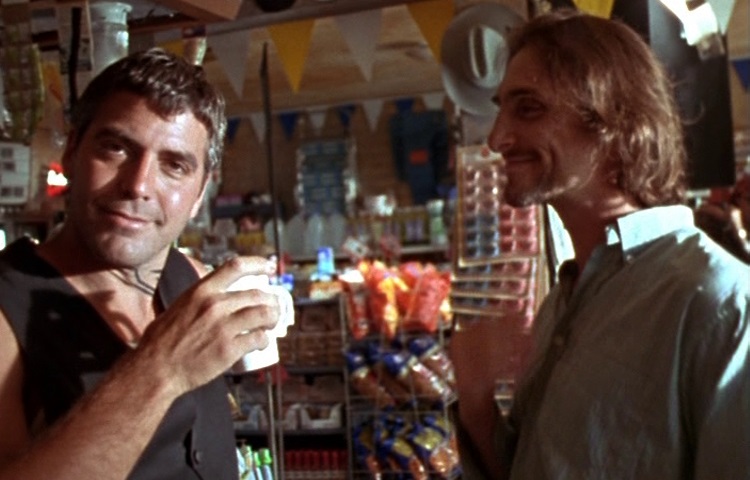
FilmDungeon’s Chief Editor JK sorts through the Dungeon’s DVD-collection to look for old cult favorites….
From Dusk Till Dawn (1996, USA | Mexico)
Director: Robert Rodriguez
Cast: George Clooney, Quentin Tarantino, Juliette Lewis, Harvey Keitel
Running Time: 108 mins.
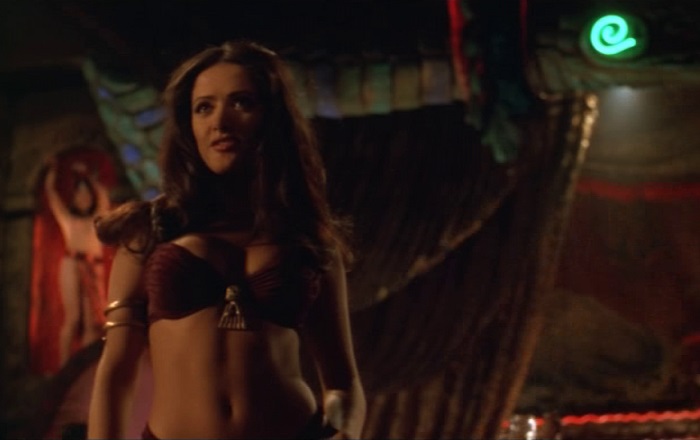
The early nineties saw the rise of filmmakers and friends Quentin Tarantino and Robert Rodriquez (they both debuted in 1992). They collaborated a number of times, but From Dusk Till Dawn is probably the greatest success in terms of cult appeal. Tarantino wrote the script and plays one of the lead roles and Rodriquez directed and edited the movie. The result is a cult classic. The first half is like watching a Tarantino neo-western crime movie. The dialogue is pure Tarantino and thus essential stuff for the cinema obsessive. The cast is excellent with Clooney in a formidable lead role as ruthless criminal Seth Gecko. The dynamic with his crazy, rapist brother Richard (played by Tarantino) ensures many extremely funny moments. During the second half, From Dusk Till Dawn surprisingly turns into a horror movie. A vampire flick to be more precise. It surely is thrilling, though not as good as the terrific first half. But some great supporting parts (by a.o. Fred Williamson and Tom Savini) add to the bloody fun.