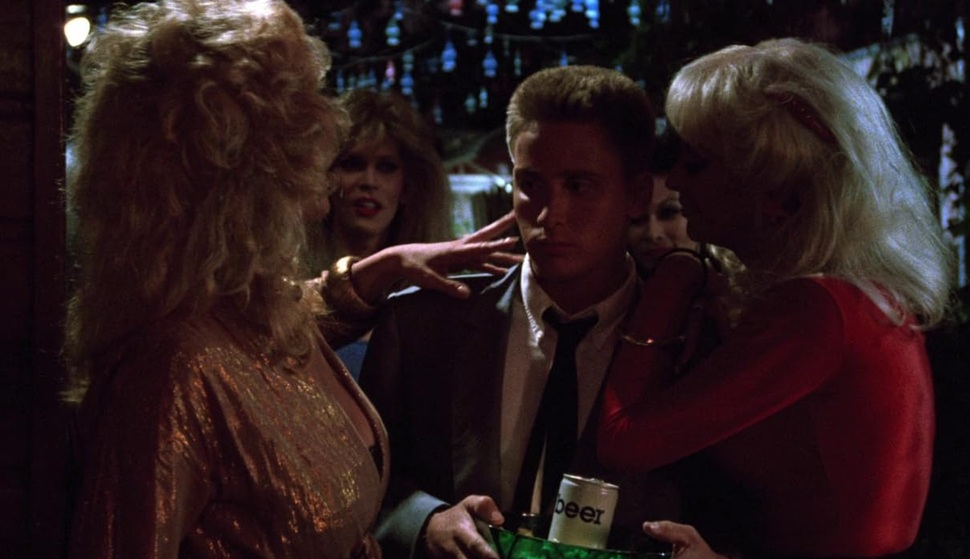
Carlito’s Way (1993)


‘He wanted out. There was only one way to get there.’

Directed by:
Brian De Palma

Written by:
David Koepp (screenplay)
Edwin Torres (novels)

Cast:
Al Pacino (Carlito Brigante), Sean Penn (David Kleinfeld), Penelope Ann Miller (Gail), Luis Guzman (Pachanga), Viggo Mortensen (Lalin), James Rebhorn (District Attorney Norwalk), John Leguizamo (Benny Blanco), Joseph Siravo (Vincent Taglialucci), Richard Foronjy (Pete Amadesso), Ingrid Rogers (Steffie)

Brian De Palma’s career is often seen as a mix of brilliant, boundary-pushing filmmaking and controversial, uneven output. About his contributions to the gangster genre (Scarface, The Untouchables, Carlito’s Way), there can be no doubt however: they belong to the absolute best. It’s right up there with Coppola’s and Scorsese’s output.

Carlito’s Way is largely set in the barrio of Manhattan’s Spanish Harlem, one of New York’s tougher areas that is filled with poverty, drugs and Latino gangs. This is the area in which Judge Edwin Torres grew up, who wrote two novels about the main character Carlito Brigante. It seems that in this neighbourhood, there are only two options in life; escape the slumps or join a gang. And those to go for option B have a way bigger chance on an early funeral (Carlito’s cousin) than to rise to the relative top (Carlito).

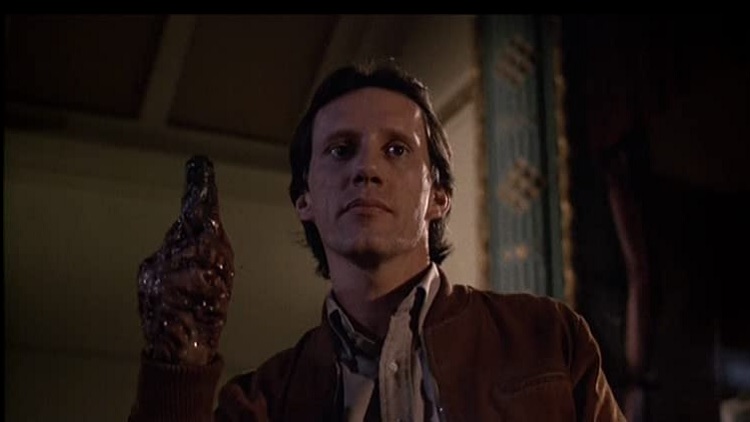
The Puerto Rican Carlito Brigante (Pacino) was a major heroin dealer before the law caught up with him and locked him up. His slick attorney David Kleinfeld (Penn) gets him an early release due to the DA’s usage of illegal wiretap evidence. The now free and seemingly new man Carlito desperately wants to change his ways. But many players, both old and new, intent to drag Carlito back into the deadly game of crime.

Despite the many temptations, Carlito manages to stay legit. He gets back together with his former girlfriend Gail (Penelope Ann Miller) and cooks up an exit plan. As soon as he has saved sufficient money by running a nightclub, he wants to take Gail to the Bahama’s and start a new life together. But then faith strikes and Carlito is placed in an impossible dilemma from which there is no escape. Kleinfeld – who Carlito feels he owes for giving him a fresh start – is in big trouble and he needs Carlito’s help with a very dangerous task.

The job turns sour, but leaves Carlito with enough cash to escape. It also puts him in a bad position with both the feds and the mob. Both his dream and downfall are now closer than ever.

Although the story of a criminal who wants out is nothing new, Carlito’s Way tells a beautiful tragedy. The deeper layers provide for a much more satisfying viewing experience than a clichéd gangster tale.

The acting is excellent. Pacino is solid as a rock as always, but the real joy here is Sean Penn. He portrays the manic, coke addicted lawyer Kleinfeld to perfection. His haircut deserves a special place in the gallery of wrong.

The finale of Carlito’s Way is an extremely suspenseful showdown with an ending that will leave no viewer unmoved. The fantastic escalator shoot-out – that looks as if Hitchcock could have directed it –is the highlight. It also pays a fitting tribute to the baby carriage scene in The Untouchables, which in turn paid tribute to Sergei Eisenstein’s Battleship Potemkin.

De Palma has delivered a movie that is very rewatchable. Not only is it extremely entertaining, it is also character driven and manages to touch the viewer in the heart. Carlito’s ‘way’ turns out to be a fascinating one.

Rating:

Quote:
CARLITO: “Now I ain’t saying that my way would have been different had my mother been alive when I was a kid, cause that’s just bullshit.”

Trivia:
The exterior of the hospital where Carlito visits his bedridden attorney is the same one where Vito Corleone is taken in The Godfather (1972), also starring Al Pacino.

Eating Raoul

Director: Paul Bartel
Written by: Paul Bartel, Richard Blackburn
Cast: Paul Bartel, Mary Woronov, Robert Beltran

Year / Country: 1982, USA
Running Time: 83 mins.

After directing racing flicks Death Race 2000 and Cannonball!, Paul Bartel decided to make a more personal movie. Roger Corman, who had kick-started Bartel’s career with Death Race 2000, would not finance it, so Bartel raised the 500.000 dollar himself by putting up his parents house for sale. The result was Eating Raoul, a demented comedy of sorts about Hollywood, cannibalism and weird sex. It became a sleeper hit and got good critical reviews, especially in Europe.

The story revolves around Paul and Mary Bland, a square couple living in Hollywood. The couple is played by Bartel himself and Mary Woronov, another Corman veteran. The Blands want to open up a countryside restaurant, but lack financial means. A solution presents itself in the form of a swinger (their apartment building is full of them), a lifestyle the Blands – with their refined taste – disapprove of. When this swinger accidentally dies in their apartment, they come up with a very distinctive business model: lure swingers into their apartment and murder them for their money. It becomes a great financial success.

Then Raoul from the title gets involved (played by Robert Beltran, later Star Trek Voyager actor). He is a blacksmith, who discovers their secret and wants a partnership. After not too long, Raoul becomes a big problem the Blands have to deal with. Witty lines such as: ‘We’re having a friend for dinner’ (sounds familiar?) and a couple of hilarious gags make this an enjoyable little film. If you have a taste for the bizarre (it even got dwarves and stuff), Eating Raoul is an oddity that won’t disappoint.

Rating:

Biography: Paul Bartel (1938, New York – 2000, New York) majored in theater arts at UCLA and studied film directing in Rome. After getting his first work experience with Roger Corman he directed a number of low budget cult films. He also worked as a writer and an actor. He died in 2000 from a heart attack.

Filmography: The Secret Cinema (1968, short), Naughty Nurse (1969, short), Private Parts (1972), Death Race 2000 (1975), Cannonball! (1976), Eating Raoul (1982), Not for Publication (1984), Lust in the Dust (1985), The Longshot (1986), Amazing Stories (1986/87, TV episodes), Shelf Life (1993), The Comic Strip Presents…(1993, TV episode), Clueless (1996, TV episode)

The Ice Pirates

Director: Stewart Raffill
Written by: Stewart Raffill, Stanford Sherman
Cast: Robert Urich, Mary Crosby, Michael D. Roberts, Anjelica Huston

Year / Country: 1984, USA
Running Time: 91 mins.

This is a pretty odd movie: a Star Wars-like comedy; a sci-fi spoof that doesn’t always feel like one; a cult classic. In terms of special effects and production design, it looks good. Especially considering that this must have been – by Hollywood standards at least – a modestly budgeted flick. The cast of relatively unknown actors is – like in Star Wars – good enough to arouse and maintain interest from the viewer. The main problem with The Ice Pirates is that it doesn’t quite know what it wants to be.

The setting is a dried-up galaxy where there is virtually no water. Evil Templars from the water planet Mithra have gained control of this life-giving resource. A group of rebel pirates, under command of the roguish Jason (Robert Urich), survive by stealing ice from the great Templar fleets. During one of their missions, they are captured by the evil rulers, but with the aid of Princes Karine of Argon, they escape and start searching for the all-problem-solving Seventh World.

The story, including a romance between Jason and the princes, ensures a strangely entertaining ninety minutes. Only too often, does the movie shift from one genre to another and doesn’t go full throttle in any of them: the comedy at its best is only good for a modest smile; there is too little action to create a real sense of excitement and finally, the spoof level doesn’t go nearly over the top enough. Nevertheless there is still a lot of creativity and fantasy to be discovered. Especially the altered time element during the climax is a lot of fun. Those looking for more serious sci-fi should avoid this flawed film. But B-movie fans are – like many others – probable to embrace it as a classic in its kind.

Rating:

Biography: Stewart Raffill (1945, USA) is a US writer and director. He mostly made adventure / family films such as Lost in Africa, Mac and Me and Three.

Filmography: The Tender Warrior (1971), When the North Wind Blows (1974), The Adventures of the Wilderness Family (1975), Across the Great Divide (1976), The Sea Gypsies (1978), High Risk (1981), The Ice Pirates (1984), The Philadelphia Experiment (1984), Mac and Me (1988), Mannequin: On the Move (1991), Tammy and the T-Rex (1994), Lost in Africa (1994), The New Adventures of Robin Hood (1997, TV-episodes), The New Swiss Family Robinson (1998), Grizzly Falls (1999), A Month of Sundays (1999), Adjustments (2001, short), While You Were Waiting (2002, short), Three (2005), Croc (2007, TV), Mysterious (2007)

Cult Radar: Part 3

FilmDungeon.com is glad to explore the video trenches to find that oddball treasure between the piles of crap out there. Of Course, a treasure in this context can also be a film that’s so shockingly bad it’s worth a look, or something so bizarre that cult fans just have to see it. Join us on our quest and learn what we learn. Hopefully we’ll uncover some well-hidden cult gems.

Researched by: Jeppe Kleijngeld

Dracula A.D. 1972 (UK, 1972)

Directed by: Alan Gibson
Written by: Don Houghton
Cast: Christopher Lee, Peter Cushing, Stephanie Beacham

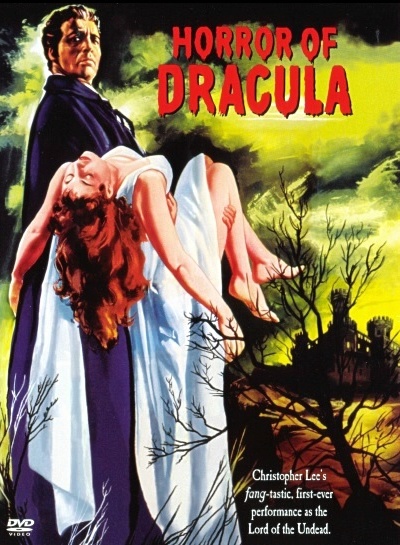
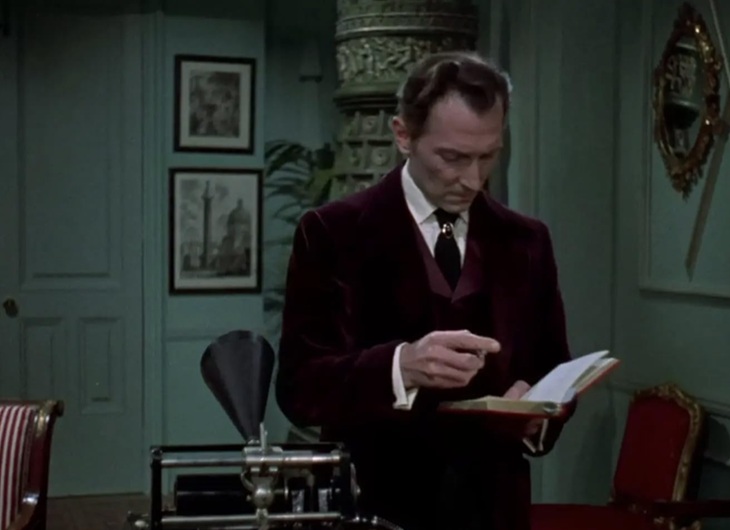
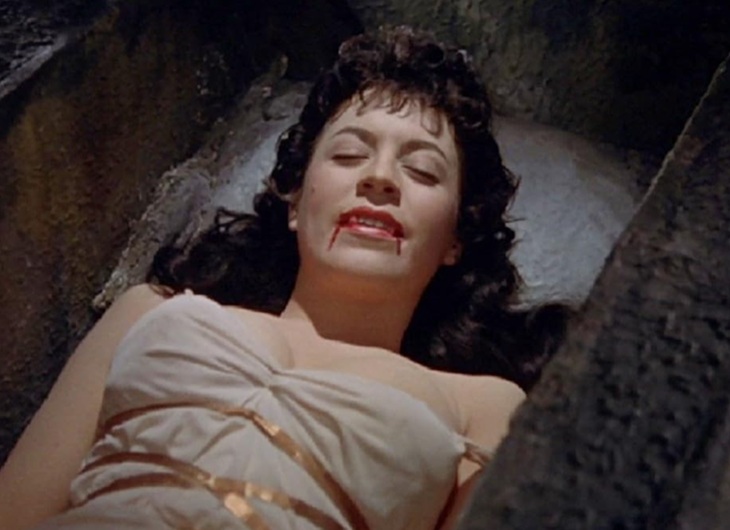
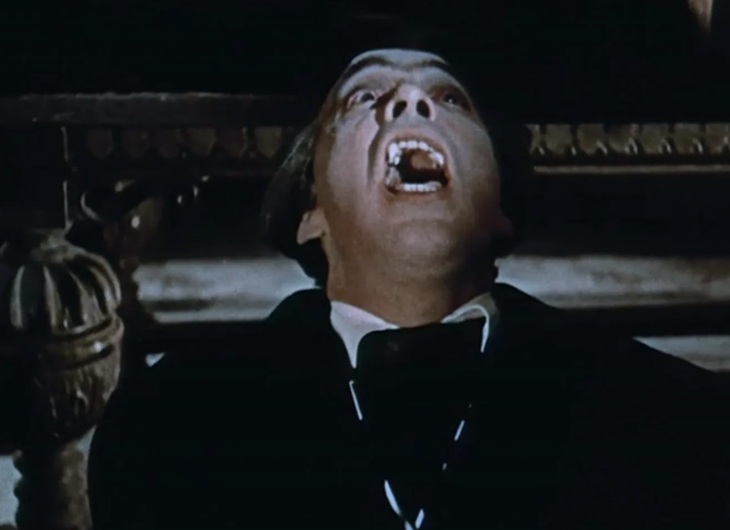
This is the sixth Hammer production that stars Christopher Lee as the uncanny Count Dracula. This time he appears in London during the seventies, as one of his descendants. Johnny Alucard (spell his surname backwards), performs a ritual which brings his old master back to life. Dracula rapidly starts to suck the blood out of young girls. Luckily for the London hippie community, a descendant of the legendary Van Helsing (Peter Cushing), discovers what’s going on and he bows to destroy the evil count forever. Lee and Cushing are a joy to watch as always. They are very charismatic speakers, both equipped with a great voice that enables them to make almost everything they say sound interesting. It’s only a shame that Lee gets too little screen time. Also, the actors playing the hippie characters are extremely unconvincing. Just because someone’s on acid doesn’t mean he will barely react to strange and shocking occurrences. One of the weaker and duller Hammer Dracula flicks.


The Galaxy Invader (USA, 1985)

Directed by: Don Dohler
Written by: Don Dohler, David Donoho, Anne Frith
Cast: Richard Ruxton, Faye Tilles, George Stover

It starts with a Predator-like intro-shot of a fireball flying towards earth, followed by a pulpy credit sequence, including the typical cheesy synthesizer score. The fireball (spaceship) lands in Maryland and the aggressive alien creature onboard starts to roam the outside. A group of rednecks start to hunt it down for the money and a deadly confrontation ensues, while a UFO hobbyist and his former pupil get involved when they attempt to rescue the alien. The first time the Galaxy Invader appears (within five minutes), you’ll see a guy in a suit so ridiculous, it makes you wonder why they even bothered continuing this production at all. Despite these crappy effects, the movie is often quite hilarious because of the stupid (inter)actions of the yokels and the ludicrous action scenes. The alien shoots firework rockets from his gun for Christ sakes! It looks as though the budget was just a few thousand dollars. Great movie though, if you got a thing for the ultra-cheap stuff.


Kong Island (Italy, 1968)

Directed by: Robert Morris
Written by: Chang Cheh
Cast: Brad Harris, Marc Lawrence, Esmeralda Barros

Released on a Grindhouse double feature DVD together with The Galaxy Invader. The picture quality of this film is so bad that you can barely see what’s going on at times. Not that the story is very complicated. In the Nairobi jungle, a mad scientist creates a number of brain-controlled killer gorillas. They kidnap the young girl Diana who belongs to a local expedition group. Mercenary Burt leads a rescue party into the labyrinth jungle, financed by Diana’s father, a bastard who also secretly sponsors the scientist’s experiments. The rescue party gets ambushed and all except for Burt die. Soon after, he meets the ‘sacred monkey’, a girl raised by apes, who helps him find the scientist’s underground lab for a final showdown. Dull movie with virtually nothing to make it worth your while. Also known as Eve, The Wild Woman and King of Kong Island. Best to avoid.


Lucker (Belgium, 1986)

Directed by: Johan Vandewoestijne
Written by: Johan Vandewoestijne, John Kupferschmidt
Cast: Nick Van Suyt, Helga Vandevelde, Let Jotts

The heavily insane John Lucker (Nick Van Suyt) escapes from a mental institution. We learn that he has killed eight woman and performed sexual acts with their already decomposing corpses. That already says it all right? Lucker doesn’t talk much, which makes him all the more scary when he brutally murders someone. Not that it is so much better when he does talk. A prostitute, one of his victims, tells him “this is not my idea of a good time”. Same goes for the viewer: it’s all very unpleasant and nasty. But despite its dark and gloomy ugliness, there is something fascinating about Vandewoestijne’s approach. He created a visually impressive work that features good acting. Hats off for those poor victim girls, who make their torment seem very real. Also kudos for Van Suyt’s disturbing portrayal of John Lucker. A deeply messed-up maniac filled with misogyny. If you decide to watch this, prepare for the worst though.


Nightmare Concert (Italy, 1990)
OT: Un gatto nel cervello

Directed by: Lucio Fulci
Written by: John Fitzimmons, Lucio Fulci, Giovanni Simonelli, Antonio Tentori
Cast: Lucio Fulci, Brett Halsey, Ria De Simone

The DVD-cover of Nightmare Concert aka A Cat in the Brain describes this as Fulci’s bloodiest film. Hard to believe, but it is actually kind of true. I can’t remember many films with this much red in it. It is a special film as well: Fulci stars as himself, a film director with a taste for gore, who begins having violent fantasies. He visits a shrink who hypnotizes him. As a result, Fulci can no longer see the difference between his films and reality which results in loads of brutal slayings. The idea is crystal clear: screen violence leads to real violence. Many recognizable Fulci elements are present in Nightmare Concert: inventive kills (driving over a corpse ten times), less inventive kills (body part dismemberment by chainsaw), some sex and quite a lot of black humour. It is also completely over the top and contains a few lovely moments of self-parody. Just as trashy as most of Fulci’s films, but when the man is on a roll, who’s complaining?


Dracula A.D. 1972