Ranking the Top 100 Beatles Songs – Part 1

The Beatles, the most influential band of all time, deserve the ultimate list. I decided to make a ranking of their 100 greatest songs and devote a major video to this list on my YouTube channel.

Now, this video – published in two parts and totaling 43 minutes of screentime – was quite an undertaking and took me eight months to complete. Compiling the list was relatively tough because the boys have made so many masterpieces. Special thanks to the ever-knowledgeable Jan Bletz for his helpful input. The really tough part was creating the video itself though.

Make no mistake: getting to 43 minutes of edited video can be a real nightmare. Many things go wrong: technical issues, copyright claims of YouTube, the stress of perfectionism and more. Respect for anybody who does this for a living.

That said, I’m pretty happy with the final result – flaws and all. So without further ado, I proudly present the ultimate Beatles playlist, in two parts. I hope you enjoy it.

100. A Hard Day’s Night

99. The Night Before

98. Eight Days a Week

97. Love Me Do

96. I Will

95. Hey Bulldog

94. She Said She Said

93. It Won’t Be Long

92. Mother Nature’s Son

91. The Continuing Story of Bungalow Bill

90. Please Please Me

89. No Reply

88. I Want to Tell You

87. Martha My Dear

86. This Boy

85. Lady Madonna

84. I’m Only Sleeping

83. Can’t Buy Me Love

82. We Can Work It Out

81. Your Mother Should Know

80. Getting Better

79. I Saw Her Standing There

78. Magical Mystery Tour

77. You Can’t Do That

76. Taxman

75. And I Love Her

74. I’ve Just Seen a Face

73. From Me to You

72. You Won’t See Me

71. I’m So Tired

70. Ob-La-Di, Ob-La-Da

69. I’m a Loser

68. Octopus’s Garden

67. I’ll Follow the Sun

66. Help!

65. Julia

64. When I’m Sixty-Four

63. Two of Us

62. The Ballad of John and Yoko

61. With a Little Help from My Friends

60. I Should Have Known Better

59. Ticket to Ride

58. Nowhere Man

57. Don’t Let Me Down

56. If I Needed Someone

55. Sgt. Pepper’s Lonely Hearts Club Band

54. I Want You (She’s So Heavy)

53. All You Need Is Love

52. Carry That Weight

51. Oh! Darling

Check out part 2 here…

Ranking the Top 100 Beatles Songs – Part 2

50. Paperback Writer

49. Sexy Sadie

48. I Me Mine

47. Maxwell’s Silver Hammer

46. For No One

45. Hello, Goodbye

44. I Am the Walrus

43. Get Back

42. I Feel Fine

41. She Loves You

40. Tomorrow Never Knows

39. And Your Bird Can Sing

38. Within You Without You

37. Here Comes the Sun

36. I’m Down

35. Revolution

34. If I Fell

33. The Long and Winding Road

32. All My Loving

31. You Never Give Me Your Money

30. Day Tripper

29. Golden Slumbers

28. Fixing a Hole

27. Michelle

26. I Want to Hold Your Hand

25. Across the Universe

24. Yesterday

23. Drive My Car

22. Dear Prudence

21. Back in the U.S.S.R.

20. Blackbird

19. Come Together

18. Girl

17. The Fool on the Hill

16. Lucy in the Sky with Diamonds

15. Something

14. Being for the Benefit of Mr. Kite!

13. Eleanor Rigby

12. Happiness Is a Warm Gun

11. Penny Lane

10. While My Guitar Gently Weeps

09. Norwegian Wood (This Bird Has Flown)

08. Strawberry Fields Forever

07. Let It Be

06. Hey Jude

05. In My Life

04. She’s Leaving Home

03. Because

02. Here, There and Everywhere

01. A Day in the Life

Check out part 1 here

John & Paul: A Love Story in Songs

‘Ticket to Ride’ glints with meanings; you can walk around it forever and see different shafts of light bounding off its surfaces. It’s about a break-up, viewed through a haze of pot smoke. It’s about a generational shift in the balance of power between men and women. It’s about a shift in the balance of power between John and Paul, as John comes to suspect that Paul doesn’t rely on him quite as much as he relies on Paul.’

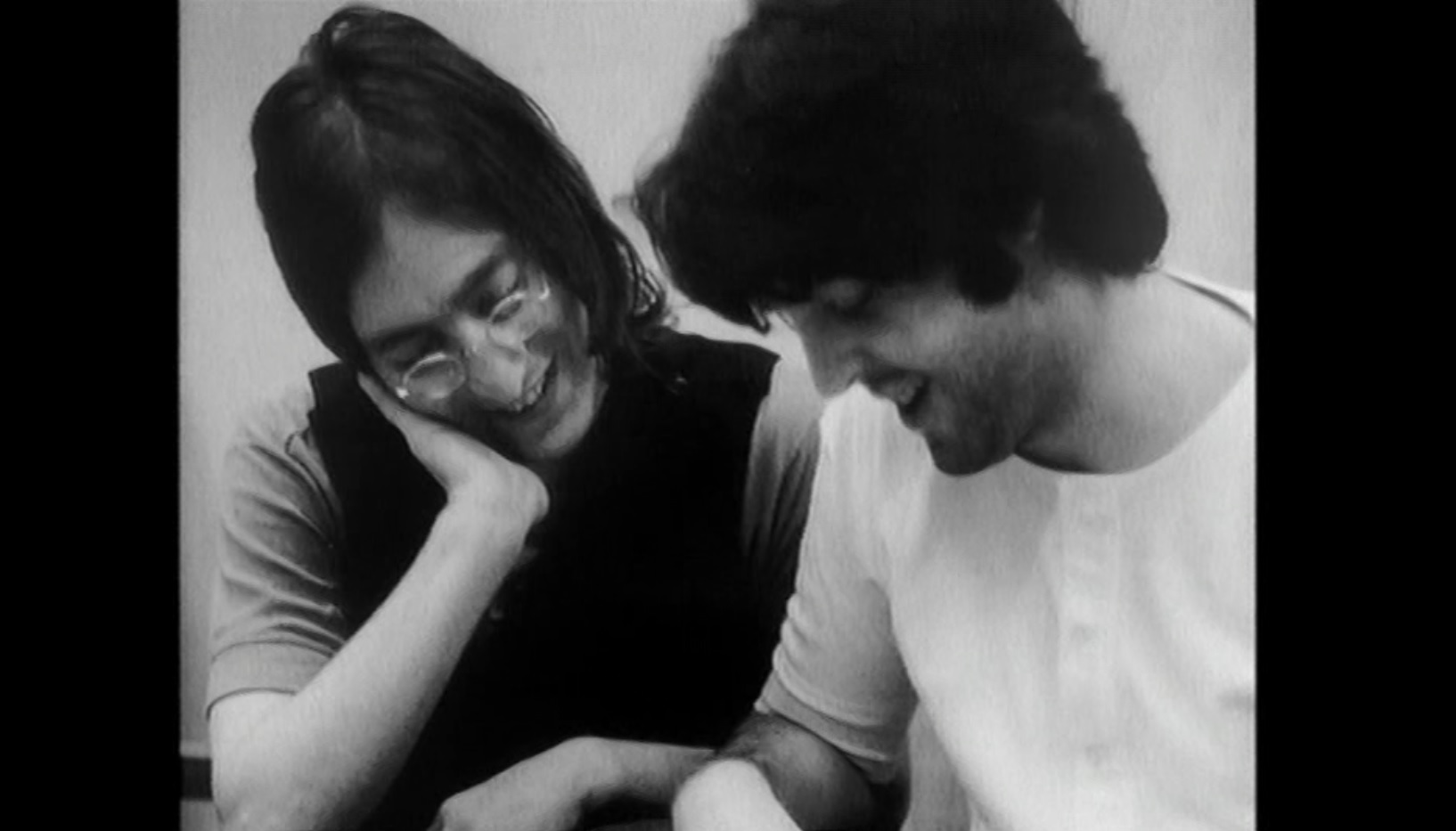
This new book by British author Ian Leslie tells the story of John Lennon’s and Paul McCartney’s intimate relationship. Starting with their first meeting at the Woolton Village Fête and ending with Paul’s response to John’s death in 1980. It tells the story by way of the richest primary source of all: the songs they wrote together. Each chapter is anchored in a song that tells us something about the state of their relationship at that time. The main point is that even after the Beatles broke up, John and Paul were inseparable. They merged their souls and multiplied their talents to create the greatest bodies of music in history.

This is also a love story. John and Paul were more than just friends or collaborators in the sense that we normally understand these terms. Their friendship was in a sense a romance, full of longing and passion, riven by jealousy.

The biographical stories told aren’t new – although I certainly learnt new things – but Leslie’s approach still feels fresh. The psychology behind the stories is what sets it apart. Every anecdotal story is approached by how things must have felt and been experienced by John and Paul. It delves into their state of mind at the time certain songs were written.

The first song Leslie discusses is ‘Come Go With Me’, which John performed with the Quarrymen at the Woolton Village Fête. His improvised lyrics impressed Paul, who realized they might connect through a shared passion for music and songwriting. It moves on with their first songs: ‘I Lost My Little Girl’ by Paul and ‘Hello Little Girl’ by John. This was right away the first instance in which the two were borrowing and building on each other’s ideas.

They began writing songs together, something nobody was doing at that time except the Great Ones from America. The two trusted each other enough to let the other hear their unfinished work, and the more they shared the closer they became.
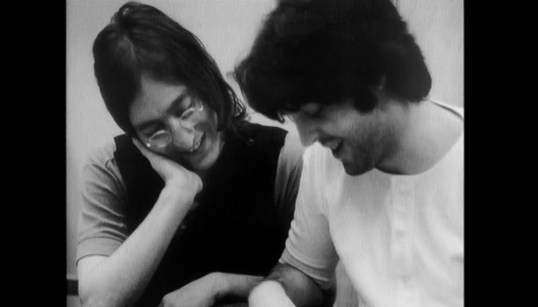
They bonded even more deeply over the loss of their mothers—Paul at 14, John at 17. Paul: “Each of us knew that had happened to the other. At that age you’re not allowed to be devastated and particularly as young boys, teenage boys, you just shrug it off.” It shattered them he later said, but they had to hide how broken they felt. “I’m sure I formed shells and barriers in that period that I’ve got to this day. John certainly did.”

Shells and barriers are defensive fortifications, but for John and Paul this shared trauma also blasted open an underground tunnel through which they were able to communicate in secret from the rest of the world, and even from themselves. In music they could say what they felt without having to say it at all. In 2016, McCartney told Rolling Stone Magazine: “Music is like a psychiatrist. You can tell a guitar things that you can’t tell people. And it will answer you with things people can’t tell you.”

The story goes on with their rise in Hamburg and then in Liverpool. Those who knew the pair marveled at how close they were. Bernie Boyle, a Cavern regular who did some work for the Beatles as a roadie, observed their eerie mental connection: “They were so tight, it was like there was a telepathy between them: on stage, they’d look at each other and know instinctively what the other was thinking.”

People were drawn to them, but were also wary of them, for both were capable of shriveling outsiders with wit. Together they had an aura of unbreachable assurance. This was partly the arrogance of the damaged. The well known trauma psychiatrist Bessel van der Kolk observes: “After trauma the world becomes sharply divided between those who know and those who don’t.”

In their early years, McCartney brought in ballads to their performances like ‘Till There Was You’. John felt discomfort during those moments, but he realized that these songs contributed to the band’s more varied approach than just rock ‘n roll. Besides, John – despite his tough image – secretly also loved the genres that they both got familiar with in their childhood, like folk, music hall, jazz and show-tunes.

It was the song ‘Please Please Me’ that really got the Lennon-McCartney songwriting partnership going. At that point, it became a second revenue stream within the band just for the two of them. ‘Please Please Me’ was their first number one hit and was the final move towards the Lennon-McCartney songwriting explosion that would soon be unleashed.

The book goes on to describe many of the songs that followed, focusing on how John and Paul conceived them, delivered them, and why their combination of voices and sensibilities made the music so enduring. Leslie also teases out the hidden meanings some songs carried for each of them; messages they sometimes couldn’t say directly.
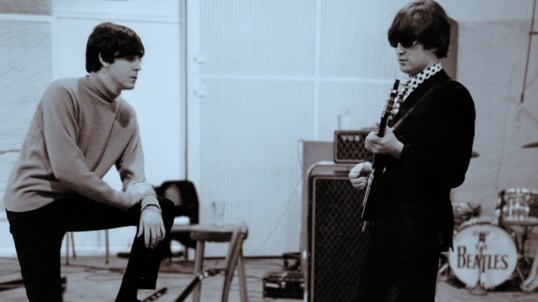
There were also differences in their approach to songwriting. John’s song ideas were often used as a creative platform to which the others could bring their brilliant contributions. Paul – the most accomplished musician and instrumental allrounder – tended to bring more fully fledged songs to the band with clear ideas of what he wanted.

In the first five albums, John was mostly the song originator of the band. Paul’s ‘Yesterday’ was an important moment in their relationship, argues Leslie. John always felt uncertain about it, perhaps because it showed that Paul was such a brilliant songwriter in his own right and that he could do without John. After the break-up, John wrote ‘Imagine’ and according to a collaborator at that time, John felt he had finally written a melody as good as ‘Yesterday’.

After the creative highlight that was ‘Sgt. Pepper’s’, the disintegration of the band started in John’s mind. During their time in India, John was depressed as evident by songs such as ‘I’m So Tired’ and ‘Yer Blues’. The Beatles had been his closest connection and had pulled him through the most difficult of times. Now, it was time to start anew.

Leslie covers the break-up and post-break-up years in great detail, showing how the songs of that period reflect what was going on in their minds. For example, John’s ‘Look At Me’ – which was written in India – is about John’s sense of identity hanging on by being seen by Paul, his creative partner. And if he is not being seen by Paul, who is he supposed to be?

After the break-up, their connection always remained strong and they always kept communicating through music. There were the famous songs at which they were having digs at each other (‘Too Many People’ and ‘How Do You Sleep?’). There was also the instance of John’s final live performance at a concert by Elton John. He chose three songs to perform and one of them was ‘I Saw Her Standing There’. Why did he choose this Paul-song? Because he was scared and needed to summon Paul to get him though, Leslie argues.

The book ends with John’s murder and Paul’s heartbreaking response. The bond was severed forever, yet Paul found a way to keep speaking to John – as always through music. His song ‘Here Today’ is a conversation with the friend, rival, and partner he could never replace.

The 15 Greatest George Harrison Songs

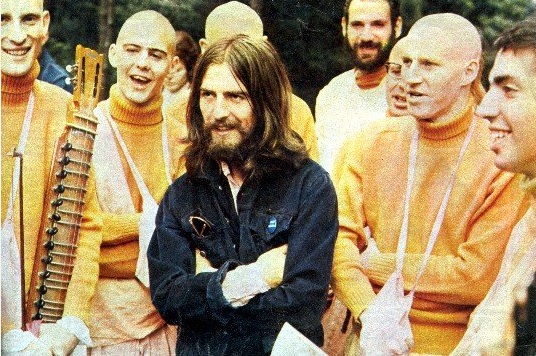
During his formative years as lead guitarist of The Beatles, George Harrison, often called the quiet and spiritual Beatle, developed himself as a successful songwriter in his own right, who worked in the shadow of songwriting canon Lennon-McCartney. He ended up writing some of the group’s most iconic songs, and then – post-Beatles – continued to add a number of classics to his repertoire as a productive solo artist. These are my 15 favorites.

15. Blow Away

Day turned black, sky ripped apart. Rained for a year ‘til it dampened my heart. Cracks and the leaks, the floorboards caught rot. About to go down, I had almost forgotten… Great opening lyrics, this title song and single from of his 1979 album ‘George Harrison’. This easy listening song became one of Harrison’s most popular recordings from his solo career, and it’s easy to understand why.

14. I Want To Tell You

This was the third track George added to ‘Revolver’, and thereby the first time he contributed more than two tracks to a Beatles album. The song is about the difficulty of conveying the emotions you experience during an acid trip. It’s the opening song of ‘Live in Japan’, the fantastic album made of the concert tour George did in Japan with Eric Clapton as his guitarist and band leader.

13. Piggies

‘Piggies’ is a social satire inspired by George Orwell’s ‘Animal Farm’. Great combo of classical music, baroque pop and absurd lyrics (pigs eating bacon). Unfortunately it was, along with ‘Helter Skelter, used by Charles Manson and his cult as a foundation for his race-related counter cultural revolution. Still, it remains a terrific song, and Harrison’s second best song on the magnificent ‘White Album’ in my humble opinion.

12. Living in the Material World

This song’s title was chosen by Martin Scorsese for his documentary about Harrison. It’s another one of his spiritual songs and the title of his follow-up album to ‘All Things Must Pass’. It’s a very memorable tune in which George describes the limits of knowledge we have in this state as living beings and the clearer picture that will emerge after death. John and Paul are also mentioned in the lyrics.

11. If I Needed Someone

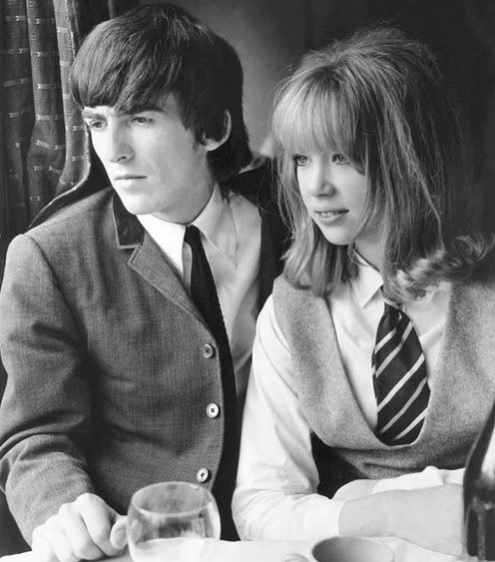
Along with ‘Think For Yourself’, this was George’s contribution to ‘Rubber Soul’. He apparently wrote it for Pattie Boyd, with whom he wasn’t yet married in 1965. It was inspired by the sound of the American band the Byrds who George and John liked and who were clearly inspired by the Beatles. The ambivalent lyrics are quite beautiful, and ‘If I Needed Someone’ was at the time considered to be George’s best song at that point.

10. Within You, Without You

One of the three Indian songs George composed for the Beatles (the others are ‘Love You To’ and ‘The Inner Light’) and his only song on ‘Sgt. Pepper’s Lonely Hearts Club Band’. “I think that is one of George’s best songs”, John Lennon later said. “I like the arrangement, the sound and the words. He is clear on that song. You can hear his mind is clear and his music is clear.” It was recorded in Abbey Road Studios in London without the other Beatles, and features Indian instruments such as the sitar, a tambura and a tabla.

09. I Me Mine

In Peter Jackson’s ‘Get Back’ about the ‘Get Back’ sessions in Twickenham Studio’s, George arrives one morning, and he starts playing a new song he’s been working on for Ringo and some crew members. It is called ‘I Me Mine’. They like it and so do I. The lyrics point to self-centredness as part of the human condition. It was the last song The Beatles, somewhat ironically, recorded before they split up and went to do their own thing.

08. Cheer Down

‘Cheer Down’ was the closing song of the tremendous action film Lethal Weapon 2 in 1989. It was picked by George’s friend Eric Clapton, who was in charge of the music. The title of the song is attributed to Harrison’s wife Olivia, who told her husband to ‘cheer down’ when he would get too enthusiastic. He wrote it together with Tom Petty, and released it as a single with ‘Poor Little Girl’ as the B-side. It was the last such release by Harrison as a solo artist during his lifetime.

07. Tax Man

On The Beatles’ legendary album ‘Revolver’, George got the opening track with ‘Tax Man’. It was the first political song by the group, written as a protest against the progressive super tax of 95 percent the band had to pay at that time. It was introduced by Harold Wilson, prime minister and Labour Party leader, who is mentioned in the lyrics along with conservative leader Ted Heath. The fantastic guitar solo is played by none other than Paul McCartney.

06. What Is Life

‘What Is Life’ is one of the hit singles of ‘All Things Must Pass’, Harrison’s triple album which was released in november 1970 after the breakup of the group. Background musicians on the song include Eric Clapton and the Delaney & Bonnie and Friends Band. It became one of Harrison’s most popular compositions and showed the depth of his talents that had been hiding in plain sight behind Lennon and McCartney. The songs was used in the final segment of GoodFellas, the part in which Henry Hill’s life as a gangster goes off the rails.

05. Here Comes The Sun

And what is currently the most streamed Beatles-song? It’s not a Lennon-McCartney composition, but by far Harrison’s ‘Here Comes The Sun’. It is currently on 1.1 billions streams on Spotify. George wrote this pearl at Eric Claptons’ country house on an acoustic guitar while skipping a business meeting at Apple Corps headquarter about The Beatles’ business affairs. It became one of his signature songs and together with ‘Something’ formed his genius contribution to ‘Abbey Road’, the final album they recorded. The beautiful composition shows his maturity as a songwriter.

04. Something

This classic love song from ‘Abbey Road’ became Harrison’s first A-side single (it was released as a double A-side single together with Lennon’s ‘Come Together’). It is considered as a definite highlight of Harrison’s career. Lennon called it “the best track on ‘Abbey Road’” and it was later covered by a.o. Frank Sinatra, Elvis Prestley, Ray Charles and Shirley Bassey. After ‘Yesterday’ it is the most covered song by The Beatles.

03. While My Guitar Gently Weeps

Rolling Stone Magazine ranked this song seventh in their list ‘The 100 Greatest Guitar Songs of All Time’. And justly so! The guitar work (played partly by Eric Clapton uncredited) is sweeping. The words that started this composition – gently and weeps – were randomly chosen from a book George found lying around. This reflects the meaning of the lyrics that appear to be about randomness and – typical for George – universal love. Inspired by the Taoist concept that everything is relative to everything else as opposed to the Western view that things are merely coincidental.

02. Give Me Love (Give Me Peace On Earth)

I am a sucker for George’s spiritual songs and this is reflected in my choice for his greatest two songs. ‘Give Me Love’ (1973) became George’s second number one single in the US knocking McCartney’s ‘My Love’ to the second spot. It contains beautiful slide-guitar solos, and I love his passionate pleading to the Lord, asking to be freed from birth (released from the karmic cycle of birth, death, and rebirth). Don’t miss the beautiful live version from the ‘Live in Japan’ album.

01. My Sweet Lord

Why ‘My Sweet Lord’ is my favorite George Harrison song? Because the songs heralded the arrival of Harrison’s slide guitar technique, and I absolutely love the sound of the guitars on this song. The solo especially is marvelous. Also, George’s passionate singing is terrific, and those background vocals: LOVE THEM! Lennon didn’t like it much, commenting: “Every time I put the radio on it’s ‘oh, my Lord.’ I’m beginning to think there must be a God.” But maybe he was a little jealous that George became the first ex-Beatle to score a number-one single. Later in the 1970s, Harrison was found guilty to have subconsciously plagiarized the song ‘He’s So Fine’ by The Chiffons.