If you have been away.
And left this world behind.
So far away.
No problems on your mind.
Alone again.
Feeling very sad.
Left with your memories.
Memories
Earth and Fire (1972)
If you have been away.
And left this world behind.
So far away.
No problems on your mind.
Alone again.
Feeling very sad.
Left with your memories.
Memories
Earth and Fire (1972)
Soms koop ik spontaan een boek om me te inspireren. Laatst viel de keuze op het boek ‘1001 films die je gezien moet hebben’, met op de cover een still van ‘Life of Pi’.

Bij het doorbladeren laatst viel me op dat er niet alleen feature films tussen staan, maar ook een enkele korte film. Daaronder ook ‘Report’ (Bruce Conner, 1967), een 13 minuut durende compilatie van nieuwsbeelden van de moordaanslag op John F. Kennedy.
Waarom is dit volgens het boek zo’n geniaal werk? De beschrijving leest: Op de dag dat John F. Kennedy vermoord werd, begon Bruce Conner televisiebeelden van de moord op film op te nemen. Na vier jaar bijwerken en monteren van het verzamelde materiaal bracht hij de avant-gardistische klassieker ‘Report’ uit.
Op de soundtrack horen we de radio- en televisiecommentaren van die dag, waardoor de gebeurtenis steeds hysterischer wordt. In zijn beelden blijft Connor echter terughoudend. Op het moment van sterven zien we een wit doek en vervolgens een heftige opeenvolging van zwart-wit beelden. Steeds weer verschijnen beelden van de moord – honderden, uit alle mogelijke nieuwsrubrieken, reclames, cartoons en films.
Het lijkt wel of Connor zich vanaf het begin gerealiseerd heeft dat onze hele houding tegenover die gebeurtenis voortkwam uit de manier waarop de massamedia ons onophoudelijk met beelden en geluiden van die dag bestookten. ‘Report’ geeft heel goed de twee tegengestelde reacties op de moord op Kennedy weer: frustratie over het ontbreken van wezenlijke informatie in het audiovisuele archief, en juist het zien van te veel beelden waardoor de complottheorie, in de stijl van Oliver Stone, werd versterkt.
Nog een beetje vaag? Bekijk zelf onderstaande videoessay over Conner’s korte docu-film op YouTube:
Delivered 28 August 1963, at the Lincoln Memorial, Washington D.C.
I am happy to join with you today in what will go down in history as the greatest demonstration for freedom in the history of our nation.
Five score years ago, a great American, in whose symbolic shadow we stand today, signed the Emancipation Proclamation. This momentous decree came as a great beacon light of hope to millions of Negro slaves who had been seared in the flames of withering injustice. It came as a joyous daybreak to end the long night of their captivity.
But one hundred years later, the Negro still is not free. One hundred years later, the life of the Negro is still sadly crippled by the manacles of segregation and the chains of discrimination. One hundred years later, the Negro lives on a lonely island of poverty in the midst of a vast ocean of material prosperity. One hundred years later, the Negro is still languished in the corners of American society and finds himself an exile in his own land. And so we’ve come here today to dramatize a shameful condition.
In a sense we’ve come to our nation’s capital to cash a check. When the architects of our republic wrote the magnificent words of the Constitution and the Declaration of Independence, they were signing a promissory note to which every American was to fall heir. This note was a promise that all men, yes, black men as well as white men, would be guaranteed the ‘unalienable Rights’ of ‘Life, Liberty and the pursuit of Happiness.’ It is obvious today that America has defaulted on this promissory note, insofar as her citizens of color are concerned. Instead of honoring this sacred obligation, America has given the Negro people a bad check, a check which has come back marked ‘insufficient funds.’
But we refuse to believe that the bank of justice is bankrupt. We refuse to believe that there are insufficient funds in the great vaults of opportunity of this nation. And so, we’ve come to cash this check, a check that will give us upon demand the riches of freedom and the security of justice.
…It would be fatal for the nation to overlook the urgency of the moment. This sweltering summer of the Negro’s legitimate discontent will not pass until there is an invigorating autumn of freedom and equality. Nineteen sixty-three is not an end, but a beginning. And those who hope that the Negro needed to blow off steam and will now be content will have a rude awakening if the nation returns to business as usual. And there will be neither rest nor tranquility in America until the Negro is granted his citizenship rights. The whirlwinds of revolt will continue to shake the foundations of our nation until the bright day of justice emerges.
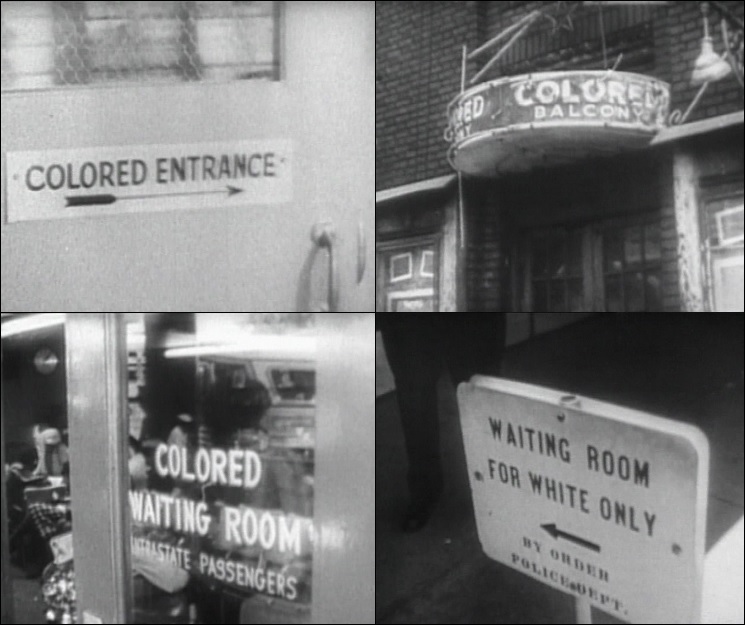
…There are those who are asking the devotees of civil rights, ‘When will you be satisfied?’ We can never be satisfied as long as the Negro is the victim of the unspeakable horrors of police brutality. We can never be satisfied as long as our bodies, heavy with the fatigue of travel, cannot gain lodging in the motels of the highways and the hotels of the cities. We cannot be satisfied as long as the negro’s basic mobility is from a smaller ghetto to a larger one. We can never be satisfied as long as our children are stripped of their self-hood and robbed of their dignity by signs stating: ‘For Whites Only.’ We cannot be satisfied as long as a Negro in Mississippi cannot vote and a Negro in New York believes he has nothing for which to vote. No, no, we are not satisfied, and we will not be satisfied until ‘justice rolls down like waters, and righteousness like a mighty stream.’

… Let us not wallow in the valley of despair, I say to you today, my friends.
And so even though we face the difficulties of today and tomorrow, I still have a dream. It is a dream deeply rooted in the American dream.
I have a dream that one day this nation will rise up and live out the true meaning of its creed: ‘We hold these truths to be self-evident, that all men are created equal.’
I have a dream that one day on the red hills of Georgia, the sons of former slaves and the sons of former slave owners will be able to sit down together at the table of brotherhood.
I have a dream that one day even the state of Mississippi, a state sweltering with the heat of injustice, sweltering with the heat of oppression, will be transformed into an oasis of freedom and justice.
I have a dream that my four little children will one day live in a nation where they will not be judged by the color of their skin but by the content of their character.
I have a dream today!
I have a dream that one day, down in Alabama, with its vicious racists, with its governor having his lips dripping with the words of ‘interposition’ and ‘nullification’ — one day right there in Alabama little black boys and black girls will be able to join hands with little white boys and white girls as sisters and brothers.
I have a dream today!
Read the whole speech here:
http://www.americanrhetoric.com/speeches/mlkihaveadream.htm
Up I rush off to work.
Hello Fred you look half dead.
Are you coming are you going.
I could never do a double shift.
Hello Fred get some bed Fred.
On the Beat Pete
Madness (1980), Absolutely

