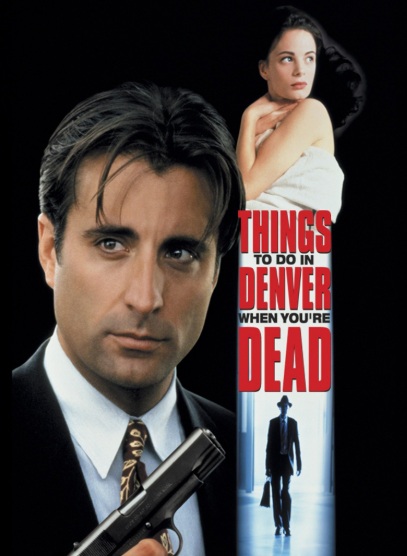
Things to Do in Denver When You’re Dead (1995)


‘They can die quickly. They can die slowly. But they must die!’

Directed by:
Gary Fleder

Written by:
Scott Rosenberg

Cast:
Andy Garcia (Jimmy ‘The Saint’ Tosnia), Christopher Lloyd (Pieces), William Forsythe (Franchise), Bill Nunn (Easy Wind), Treat Williams (Critical Bill), Jack Warden (Joe Heff), Steve Buscemi (Mister Shhh), Fairuza Balk (Lucinda), Gabrielle Anwar (Dagney), Christopher Walken (The Man with the Plan)
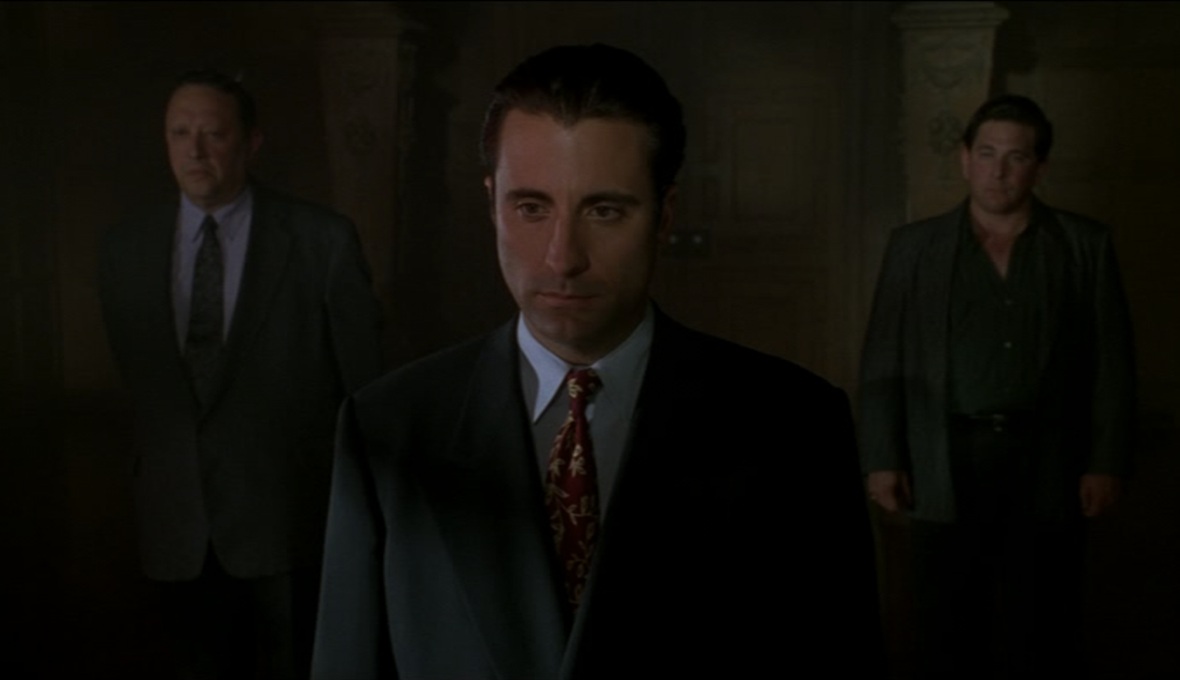
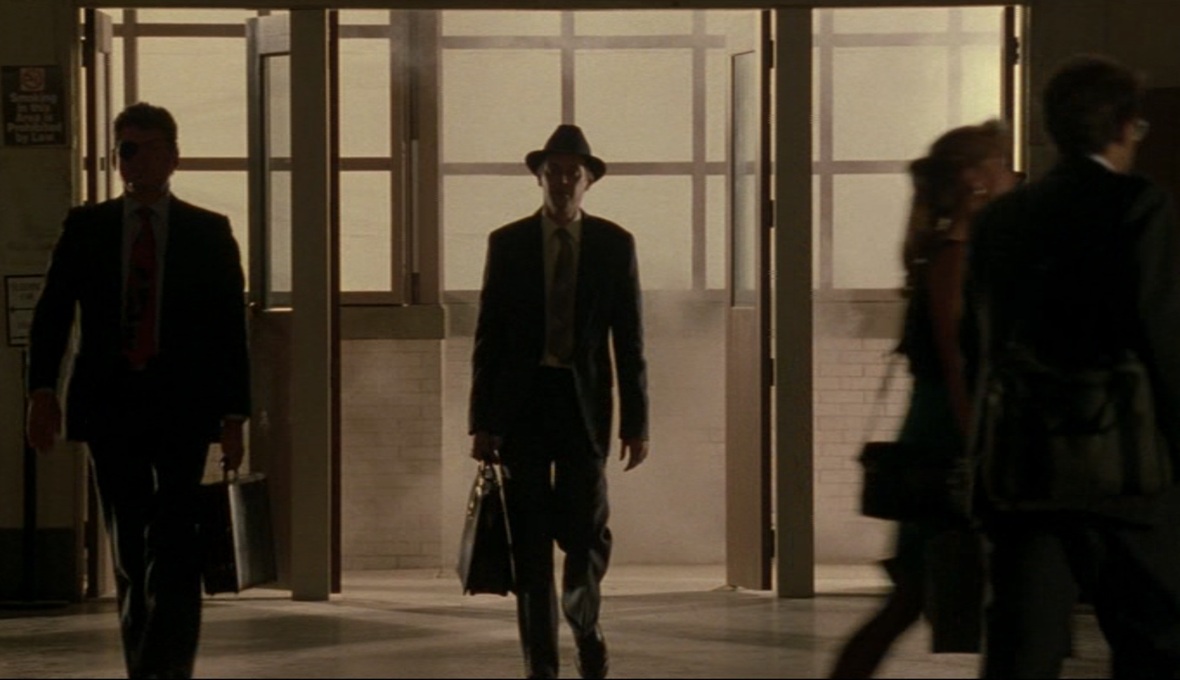
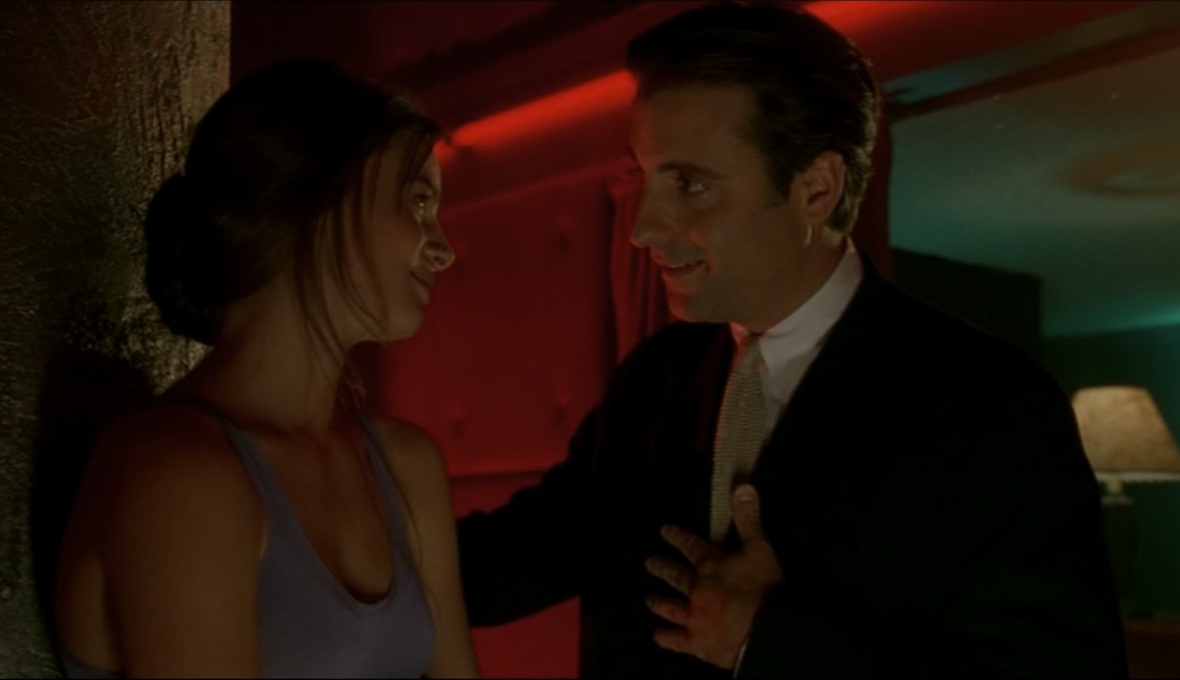
Jimmy the Saint (Andy Garcia) is a decent guy with a criminal background. He now runs a video business where dying people can record final words of wisdom for their loved ones.

Things are going well for Jimmy: he meets a nice girl (Gabrielle Anwar) and leads a pleasant life, but then his old boss calls for him. The crippled gangster ‘The Man with the Plan’ (Christopher Walken) asks Jimmy to do one final job. Jimmy agrees and brings along four old friends. The job goes horribly wrong, and the five friends are now marked for death.

What is especially notable about Things to Do in Denver When You’re Dead is the awesome cast. The ‘good’ guys are a wonderful collection (Lloyd, Forsythe, Williams, Nunn), with a charismatic Garcia in the lead. The other camp isn’t shy of great players either: Christopher Walken gives a very sinister performance, but the scene-stealer is Steve Buscemi. The scenes in which his character Mr. Shhh appears are the best in the whole movie.

The problem with Things to Do in Denver When You’re Dead is that during the first hour, it is hard to see what the makers wanted to achieve. It appears to be a whacky gangster film / black comedy, seemingly inspired by Tarantino, who brought out Pulp Fiction a year earlier. But if that is the case, it is not whacky enough – and not funny enough, for that matter.

When Christopher Lloyd starts talking about the good old days and says, “We did the things,” I couldn’t help but think: why not now? There is too much talking about stuff that happened before the movie. Things to do in Denver when you’re dead? These guys don’t even do stuff when they’re alive!

Then again, as the movie approaches its ending, it becomes clearer what the screenplay is aiming for. The ending is a fairly impressive piece of writing. It makes you think about death, only in an enjoyable way. Now that can’t be too bad, can it?

Rating:

Quote:
CRITICAL BILL: “I am Godzilla, you are Japan!”

Trivia:
Screenplay writer Scott Rosenberg (Con Air, High Fidelity) wrote the script in two weeks. It was partly in reflection to the death of his father from cancer.
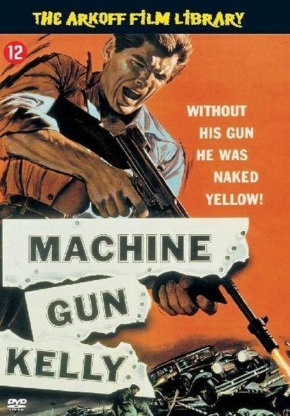
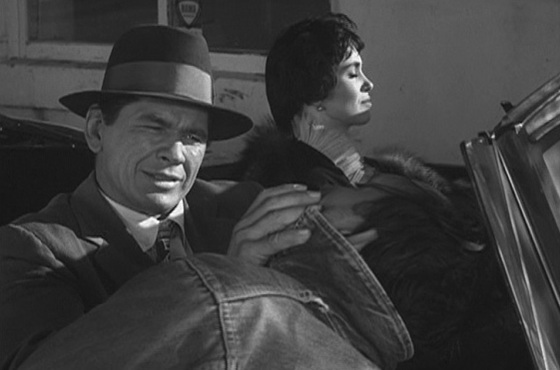
Machine Gun Kelly (1958)


‘Without His Gun He Was Naked Yellow!’

Directed by:
Roger Corman

Written by:
R. Wright Campbell

Cast:
Charles Bronson (George R. ‘Machine Gun’ Kelly), Susan Cabot (Florence ‘Flo’ Becker), Morey Amsterdam (Michael Fandango), Richard Devon (Apple), Jack Lambert (Howard), Frank DeKova (Harry), Connie Cilchrist (‘Ma’ Becker), Wally Campo (Maize), Barboura Morris (Lynn Grayson), Lori Martin (Sherryl Vito)

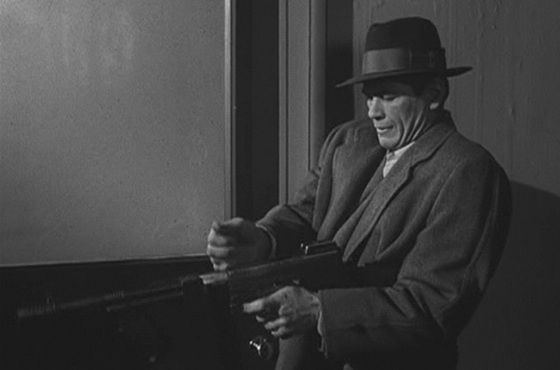
George ‘Machine Gun’ Kelly was one of the most notorious criminals from the prohibition days, along with Baby Face Nelson, John Dillinger and Pretty Boy Floyd. What sets him apart is that Machine Gun is scared to death of death. Whenever he sees a coffin or another omen of death he starts sweating and shaking like a leaf. Hence the tagline of this film: ‘Without His Gun He Was Naked Yellow!’

The movie starts with a daring robbery. Kelly and his pals rob 41.000 dollars from a local bank. Quite a sum in those days, but Kelly wants more. His hothead behaviour causes friction in the gang, and his relationship with his girlfriend ‘Flo’ is also unstable. When they kidnap the daughter of an oil magnate, things start to go very wrong and Kelly’s downfall draws closer.

This low budget flick is directed by King of the B-movies Roger Corman. Movies about phobic gangsters were popular in the fifties. In 1950 James Cagney played a gangster with a mother complex in White Heat. This film kind of reminds of that one; only it is far from the masterpiece White Heat is. Charles Bronson plays a very cold and unsympathetic character. That makes it hard to care what happens to him. Only worth a look because of the historical aspect. In fact, the story is interesting enough for a remake – by a gifted director. That could definitely work.

Rating:

Quote:
FLORENCE ‘FLO’ BECKER: “You watch it Georgie. Your shadow will scare you to death some time.”

Trivia:
This is Roger Corman’s first gangster movie.

Death Race

Director: Paul W.S. Anderson
Written by: Paul W.S. Anderson
Cast: Jason Statham, Joan Allen, Ian McShane, Tyrese Gibson

Year / Country: 2008, USA, Germany, UK
Running Time: 106 mins.

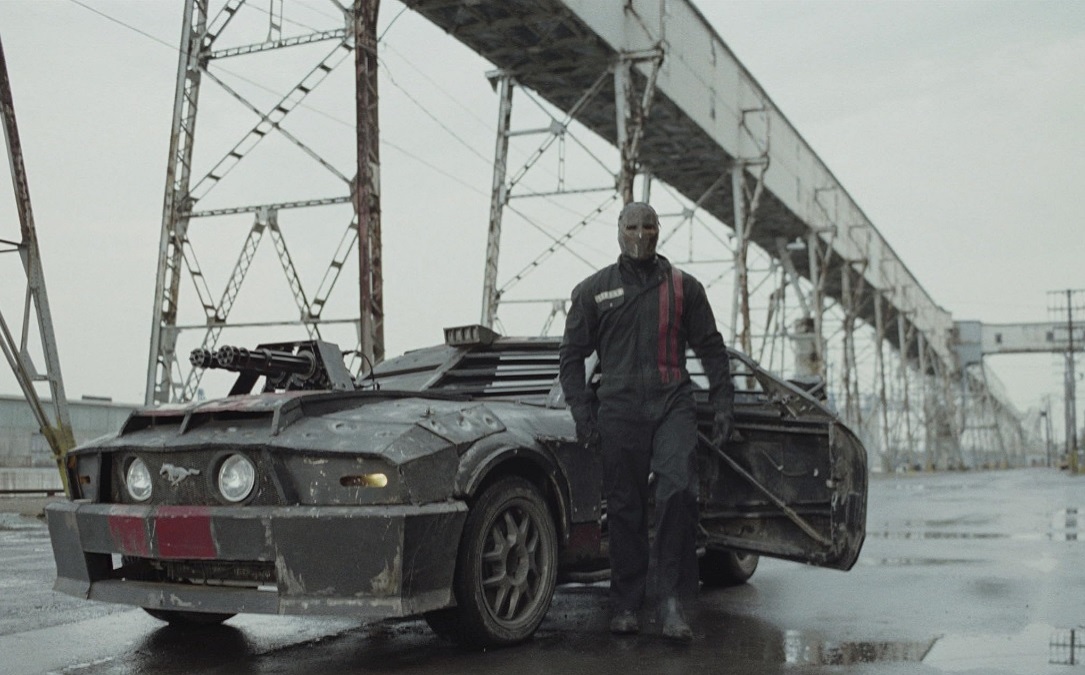
Death Race is supposed to be a remake of Death Race 2000, a Roger Corman produced cult gem from the seventies. While there is certainly resemblance; it is all about a gladiator-like futuristic car race, there are many differences as well. Death Race 2000 was a cynical, humoristic and over the top look at the future, while Death Race doesn’t seem to be more than a straightforward action flick. Not that there’s anything wrong with that, the target audience just might be a little different.

In 2012, a financial crisis threw the Western world into chaos. Jensen Ames (Statham) is an ex-racer who is framed for murdering his wife. In jail he has to replace legendary driver Frankenstein in the internet hit ‘Death Race’. While Ames makes a great Frankenstein, the real monster is warden Hennessey (Joan Allen) who directs the deadly race to make a killing from the broadcasting. But Ames is not one to simply play ball. He has an escape-plan to execute, a conspiracy to solve and enemies to exterminate.

The plot is very predictable, but the concept works well enough to forgive the film this flaw. It seems that in every movie director Anderson directs, he does one thing extremely well and a lot of other things very wrong. In this movie it is the action that blows off the screen. The internet streaming footage is also fabulous. His writing skills leave a lot to be desired though. This is mainstream Hollywood work.

Statham has become quite the badass action star. I preferred David Carradine in the Frankenstein role in the original, but Statham is nevertheless okay. However, Tyrese Gibson is a lousy replacement for Machine Gun Joe. Watching Sylvester Stallone in that part was a thousand times cooler, though it is not entirely Gibson’s fault. The script doesn’t give him much to work with. In the acting department, there is great support from Joan Allen as queen bitch and Ian McShane as Ames’ biggest supporter.

That leaves one comment to be made; the ending is excruciating. But since the largest part of the film is about racing, this movie can be called a modest success. It is certainly the best thing Anderson has done in years.

Rating:

Biography: Paul W.S Anderson (1965, Newcastle-upon-Tyne, UK) gained some notoriety in his native England with his ultra-violent feature debut Shopping in 1994. Its relative success allowed him to direct action / sci-fi films in Hollywood, including the financially successful Mortal Kombat. In 2002 he resurfaced another video game adaptation, Resident Evil. He next was given the helm for the long-awaited film adaptation of the popular Dark Horse comic book, AVP: Alien Vs. Predator.

Filmography (a selection): Shopping (1994), Mortal Kombat (1995), Event Horizon (1997), Soldier (1998), The Sight (2000, TV), Resident Evil (2002), AVP: Alien vs. Predator (2004), Death Race (2008), Resident Evil: Afterlife (2010), The Three Musketeers (2011), Resident Evil: Retribution (2012), Pompeii (2014), Resident Evil: The Final Chapter (2016), Monster Hunter (2020)

A Bullet for the General

Director: Damiano Damiani
Written by: Salvatore Laurani (story), Franco Solinas (adaptation)
Cast: Gian Maria Volonté, Klaus Kinski, Martine Beswick, Lou Castel

Year / Country: 1966, Italy
Running Time: 113 mins.

Zapata Westerns are a subgenre of the Spaghetti Western. They deal with political themes and play against the backdrop of the Mexican Revolution between around 1910 and 1920, the years of the famous Mexican revolutionary Emiliano Zapata, after whom the genre is named. Famous examples include; Sergio Curbucci’s Companeros and The Mercenary, and Sergio Leone’s A Fistful of Dynamite. A Bullet for the General is an early contribution to the genre and is regarded as one of the best.

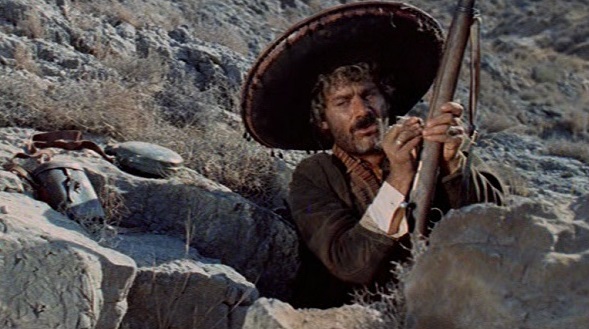
It deals with a group of cutthroat bandits, led by El Chuncho (Volonté). Their job is to steal guns for the revolutionary general Elias. During a violent train raid, they pick up young American Tate (Castel), who they take along with them as a welcome addition to their crew. What they don’t know is that Tate is secretly an assassin hired by the Mexican government to kill Elias with the golden bullet he carries with him.

Starring two actors familiar in the Spaghetti Western genre, namely the man with the characteristic laugh Gian Maria Volonté (Ramón Rojo in A Fistful of Dollars and El Indio in For a Few Dollars More) and, Klaus Kinski (The Great Silence, and also For a Few Dollars More), it became extremely popular in Europe, though butchered for both political and content reasons in overseas markets. The film makes many references to the Vietnam War. The character Tate for example is meant to represent the CIA’s interventions in Latin America.

A Bullet for the General is a fiesta with guns. Composer Luis Enriquez Bacalov (Django, Il Postino, Kill Bill) has provided a cheerful musical score, while El Chuncho and his bandits kill more Mexicans than The Wild Bunch. This is how a revolution works; misery and death contrast with joy and celebration. It is only difficult to sympathise with these hard characters. My general thought during the movie was therefore; ‘so, let’s kill this general and get it over with.’ A lot was made up by the excellent action and production design, and the final scene also delivers some heartfelt (and needed) emotion.

Rating:

Biography: Damiano Damiani (1922, Pasiano, Italy) is an Italian screenwriter, director and actor. He won awards for several of his films, such as the Mafia drama The Pizza Connection. In the eighties he also made the renowned mini-series La Piovra (The Octopus) about a prosecutor’s battle with the Mafia. This successful series ran for eight series on RAI Uno and turned out to be one of Italy’s best selling series abroad.

Filmography (a selection): The Hit Man (1960), Lipstick (1960), The Empty Canvas (1963), Strange Obsession (1966), A Bullet for the General (1966), The Day of the Owl (1968), The Most Beautiful Wife (1970), How to Kill a Judge (1974), A Genius, Two Partners and a Dupe (1975), Goodbye and Amen (1977), A Man on His Knees (1978), The Warning (1980), The Octopus (1984, mini-series), The Pizza Connection (1985), The Inquiry (1986), Massacre Play (1989), Angel With a Gun (1992), Killers on Holiday (2002)