Double Bill #07: Seven Samurai & The Magnificent Seven

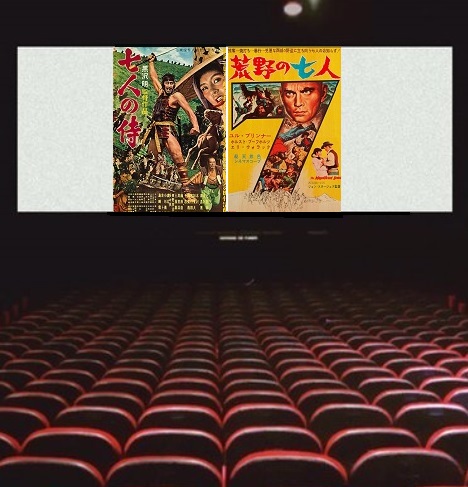
The Japanese classic and its American Western remake. Akira Kurasawa’s Seven Samurai (1954) – about a farming village in 16th century Japan which is about to be robbed by bandits and the honorable men who choose to protect it – can be considered as the birth of action cinema. It is very nearly a perfect film: a fantastic cast, brilliantly executed shots, kinetic editing, and a real sense of adventure. These samurai, farmers and even bandits are living on the edge. Every day could very well be their last. This tense clash of opposing forces is never done better and inspired countless other movies. Seven Samurai established many action cinema traditions, such as the assembly of a team of heroes, including a character for comic relief (Toshiro Mifune). And although Mifune steals many scenes, he doesn’t outshine the other characters who equally come to their right. The Magnificent Seven (1960) is not as great a Western remake as A Fistful of Dollars (1964) is of Kurosawa’s Yojimbo (1961), but it is still a pretty solid Western by director John Sturges (The Great Escape). The plot is exactly the same. Seven gunslingers vow to protect a farming village against a pack of thirty or so bandits, led by Eli Wallach (‘Ugly’ from The Good, The Bad and the Ugly). Yul Brunner and Steve McQueen, two major movie stars at the time, lead the posse, which also includes a young Charles Bronson and James Coburn. The script has less dramatic beats than its Japanse predecessor, but the moments are still there: that feeling that everything is at stake for these characters. An unexpected plot twist that is not in the original, raises the odds even higher. A great move surely. The finale, though, cannot hold a candle to the virtuoso finale of Seven Samurai. Much of the action looks extremely unconvincing with one death scene in particular being an embarrassment. Of course, you might ask yourself: why a remake at all? But that is just Hollywood. And seeing these great American actors doing their hero thing is not so bad at all.

Kenmerken van een échte held

Door Jeppe Kleyngeld

Ash, The Dude, James Bond, Raoul Duke… ga zo maar door. Ik heb een hoop helden gekend in mijn 33-jaar lange – en ik mag gelukkig zeggen zeer rijke – leven. Maar als ik moet schrijven over wat een echte held typeert, kies ik instinctief toch meteen voor The Man with No Name, het stoere, rauwe en eervolle, door Clint Eastwood vertolkte personage in Sergio Leone’s befaamde Dollars trilogie. En dan specifiek het eerste deel van het drieluik: A Fistful of Dollars (1964).

Het personage lijkt in eerste instantie een opportunist, die tussen twee rivaliserende bendes in gaat staan en geld verdient aan het vermoorden van bendeleden aan beide kanten en het doorsluizen van informatie. Maar hij is geen opportunist. Vanaf het begin is hij betrokken bij de goede mensen in het verhaal. Zij worden onderdrukt door de bendes en The Man with No Name zet alles in wat hij heeft om ze te helpen. Ook het geld dat hij verdient met het omleggen van de slechteriken geeft hij aan de arme mensen. En hij wil er niks terug voor hebben. Op de momenten dat hij niet ingrijpt, heeft dat puur te maken met zijn scherpe intellect. Hij weet dat het soms beter is om zijn tijd af te wachten, om uiteindelijk te kunnen zegevieren.

Wat kenmerkt nu dit personage dat zonder twijfel een inspirerend rolmodel is? Ik noem er vijf.

1. Hij is onbevreesd
The Man with No Name rijdt een beangstigend stadje binnen waar direct een dode man op een paard voorbij komt rijden. Op zijn rug staat ‘Adios Amigo’ geschreven, zien we als het paard waar de dode man op zit langs Eastwood de woestijn in rijdt. Geen probleem, Eastwood heeft zijn doel duidelijk voor ogen en hij treedt het zonder angst tegemoet. Als hij al angst heeft, laat hij zich er in ieder geval niet door weerhouden zijn doelen na te streven.

2. Hij betaalt zijn schulden
Bij binnenkomst in het dode stadje, wordt hij direct beschoten door een stel dronken bandito’s. Hij duikt onder in een herberg, waar hij wat eten en drinken krijgt van de sympathieke eigenaar. Deze man waarschuwt hem gelijk dat als hij blijft, hij zo goed als zeker vermoord zal worden in de strijd tussen de twee clans: de Baxters en de Rojos. Maar omdat The Man with No Name de herbergier niet kan betalen, blijft hij toch net zo lang tot hij genoeg verdiend heeft om hem terug te betalen. Dat getuigt van respect voor de gewone, werkende man.

The Man with No Name 3

3. Hij neemt het op voor de zwakkeren
Legendarisch is de scene waarin ‘The Man’ langs de doodgraver loopt (‘get three coffins ready’) en recht op de mannen af wandelt die hem bij het betreden van de stad hebben beschoten. Hij confronteert ze met hun gedrag en neemt het daarbij op voor zijn paard: ‘He is feeling real bad, my mule. You see, he got all riled up when you fired those shots at his feet. You see, I understand that you were just playing’ around. But the mule, he just doesn’t get it. Of course, if you were to all apologize…’ De bandieten lachen hartelijk om zijn verzoek. ‘I don’t think it’s nice, you laughing’, vervolgt hij, nu met een heel gevaarlijke uitdrukking op zijn gezicht. ‘See, my mule don’t like people laughing. He gets the crazy idea you’re laughing at him. Now, if you apologise, like I know you’re going to, I might convince him that you really didn’t mean it.’  10 seconden later zijn de bandieten dood. Eastwood heeft zich alleen vergist in aantal, dus voert hij de bestelling op bij de doodgraver: ‘My mistake. Four coffins.’  Cooler is niet mogelijk.

4. Hij lijdt ook pijn
The Man with No Name is niet een held wie alles altijd maar gemakkelijk afgaat. Nadat hij de onderdrukte vrouw Marisol heeft bevrijd van de slechte Ramón Rojos en heeft herenigd met haar zoontje Jezus, wordt zijn dubbele agenda ontdekt door Ramón. Hij krijgt een genadeloos pak slaag wat hem bijna het leven kost. Wie zijn doel wil bereiken, moet soms pijn lijden. The Man ondergaat dat als een echte man wat veel respect verdient.

5. Hij heeft niet alleen vaardigheden, hij is ook intelligent
Bandiet Ramon weet het goed te omschrijven; ‘I don’t like that Americano. He is too smart to be just a hired fighter. When someone with that face works with his gun, you can count on two things. He’s fast on the trigger, but he’s also intelligent.’ Hij lijkt tegen het einde van de film echter zijn eigen les vergeten te zijn. Hoe vaak hij The Man ook neerschiet, hij blijft maar opstaan. Een kogelvrij vest kan wonderen doen. Deze scene werd ook bewonderd door Biff Tannen in Back to the Future: Part II. In hoeverre dat een aanbeveling is, valt te bezien, maar een feit blijft dat ze niet veel slimmer komen als The Man with No Name. En hij wint het gevecht uiteindelijk, het laatste kenmerk van deze held der helden. Wat een held, niet?

Face to Face

Director: Sergio Sollima
Written by: Sergio Donati, Sergio Sollima
Cast: Tomas Milian, Gian Maria Volonté, William Berger

Year / Country: 1967, Italy / Spain
Running Time: 107 mins.

In Face to Face, director Sergio Sollima delivers a more intellectual take on the spaghetti western while still packing in thrilling action. The film stars Gian Maria Volonté – best known for his villainous roles in A Fistful of Dollars and For a Few Dollars More – as Boston professor Brad Fletcher. Suffering from a severe lung ailment, Fletcher moves to Texas for the warmer climate, only to be taken hostage by the ruthless bandit Solomon Bennet (Tomas Milian) during a daring escape from custody.

Bennet aims to reunite his old gang, including his former ally Siringo (William Berger). However, he’s being hunted by the Pinkertons – a private detective agency – of which Siringo is secretly a member. As Fletcher spends more time with Bennet, his passive nature erodes, and he gradually embraces a life of crime. Once the beast within him is unleashed, he proves to be even more ruthless than his captor.

Sollima weaves a deeper thematic layer into the film, using the western setting to explore the rise of fascism. When Bennet seizes control of a village, he governs it as though it were a single organism, using manipulation and torture to force everyone into submission. His authoritarian rule mirrors historical regimes, adding an unsettling resonance to the story.

However, Fletcher’s transformation isn’t entirely convincing, likely due to the film’s extensive edits – the original cut ran 2.5 hours. His shift from an educated, seemingly moral man to a cruel bandit happens too abruptly, making it feel somewhat unearned. That said, Sollima’s direction shines, especially in his handling of the actors. Volonté delivers a controlled and nuanced performance, while Milian exudes charisma in every scene.

Ennio Morricone’s score, while solid, doesn’t quite reach the brilliance of his work with Sergio Leone. However, the film’s opening credit sequence does capture the grandeur of Leone’s westerns, setting the stage for an absorbing experience. Despite some flaws, Face to Face remains an excellent film – thought-provoking, visually compelling, and anchored by strong performances.

Rating:

Biography: Sergio Sollima (1921, Rome) is an Italian filmmaker. Due to his trio of westerns starring Tomas Milian in the mid 60’s (The Big Gundown, Face to Face and Big Gundown 2: Run, Man, Run) he became known as ‘the other Sergio’ – the third most important director of spaghetti westerns, after Sergio Leone and Sergio Corbucci. Sollima began in cinema as a scriptwriter on Italian sword and sandal epics such as Ursus (1961) and The Ten Gladiators (1963). He directed two spy movies to capitalize on the popularity of the James Bond films. Then he started making spaghetti westerns and action / crime films such as The Family starring Charles Bronson and Telly Savalas. Later in his career he moved more towards television work.

Filmography (a selection): L’amore difficile (1962, segment ‘L’avventura di un soldato’), Agente 3S3, passaporto per l’inferno (1965), Agente 3S3, massacre al sole (1966), Requiem per un agente segreto (1966), The Big Gundown (1966), Face to Face (1967), Big Gundown 2: Run, Man, Run, The Family (1970), Devil in the Brain (1972), Revolver (1973), Sandokan (1976, TV-episodes), The Black Corsair (1976), Steps of Love (1989), Berlin ’39 (1993)

A Bullet for the General

Director: Damiano Damiani
Written by: Salvatore Laurani (story), Franco Solinas (adaptation)
Cast: Gian Maria Volonté, Klaus Kinski, Martine Beswick, Lou Castel

Year / Country: 1966, Italy
Running Time: 113 mins.

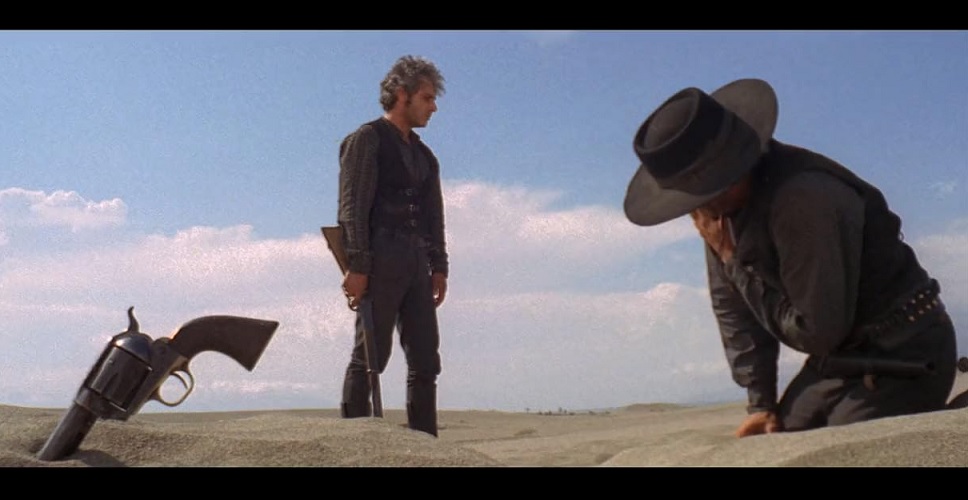
Zapata Westerns are a subgenre of the Spaghetti Western. They deal with political themes and play against the backdrop of the Mexican Revolution between around 1910 and 1920, the years of the famous Mexican revolutionary Emiliano Zapata, after whom the genre is named. Famous examples include; Sergio Curbucci’s Companeros and The Mercenary, and Sergio Leone’s A Fistful of Dynamite. A Bullet for the General is an early contribution to the genre and is regarded as one of the best.

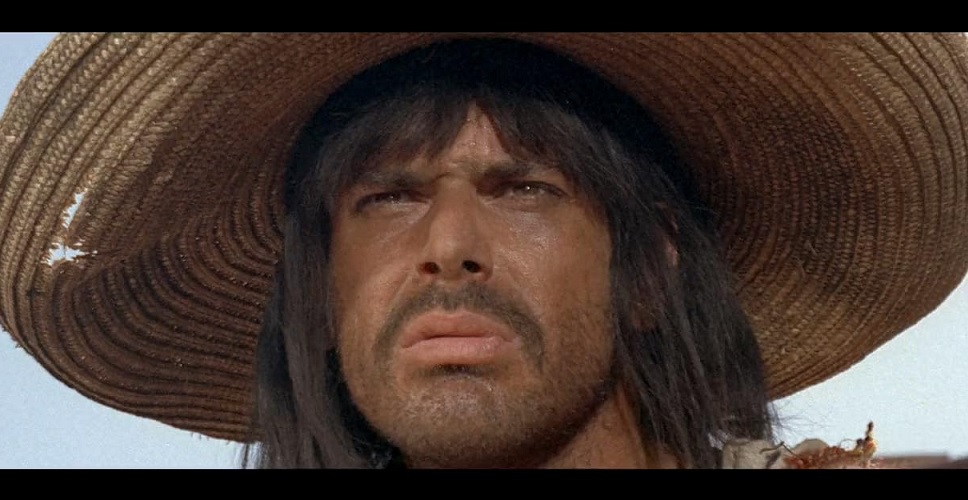
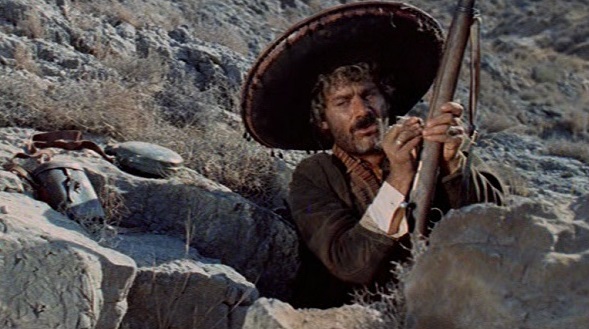
It deals with a group of cutthroat bandits, led by El Chuncho (Volonté). Their job is to steal guns for the revolutionary general Elias. During a violent train raid, they pick up young American Tate (Castel), who they take along with them as a welcome addition to their crew. What they don’t know is that Tate is secretly an assassin hired by the Mexican government to kill Elias with the golden bullet he carries with him.

Starring two actors familiar in the Spaghetti Western genre, namely the man with the characteristic laugh Gian Maria Volonté (Ramón Rojo in A Fistful of Dollars and El Indio in For a Few Dollars More) and, Klaus Kinski (The Great Silence, and also For a Few Dollars More), it became extremely popular in Europe, though butchered for both political and content reasons in overseas markets. The film makes many references to the Vietnam War. The character Tate for example is meant to represent the CIA’s interventions in Latin America.

A Bullet for the General is a fiesta with guns. Composer Luis Enriquez Bacalov (Django, Il Postino, Kill Bill) has provided a cheerful musical score, while El Chuncho and his bandits kill more Mexicans than the Wild Bunch. This is how a revolution works; misery and death contrast with joy and celebration. It is only difficult to sympathise with these hard characters. My general thought during the movie was therefore; ‘so, let’s kill this general and get it over with.’ A lot was made up by the excellent action and production design, and the final scene also delivers some heartfelt (and needed) emotion.

Rating:

Biography: Damiano Damiani (1922, Pasiano, Italy) is an Italian screenwriter, director and actor. He won awards for several of his films, such as the Mafia drama The Pizza Connection. In the eighties he also made the renowned mini-series La Piovra (The Octopus) about a prosecutor’s battle with the Mafia. This successful series ran for eight series on RAI Uno and turned out to be one of Italy’s best selling series abroad.

Filmography (a selection): The Hit Man (1960), Lipstick (1960), The Empty Canvas (1963), Strange Obsession (1966), A Bullet for the General (1966), The Day of the Owl (1968), The Most Beautiful Wife (1970), How to Kill a Judge (1974), A Genius, Two Partners and a Dupe (1975), Goodbye and Amen (1977), A Man on His Knees (1978), The Warning (1980), The Octopus (1984, mini-series), The Pizza Connection (1985), The Inquiry (1986), Massacre Play (1989), Angel With a Gun (1992), Killers on Holiday (2002)