A Genius, Two Partners and a Dupe

Director: Damiano Damiani
Written by: Damiano Damiani, Ernesto Gastaldi, Fulvio Morsella
Cast: Terence Hill, Miou-Miou, Robert Charlebois, Patrick McGoohan

Year / Country: 1975, Italy, France, West Germany
Running Time: 118 mins.

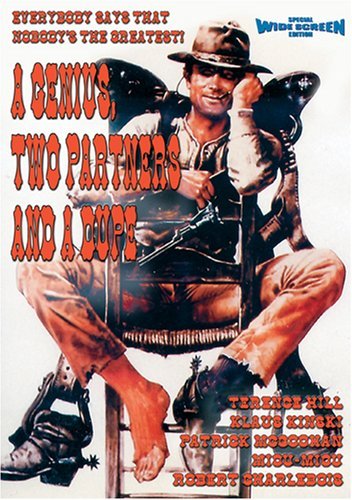
By the 70’s, the spaghetti western had almost become a parody of itself. The serious violent westerns were barely released outside of Italy, while comedy-westerns such as the ‘Trinity’ movies were immensely popular internationally. Genre originator Sergio Leone decided to make the ultimate parody himself in 1973. This became My Name is Nobody, starring Terence Hill. It was a box office hit. In 1975 Leone produced the loose sequel called A Genius, Two Partners and a Dupe, also known as Nobody’s the Greatest. While it was once again popular at the box office due to Hill and Leone’s involvement, the critics didn’t like it. And understandably so.

Hill essentially reprises his Nobody role. His character Joe Thanks is a genius conman. Together with his friends Steam Engine Bill (Robert Charlebois) and Lucy (Miou-Miou) he cooks up an elaborate plan to steal 300.000 dollars from the Indian-hating Major Cabot (Patrick McGoohan). Whenever things are about to go wrong, Joe, the genius, knows exactly what to do.

Leone came up with the idea for the plot after seeing Las Valseuses, starring Miou-Miou, who he then cast as Lucy. Besides producing, Leone also directed the opening scene. The rest of the film is directed by Damiano Damiani, who made one of the greatest spaghetti’s in 1966: A Bullet For the General. This was the last western Leone worked on. He was disappointed with the result and chose to remain uncredited. I can’t blame him. This is pretty much a mess and most of the jokes miss their mark.

Like in all of Leone’s projects, the original score is composed by Ennio Morricone. The very electric score in this film is one of the few things it has going for it. His adaptation of Für Elise, combined with the wailing from The Good, the Bad and the Ugly is a beautifully constructed highlight. That is basically it though. One can only conclude that by this time, the spaghetti western was truly dead.

Rating:

Biography: Damiano Damiani (1922, Pasiano, Italy) is an Italian screenwriter, director and actor. He won awards for several of his films, such as the Mafia drama The Pizza Connection. In the eighties he also made the renowned mini-series La Piovra (The Octopus) about a prosecutor’s battle with the Mafia. This successful series ran for eight series on RAI Uno and turned out to be one of Italy’s bestselling series abroad.

Filmography (a selection): The Hit Man (1960), Lipstick (1960), The Empty Canvas (1963), Strange Obsession (1966), A Bullet for the General (1966), The Day of the Owl (1968), The Most Beautiful Wife (1970), How to Kill a Judge (1974), A Genius, Two Partners and a Dupe (1975), Goodbye and Amen (1977), A Man on His Knees (1978), The Warning (1980), The Octopus (1984, mini-series), The Pizza Connection (1985), The Inquiry (1986), Massacre Play (1989), Angel With a Gun (1992), Killers on Holiday (2002)


A Bullet for the General

Director: Damiano Damiani
Written by: Salvatore Laurani (story), Franco Solinas (adaptation)
Cast: Gian Maria Volonté, Klaus Kinski, Martine Beswick, Lou Castel

Year / Country: 1966, Italy
Running Time: 113 mins.

Zapata Westerns are a subgenre of the Spaghetti Western. They deal with political themes and play against the backdrop of the Mexican Revolution between around 1910 and 1920, the years of the famous Mexican revolutionary Emiliano Zapata, after whom the genre is named. Famous examples include; Sergio Curbucci’s Companeros and The Mercenary, and Sergio Leone’s A Fistful of Dynamite. A Bullet for the General is an early contribution to the genre and is regarded as one of the best.

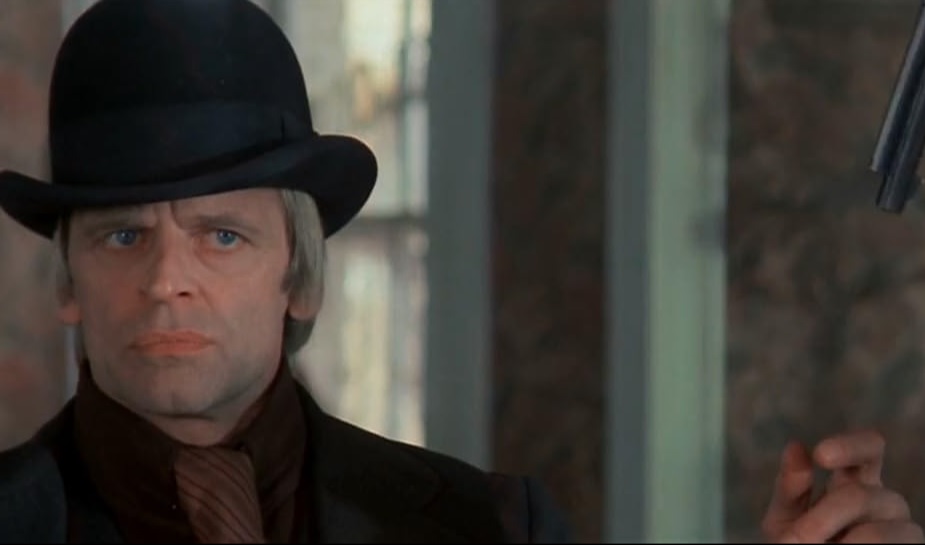
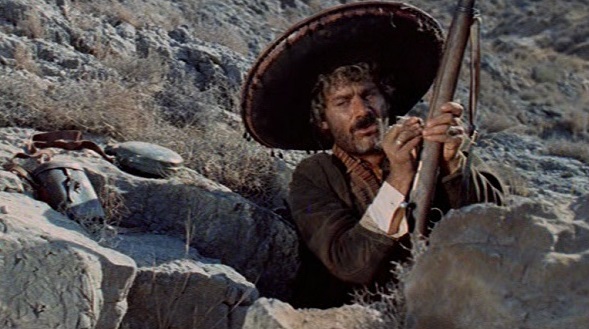
It deals with a group of cutthroat bandits, led by El Chuncho (Volonté). Their job is to steal guns for the revolutionary general Elias. During a violent train raid, they pick up young American Tate (Castel), who they take along with them as a welcome addition to their crew. What they don’t know is that Tate is secretly an assassin hired by the Mexican government to kill Elias with the golden bullet he carries with him.

Starring two actors familiar in the Spaghetti Western genre, namely the man with the characteristic laugh Gian Maria Volonté (Ramón Rojo in A Fistful of Dollars and El Indio in For a Few Dollars More) and, Klaus Kinski (The Great Silence, and also For a Few Dollars More), it became extremely popular in Europe, though butchered for both political and content reasons in overseas markets. The film makes many references to the Vietnam War. The character Tate for example is meant to represent the CIA’s interventions in Latin America.

A Bullet for the General is a fiesta with guns. Composer Luis Enriquez Bacalov (Django, Il Postino, Kill Bill) has provided a cheerful musical score, while El Chuncho and his bandits kill more Mexicans than the Wild Bunch. This is how a revolution works; misery and death contrast with joy and celebration. It is only difficult to sympathise with these hard characters. My general thought during the movie was therefore; ‘so, let’s kill this general and get it over with.’ A lot was made up by the excellent action and production design, and the final scene also delivers some heartfelt (and needed) emotion.

Rating:

Biography: Damiano Damiani (1922, Pasiano, Italy) is an Italian screenwriter, director and actor. He won awards for several of his films, such as the Mafia drama The Pizza Connection. In the eighties he also made the renowned mini-series La Piovra (The Octopus) about a prosecutor’s battle with the Mafia. This successful series ran for eight series on RAI Uno and turned out to be one of Italy’s best selling series abroad.

Filmography (a selection): The Hit Man (1960), Lipstick (1960), The Empty Canvas (1963), Strange Obsession (1966), A Bullet for the General (1966), The Day of the Owl (1968), The Most Beautiful Wife (1970), How to Kill a Judge (1974), A Genius, Two Partners and a Dupe (1975), Goodbye and Amen (1977), A Man on His Knees (1978), The Warning (1980), The Octopus (1984, mini-series), The Pizza Connection (1985), The Inquiry (1986), Massacre Play (1989), Angel With a Gun (1992), Killers on Holiday (2002)