Dungeon Classics #37: Coffy

FilmDungeon’s Chief Editor JK sorts through the Dungeon’s DVD-collection to look for old cult favorites….

Coffy (1973, USA)

Director: Jack Hill
Cast: Pam Grier, Booker Bradshaw, Robert DoQui
Running Time: 90 mins.

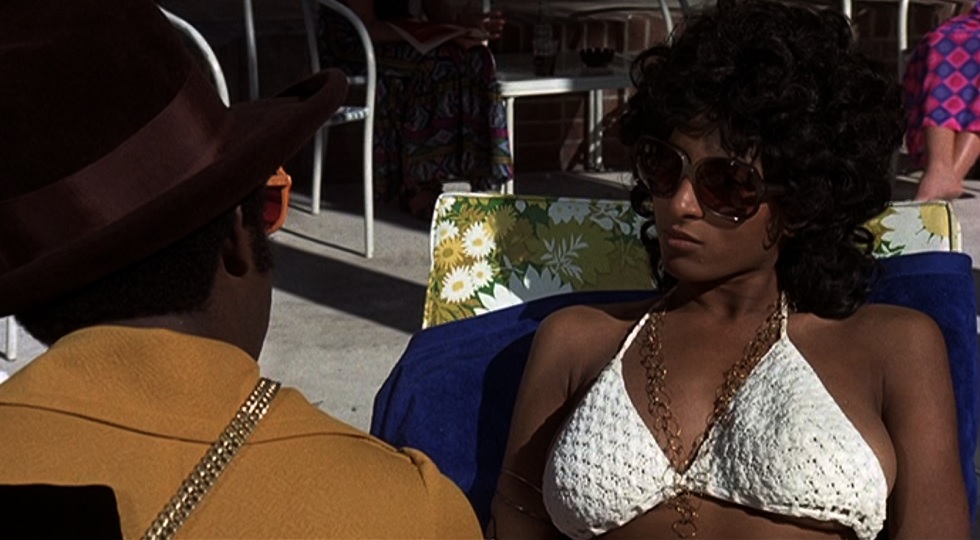
‘Coffy is the color of your skin’, sings Denise Bridgewater in the opening theme of Coffy – a blaxploitation classic starring Pam Grier and one of Quentin Tarantino’s all-time favorite films. From the moment the stylish opening credits roll, it’s clear this movie is something special. Grier plays Flower Child ‘Coffy’ Coffin, a nurse whose sister’s life is shattered by heroin addiction. Fueled by rage, she sets out on a ruthless mission of revenge. Disguising herself as a drug-addicted prostitute, she lures street-level pushers into a trap – before blowing their brains out. But she doesn’t stop there. Determined to take down the real power players, she goes after the slick pimp and drug dealer King George, as well as the dangerous mob boss Vitroni. Directed by Jack Hill – an early collaborator of Roger Corman and Francis Ford Coppola before cementing his legacy as the king of blaxploitation – Coffy delivers everything the genre is known for: gritty action, bloody vigilante justice, and plenty of nudity, not least from Grier herself. While her acting faced some criticism at the time, her sheer star power is undeniable. She owns this film, elevating it beyond mere exploitation and securing its place in movie history as an absolute cult classic.

Double Bill #13: Double Impact & Hard Target

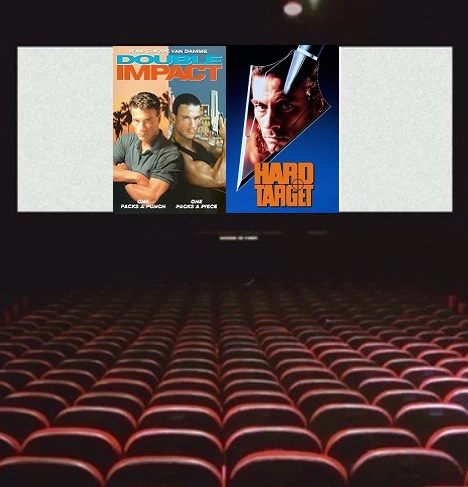
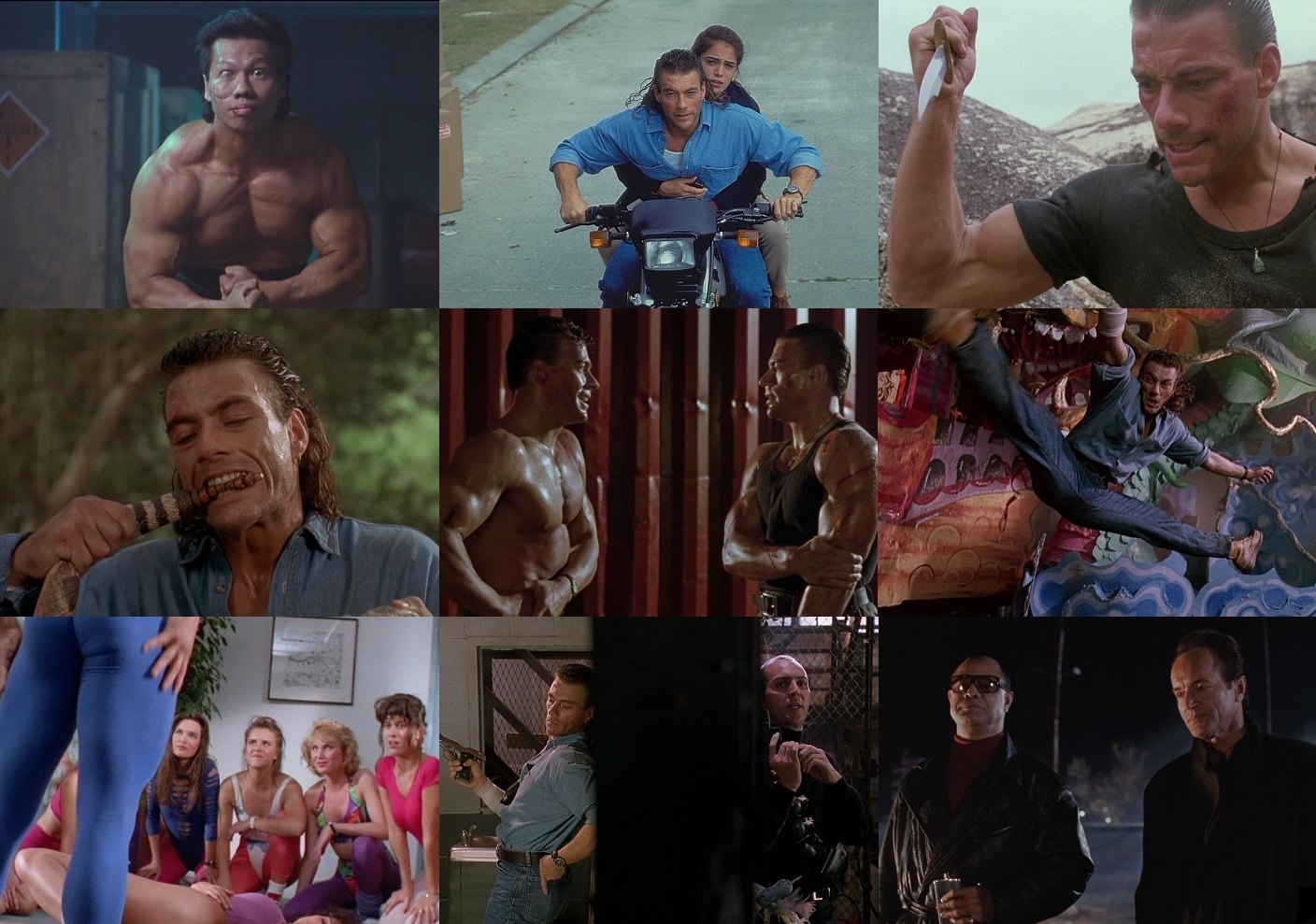
The eighties and nineties, the decades in which I grew up in, was the era of the action movie. And one of its main heroes was Jean-Claude Van Damme (real name: Jean-Claude Van Varenberg). For this Double Bill, I rewatched two of his most enjoyable and nostalgic movies of this period: Double Impact (1991) and Hard Target (1993). In the first one he plays a set of twin brothers, so it has double the Van Damage. The brothers go after a bunch of gangsters in Hong Kong who murdered their parents when they were babies. It has great bad guys, who are stylishly dispatched by the two Van Damme characters using both martial arts and a variety of firearms. The greatest threat is the triad member played by Bolo Yeung, a legendary Chinese martial arts expert who is also in Enter the Dragon and Van Damme’s Bloodsport. The final duel with him is one of the highlights of the movie. The film’s director Sheldon Lettich also directed Wrong Bet in 1990, another Van Damme classic. He is no John Woo, but skillful enough to give the audience what it wants: violent, bloody action and some humor on the side. Hard Target has plenty of this as well, but the choreography of the action scenes is of a whole different level. Van Damme takes on a gang of despicable white men, led by Lance Henriksen, who organize manhunts for the rich and bored. Van Damme’s character Chance grew up in the New Orleans Bayou and knows a thing or two about survival and asskicking. When he becomes the quarry of their next hunt, the roles are quickly reversed and we get to witness some of the most satisfying kills of Van Damme’s career. Hong Kong director John Woo’s American debut was produced by Robert Tappert and Sam Raimi (of Evil Dead fame). It is easy to see why they liked this project: Woo’s visual style is so immensely cool it matches Raimi’s. His action is an art form, a ballet of blood, bullets, explosions, falling bodies and flying kicks in slow motion. These are two classics of the era and highly enjoyable as a Double Bill.

Withnail & I

Director: Bruce Robinson
Written by: Bruce Robinson
Cast: Paul McGann, Richard E. Grant, Richard Griffiths

Year / Country: 1987, UK
Running Time: 107 mins.

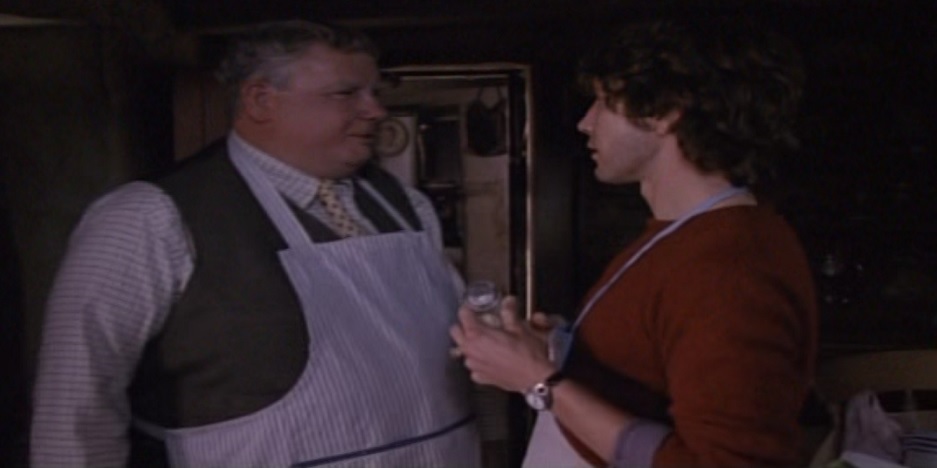
Withnail & I is a masterpiece of British cinema, produced by HandMade Films, the iconic production company founded by George Harrison. Known for crafting timeless classics like The Long Good Friday and Monty Python’s Life of Brian, HandMade Films once again struck gold with this darkly comedic gem, written and directed by Bruce Robinson.

The story revolves around two unemployed, substance abusing actors, called Withnail (Richard E. Grant) and I (Paul McGann). It is based on the experiences of writer-director Bruce Robinson. When the two actors get increasingly depressed by the lack of auditions and the drudgery of regular life in Camden, they go to the countryside for a vacation in a cottage owned by Withnail’s homosexual uncle Monty (Richard Griffiths).

However, their idyllic getaway quickly spirals into chaos, as the harsh realities of rural life – featuring a bull, unplucked chickens, unfriendly locals, and the unwanted advances of a very horny Monty – compound their misery and desperation. Their only solace seems to lie in copious amounts of alcohol, leading to some of the film’s most memorable moments.

Robinson’s autobiographical script works wonderfully well, and the acting by the three leads is top notch. The soundtrack, featuring classics from Jimi Hendrix and The Beatles, add to the great atmosphere. Withnail & I is a truly original film with dialogues that are truthful, witty and genuine. A one of a kind movie.

Rating:

Biography: Bruce Robinson (1946, Broadstairs, Kent) started his career as an actor, but did not find it fulfilling nor lucrative. He started writing screenplays and in 1984, his Cambodia script The Killing Fields was turned into a memorable war movie by Roland Joffé. With his second script, he chose to direct himself. Withnail & I, which is largely autobiographical, became a cult classic. Robinson’s subsequent films, the advertising satire How To Get Ahead in Advertising and the serial-killer thriller Jennifer 8, while less memorable than his debut, still showed Robinson’s talents. In 2011 he brought The Rum Diary, a novel by legendary writer and Gonzo journalist Hunter S. Thompson, to the screen which received mixed reviews.

Filmography: Withnail & I (1987) / How to Get Ahead in Advertising (1989) / Jennifer Eight (1992) / The Rum Diary (2011)

Altered States

Director: Ken Russell
Written by: Paddy Chayefsky (novel & screenplay)
Cast: William Hurt, Blair Brown, Bob Balaban

Year / Country: 1980, USA
Running Time: 102 mins.

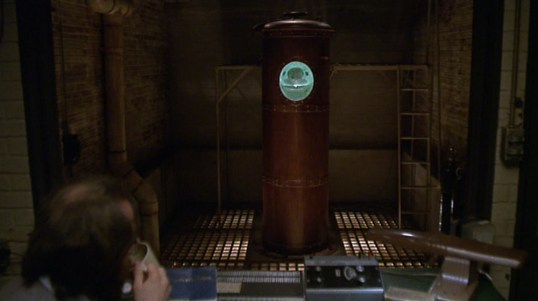
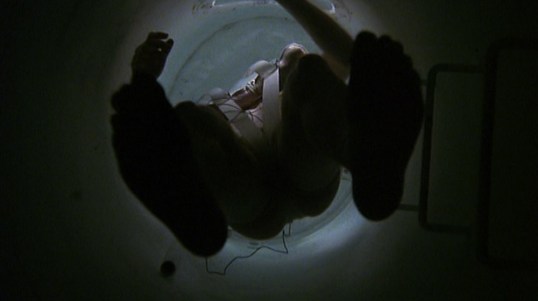
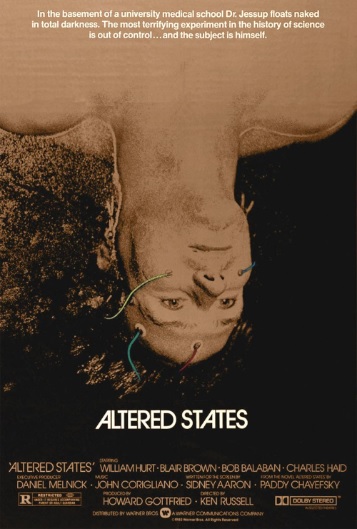
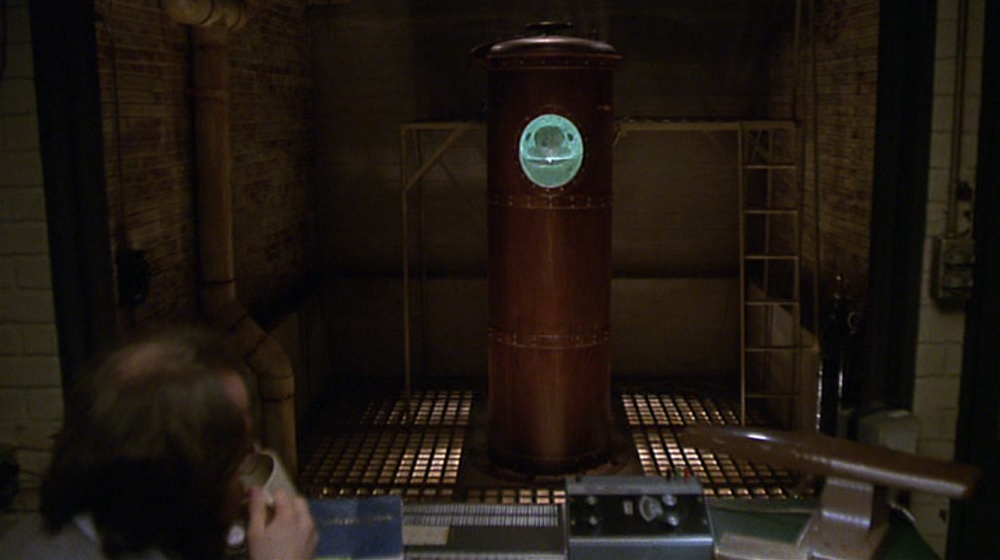
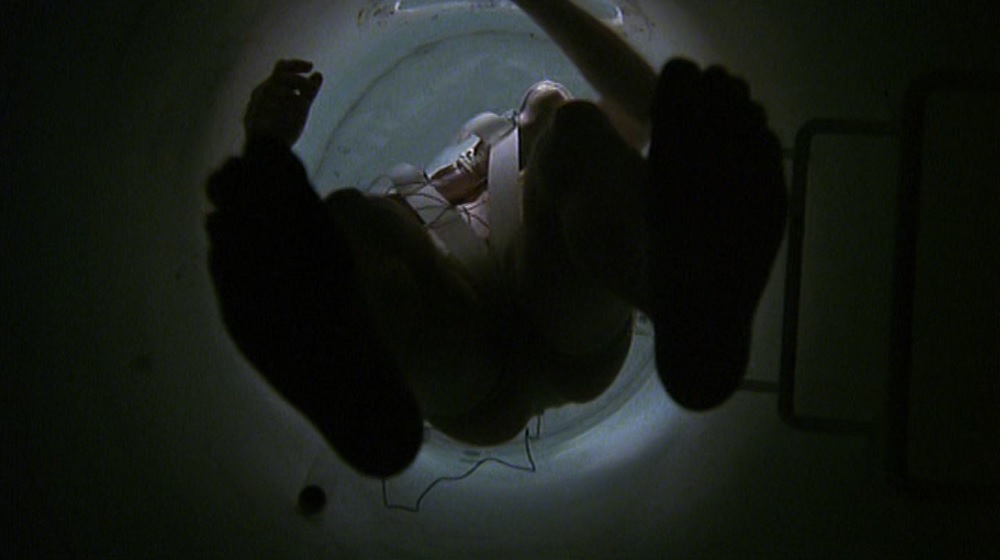
Altered States is a wild and thought-provoking journey into the mind of Dr. Eddie Jessup, a psycho-physiologist in the 1960s who becomes obsessed with exploring the boundaries of human consciousness. Plagued by unresolved childhood trauma, Jessup is driven by an insatiable curiosity about the meaning of existence. His experiments with a mind-altering isolation tank trigger intense religious hallucinations featuring visions of God, Jesus, and crucifixion scenes, blending spirituality with the surreal.

The story takes a darker turn after Jessup encounters a remote Mexican tribe and brings home a powerful psychedelic compound. Incorporating this substance into his experiments, he discovers that the altered states of consciousness he experiences are not merely internal, but can manifest physically. This revelation pushes the film into unsettling body-horror territory, shifting its tone to something more visceral and disturbing. The escalating tension and grotesque transformations make the latter half of the film both unnerving and memorable.

While Altered States begins with fascinating philosophical and scientific ideas, it struggles to maintain its initial momentum. Despite this, there is much to admire. William Hurt delivers an outstanding performance in his film debut, capturing Jessup’s intense obsession and vulnerability. The hallucinatory sequences are stunningly crafted, offering surreal imagery that lingers in the mind.

The film’s controversial themes and bold exploration of consciousness, faith, and identity make it a product of its time, yet it remains daring even by today’s standards. Though it doesn’t fully sustain its excitement throughout, Altered States is an ambitious and visually arresting experience that’s worth exploring for fans of psychological horror.

Rating:

Biography: Ken Russell (1927, Southampton, Hampshire – 2011, Lymington, Hampshire) was a visionary British filmmaker celebrated for his flamboyant and provocative style. He initially pursued a career in dance and photography before turning to filmmaking in the 1950s. His early work in documentaries demonstrated a flair for blending artistic innovation with compelling storytelling. His breakthrough came with Women in Love (1969), an adaptation of D.H. Lawrence’s novel, which earned critical acclaim and an Academy Award for actress Glenda Jackson. He followed this with audacious films like The Music Lovers (1971), The Devils (1971), and Tommy (1975), each characterized by their bold visuals, experimental narratives, and controversial themes. Known for his unflinching exploration of sexuality, religion, and human eccentricity, Russell’s work was often polarizing but undeniably influential. He continued to push boundaries with films like Altered States (1980) and Gothic (1986), cementing his reputation as a maverick artist.

Filmography (a selection): Peepshow (1956, short), A House in Bayswater (1960, short), French Dressing (1964), Billion Dollar Brain (1967), Women in Love (1969), The Devils (1971), Savage Messiah (1972), Mahler (1974), Tommy (1975), Lisztomania (1975), Valentino (1977), Altered States (1980), Crimes of Passion (1984), Faust (1985, TV-Movie), Gothic (1986), Salome’s Last Dance (1988), The Rainbow (1989), Whore (1991)