Repo Man

Director: Alex Cox
Written by: Alex Cox
Cast: Harry Dean Stanton, Emilio Estevez, Tracey Walter, Olivia Barash

Year / Country: 1984, USA
Running Time: 92 mins.
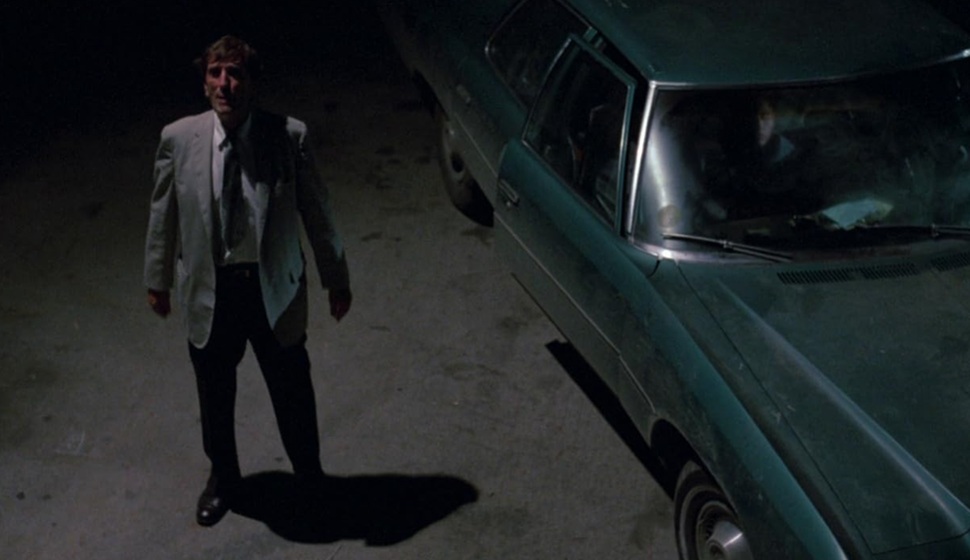
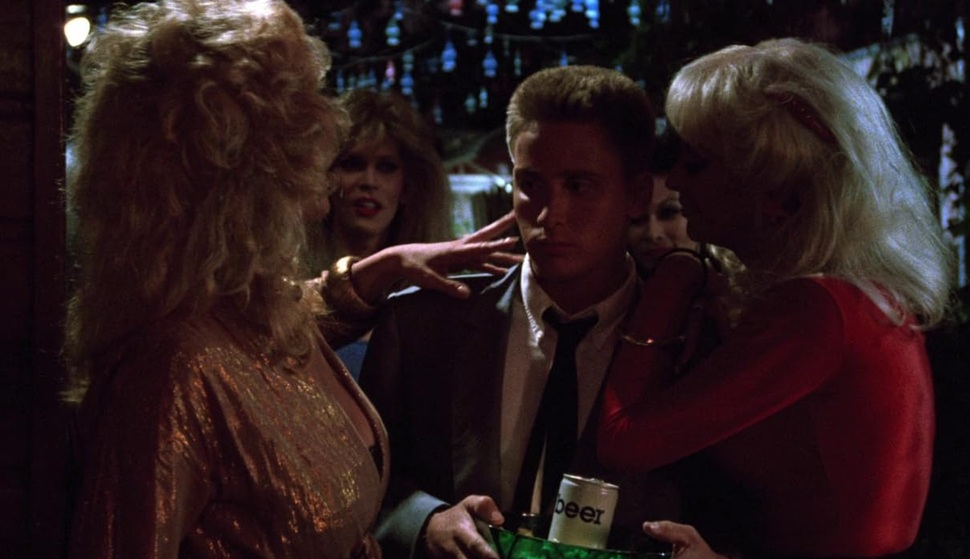
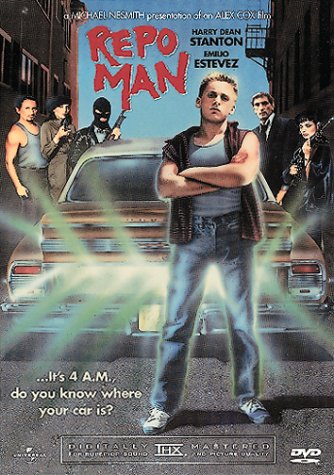
Repo men are repossessors. They take back cars from bad debtors who have failed to pay their bills. They often work through the night and rely on speed to keep up with the demands of the job. Suburban punk Otto (Emilio Estevez) lands a position with the Helping Hand Corporation, where his mentor becomes veteran repossessor Bud (Harry Dean Stanton), who shows him the ropes.

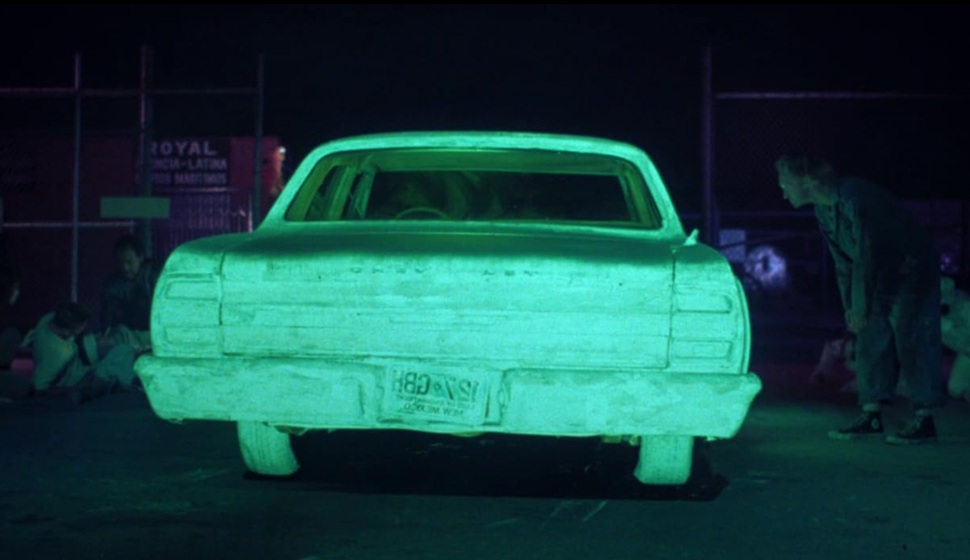
Together, Bud and Otto make an effective car-recovery team, but the job comes with plenty of threats: the fierce Rodriguez brothers as rival operators, a gang of punks, and even the government. Trigger-happy car owners frequently complicate matters as well. The story really gains momentum when a highly valuable Chevy Malibu is flagged for repossession. What no one realizes, however, is that the car originates from Roswell, New Mexico and that its trunk contains a mysterious alien device.

Writer-director Alex Cox once worked as a repo man himself, and he blends that firsthand experience with sci-fi elements to create something decidedly unconventional. Repo Man carries a strong cult vibe, which is both rare and appealing. The downside is that this atmosphere sometimes feels like the film’s main selling point. Still, a number of funny moments and consistently enjoyable performances make it a very watchable movie, just not quite the cult masterpiece it might have been.

Rating:

Biography: Alex Cox (1954, Liverpool) left law school to study film at Bristol University. Then he worked as a repo-man. He used his experiences in this profession to write and direct his feature debut Repo Man. After that, he worked as an actor, writer and director. He was successful in the eighties, especially with Sid and Nancy. Since the nineties, he mostly directed TV-movies and documentaries.

Filmography: Sleep is for Sissies (1980, short), Repo Man (1984), Sid and Nancy (1986), Straight to Hell (1987), Walker (1987), Red Hot and Blue (1990, TV), Highway Patrolman (1991), Death and the Compass (1992), The Winner (1996), Three Businessmen (1998), Kurosawa: The Last Emperor (1999, TV-doc), A Hard Look (2000, TV-doc), Revengers Tragedy (2002), Mike Hama, Private Detective: Mike Hama Must Die! (2002, TV), I’m a Juvenile Delinquent, Jail Me! (2004, TV), Searchers 2.0 (2007), Repo Chick (2009), Straight to Hell Returns (2010)

Videodrome

Director: David Cronenberg
Written by: David Cronenberg
Cast: James Woods, Sonja Smits, Deborah Harry, Peter Dvorsky

Year / Country: 1983, Canada
Running Time: 84 mins.

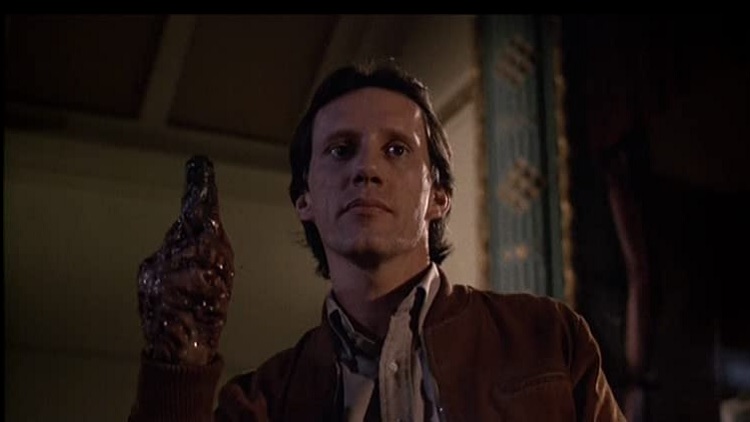
In David Cronenberg’s Videodrome, shabby network TV-producer Max Renn (James Woods) is searching for the ultimate shock-TV experience to serve his buccaneers. When his tech-man Harlan breaks into a secret cult-network show called ‘Videodrome’ he finds what he is looking for. A series of snuff videos that are very grotesque, realistic and brutal. Not meant for public consumption. But, as Max puts it, his channel is too small to be considered public.

Max justifies his occupation with economics. His network is small and can only survive by giving the audience something they can’t get anywhere else, hence his interest in Videodrome. When Max participates in a television debate about the ethics of his work, he meets the girl Nicki with whom he hooks up afterwards. She turns out to be pretty much a masochist, who wants to audition for Videodrome herself. Then Max finds out that the show – that is all about torture, mutilation and murder – is real.

When Max goes to speak to television guru Brian O’Blivion, he starts having hallucinations. And very soon the lines between reality and video begin to fade. It goes deep. What we learn along with Max is that reality is pure perception. According to O’Blivion, Videodrome will eventually evolve the human brain so that it will be able to control hallucinations and change the human reality entirely.

Master of body horror David Cronenberg sets up this creepy movie perfectly. The prospect of an unleashed hallucination machine is pretty much terrifying, especially after seeing what Max sees. Max has to watch his own body mutate when a videocassette inserter appears in his belly. This can be used by the creators of Videodrome to insert hallucinations in the form of pulsating VHS-cassettes. The flesh transformations are made very gruesomely by FX-wizard Rick Baker. A frightening exploration of the mind of those who like extreme stuff. A movie that was ahead of its time and is still powerful today in both style and message.

Rating:

Biography: David Cronenberg (1943, Toronto), also known as the King of Venereal Horror or the Baron of Blood, grew up in Toronto. His father was a journalist and his mother a piano player. Cronenberg graduated from the University of Toronto with a degree in literature after switching from the science department. He then turned to filmmaking and reached a cult status with a few early horror features including Shivers and Rabid. He rapidly became a very popular genre filmmaker and eventually a true auteur, making profound statements on modern humanity and ever-changing society.

Filmography (a selection): Transfer (1966, short) / Stereo (1969) / Shivers (1975) / Rabid (1977) / Fast Company (1979) / The Brood (1979) / Scanners (1981) / The Dead Zone (1983) / The Fly (1986) / Dead Ringers (1988) / Naked Lunch (1991) / Crash (1996) / eXistenZ (1999) / Spider (2002) / A History of Violence (2005) / Eastern Promises (2007) / A Dangerous Method (2011) / Cosmopolis (2012) / Crimes of the Future (2022)

Two-Lane Blacktop

Director: Monte Hellman
Written by: Rudolph Wurlitzer, Will Corry
Cast: James Taylor, Dennis Wilson, Laurie Bird, Warren Oates

Year / Country: 1971, USA
Running Time: 98 mins.

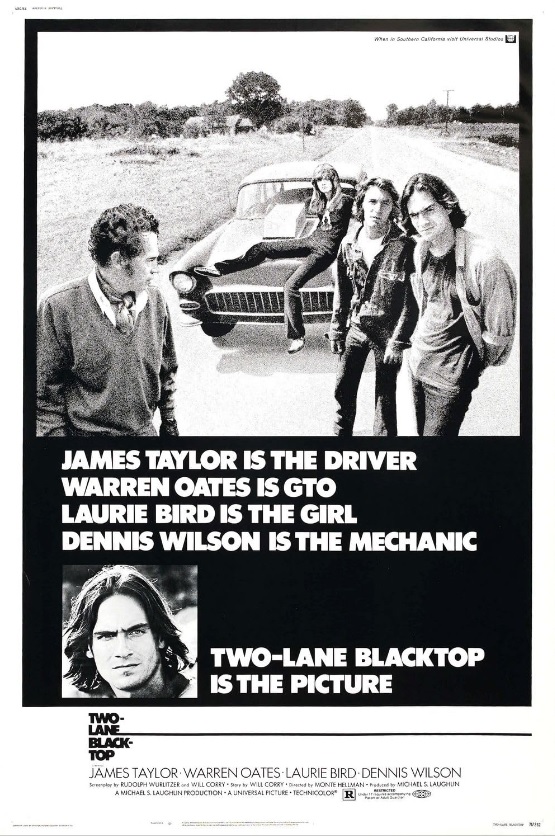
After winning a late-night drag race, the driver (James Taylor) and his friend, the mechanic (Dennis Wilson), leave Los Angeles in their gray ’55 Chevrolet. They embark on an aimless road trip, stopping only for food, gas, and the occasional driving challenge. Along the way, they pick up a free-spirited hitchhiker (Laurie Bird) and continue their journey eastward. Their path repeatedly crosses with a 1970 Pontiac GTO, driven by a boastful older man (Warren Oates), leading to a high-stakes cross-country race to Washington, D.C. for ownership of their cars.

This is not a summary of the story, but it’s the whole story. The film unfolds as a meditation on existentialism, where racing becomes a metaphor for life itself. The characters drive not toward any clear destination but toward an uncertain fate, embodying the restless, aimless energy of drifters. Tellingly, none of the main characters even have names, emphasizing their roles as archetypes of the disillusioned wanderer.

Watching this film feels like stepping into a time capsule. Much like American Graffiti, it captures the spirit of a bygone era – an America of the early 1970s, defined by hippies, muscle cars, and rock ‘n’ roll. The minimalist storytelling is complemented by striking cinematography, making the open road a central character in its own right.

Two-Lane Blacktop is more than a movie; it’s a raw, unvarnished piece of Americana. A snapshot of a world long past, it stands as a beautiful, haunting testament to a fleeting time and place in American culture.

Rating:

Biography: Monte Hellman (1932, New York) studied drama at Stanford University and film at UCLA. He joined legendary producer Roger Corman and made his film debut with Beast From Haunted Cave, an enjoyable 50’s creature flick. Hellman teamed up with Jack Nicholson and together they made two low-budget flicks in the Philippines, one written by Nicholson. They continued the co-op and made two more films together, this time Westerns. Once again Nicholson wrote the screenplay for one of them (Ride in the Whirlwind). Hellman then made Two-Lane Blacktop, which did well with critics, but bad at the box-office. After making a couple more cult movies, Hellman mostly worked as second-unit director, editor and executive producer for acclaimed directors such as Samuel Fuller, Paul Verhoeven and Quentin Tarantino. His latest directing effort was a segment of the horror anthology Trapped Ashes.

Filmography: Beast from Haunted Cave (1959), Flight to Fury (1964), Back Door to Hell (1964), Ride in the Whirlwind (1965), The Shooting (1967), Two-Lane Blacktop (1971), Cockfighter (1974), Baretta (1975, TV), The Greatest (1977), China 9, Liberty 37 (1978), Inside the Coppola Personality (1981), Iguana (1988), Silent Night, Deadly Night III: Better Watch Out! (1989), Stanley’s Girlfriend (2006, short), Trapped Ashes (2006, segment ‘Stanley’s Girlfriend’)

Dirty Mary, Crazy Larry

Director: John Hough
Written by: Leigh Chapman, Antonio Santean, Richard Unekis (novel ‘The Chase)
Cast: Peter Fonda, Susan George, Adam Roarke, Kenneth Tobey

Year / Country: 1974, USA
Running Time: 93 mins.

Peter Fonda’s Larry and his partner Deke (Adam Roarke) rob a supermarket manager for 150 large. On their getaway, they encounter the sluttish Mary who joins them on their high speed road trip in a blue Chevy. The law is on to them quickly leading to a number of spectacular chases. Off course the trio outsmarts the initially unmoved, but later fanatical police chief, played by Vic Morrow.

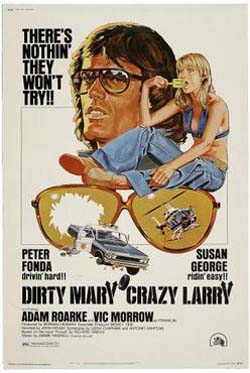
‘I’m gonna braid your tits’, the misogynist Larry tells Mary at one point during the movie. Not very politically correct but exploitation pur sang. Just check out the movie’s poster above: pure vintage 70’s cool. This film became a major drive-in cinema hit.

Dirty Mary, Crazy Larry is an excellent companion piece for Vanishing Point or Two-Lane Blacktop, philosophical, little story and big on car chases. That last element is especially well done. As soon as ‘the chase’ starts we get a 200 mph high-speed nitrous burnout. Very spectacular. The nihilistic tone doesn’t hurt the movie either.

The stupefying characters will be especially enjoyable for a stoned audience. Fonda plays a rougher (and crazier) version of his Easy Rider character Wyatt, and he pulls this off quite effectively. Mary’s part is harder to enjoy. We know she’s dirty, but why and what else is there to this girl?

The ending of Dirty Mary, Crazy Larry comes unexpectedly for those who are unfamiliar with this particular type of movie. It is shocking either way, and in a certain regard…beautiful. Especially as soon as the closing song ‘Time is Such a Funny Thing’ becomes audible.

Rating:

Biography: John Hough (1941, London) came into the picture with some low-budget horror flicks like Twins of Evil and The Legend of Hell House. He got his big break by securing himself a steady position as assistant director on the extremely popular TV-show The Avengers. Later he would try other stuff like sci-fi, fantasy, western, action and drama. He even directed a few Disney pictures. Late eighties he had a bump in the road, exemplified with the cruddy horror flick Howling IV: THe Original Nightmare. Hough’s last credit as a director to date was the gory Jack the Ripper tale Bad Karma.

Filmography (a selection): Wolfshead: The Legend of Robin Hood (1969), The Avengers (1968-69, TV episodes), Eyewitness (1970), Twins of Evil (1971), Treasure Island (1972), The Legend of Hell House (1973), Dirty Mary Crazy Larry (1974), Escape to Witch Mountain (1975), Return from Witch Mountain (1978), Brass Target (1978), The Watcher in the Woods (1980), Triumphs of a Man Called Horse (1982), Black Arrow (1985, TV), Biggles (1986), American Gothic (1987), Howling IV: The Original Nightmare (1988), A Ghost in Monte Carlo (1990, TV), Something to Believe In (1998), Bad Karma (2001)