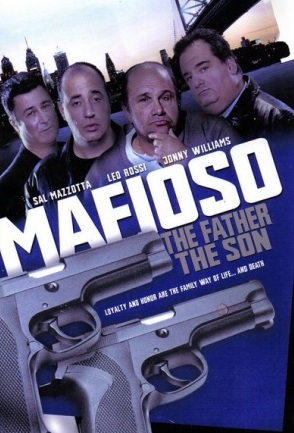
Mafioso: The Father, the Son (2004)


‘Kill or be killed’

Directed by:
Anthony Caldarella

Written by:
Sal Mazzotta
Leo Rossi
Tony DiGerolamo

Cast:
Sal Mazzotta (Frank Paradiso), Leo Rossi (Vito Lupo), Freddie Ganno (Vince Lupo), Robert Costanzo (Antonio Paradiso), Johnny Williams (Danny Defino), Tamela D’Amico (Gina Paradiso), Susan Priver (Lisa Paradiso), Ken Lerner (Sid Freeman), Tony Devon (Louie Eggs), Frank Adonis (Luca Veneri)

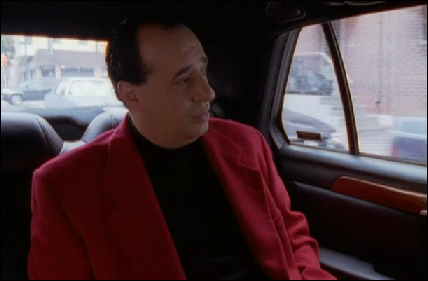
This low budget Mafia film revolves around an Italian crime family in Philadelphia. The leader, Antonio Paradiso is a man of old tradition. Antonio’s son Frank is like his father in many ways. He is ready to succeed his father as the new leader of the family. The times are changing however, and other gangs are waiting to move in on the family business. When members of the Paradiso family are being hit, Frank has to fight to survive, protect his family and find the ones responsible.

Standard and cliché modern day mob movie. It deals with some of the same themes as HBO Series The Sopranos, but doesn’t even come remotely close to touching that level. It does contain a fair amount of mob violence and action but most of it comes across as cheap exploitation.

The screenplay is of an acceptable quality, but offers nothing new or surprising. Most of the actors do reasonable, only leading man Sal Mazzotta doesn’t convince as the boring, monotone Frank.

The art-direction of this film should have definitely been better. Some of the murders just don’t look good at all. There are some familiar faces from mob films, Leo Rossi from Analyze This, Johnny Williams (Johnny Roastbeaf) from GoodFellas, and Frank Adonis (Anthony Stabile), also from GoodFellas.

This film is what it is, a direct to DVD mob flick. Not recommended for those that want thrills other than a man having his nuts roasted.

Rating:

Quote:
FRANK PARADISO: “You want the hitter? Fine. But I want the heart of the one that paid him.”

Trivia:
Screenplay writers Sal Mazzotta and Leo Rossi collaborated again for the short sci-fi thriller Frankie the Squirrel in 2007.

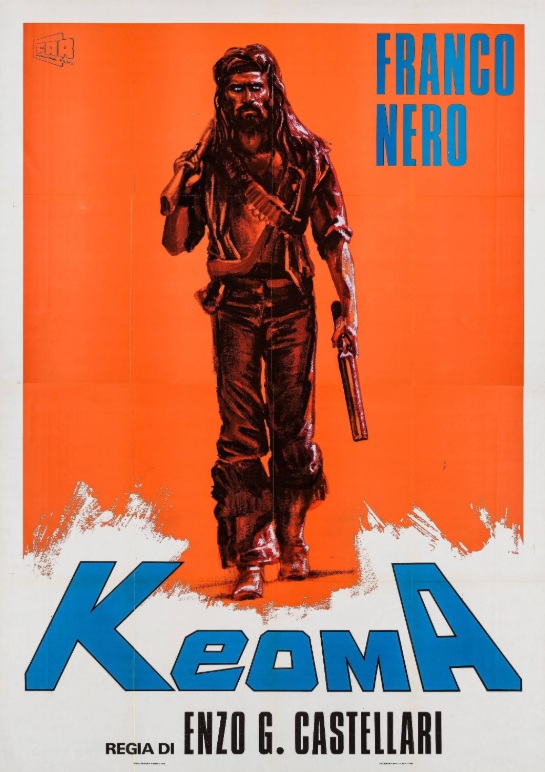
Keoma


Director
: Enzo G. Castellari
Written by: Enzo G. Castellari, Nico Ducci, George Eastman, Mino Roli
Cast: Franco Nero, Woody Strode, William Berger, Donald O’Brien

Year / Country: 1976, Italy
Running Time: 97 mins.

Besides the legendary spaghetti westerns by Sergio Leone, that due to their lyricism and sense of dimension, became true cinema classics, the genre consists almost solely of B-pictures. This B-genre started in 1966 with the release of Sergio Corbucci’s Django. This classic cult movie shaped the format of the genre with its mysterious hero driven by revenge, excessive violence, a limited budget and the absence of realism.

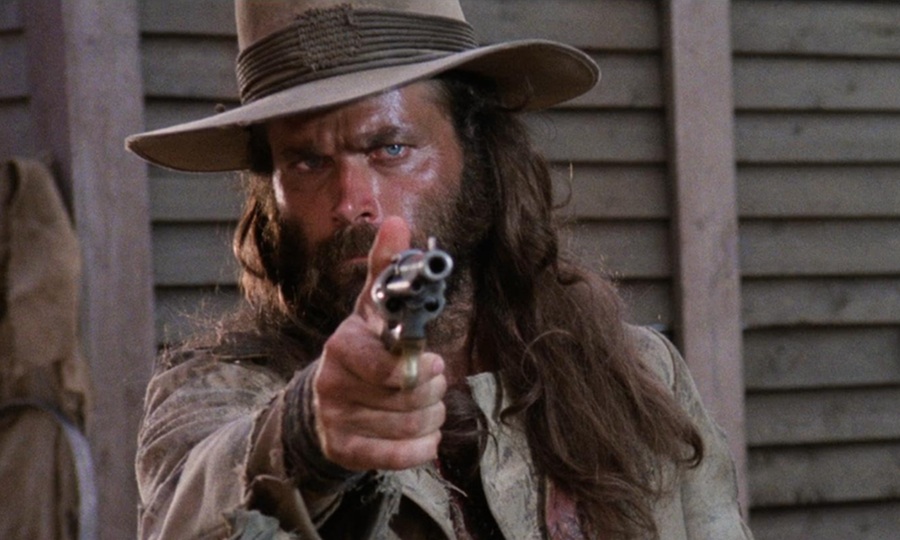
Exactly ten years later, Keoma was made, one of the last notable films of its genre. Like in Django, spaghetti star Franco Nero stars in the title role. The movie is also known as Django Rides Again, while it has nothing to do with the Django series. The producers probably wanted to cash in on this household name, just like approximately thirty other pseudo sequels and lousy spin-offs tried to do.

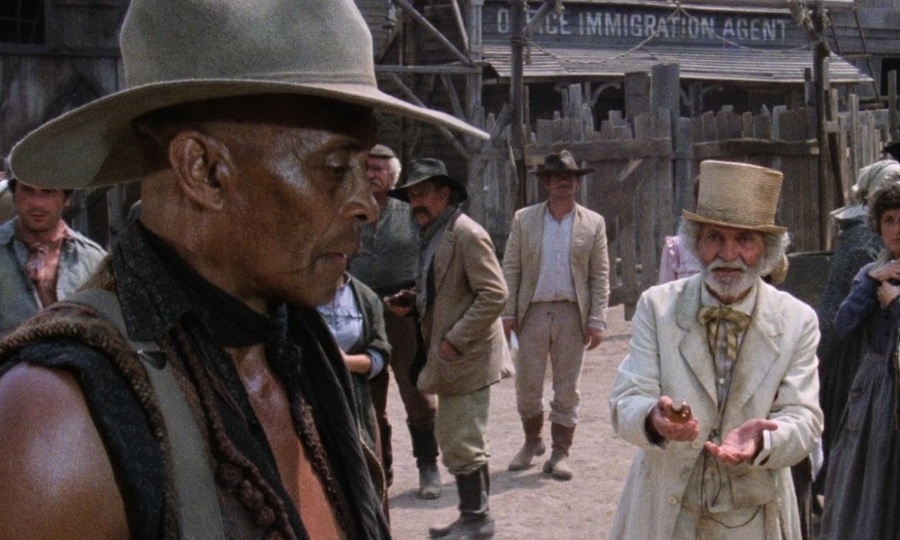
But Keoma is not a lousy film, on the contrary. It’s quite the action-western with Nero once again portraying a strong character. The half-breed Indian Keoma returns from civil war only to find his hometown in chaos and controlled by an evil gang led by the sadistic Caldwell. Keoma takes on Caldwell’s scum that includes his own three half brothers. He gets help only from his father and a black man named George, an outcast like Keoma, played by genre icon Woody Strode.

Through flashbacks we learn more about Keoma’s childhood. He was never accepted because of his Indian background. The racism in the film contributes to the movie’s depressing atmosphere. Other factors contributing to this are the hellish images of plague victims and general destruction. The dark, unpleasant atmosphere is enhanced by the wailing score by Guido and Maurizio De Angelis.

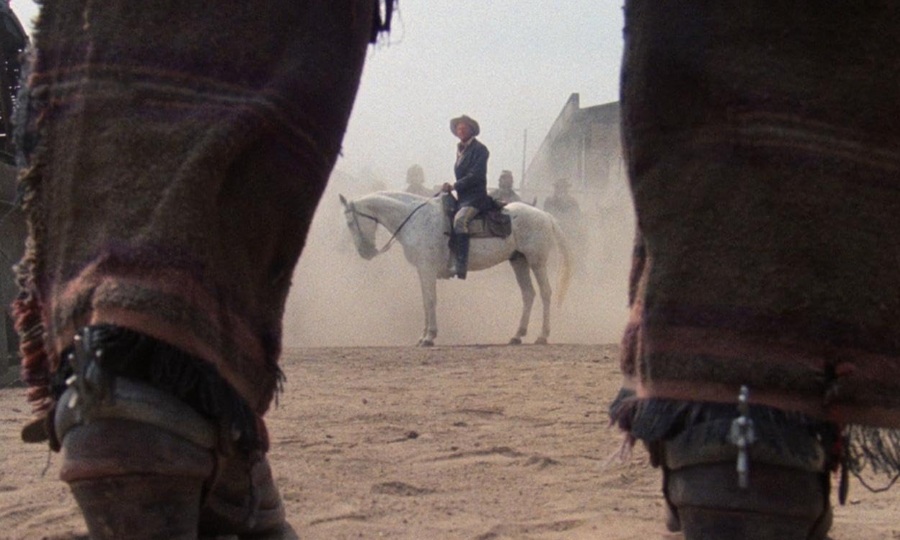
But Keoma isn’t that deep into deeper meaning. The action is what makes it stick. The slow-motion gunplay, a specialty of director Enzo Castellari, is done masterfully. While the film may be a little too dark and serious, and miss the irony and sarcasm of Leone’s films, it is a supreme spaghetti in terms of uncompromising action. A worthy finale to a glorious period.

Rating:

Biography: Enzo G. Castellari (1938, Rome) was born as Enzo Girolami, son of cult-director Marino Girolami (Zombi Holocaust). In the seventies and eighties he made a large number of exploitation movies. Most of them were low cost productions, but by using slow-motion and special editing techniques, Castellari differentiated his movies from the pure trash flicks. After the downfall of the Italian B-movie industry during the late eighties, Castellari turned to television like many of his colleagues did.

Filmography (a selection): Go Kill and Come Back (1967), Seven Winchesters for a Massacre (1967), That Dirty Story of the West (1968), Battle Squadron (1969), Cold Eyes of Fear (1971), Con Men (1972), High Crime (1973), Keoma (1976), The Big Racket (1976), The Heroin Busters (1977), The Inglorious Bastards (1978), Shark (1981), Bronx Warriors (1982), Bronx Warriors 2 (1993), Tuareg: The Desert Warrior (1984), Hammerhead (1987), Extralarge: Moving Target (190, TV), Extralarge: Black Magic (1991, TV), Jonathan of the Bears (1993)

Capone (1975)


‘The man who made the twenties roar! Now, after 45 years, his true story can be told!

Directed by:
Steve Carver

Written by:
Howard Browne

Cast:
Ben Gazzara (Al Capone), Harry Guardino (Johnny Torrio), Sylvester Stallone (Frank Nitti), Susan Blakely (Iris Crawford), John Cassavetes (Frankie Yale), Frank Campanella (Big Jim Colosimo), John D. Chandler (Earl ‘Hymie’ Weiss), Peter Maloney (Jake Guzik), Royal Dano (Anton J. Cermak), Dick Miller (Deputy Sherrif Joe Pryor)

Alphonse Capone wasn’t Mafia strictly speaking. But his outfit in Chicago was much more powerful and feared than the many mob families in the US. In this biography, we follow him as he rises from the streets of Brooklyn to the top of the Chicago underworld.

His mentor was Johnny Torrio (Harry Guardino) , a business oriented gangster who saw major opportunities in the upcoming prohibition and potential in the thuggish Al Capone. When Torrio moves to Chicago to profit from the opened-up illegal booze market, he brings Capone along as his second man. After ridding themselves of a local big shot, they quickly build a vast empire that generates millions of dollars monthly. The roaring twenties have begun.

But North Side gangsters, such as Hymie Weiss, Dion O’Bannion and George ‘Bugs’ Moran oppose the rising power and a gang war ensues. Torrio, who doesn’t have a stomach for blood, leaves Chicago after a failed assassination attempt and Capone inherits the business. This results in more bloodshed, right until the infamous St. Valentine’s Day Massacre and the demise of Capone along with the end of the prohibition.

This movie contains a lot of Tommy gun action, tit shots and fist fights, making it little more than an exploitation flick. No wonder, since Roger Corman, King of the B’s, is the producer. The cast is pretty B too and the acting no more than okay. Gazzara’s portrayal of Capone relies too much on yelling and tough guy talk, while the then unknown Sylvester Stallone shows little promise here. Only Guardino is excellent as Torrio.

Capone starts promising, but for a biography, it remains way too shallow to really captivate the viewer. We just don’t get to know Capone. All we really see is that he is a hothead with a big mouth and a Tommy gun. Also the historic accuracy of this film should be taken with a big grain of salt.

Rating:

Quote:
JOHNNY TORRIO: “Chicago is a beer drinking town. No law can change that.”

Trivia:
In the film, Capone’s henchman Frank Nitti frames Capone, resulting in his conviction for income tax evasion. He then takes over the outfit. In reality, Nitti was convicted for the same felony and received an 18 months sentence.

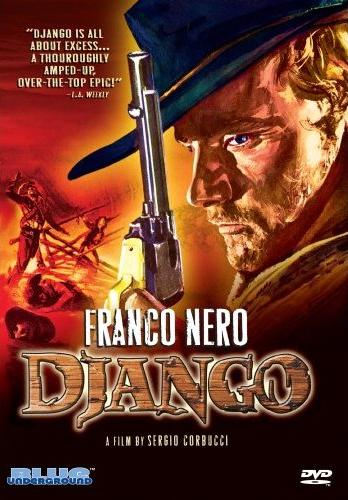
Django

Director: Sergio Corbucci
Written by: Sergio Corbucci, Bruno Corbucci, Franco Rossetti
Cast: Franco Nero, José Bódalo, Loredana Nusciak, Ángel Álvarez

Year / Country: 1966, Italy / Spain
Running Time: 88 mins.

In 1964, Sergio Leone, an Italian director, redefined the western genre with A Fistful of Dollars, a groundbreaking remake of Akira Kurosawa’s Yojimbo. Starring a then-unknown Clint Eastwood, the film introduced audiences to the now-iconic figure of the nameless gunslinger, a drifter who arrives in a town torn apart by a bitter private war. Playing both sides against each other, he emerges victorious, setting the template for the spaghetti western genre.

The overwhelming success of Leone’s film inspired a wave of imitations, varying in quality. Among these, Django (1966) by Sergio Corbucci stands out as one of the best and certainly the most famous. The film borrows heavily from A Fistful of Dollars but adds its own distinctive twist. Instead of a nameless drifter, we meet Django, a mysterious stranger trudging through a desolate landscape while dragging a coffin behind him. His identity is memorably introduced through Louis Bacalov’s haunting theme song, which passionately proclaims his name: Django!

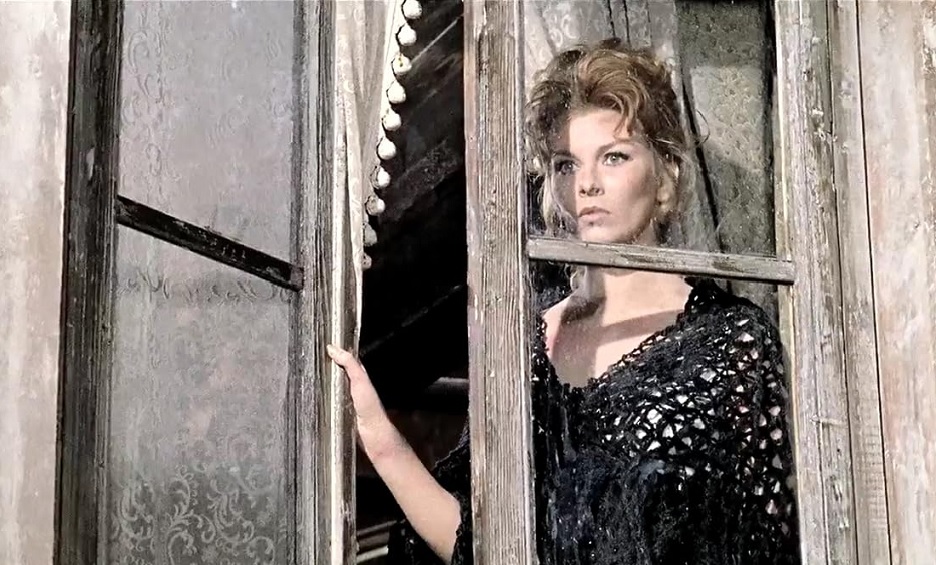
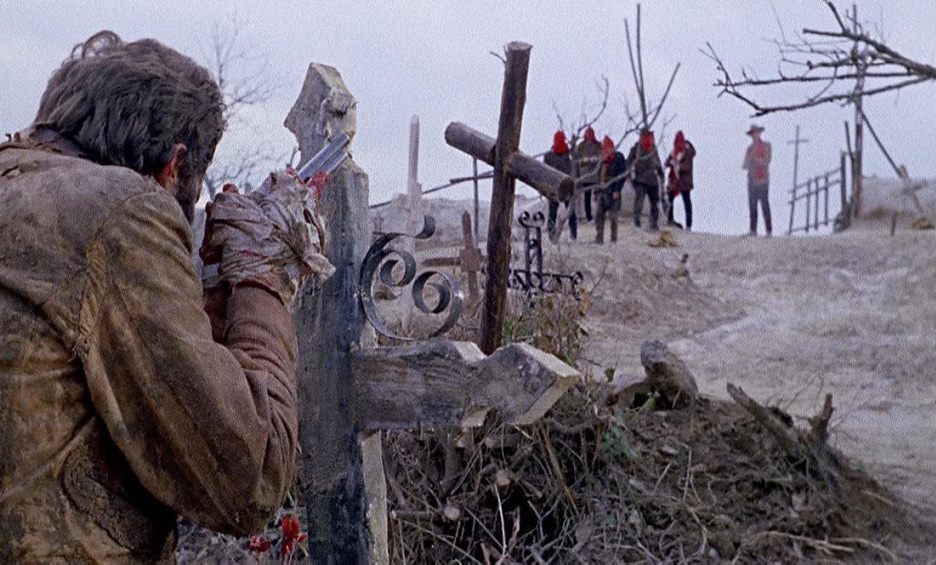
The story follows Django as he rescues a prostitute named Maria from a gang of ruthless outlaws. He escorts her to a ghostly, near-abandoned town where he intends to settle an old score. There, he finds himself caught in a deadly conflict between Mexican revolutionaries and a band of racist Southern renegades led by his arch-nemesis, Major Jackson. Initially siding with the Mexicans to deal a crippling blow to Jackson, Django’s motivations soon come to light, setting the stage for an explosive and tragic finale. By the film’s end, only Django and Maria are left standing amidst the carnage, with the rest buried – literally and figuratively.

What elevates Django almost to the level of Leone’s masterpiece is Corbucci’s skillful execution of the genre’s defining elements. Franco Nero delivers a magnetic performance as the titular anti-hero, rivaling Eastwood’s cool and detached gunslinger. Bacalov’s score, while perhaps not as iconic as Ennio Morricone’s, is equally evocative, setting the perfect tone for the film. The supporting cast adds depth to the world, and the stylish, gritty action sequences ensure the audience remains captivated throughout.

Of course, Django is also notorious for its graphic violence, which was shocking for its time. Though modern audiences might find it less visceral compared to contemporary standards, the film doesn’t shy away from bloodshed. That said, the lack of squibs – a result of budgetary constraints – dampens some of the impact, as the gunplay often lacks the visual punch of more modern films.

The film’s pacing does falter slightly in the middle act, where the tension and momentum dip after the gripping opening sequences. However, Corbucci makes up for this with a thrilling and memorable climax that reaffirms the film’s status as a cult classic.

In conclusion, Django is a quintessential spaghetti western and a must-watch for fans of the genre. With its unforgettable protagonist, striking visuals, and bleak tone, it stands as a testament to the creativity and enduring appeal of Italian westerns.

Rating:

Biography: Sergio Corbucci (1926, Rome – 1990, Rome) was, alongside Sergio Leone, one of the most prominent directors of spaghetti westerns. Born and raised in Rome, Corbucci played a crucial role in popularizing the genre, particularly through his iconic films Django (1966) and The Great Silence (Il Grande Silenzio, 1968). He frequently collaborated with actor Franco Nero, crafting memorable characters and stories that helped define the genre’s unique style. His B-movies are characterized by brutal violence, surrealist and apocalyptic production design, black humour and politically left symbolism. Corbucci was a fanatical Marxist and many of his films show the hopelessness of the revolution. He kept working in Italy throughout his career and most of his films were barely released abroad. He died in Rome in 1990.

Filmography (a selection): Foreign Earth (1954), Water’s Love (1954), Supreme Confession (1957), Angel’s Sky (1957), Duel of the Titans (1961), Toto, Peppino and La Dolce Vita (1961), The Son of Spartacus (1963), Grand Canyon Massacre (1963), Django (1966), Navajo Joe (1966), The Mercenary (1968), The Great Silence (1968), Compañeros (1970), Bandera Bandits (1972), The White, the Yellow, and the Black (1975), The Payoff (1978), Super Fuzz (1980), My Darling, My Dearest (1982), Days of Inspector Ambrosio (1988)