Land of the Dead

Director: George A. Romero
Written by: George A. Romero
Cast: Simon Baker, John Leguizamo, Asia Argento, Dennis Hopper

Year / Country: 2005, Canada / France / USA
Running Time: 93 mins.

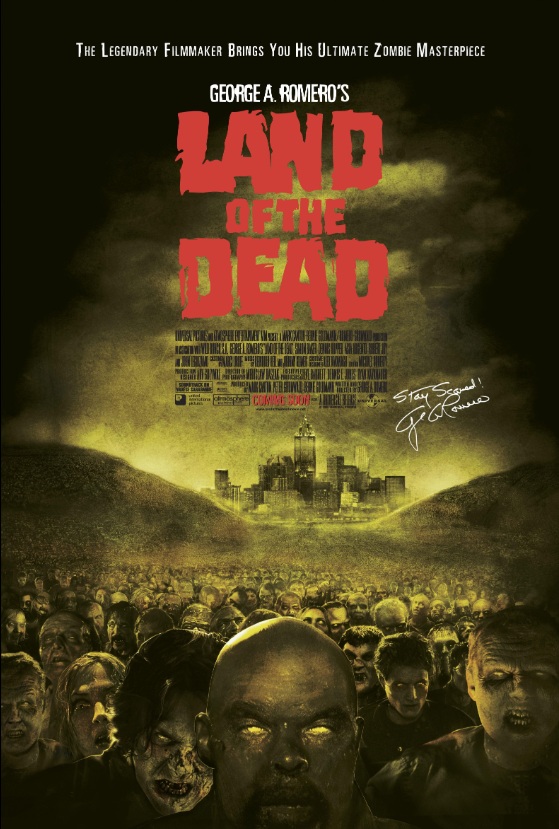
Twenty years after Day of the Dead, zombie king George A. Romero returns to his roots with the fourth part of his classic ‘Dead’ series. The story of Land of the Dead takes place years after Day. How long exactly is not specifically stated, but it’s long enough for two civilizations to have erupted.

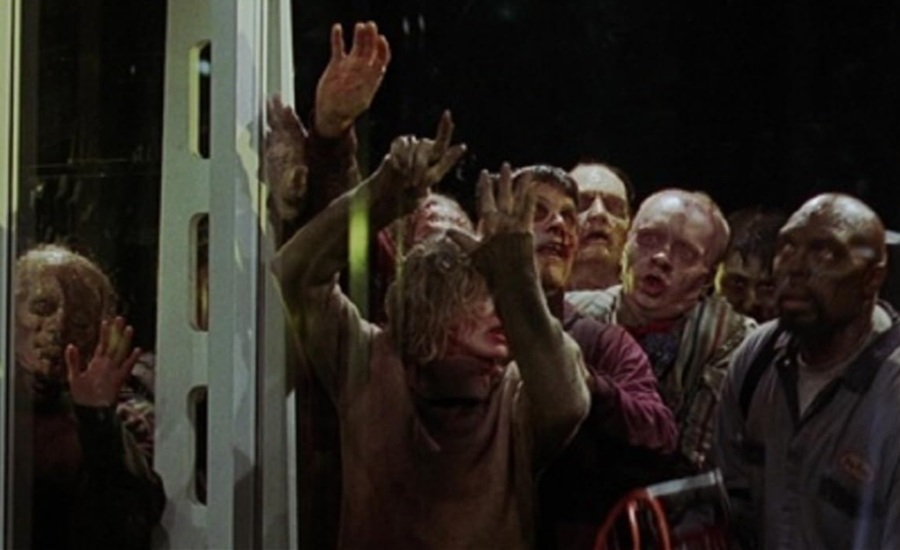
The first civilization in Land consists of the living dead who are no longer the ‘mindless walking corpses’ they once were. They have evolved, and have even become relatively intelligent (for walking corpses that is). The zombies can now communicate with each other and use basic strategies in attacks. They also have a leader, a gas pump attendant named Big Daddy, who knows how to display emotions. Especially anger.

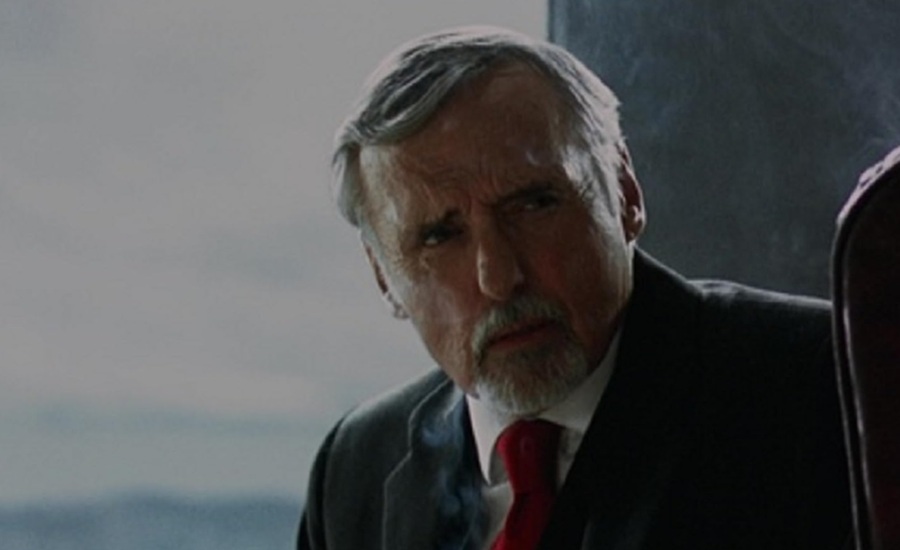
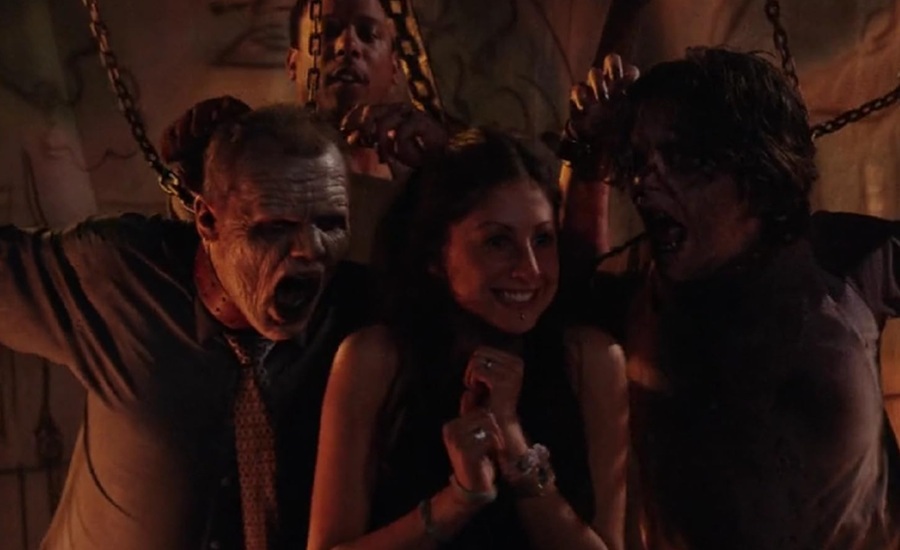
His anger is directed towards the other civilization in Land: the humans. They live in a fortified city protected by walls and electric fences which is dominated by macho behaviour and corrupt politics. Like the zombies, the humans also have a leader, the corrupt businessman Paul Kaufman (Dennis Hopper) who occupies the city’s tallest building. At night, the humans go out on a zombie killing spree to clear the surrounding area and gather supplies. For this purpose they use a massive armed vehicle called Dead Reckoning. During the nightly expeditions, the humans commit cruelties against the zombies which makes them (especially Big Daddy) very angry. But the humans commit crimes against each other as well.

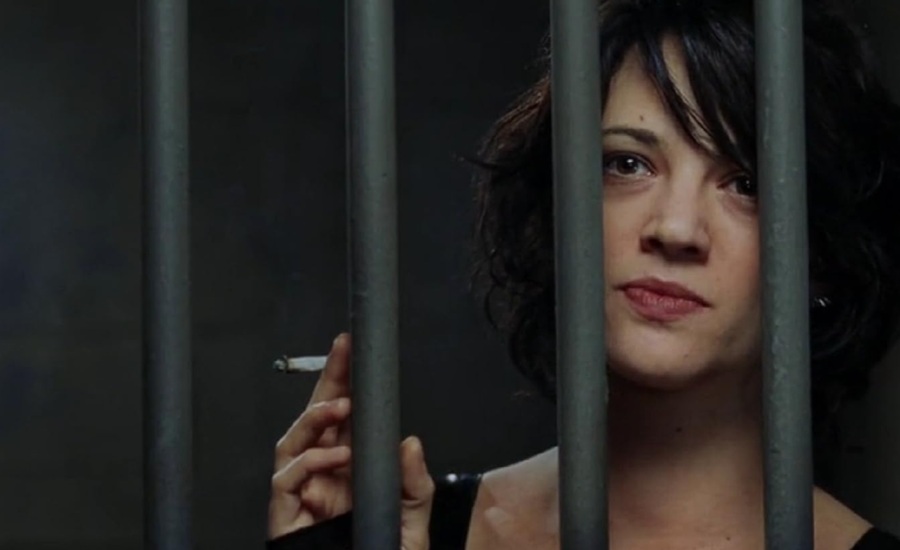
John Leguizamo plays Cholo, a young and reckless entrepreneur who makes a few bucks by bringing in booze for Kaufman. When Kaufman cheats Cholo in a deal, Cholo steals Dead Reckoning and demands five million to bring it back. Kaufman hires expedition leader Riley (Simon Baker) to bring in the vehicle that he designed himself. Riley sets out to find Cholo, but does so for different motives than Kaufman thinks. On his journey Riley picks up the female soldier Slack (Asia Argento), while the zombie army launches an attack on the city.

When Land of the Dead came out it was received with mixed emotions. Some felt that Romero should have left his old trilogy alone, while other fans couldn’t wait to see it. Those who were expecting too much were initially disappointed, but in retrospect saw more of Romero’s signature qualities. The overall reaction from critics was mostly positive. Once again Romero created a metaphorically rich film that contains plenty of humour, violence and stylish visuals. The downside is that the film’s plot is a little too thin to really involve the viewer, making this a slightly less enjoyable film than other ‘Dead’ entries. But with Romero that still means one hell of a good time. It might not be groundbreaking. But entertaining? Hell yes.

Rating:

Biography: George A. Romero (1940, New York – 2017, Toronto), who lived in Pittsburgh, made his feature debut with Night of the Living Dead. It was a low budget zombie movie that was both groundbreaking and shocking in its time. Quickly, it became a major horror classic. He then directed some smaller, personal films in which he often combined horror and social commentary. In 1978 he topped the success of Night of the Living Dead with his brilliant follow-up Dawn of the Dead. In the eighties his career stagnated a bit when he created the third part in his zombie series Day of the Dead. It was a failure both commercially and critically. It is more appreciated nowadays. In a recent feature by Empire – The 25 Best Zombie Movies Of All Time – it is ranked second only after Dawn of the Dead. In 2005 Romero made a small comeback with Land of the Dead. He died in 2017.

Filmography (a selection): Night of the Living Dead (1968), There’s Always Vanilla (1971), Season of the Witch (1972), The Winners (1973, TV episodes), The Crazies (1973), O.J. Simpson: Juice on the Loose (1974, TV doc), Martin (1977), Dawn of the Dead (1978), Knightriders (1981), Creepshow (1982), Day of the Dead (1985), Monkey Shines (1988), Two Evil Eyes (1990) [with Dario Argento], The Dark Half (1993), Bruiser (2000), Land of the Dead (2005), Diary of the Dead (2007), Survival of the Dead (2009)


For a Few Dollars More

Director: Sergio Leone
Written by: Fulvio Morsella, Sergio Leone, Luciano Vincenzoni
Cast: Clint Eastwood, Lee Van Cleef, Gian Maria Volontè

Year / Country: 1965, Italy, Spain, West Germany
Running Time: 126 mins.

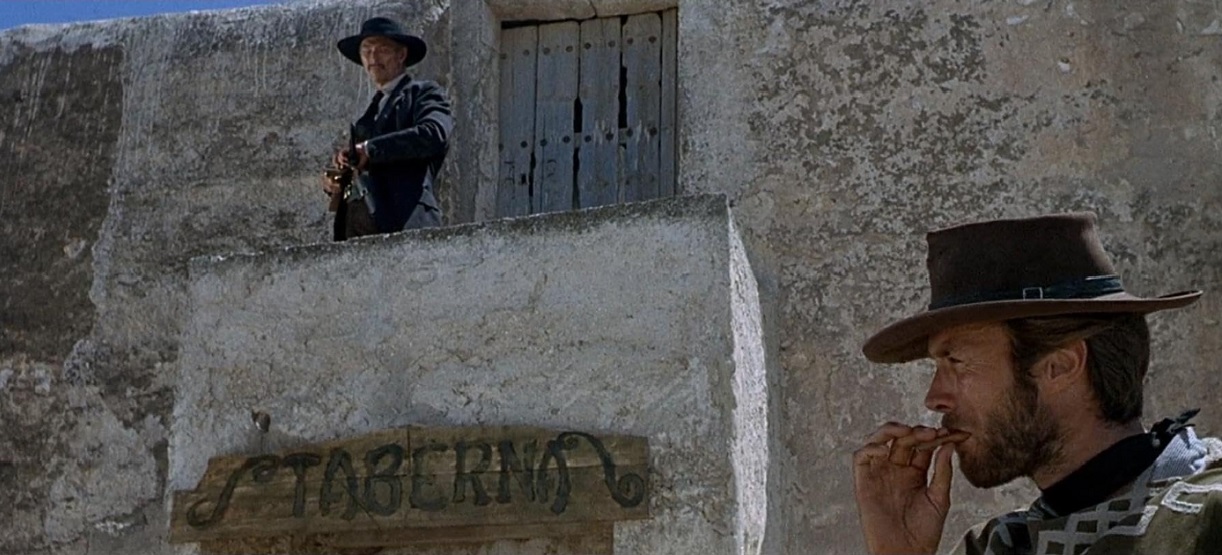
A credit sequence can make or break a movie, and I’ve always loved the one that opens For a Few Dollars More. A lone rider approaches in an extreme long shot. Suddenly, a rifle cracks, the rider falls, and the horse gallops off. Then Ennio Morricone’s score bursts in, and the credits roll. Simple, yet brilliant.

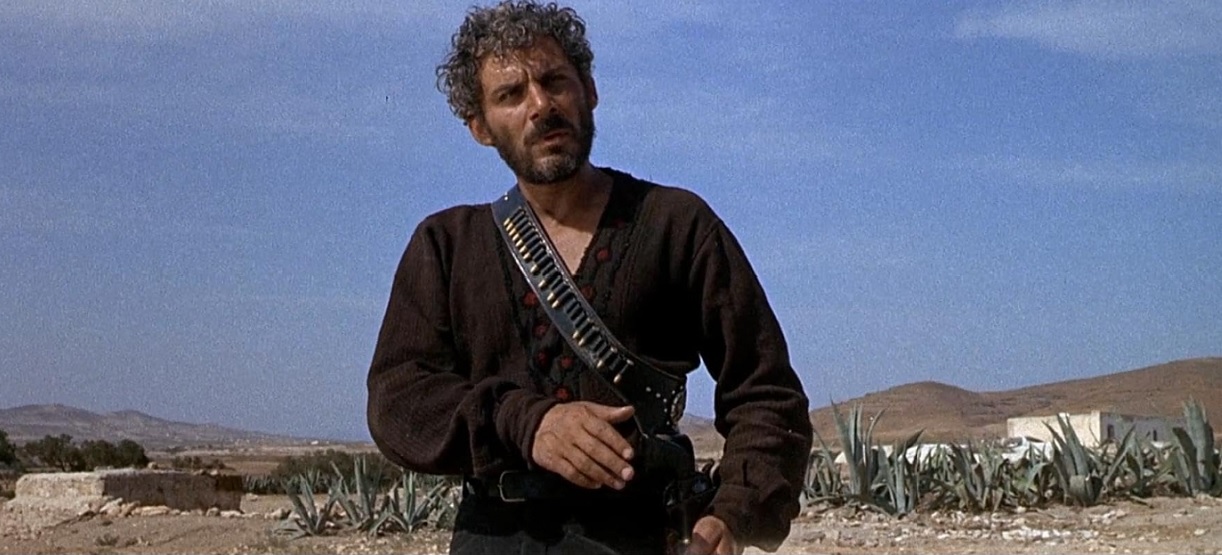
Next, a title card appears: “Where life had no value, death, sometimes, had its price. That is why the bounty killers appeared.” In the first half hour, we’re introduced to the film’s three central figures. Colonel Mortimer (Lee Van Cleef) and Monco (Clint Eastwood) are rival bounty hunters who form an uneasy alliance to take down the deranged bandit El Indio (Gian Maria Volontè).

This second installment in Sergio Leone’s world-famous ‘Dollars Trilogy’ is a tense, action-packed rollercoaster. Just one year after the excellent A Fistful of Dollars, Leone delivers an even more stylish and accomplished Western. It’s also the funniest film of his career.

The decision to cast Lee Van Cleef as Eastwood’s ultra-cool counterpart was inspired. Few actors could match Eastwood’s screen presence, but Van Cleef not only holds his own, he arguably matches him in sheer badassery. Volontè, already a memorable villain in A Fistful of Dollars, turns in an even more manic, menacing performance here. His gang of outlaws, including a wonderfully twitchy Klaus Kinski, adds further flavor to the mix.

If the film has a flaw, it’s that its pacing is occasionally uneven. Some sequences, like the El Paso bank heist, drag a bit. But this is a minor gripe in a film overflowing with memorable moments, sharp dialogue, and unforgettable characters. Leone’s blend of style, suspense, and morbid humor has rarely been better.

And the ending – well, no spoilers – but suffice to say, it’s one of those perfectly twisted moments that’s sure to leave a massive grin on your face.

Rating:

Biography: Sergio Leone (1929, Rome – 1989, Rome) made his debut in the cinema working as a voluntary assistant and extra, among other things, in The Bicycle Thieves by Vittorio de Sica. Later, he became assistant director to Mario Bonnard. In 1959, when Bonnard was ill, he took over from him on the set of The Last Days of Pompeii. In 1961 he directed his first full-length film: The Colossus of Rhodes. But the film that was to bring him to the general attention came out in 1964: A Fistful of Dollars. His next films, For a Few Dollars More and The Good, The Bad and the Ugly complete what came to be known as the Dollars Trilogy and were a great box-office success. He would only make three more films before tragically passing away in 1989. He was taken from us by a heart attack in his house in Rome, while working on an ambitious project for a film on the Siege of Leningrad.

Filmography: The Colossus of Rhodes (1961), A Fistful of Dollars (1964), For a Few Dollars More (1965), The Good, The Bad and the Ugly (1966), Once Upon a Time in the West (1968), A Fistful of Dynamite (1971), Once Upon a Time in America (1984)


Day of the Dead

Director: George A. Romero
Written by: George A. Romero
Cast: Lori Cardille, Terry Alexander, Joe Pilato, Jarlath Conroy

Year / Country: 1985, USA
Running Time: 102 mins.

In George Andrew Romero’s Night of the Living Dead (1968) the dead were resurrected and started a crisis. In Dawn of the Dead (1978), the zombies were taking the upper hand. Now in 1985’s Day of the Dead, there are barely any humans left. A small group of survivors consisting of soldiers, scientists and civilians, are holed up in a military complex with hundreds of flesh-eaters roaming around on the outside.

There has been a time leap since Dawn, so the zombies are slowly decomposing and are looking more gray and green than in the previous ‘Dead’ movies. The different groups living in the claustrophobic complex are each dealing with the situation in their own way. The scientists are searching for a way to ‘control’ the zombies, while the soldiers want to wipe them all out. The few civilians on the other hand, just want to enjoy the time they have left.

The lack of any prospects starts to create tension within the group. Especially with the psychopathic Captain Rhodes (Joe Polito) who commands the small military force. Before long, their infighting leads to a final clash with the zombies. Romero shows us once again that humans are a greater danger to themselves than any outside threat.

Romero called Day of the Dead his favorite entry in the series, even though it was derided by critics upon release. Today the film got more of a cult status. And justly so. As a film basically showing total apocalypse, it succeeds brilliantly. The only problem is that it’s pretty depressing. From Dr. ‘Frankenstein’ Logan conducting gruesome experiments on zombies in his underground lab to the unpleasant characters: it all contributes to making this film pretty hard to sit through. In Dawn, the shopping mall location lended itself well for some inventive humor. The funniest thing about Day is the ‘intelligent’ zombie Bub who even utters some dialogue in the film (A..llli….ciaaaa…).

Romero’s golden touch, the fantastic special make-up effects by Tom Savini and the dark atmosphere make this a must-see for horror fans. The successful military satire is another good reason to see Day of the Dead. However, dejected types might be better off not watching this. Like the other ‘Dead’ films its concept may well be brilliant, but it is still a nasty and depressive movie. Twenty years later Romero would continue his series with Land of the Dead.

Rating:

Biography: George A. Romero (1940, New York – 2017, Toronto), who lived in Pittsburgh, made his feature debut with Night of the Living Dead. It was a low budget zombie movie that was both groundbreaking and shocking in its time. Quickly, it became a major horror classic. He then directed some smaller, personal films in which he often combined horror and social commentary. In 1978 he topped the success of Night of the Living Dead with his brilliant follow-up Dawn of the Dead. In the eighties his career stagnated a bit when he created the third part in his zombie series Day of the Dead. It was a failure both commercially and critically. It is more appreciated nowadays. In a recent feature by Empire – The 25 Best Zombie Movies Of All Time – it is ranked second only after Dawn of the Dead. In 2005 Romero made a small comeback with Land of the Dead. He died in 2017.

Filmography (a selection): Night of the Living Dead (1968), There’s Always Vanilla (1971), Season of the Witch (1972), The Winners (1973, TV episodes), The Crazies (1973), O.J. Simpson: Juice on the Loose (1974, TV doc), Martin (1977), Dawn of the Dead (1978), Knightriders (1981), Creepshow (1982), Day of the Dead (1985), Monkey Shines (1988), Two Evil Eyes (1990) [with Dario Argento], The Dark Half (1993), Bruiser (2000), Land of the Dead (2005), Diary of the Dead (2007), Survival of the Dead (2009)

A Fistful of Dollars

Director: Sergio Leone
Written by: Victor Andrés Catena, Jaime Comas, Sergio Leone
Cast: Clint Eastwood, Marianne Koch, Gian Maria Volontè, Wolfgang Lukschy

Year / Country: 1964, Italy / Spain / West Germany
Running Time: 96 mins.

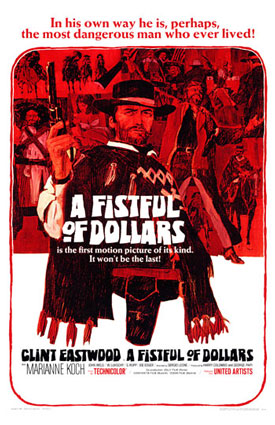
During the filming of The Last Days of Pompeii in Europe, directors Sergio Leone and Sergio Corbucci were struck by the idea of using the landscapes they encountered as the backdrop for a western. Five years later, A Fistful of Dollars arrived – a groundbreaking and hugely influential film that launched both Leone’s and Clint Eastwood’s international careers.

For its plot, Leone drew inspiration from Akira Kurosawa’s classic samurai film Yojimbo. A mysterious stranger arrives in a desolate town where no one works except the coffin maker. The town is controlled by two rival gangs – the Baxters and the Rojos – who each try to buy his loyalty. But the stranger is playing his own game. Instead of choosing a side, he orchestrates a deadly conflict to eliminate both gangs and free the town from their oppression.

At the time, Eastwood was virtually unknown, with his biggest credit being the TV show Rawhide. Leone had considered other actors for the role – James Coburn, Charles Bronson, Lee Marvin, and Henry Fonda – but ultimately, Eastwood’s brilliant performance became a key factor in the film’s success. As the enigmatic gunslinger, he exudes effortless cool. With his cobra-quick draw, sharp intellect, and signature poncho, hat, and cigar, he creates an unforgettable character. Despite his stoic presence and minimal dialogue, he also delivers moments of dry humor, particularly in the scene where he demands apologies from four outlaws for scaring his horse – a comic masterpiece.

From the opening animated credit sequence, A Fistful of Dollars pulls you in. Leone’s direction is flawless, blending breathtaking widescreen cinematography with expertly staged duels that brim with tension. Despite the film’s modest budget, its visual and narrative execution mask any limitations. A major part of its success is owed to Ennio Morricone’s unforgettable score – one of his early masterpieces – that elevates the film’s atmosphere and impact.

Initially, A Fistful of Dollars developed a cult following in Italy before becoming a mainstream box-office sensation. Word spread quickly – this was the must-see film of the year. It was soon followed by two sequels, For a Few Dollars More and The Good, the Bad and the Ugly, completing what would become the legendary Dollars Trilogy.

Rating:

Biography: Sergio Leone (1929, Rome – 1989, Rome) made his debut in the cinema working as a voluntary assistant and extra, among other things, in The Bicycle Thieves by Vittorio de Sica. Later, he became assistant director to Mario Bonnard. In 1959, when Bonnard was ill, he took over from him on the set of The Last Days of Pompeii. In 1961 he directed his first full-length film: The Colossus of Rhodes. But the film that was to bring him to the general attention came out in 1964: A Fistful of Dollars. His next films, For a Few Dollars More and The Good, The Bad and the Ugly complete what came to be known as the Dollars Trilogy and were a great box-office success. He would only make three more films before tragically passing away in 1989. He was taken from us by a heart attack in his house in Rome, while working on an ambitious project for a film on the Siege of Leningrad.

Filmography: The Colossus of Rhodes (1961), A Fistful of Dollars (1964), For a Few Dollars More (1965), The Good, The Bad and the Ugly (1966), Once Upon a Time in the West (1968), A Fistful of Dynamite (1971), Once Upon a Time in America (1984)