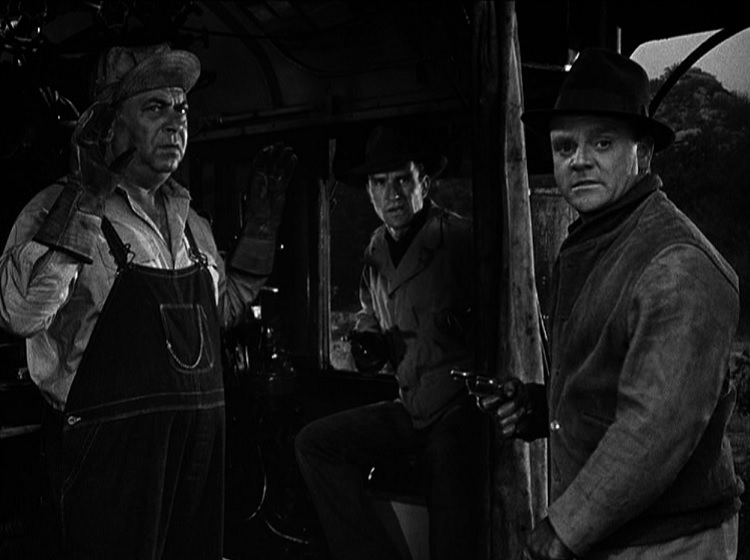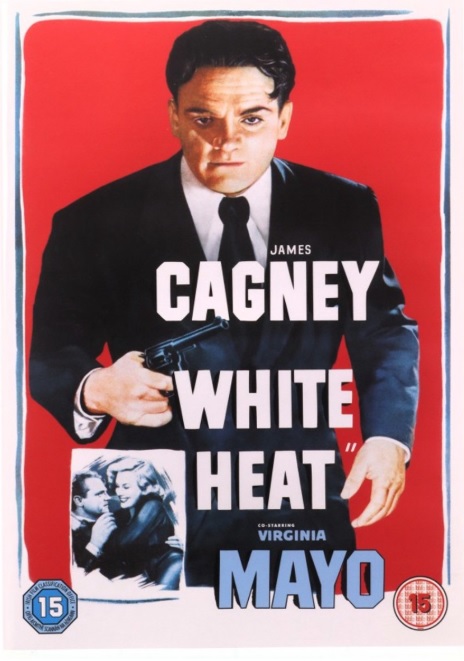
White Heat (1949)


James Cagney Is Red Hot In ‘White Heat’!

Directed by:
Raoul Walsh

Written by:
Ivan Goff (screenplay)
Ben Roberts (screenplay)
Virginia Kellogg (story)

Cast:
James Cagney (Cody Jarrett), Virginia Mayo (Verna Jarrett), Edmond O’Brien (Hank Fallon / Vic Pardo), Margaret Wycherley (Ma Jarrett), Steve Cochran (Big Ed Somers), John Archer (Philip Evans), Wally Cassell (Cotton Valletti), Fred Clark (Trader Winston), Marshall Bradford (Chief of Police), Paul Guilfoyle (Roy Parker)
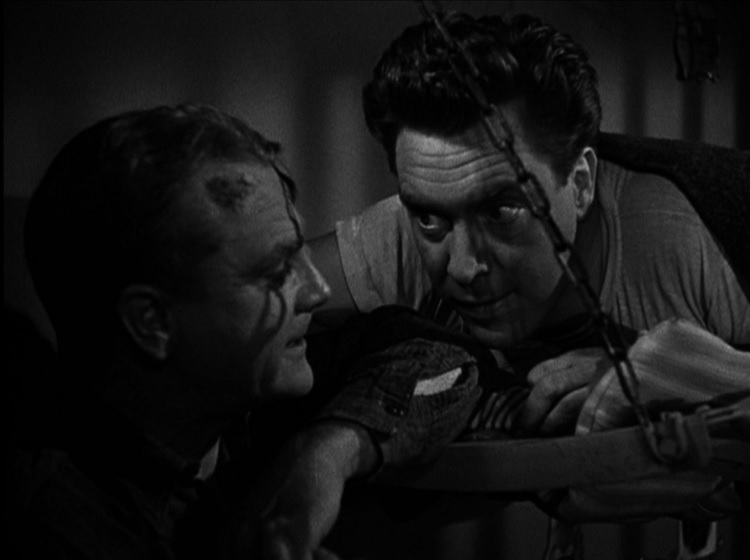
White Heat opens in High Sierra – a nod to the 1941 Humphrey Bogart classic directed by Raoul Walsh – where the Jarrett Mob executes a daring heist on a treasury train, making off with 300,000 dollars in government money. The stage is set for a relentless manhunt as the authorities vow to dismantle the gang and reclaim the stolen fortune.

At the helm of the Jarrett gang is Cody Jarrett, a volatile and psychopathic criminal plagued by deep-seated mother issues. James Cagney delivers a career-defining performance, infusing Jarrett with terrifying intensity and unpredictable rage.

Director Raoul Walsh, who previously collaborated with Cagney on The Roaring Twenties, masterfully guides this explosive portrayal, cementing White Heat as a trendsetter for modern crime thrillers.

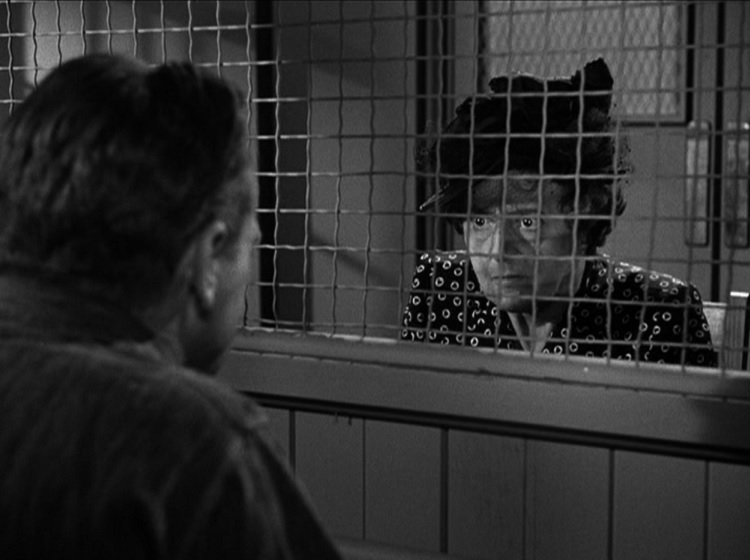
The supporting cast shines, particularly Virginia Mayo as Verna Jarrett, the bubblegum-chewing femme fatale, and Margaret Wycherley as the sinister Ma Jarrett – a character whose malevolence rivals the likes of the mother character Livia from I, Claudius and The Sopranos. Cagney’s unhinged outbursts and chilling charisma make Jarrett one of cinema’s most unforgettable villains.

From its gripping opening to its spectacular, thematically resonant finale, White Heat is a relentless and timeless masterpiece. The film’s iconic line – “Made it, Ma! Top of the world!” – isn’t just Jarrett’s delusional triumph; it’s a fitting tribute to the film itself. Few movies achieve such enduring power, but White Heat stands tall among the greats.

Rating:

Quote:
CODY JARRETT: “Big Ed, Great… Big… Ed. Know why they call him that? Because his ideas are big. Someday he’s gonna get a really big one, about me. It’ll be his last.”

Trivia:
The unusually close relationship between Cody Jarrett and his domineering mother was inspired by real life bank robbers Kate Barker (aka Ma Barker) and her sons.

The Public Enemy (1931)


All his life he took what he wanted…Why not women?

Directed by:
William A. Wellman

Written by:
Kubec Glasmon
John Bright
Harvey F. Thew

Cast:
James Cagney (Tom Powers), Jean Harlow (Gwen Allen), Edward Woods (Matt Doyle), Joan Blondell (Mamie), Donald Cook (Mike Powers), Leslie Fenton (Nails Nathan), Beryl Mercer (Ma Powers), Robert O’Connor (Paddy Ryan), Murray Kinnell (Putty Nose)

William A. Wellman’s The Public Enemy stands as one of the defining works of early gangster cinema. Released in 1931 – the same year as Little Caesar starring Edward G. Robinson – it helped kick off a gritty, hard-hitting genre that would become a Hollywood staple.

The film opens in industrial America circa 1909, where barrels of bootleg booze roll through the streets and petty crime leads to organized underworld dealings. At the heart of the story are two Irish-American youths who drift into gang life. One of them is Tom Powers, a volatile and ambitious thug played by the electric James Cagney in a star-making performance.

Cagney’s Tom Powers isn’t just another gangster – he’s a smoldering embodiment of the American outlaw spirit, tough, unpredictable, and ultimately doomed. And while the film famously features Cagney’s brutal shooting of a horse (what is it with gangsters and horses?), it’s the iconic grapefruit scene – where he smashes a half grapefruit into Mae Clarke’s face – that has become the movie’s enduring image.

Though Edward G. Robinson’s Little Caesar beat The Public Enemy to theaters by a few months, Wellman’s film surpasses it in terms of visual style and production value. Beautifully shot with a sharp eye for period detail, the direction gives the film a sense of realism and cinematic flair that feels advanced for its time. Interestingly, the film’s lead role was originally assigned to Edward Woods, with Cagney cast as his sidekick. But during rehearsals, Wellman recognized Cagney’s screen presence and wisely switched the roles. The result is one of the most memorable debuts in film history; Cagney utterly commands the screen.

The story charts Tom Powers’ rise through the criminal ranks during Prohibition, chronicling his growing influence and inevitable downfall. Like many gangster films of the era, such as Scarface (1932), The Public Enemy operates as a cautionary tale. While it thrills with its violence and bravado, it ultimately condemns the gangster lifestyle. As Powers’ actions begin to take a toll on those around him, the film steers toward its grim, uncompromising conclusion. Cagney’s final line – “I ain’t so tough” – rings with bitter irony.

The Public Enemy marked the beginning of two major cinematic milestones: the emergence of James Cagney as a major star and the ascendance of the gangster film as a serious Hollywood genre. Nearly a century later, it remains a landmark of American cinema: stylish, shocking, and still relevant.

Rating:

Quote:
PADDY RYAN: “As far as I’m concerned there’s only two kinds of people: Right and wrong. Now, I think you’re right. You’ll find that I am, unless you cross me.”

Trivia:
The scene where Tom shoots the horse that threw and killed Sam ‘Nails’ Nathan in a riding accident was based on an actual incident. In 1924, Sam ‘Nails’ Morton, a member of Dion O’Banion’s gang, was thrown from his horse and killed while riding in Chicago’s Lincoln Park. Other members of the gang, led by Louis ‘Two Gun’ Alteri, kidnapped the horse, took it to the spot where the accident occurred, and shot it dead. Source: Carl Sifakis, ‘Encyclopedia Of American Crime.’