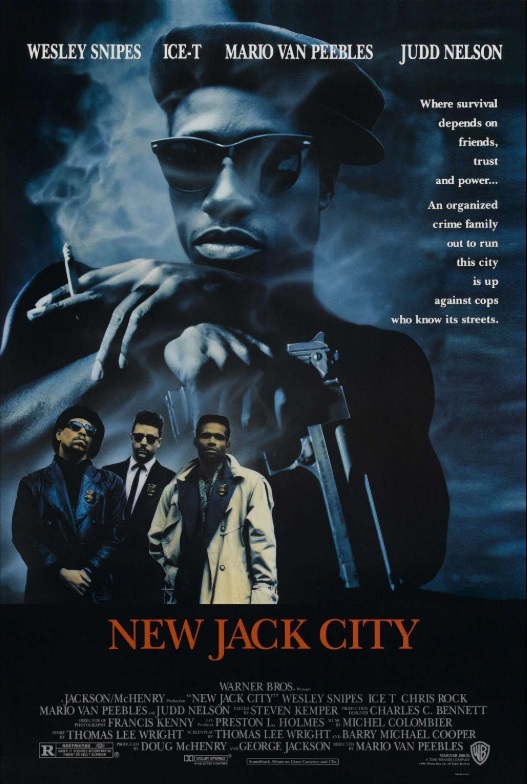
New Jack City (1991)


‘It was a time that there was a new gangster in………’

Directed by:
Mario Van Peebles

Written by:
Thomas Lee Wright
Barry Michael Cooper

Cast:
Wesley Snipes (Nino Brown), Ice-T (Det. Scotty Appleton), Allen Payne (Gee Money Wells), Chris Rock (Pookie Robinson), Mario Van Peebles (Stone), Michael Michele (Selina), Bill Nunn (Duh Duh Duh Man), Russell Wong (Park), Bill Cobbs (Old Man), Christopher Williams (Kareem Akbar), Judd Nelson (Det. Nick Peretti), Vanessa Williams (Keisha)
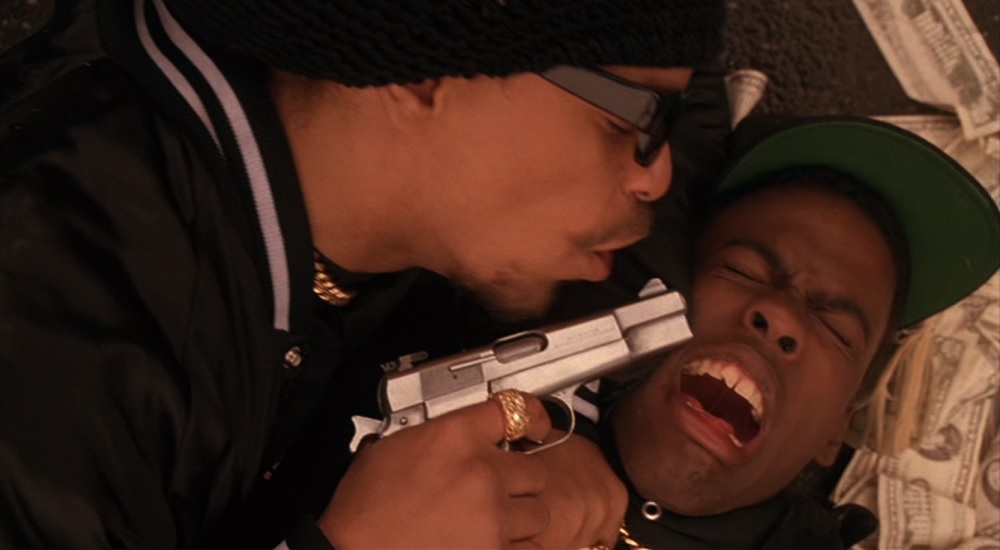
This trip back to the nineties opens with shots of New York and a news report about economic hardship. “The deficit now stands at an astounding 221 billion dollars, and income inequality is at its worst level since the Great Depression”, the voice-over says. Oh boy, if only they could see us now.

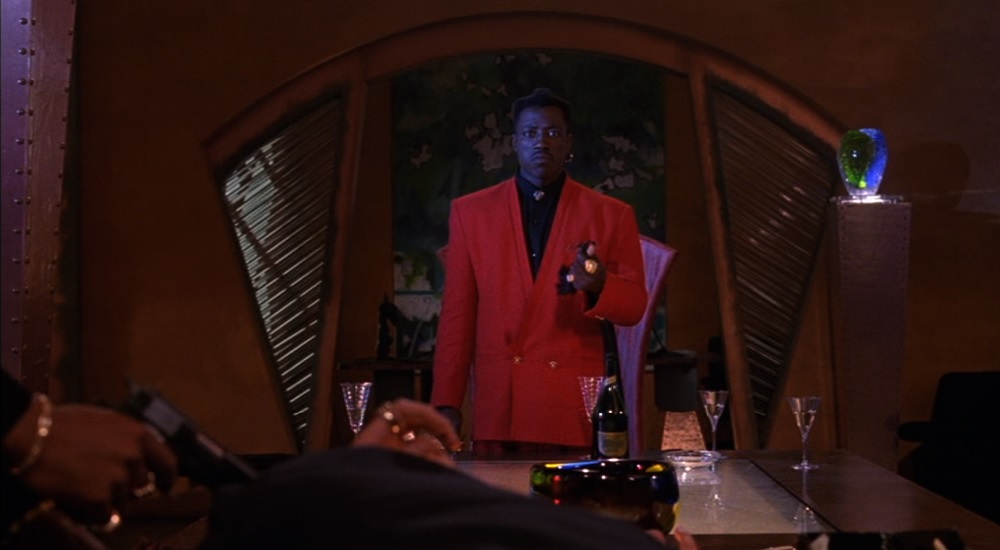
In an amazing shot, the camera swoops in on a bridge where a gangster is dangling a man by his feet. Drug kingpin Nino Brown (Wesley Snipes) steps out of his car and orders the man dropped, apparently over a drug dispute.

The movie sets the year at 1986, the height of the crack epidemic in Harlem. Brown, along with his lieutenants Gee Money and the Duh Duh Man – collectively known as the Cash Money Brothers – has seized control of the drug trade. They take over an entire apartment block called The Carter and run their crack empire from within its walls.

Ice-T plays Scotty Appleton, a detective with a personal grudge against Brown. He joins a special police unit tasked with taking down the increasingly megalomaniacal Brown and his CMB crew. The team is led by Stone (Mario Van Peebles, who also directed the film), Detective Nick Peretti (Judd Nelson), and the ex-junkie turned informant Pookie (an excellent Chris Rock).

New Jack City is a true product of its time: the nineties, the crack era, rap music, and capitalism gone wrong (though nothing like today). The costume designers clearly had a field day. The film is also distinctly postmodern: Nino Brown watches Scarface even as he heads toward the same mistakes Tony Montana made. Overall, it’s an effective crime flick: it pulls you in like a crack pipe does a junkie, and you ride it out until the end, when Nino Brown’s empire inevitably comes crashing down.

Rating:

Quote:
NINO BROWN: “You cut a side deal with that motherfucker. Yes, you did, Gee. Fucking Cain. My brother’s keeper. Was it this glass dick you’ve been sucking on? Was that it? Now I see how you let that motherfucker infiltrate. He used you, Gee. What ever happened to, ‘Am I my brother’s keeper?’”

Trivia:
Wesley Snipes originally wanted to play Scotty Appleton. However, Mario Van Peebles and screenwriter Barry Michael Cooper insisted that he play Nino Brown, as the part was written especially for him.
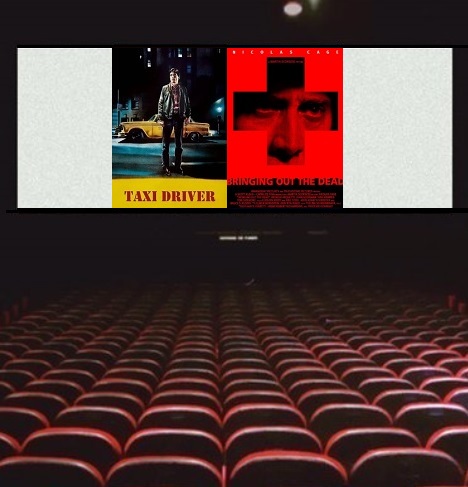
Double Bill #15: Taxi Driver & Bringing Out the Dead

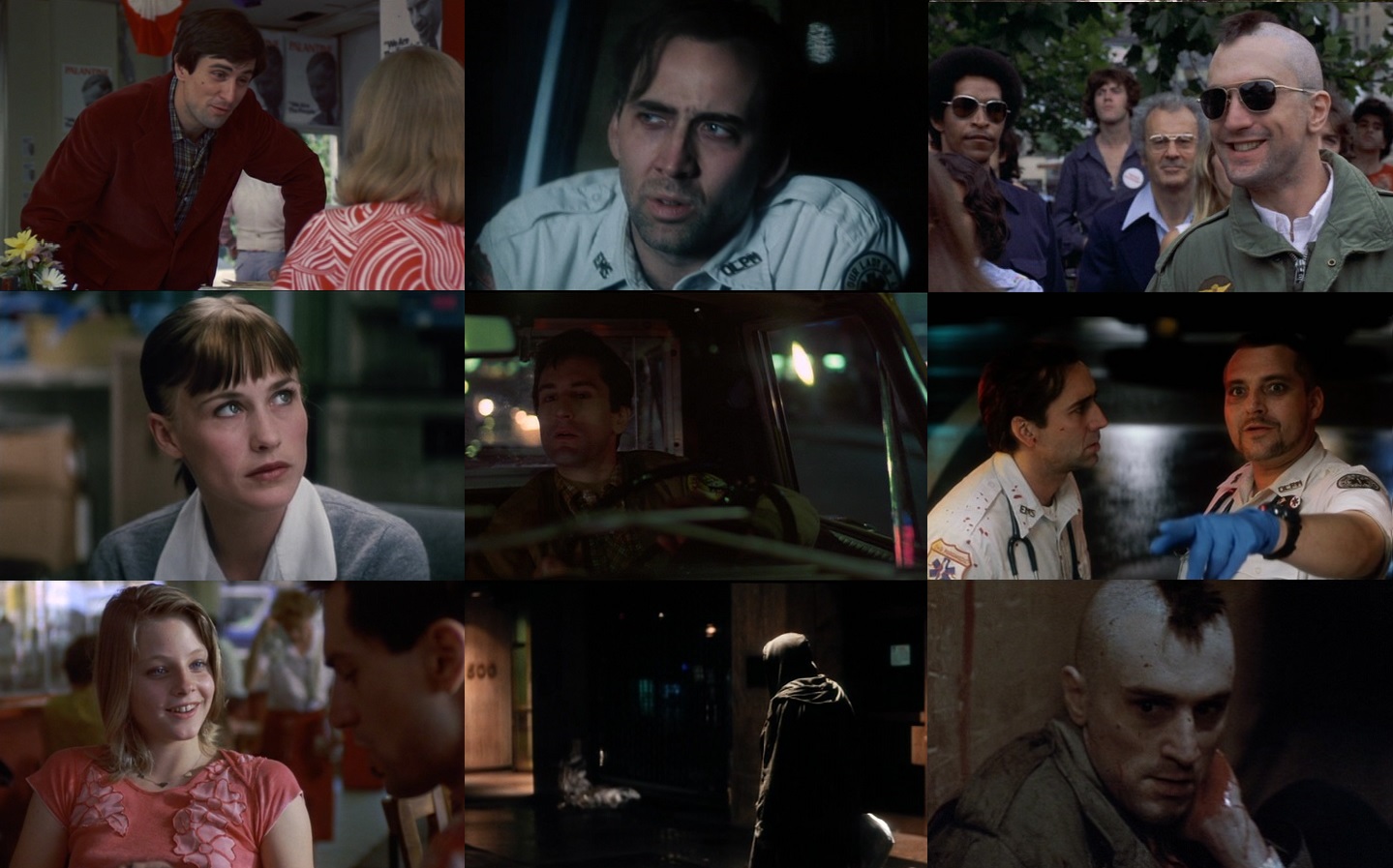
In Scorsese’s oeuvre, this is the most obvious Double Bill together with Casino and GoodFellas. Taxi Driver and Bringing Out the Dead share a great deal in common. Both revolve around a driving protagonist who suffers from urban isolation in New York City while interacting with colleagues. Both were written by Paul Schrader, feature a dark atmosphere, and explore urban madness and crime. Visually, each film reflects the protagonist’s mental state within the cityscape – often through POV shots of grim street scenes. In both, the anti-hero is driven by a desire to save others, particularly women. Each also features a rapid-fire cameo by Scorsese himself (in Bringing Out the Dead, he’s the voice of the radio dispatcher). Both films include moments that likely exist only in the protagonist’s mind: Frank Pierce (Nicolas Cage) sees visions of ghosts and corpses on the streets, while Travis Bickle (Robert De Niro) probably imagines the entire ending of Taxi Driver. Of the two movies, Taxi Driver is obviously the masterpiece. It captures the transformation of this complex main character perfectly. From oddball, to radical, to killer. De Niro’s performance is deeply unsettling; he truly becomes Travis, and it shows. His voice-over beautifully conveys his descent into psychological darkness, and the lines have a raw, poetic quality. Shot on a low budget in a documentary style, the film has a gritty authenticity. Add Bernard Herrmann’s haunting score and the outstanding supporting cast (Jodie Foster, Peter Boyle, Harvey Keitel, and Cybill Shepherd), and you have a truly iconic classic on your hands. While Bringing Out the Dead never reaches that same status, it remains an underrated entry in Scorsese’s filmography. It vividly captures the stress and chaos of working as an ambulance driver, with striking imagery – like Frank literally lifting spirits in the city. Philosophically, it reflects on life and death in the modern metropolis and, unlike Taxi Driver, includes moments of humor (in Taxi Driver, the only joke is Travis taking his date to a porn movie). Viewed together, these films form a fascinating pair: after descending into the darkness of Taxi Driver, Bringing Out the Dead feels almost like a cathartic, even therapeutic, experience.

Mean Streets (1974)


‘You don’t make up for your sins in church. You do it in the streets…’

Directed by:
Martin Scorsese

Written by:
Martin Scorsese
Mardik Martin

Cast:
Harvey Keitel (Charlie Cappa), Robert De Niro (John ‘Johnny Boy’ Civello), David Proval (Tony DeVienazo), Richard Romanus (Michael Longo), Amy Robinson (Teresa Ronchelli), Cesare Danova (Giovanni Cappa), Victor Argo (Mario), George Memmoli (Joey ‘Clams’ Scala), Lenny Scaletta (Jimmy), Jeannie Bell (Diane)

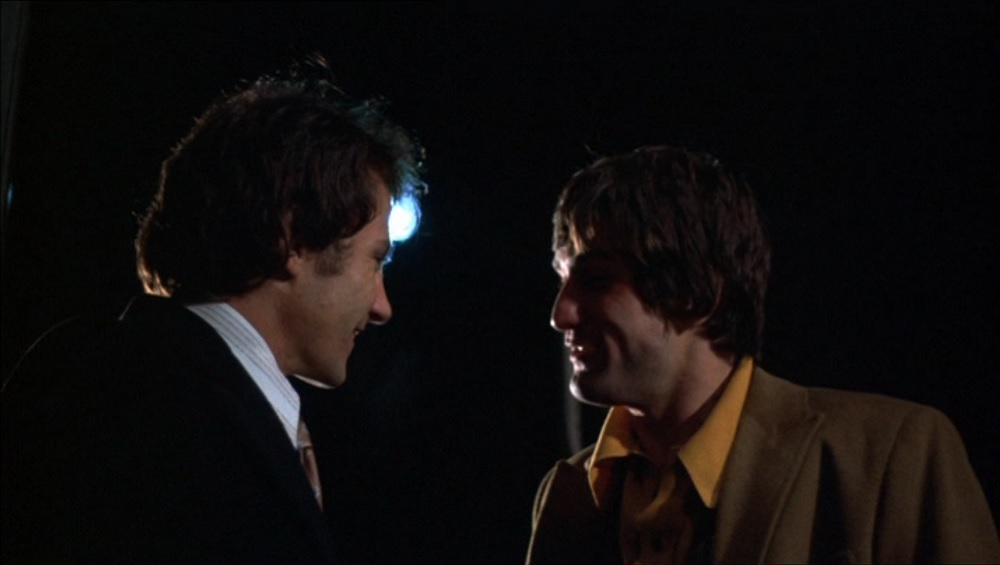
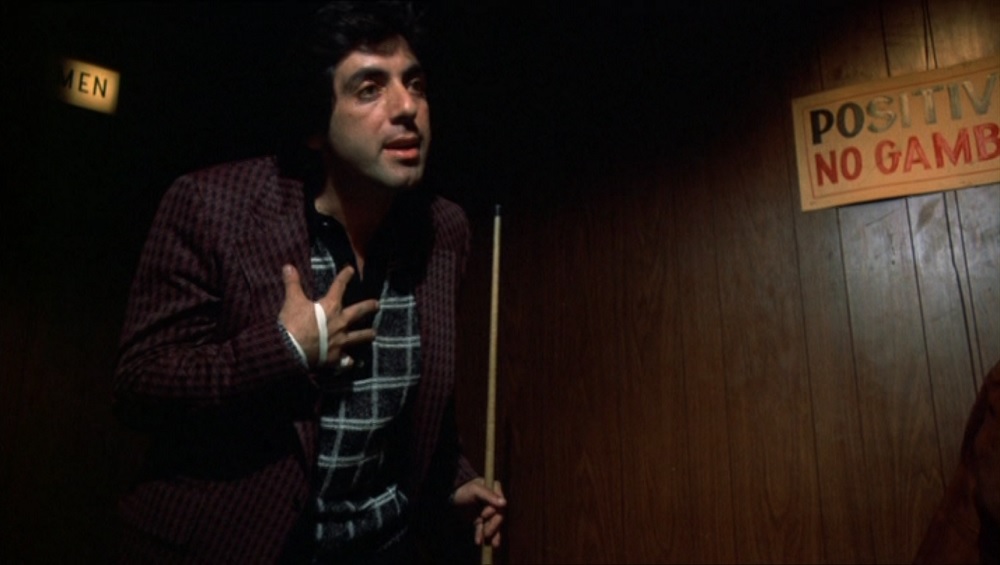
Mean Streets marks the first collaboration between Martin Scorsese and Robert De Niro and right out of the gate, it’s a masterpiece. Set in the tight-knit world of Little Italy, the film follows four small-time hustlers: the conflicted Charlie (Harvey Keitel), hot-tempered bar owner Tony (David Proval), dim-witted loan shark Michael (Richard Romanus), and the reckless wildcard Johnny Boy (Robert De Niro).

Although it isn’t technically Scorsese’s debut, it feels like it. This is the movie in which his voice fully emerges for the first time. It showcases early yet commanding performances by Keitel and De Niro, two actors who would become his most trusted collaborators. Many of the hallmarks of Scorsese’s later masterpieces are already present: the gritty New York setting, the soundtrack full of sixties pop classics, the collision of religion and crime. This isn’t exactly a gangster film – it’s about small-time crooks – but it plays like a prelude to GoodFellas, with dialogues and moral tensions that already sound familiar.

Scorsese immediately sets the tone with a Super 8 projection of Charlie wandering the streets, underscored by the Ronettes’ ‘Be My Baby’. From there, we trail Charlie through his daily routine: drinking in bars, running minor cons, wrestling with Catholic guilt in church visits, and trying to reconcile his moral compass with his ambition.

Charlie wants to rise in the underworld by aligning with his mob-connected uncle, but his loyalty to Johnny Boy – a man drowning in debt and chaos – pulls him down a dangerous path. That loyalty is both touching and toxic, and Scorsese makes it clear early on that violence is never far away. A brutal barroom shooting foreshadows the storm gathering around these characters.

The film’s raw power lies in its atmosphere. Scorsese layers the story with a soundtrack of rock ’n’ roll classics – the Stones’ ‘Jumpin’ Jack Flash’ among them – injecting energy and immediacy into every scene. His restless camera, the naturalistic dialogue laced with profanity, and the lived-in performances combine to create a world that feels authentic and alive.

De Niro is magnetic as Johnny Boy, unpredictable and dangerous yet oddly charming, while Keitel gives a deeply human performance as Charlie, a man torn between sin and salvation. Their chemistry is the film’s beating heart. Scene after scene burns into memory: a drunken spree, a hilariously chaotic bar fight, an explosive confrontation on the street. The pacing is electric, and the details are so rich you’ll want to revisit it just to soak up more of Scorsese’s vision.

The film still feels fresh today. It is utterly original, with no real comparison except some of Scorsese’s later work. Mean Streets doesn’t just hint at the brilliance to come; it announces the arrival of one of cinema’s great storytellers.

Rating:

Quote:
CHARLIE: “You know something? She is really good-lookin’. I gotta say that again. She is really good-lookin’. But she’s black. You can see that real plain, right? Look, there isn’t much of a difference anyway, is there. Well, is there?”

Trivia:
The opening words are actually spoken by Martin Scorsese, not Harvey Keitel as we are led to believe.

Bad Lieutenant

Director: Abel Ferrara
Written by: Zoë Lund, Abel Ferrara
Cast: Harvey Keitel, Victor Argo, Paul Calderón

Year / Country: 1992, USA
Running Time: 96 mins.

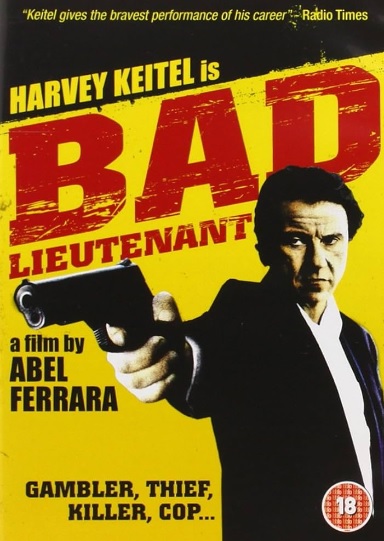
Harvey Keitel is the Bad Lieutenant in Abel Ferrara’s disturbing cop drama. He’s the kind of guy who starts snorting cocaine in his car right after he has dropped his two boys off at school. LT, as he’s credited, is a hopeless addict. He’s addicted to alcohol, crack, smack and gambling. He is also a walking time bomb.

Harvey Keitel was on a roll this year. First he appeared in Reservoir Dogs and then in this, probably the most well known and appreciated movies by New York artist and filmmaker Abel Ferrara. His performance in Bad Lieutenant is very raw, angry and animallike. LT is like a whacked out version of Keitel’s Mean Streets character.

Speaking of that movie, there are some definite links there, and with Scorsese in general. New York plays a big role, and so does religion. In his most desperate moment, LT even hallucinates of Jesus.

So how bad is LT? Pretty bad. He steals illegal drugs from evidence and puts them in the market and he steals money from two guys who just robbed a store owner while he sends the poor guy over to the station to file a report. He uses his badge only to blackmail two underaged girls to perform sexual acts, and his gun is strictly for blowing out his car radio after he lost another basebal bet.

Like Ferrara’s other drug movie The Addiction, Bad Lieutenant is a very effective film about addiction as it shows the constant hunger and the madness of it. LT is just going around frantically feeding the beast, but it’s never going to be enough. We know he is never going to fill that void and his inevitable downfall draws ever nearer. The despair that Keitel expresses is very well acted. The level of self destruction and self hatred is at times hard to watch though.

Rating:

Biography: Abel Ferrara (1951, New York) is a New York artist and filmmaker. He started making amateur films on Super 8 in his teens before making his mark as independent film director with bloody underground films such as The Driller Killer. Ferrara has an independent way of working, uses low budgets, but is still able to attract Hollywood talent for his movies, such as Christopher Walken and Harvey Keitel. His raw, realistic style and controversial content has earned him a position as an important voice in American cult cinema.

Filmography (a selection): Nicky’s Film (1971, short) / 9 Lives of a Wet Pussy (1976) / Not Guilty: For Keith Richards (1977, short doc) / The Driller Killer (1979) / Ms. 45 (1981) / Fear City (1984) / Cat Chaser (1989) / King of New York (1990) / Bad Lieutenant (1992) / Body Snatchers (1993) / The Addiction (1995) / The Funeral (1996) / The Blackout (1997) / New Rose Hotel (1998) / ‘R Xmas (2001) / Mary (2005) / Go Go Tales (2007) / Chelsea on the Rocks (2008, doc) / Napoli, Napoli, Napoli (2009) / Welcome to New York (2014) / Pasolini (2014) / Alive in France (2017, doc) / Piazza Vittorio (2017, doc) / The Projectionist (2019, doc) / Tommaso (2019) / Siberia (2019) / Padre Pio (2022)