By J.H. Kash
Sort of a follow-up to: Thinking, Fast & Slow: Dialogues on Reality (1)

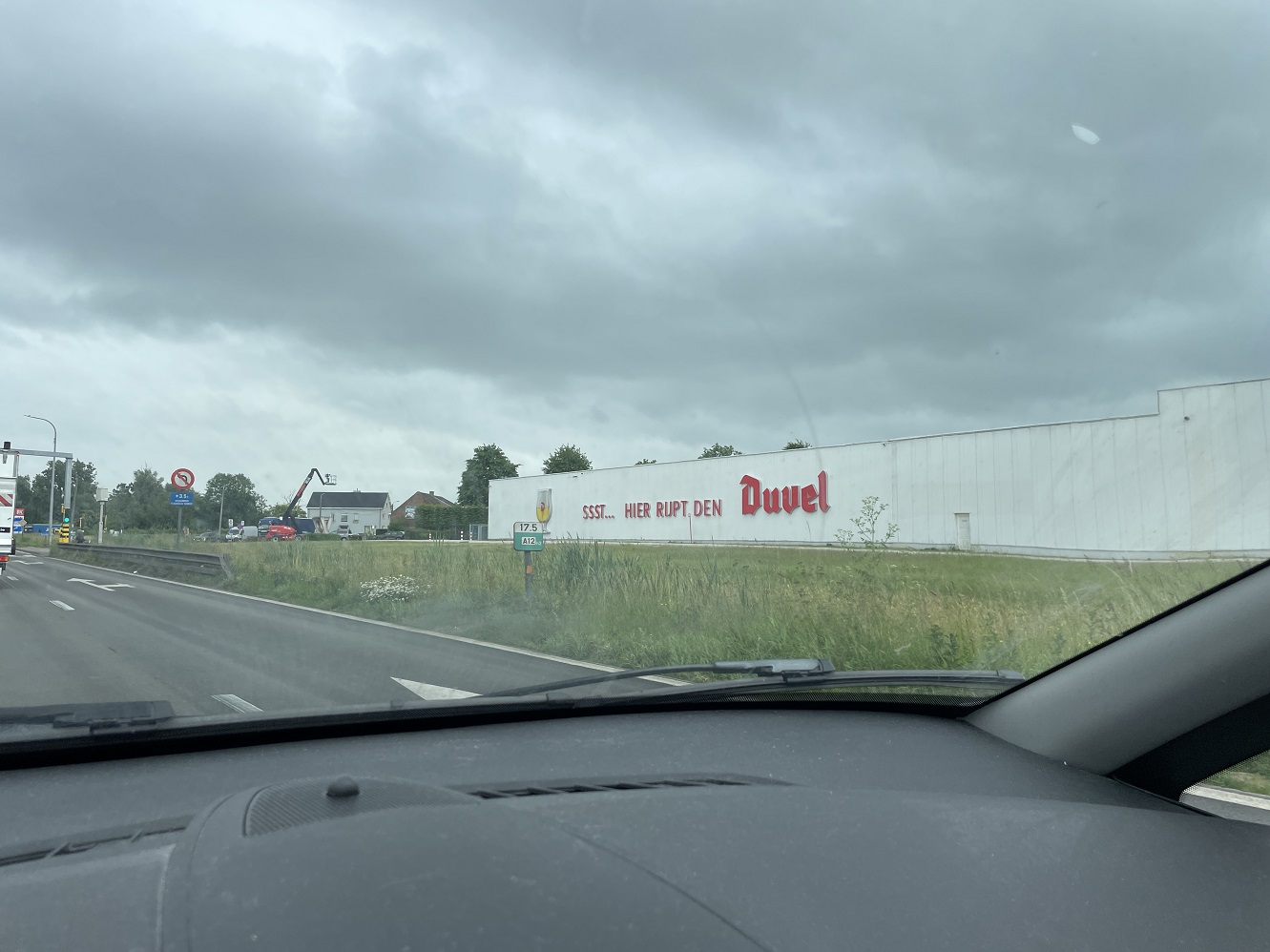
The sky was cloudy and the wind was high. I had trouble keeping my old green Opel Corsa steady as it drifted towards Brussels for what could very well be the most important event of my generation. I was driving on the A27 highway between Amsterdam and Antwerp listening to Business Radio, when reality dawned on me once again. Me driving there was only what it appeared like to me. According to the esteemed scientist Dr. Lanza, who I had the honor of meeting later that day, I was not really driving there at all. I only thought I did in my mind.
The universe is not what we think it is, according to this rebellious thinker. We consider it as a place of sorts, but it is not. Science has revealed that it really is an information system. Within this unimaginable vast system, sentient beings like us are processing information into the appearance of a physical environment. According to Lanza, this environment has no independent existence. We basically create it by observing. Ultimately, the universe resides in our consciousness. Everything does.
To most people this sounds like a bunch of flakey, mumbo jumbo, new age bullcrap. Especially to the crowd Lanza was about to face: physicists. Brilliant people surely, but they were also completely and utterly stuck within an old paradigm. I had seen it before. No matter how much experimental proof you would throw at them, they would refuse to accept it if it didn’t fit within their belief system. This time would be no different.
The event I was heading to was already legendary. Solvay 2027. The International Conference on Quantum Mechanics and the Nature of Reality. Every physicist that really mattered in the world, would be there (once again: or so it would appear). It was legendary for two reasons. One, it would take place exactly hundred years after the most famous Solvay Conference of 1927, where the world’s leading physicists at the time, Max Planck, Albert Einstein, Niels Bohr, Werner Heisenberg and Erwin Schrödinger amongst others, met to discuss the newly formulated theory of quantum mechanics, which was groundbreaking in every way. Secondly, the conference would address the most controversial unsolved problem of quantum theory. Namely, what the theory actually tells us about the reality we (seem to) inhabit.
I don’t know the first thing about physics. Let’s get that straight from the beginning. But I do have a head for the philosophical implications of the physical sciences. That is how I got to convince the chief editor of the Scientific Observer magazine to send me to cover this event in the first place. Normally I only write about finance, so I had to bluff my way into this gig. Showed him some philosophical essays, and voila, here I was. I did have to lower my fee considerably. I would even be paying for my own hotel room and expenses. But I figured it would be worth it. If these damn physicists would finally start listening.
Quantum mechanics deals with the very very small: atoms and subatomic particles. And when I say small, I really mean unfathomable tiny. A human cell, which can only be perceived under a microscope, consists of 100.000 billion atoms. Our minds cannot grasp how small that is, just like we can’t imagine how incredibly impossibly huge the universe is. And the structure of atoms is weird as hell. They consist almost completely of empty space. Matter is made up of 99,9999999 percent of empty space with tiny charged particles floating around in the void. The world only seems solid, but at a quantum level there is only energy. Therefore, our senses must be deceiving us: there is nothing solid around us at all.
Quantum physics has been weird from the get-go. To those new to the subject, I always explained the concept of the quantum leap. Take an object, like the car I was driving, and let’s say that I could instantaneously leap with my vehicle from one side of the guard rail to the other without crossing it in any way. So to be clear: not under it, above it or through it. Just like that, I’m driving on the other halfway without having traveled through the space in between. This is the quantum leap: impossible for an object this size, but not for an electron. In nature on the quantum scale, this behaviour is standard operating procedure. Objects can just pop in and out of existence without it being clear where they came from.
And that is only one of the mind blowing features of quantum theory. Another element that is nearly impossible to intuit is what has become known as the measurement problem, which would be one of the main problems discussed at the conference. When we talk about an atom, we imagine something like an extremely small grain of sand, or a stone. But it turns out that it is only like that after it has been measured by a scientist. Before it is measured, it merely exists as a statistical probability. We know it will appear somewhere after measurement – and we can even say with certainty that it will appear here or there. But we cannot know the exact location before measurement. Quantum mechanics is very clear on that. Why is this so? 100 years after the theory was formalized, physicists still don’t know. But Lanza does. Reality only exists when you observe it. Either that, or the universe branches out every time you press the ‘one cup’ button on your espresso machine. There’s no getting around it: the universe is way weirder than we think.
I picked up my jester hat on the passenger chair beside me. It read ‘Brugse Zot’, a beer brand which means something like ‘court jester from Bruges’. I took it from my special collection of funny hats because it was Belgian and I was going to Belgium. I put the thing on my head. The trick to wear a hat like this in the right way is to wear it with a completely serious face. You’re not wearing it as a joke, you’re wearing it because you mean it. Even when people give you a funny look, you smile at them, but not as a joker. Just give them a friendly smile, but never break the poker face. That way you’re sending out the right message: that you are really the real thing. You completely own something that others could never own. You’re the King of the Jokers. And that’s nothing to be sneezed at.
And I felt like a King, because I knew – thanks To Lanza – the secret of the universe. Most people couldn’t see it. Even those who understood physics. Quantum mechanics – the study of matter and energy at atomic scale – gave us since its first discovery one of the greatest revelations ever about the universe. It tells us that the world is not actually made of stuff, but is a mental construction. What we call matter is not composed of steady material, but of statistical probabilities. Indeed, that doesn’t make any sense at all. A statistical probability – let’s say; the chance that you win a million dollars in the lottery next week – is not something concrete. It consists not even of air. It is nothing. And yet, this is exactly what quantum mechanics tells us. Reality is built from nothing tangible. That chair you’re sitting on, that coffee you’re drinking, even that person you are having sex with at night, all these things are not made of anything substantial. Like the chance of winning a lottery. It is composed of atoms, which are nothing more than statistical probabilities. So why do we experience them as steady? Here Dr. Lanza’s theory of biocentrism comes in. He says that reality is not really out there as it appears, but it is actually rendered realtime in our minds. Space, time and the physical world are forms of animal perception.
I took an exit to a McDonalds Drive Thru restaurant nearby the city of Breda. I didn’t have a real breakfast yet, and this holy mission I was on required loads of energy to burn. First I needed a shot. After I parked, I took a grapefruit from my travel backpack and sliced it in half with my kitchen knife. Then I took a bite and pulled out a bottle of vodka from the satchel. I poured some within one half and sucked it dry. I knew I needed something to stay sharp the next three days, and alcohol was then my drug of choice. By using the grapefruits, I would also get my necessary vitamins.
Now it was time for solid food (although this also happens to consist for 99.9999999% of empty space). The only problem was, I’m a vegetarian. And the offer of vegetarian food along the highway is still completely non-existent in this wicked year 2027. Still, in this free will information system we’re in, ordering meat was no option. I learned that from another weird scientist named Thomas Campbell. According to this guy, the consciousness system we are part of operates on free will. It creates physical realities like ours in which sentient beings are supposed to learn and evolve. If the system functions well, the physical world and the creatures in it will slowly evolve and get better. The crucial element here is free will. Without it, we would not be able to make profitable choices and evolve…
So a little later I exited the McDonalds with a goddamn veggie burger in my hands. Not the best possible choice, but still better than the meat. Soon after, I was back on the road with a chocolate muffin and cappuccino for the ride. I figured I had earned that muffin for not going with the meat. I thought excitedly about what I was about to experience. Three days of passionate discussion on reality. I loved it. And finally meeting the man who had changed my perspective on the world so radically. I started to mentally prepare for the interview with Lanza. There really was no question I could think of that I didn’t know the answer to already. ‘So reality is not there when no one is looking?’ That is what other journalists often ask him (those who somewhat understood his theory). This is indeed close to what Lanza is saying. His theory predicts that reality is an active process that always involves a conscious observer. That raised some questions. But I figured, we’ll get there once I get my ass in Brussels. First, I put my focus on the… “Oh shit!”.
I blinked and right in front of me, three cars were coming to a real sudden halt. A fucking pile-up was happening. Time slowed down. Something that I normally call ‘I’ acted all by itself and hit the brakes and gave a major jank at the steering wheel. I flew past the three, four, five crashed cars. Then I laughed like a maniac for evading this heap of crushed metal! But too fast it turned out. Because of the heavy breaking and radical steering, the car made a 180 turn and my car smashed into the guardrail. I was dazed for just a second, then I looked up. Cars were coming at me. Fast like fuck! Several crashes took place before everything, just like that, came to a final standstill. A total of twenty cars had been involved in the pile-up. I got out of my car and started to inspect the damage. The entire side of my car was completely wrecked. Fuck! I realised the implications right away. I was gonna miss my appointment with Dr. Lanza.
END OF CHAPTER 1
Chapter from what might one day become a novel called ObserverWorld. Right now it merely exists in the ocean of possibilities we call the quantum realm. But it might be in the future manifested by a number of conscious agents, including me, Lanza and you dear readers.
Image by Please Don’t sell My Artwork AS IS from Pixabay
Update August, 2024
Did you like this story? Read more stuff like this on my new platform Free-Consciousness.com. (JK)






 FRAGMENTEN UIT HET SCHEMERLAND