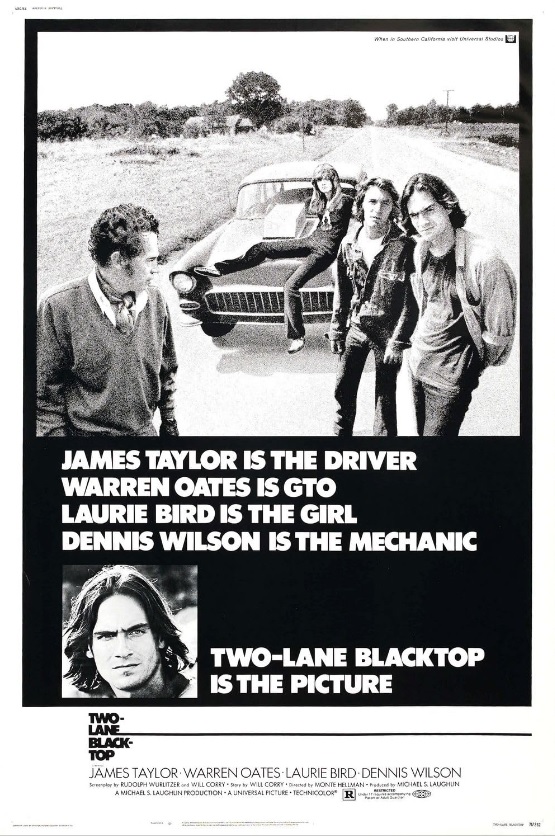
Two-Lane Blacktop

Director: Monte Hellman
Written by: Rudolph Wurlitzer, Will Corry
Cast: James Taylor, Dennis Wilson, Laurie Bird, Warren Oates

Year / Country: 1971, USA
Running Time: 98 mins.

After winning a late-night drag race, the driver (James Taylor) and his friend, the mechanic (Dennis Wilson), leave Los Angeles in their gray ’55 Chevrolet. They embark on an aimless road trip, stopping only for food, gas, and the occasional driving challenge. Along the way, they pick up a free-spirited hitchhiker (Laurie Bird) and continue their journey eastward. Their path repeatedly crosses with a 1970 Pontiac GTO, driven by a boastful older man (Warren Oates), leading to a high-stakes cross-country race to Washington, D.C. for ownership of their cars.

This is not a summary of the story, but it’s the whole story. The film unfolds as a meditation on existentialism, where racing becomes a metaphor for life itself. The characters drive not toward any clear destination but toward an uncertain fate, embodying the restless, aimless energy of drifters. Tellingly, none of the main characters even have names, emphasizing their roles as archetypes of the disillusioned wanderer.

Watching this film feels like stepping into a time capsule. Much like American Graffiti, it captures the spirit of a bygone era – an America of the early 1970s, defined by hippies, muscle cars, and rock ‘n’ roll. The minimalist storytelling is complemented by striking cinematography, making the open road a central character in its own right.

Two-Lane Blacktop is more than a movie; it’s a raw, unvarnished piece of Americana. A snapshot of a world long past, it stands as a beautiful, haunting testament to a fleeting time and place in American culture.

Rating:

Biography: Monte Hellman (1932, New York) studied drama at Stanford University and film at UCLA. He joined legendary producer Roger Corman and made his film debut with Beast From Haunted Cave, an enjoyable 50’s creature flick. Hellman teamed up with Jack Nicholson and together they made two low-budget flicks in the Philippines, one written by Nicholson. They continued the co-op and made two more films together, this time Westerns. Once again Nicholson wrote the screenplay for one of them (Ride in the Whirlwind). Hellman then made Two-Lane Blacktop, which did well with critics, but bad at the box-office. After making a couple more cult movies, Hellman mostly worked as second-unit director, editor and executive producer for acclaimed directors such as Samuel Fuller, Paul Verhoeven and Quentin Tarantino. His latest directing effort was a segment of the horror anthology Trapped Ashes.

Filmography: Beast from Haunted Cave (1959), Flight to Fury (1964), Back Door to Hell (1964), Ride in the Whirlwind (1965), The Shooting (1967), Two-Lane Blacktop (1971), Cockfighter (1974), Baretta (1975, TV), The Greatest (1977), China 9, Liberty 37 (1978), Inside the Coppola Personality (1981), Iguana (1988), Silent Night, Deadly Night III: Better Watch Out! (1989), Stanley’s Girlfriend (2006, short), Trapped Ashes (2006, segment ‘Stanley’s Girlfriend’)
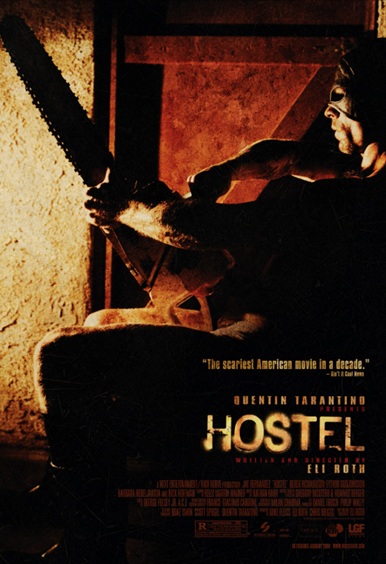

Hostel

Director: Eli Roth
Written by: Eli Roth
Cast: Jay Hernandez, Derek Richardson, Eythor Gudjonsson, Barbara Nedeljakova

Year / Country: 2005, USA
Running Time: 94 mins.

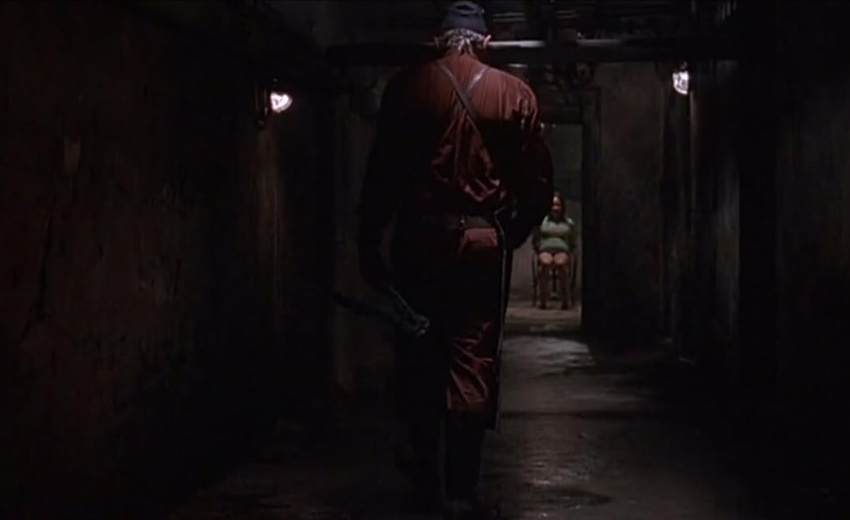
From executive producer Quentin Tarantino and director Eli Roth (Cabin Fever) comes Hostel, a relentless and visceral gore-fest that redefines the horror genre.

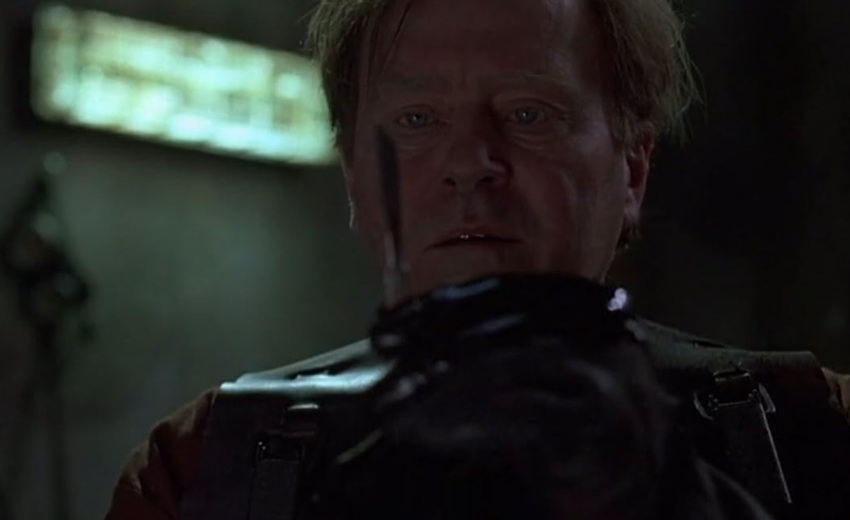
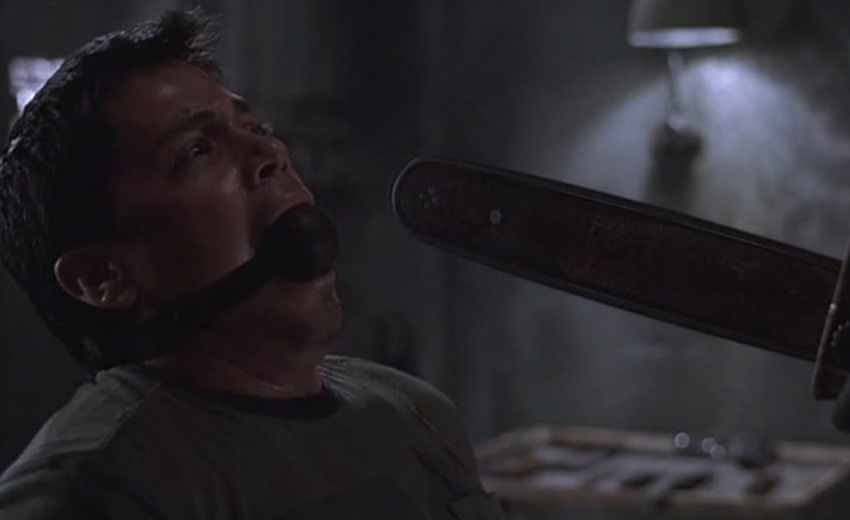
The film follows three reckless backpackers who, lured by the promise of a Slovakian hostel teeming with alluring women, stumble into a nightmare far darker than they could imagine. Instead of a paradise of hedonism, they find themselves trapped in a sadistic torture factory, where young travelers are systematically brutalized and slaughtered.

One by one, the trio is ensnared by their seductive yet treacherous holiday flings, drawn into a world of unimaginable horror. Hostel taps into the same vein of sadistic thrillers as James Wan’s Saw, but where Saw bogs itself down in a convoluted detective narrative, Hostel thrives by anchoring its terror in the protagonists’ harrowing first-person descent into madness. The slow, creeping revelation of their fate makes the experience all the more terrifying.

Roth masterfully manipulates his audience, balancing an entertaining – if occasionally implausible – setup (why would anyone impulsively jet off to Slovakia after a single photo of women?) with a descent into bleak, hopeless torment. The film escalates from a tense struggle for survival to a blood-soaked frenzy of revenge, delivering a rollercoaster of dread and catharsis.

Some people have complained about the lack of plot. But seriously: who cares? Horror movies haven’t been this fun in ages and it is the first film that actually scared the living hell out of me in quite a while. It’s a perfect storm of tension and grotesque brutality (and yes, it’s extremely gory). I’d even call it a brilliant piece of entertainment. Just a fair warning: this isn’t for the faint of heart.

Rating:

Biography: Eli Roth (1972, Boston) began shooting Super 8 movies at a young age. After studying at N.Y.U. he worked for many years in film and theatre doing every job available. His first feature Cabin Fever was made for only 1,5 million dollars and grossed a 100 million at the box office. Quentin Tarantino calls him ‘the future of horror movies’.

Filmography: Chowdaheads (1999, TV series), Cabin Fever (2002), The Rotten Fruit (2003, short), Hostel (2005), Hostel: Part II (2007)

Cult Radar: Part 5

FilmDungeon.com is glad to explore the video trenches to find that oddball treasure between the piles of crap out there. Off course a treasure in this context can also be a film that’s so shockingly bad it’s worth a look, or something so bizarre that cult fans just have to see it. Join us on our quest and learn what we learn. Hopefully we’ll uncover some well-hidden cult gems.

Researched by: Jeppe Kleijngeld

The Inglorious Bastards (Italy, 1978)
OT: Quel maledetto treno blindato

Directed by: Enzo G. Castellari
Written by: Sandro Continenza, Sergio Grieco, Franco Marotta,
Romano Migliorini, Laura Toscano
Cast: Bo Svenson, Peter Hooten, Fred Williamson, Michael Pergolani

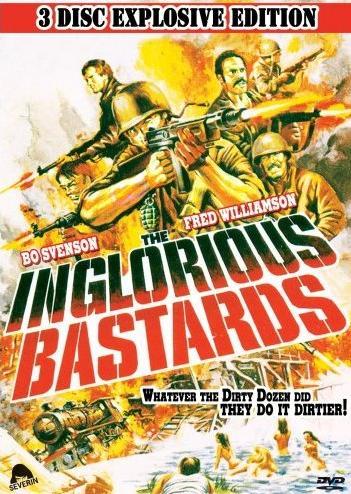
Before Tarantino’s Inglourious Basterds, there was this WWII exploitation flick. A group of Dirty Dozen-like US soldiers get transported through France in order to be court-martialed. After they get ambushed by Germans, they manage to escape. They take one German hostage, who is to lead them to safe Switzerland. Underway they have to battle their way through hoards of Nazi’s and the US military. This film is characterized by loads of shoot-outs, explosions and humor. And of course some naked girls; every exploitation film needs a couple of those! The ‘Bastards’ (five in total) are well cast. Williamson is excellent as a badass motherfucker. While the movie never becomes truly great, it does manage to involve the viewer in the characters’ mission, and every time the glorious WWII music plays, you can’t help but cheer for these bastards.

EXTRA’S: As entertaining as the movie, is the excellent 38 minute discussion between Tarantino and director Enzo Castellari about their influences (Peckinpah) and the art of filmmaking.

The Strangler of Blackmoor Castle (Germany, 1963)
OT: Der würger von schloß Blackmoor

Directed by: Harald Fodor
Written by: Ladislas Fodor, Gustav Kampendonk, Bryan Edgar Wallace
Cast: Karin Dor, Harry Riebauer, Rudolt Fernau, Hans Nielsen

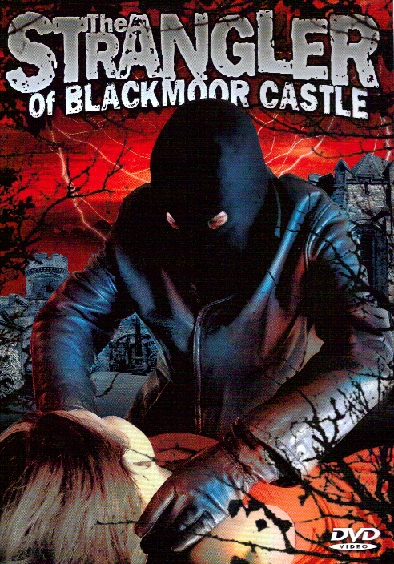
A hooded figure invades Blackmoor Castle, during a party held by the castle’s tenant Lucius Clark. The ‘Strangler’ threatens him and demands the diamonds back that Clark supposedly stole. He also leaves one man dead with a ‘M’ marked on his forehead. A Scotland Yard inspector comes over to the estate to investigate the murder. He discovers a plot around the diamonds and a confrontation with the killer ensues. This detective movie uses the build-up of a horror. This makes the beginning quite suspenseful, but it becomes a bit dull halfway through, when it turns out to be just another mediocre whodunit. Still, it is not totally without a sense of style and humor. The electronic soundtrack is made by Oskar ‘The Birds’ Sala.

Planet of Dinosaurs (USA, 1978)

Directed by: James K. Shea
Written by: Jim Aupperle, Ralph Lucas
Cast: James Whitworth, Pamela Bottaro, Louie Lawless, Harvey Shain

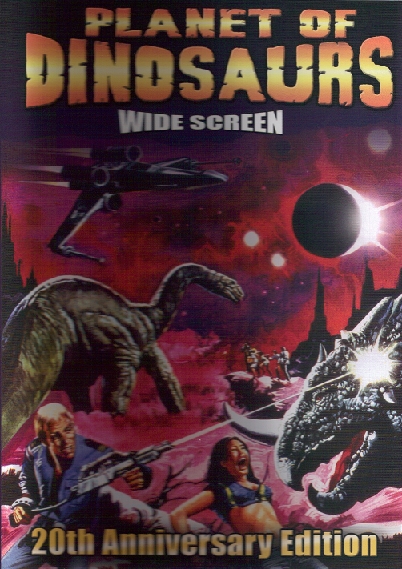
The DVD cover of Planet of Dinosaurs is a true masterpiece, but does the movie live up to it? That depends on your taste for campy stop-motion creature features. The story: a spaceship crash lands on a seemingly deserted planet. There are initially nine survivors that start to scout the area. Within two minutes, there are eight survivors left. They have landed on the planet of the apes with dinosaurs!! Some observations:
– Space effects in the beginning, ships and stuff, are very funny.
– The crew has ‘four lasers’. Hmmm…[cynical]cool.[/cynical]
– One of the last stop motion creature flicks. It’s not Harryhausen, but there is quite a lot of variety in prehistoric monsters. Only too bad they are somewhat static.
– The actors are as convincing as the dinosaurs.
– Lame dialogues and synthesizer score.

Worth watching? Yes, if you find this type of thing hilarious. Otherwise avoid.

Diabolik (Italy / France, 1968)

Directed by: Mario Bava
Written by: Mario Bava, Brian Degas, Tudor Gates, Arduino Maiuri
Cast: John Phillip Law, Marisa Mell, Michel Piccoli, Adolfo Celi

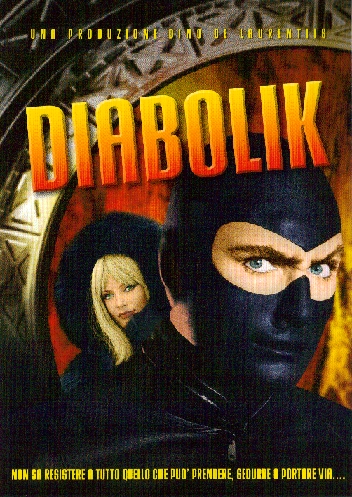
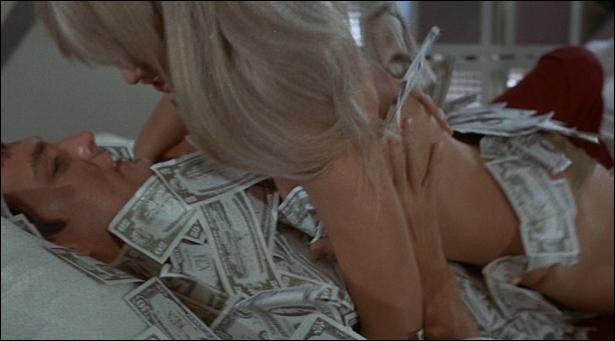
Adaptation from the Italian comic book series, produced by Dino De Laurentiis and directed by horror author Mario Bava, doing a wonderful job outside of his usual territory. John Phillip Law plays anti hero Diabolik, a masked super thief who steals riches from both the government and the Mafia. His partner is the beautiful and voluptuous Eva (Marisa Mell). Together they fulfill the male fantasy: driving black and white jaguars, making love between 10 million dollars in a rotating bed and getting away with the most daring robberies. Their opponents are inspector Ginco and mob boss Valmont, who team up in an attempt to lure Diabolik and Eva into a trap. Bava directs this superhero movie with great style, while showing respect for the source material. He delivers one amazing set-piece after another, accompanied by a brilliant musical score from master Ennio Morricone. Camp was never before or after this spectacular. Diabolik = must see movie.

Mister Scarface (Italy / Germany, 1976)
OT: I padroni della città

Directed by: Fernando Di Leo
Written by: Peter Berling, Fernando Di Leo
Cast: Harry Baer, Al Cliver, Jack Palance, Gisela Hahn

Tony (Harry Baer) collects accounts receivable for gangster Luigi. His crime family gets involved in a power struggle with local bigshot ‘Scarface’ Manzari (Palance). Tony teams up with fellow collector Rick (Al Cliver). Together they plan to scheme Scarface out of a fortune and retire afterwards. This leads to an inevitable bloody confrontation with Scarface and his crew. The fuzzy plot and often inaudible dialogues (due to deteriorated picture quality) make this movie hard to follow at times. The good things are Palance’s demonic performance and the well crafted Napels underworld atmosphere. Lot’s of action and violence during the second half especially, make this worth a look for gangster film enthusiasts.


John Phillip Law and Marisa Mell in Diabolik.


Death Proof

Director: Quentin Tarantino
Written by: Quentin Tarantino
Cast: Kurt Russell, Vanessa Ferlito, Rosario Dawson, Sydney Poitier

Year / Country: 2007, USA
Running Time: 114 mins.

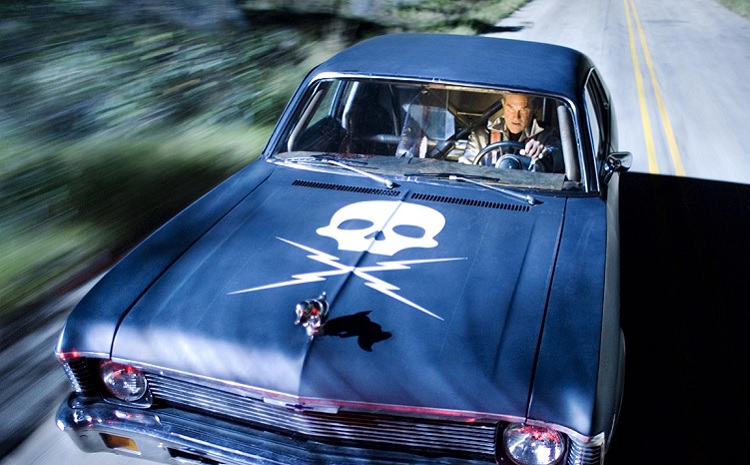
The tone of Death Proof is set right at the beginning. We hear loud engine sounds and follow a pair of feet bungling out the window of a driving car as the credits roll by. Tarantino’s half of Grindhouse is obviously some homage to cheap car chase and serial killer exploitation films. Originally part of a double bill with Robert Rodriquez’s Planet Terror, it was released outside the US as a separate movie to increase box office revenue. Not a great decision from an artistic viewpoint, but Death Proof does work as a stand-alone film.

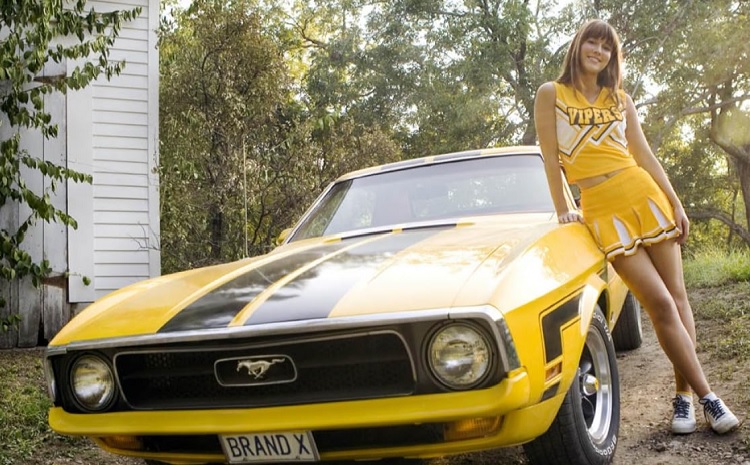
Kurt Russell plays Stuntman Mike, a weird and burned-out stunt driver who happens to be a psycho as well. He ‘suffers’ from a chick habit: stalking and eventually killing groups of beautiful young girls by crashing his ‘death proof’ car into them. Out of this he gets his sexual kicks. The first time, his plan works fine, but the second time around he should have done a little more research on his targets. This group of girls consist of fellow stunt drivers who get quite homicidal when Mike tries to pull his crap.

Tarantino uses various techniques, such as a damaged print and deliberate continuity mistakes to make Death Proof appear as a typical film that would have been shown in grindhouse theaters in the seventies. He has also included his typical trademark movie references, this time to genre classics such as Vanishing Point. In order to make it match with Planet Terror, the film also shares some characters with that film, such as Dr. Block and of course Texas ranger Earl McGraw.

One problem I have with Death Proof is that the dialogues, that normally seem effortless in a Tarantino film, come across here as sort of synthetic. This is probably done deliberately to fit the film’s campy B-style, but it is still distracting and it takes up a large part of the movie. Luckily this is made up with an interesting structure, a groovy soundtrack and a great old-school car chase scene at the end. Kurt Russell is also awesome as the movie’s central character. Stuntman Mike is a serial killer who belongs in the gallery of great Tarantino characters.

This may not be a masterpiece but it works very well as the type of experience it attempts to simulate. It is also a better balanced movie than Planet Terror. Sometimes it is a little ‘too Tarantino’ if there is such a thing, most noticeable by the casting of ‘super cool’ chicks and the overly hip dialogues. But Death Proof is nevertheless a film that has plenty of excitement and genuine coolness to offer.

Rating:

Biography: Quentin Tarantino (1963, Knoxville, Tennessee) made a big impression on the international film world when his feature debut Reservoir Dogs premiered at Sundance in 1992. After his second film Pulp Fiction screened at Cannes in 1994 and won the Palme D’or, Tarantino quickly became a household name. Since then he has enjoyed his fame by making more homages to the films he loves and grew up with.

Filmography (a selection): My Best Friend’s Birthday (1987), Reservoir Dogs (1992), Pulp Fiction (1994), Four Rooms (1995, segment ‘The Man From Hollywood’), Jackie Brown (1997), Kill Bill: Vol. 1 (2003), Kill Bill: Vol. 2 (2004), Sin City (2005, special guest director), CSI (2005, TV episodes), Grindhouse (2007, segment ‘Death Proof’), Inglourious Basterds (2009), Django Unchained (2012), The Hateful Eight (2015), Once Upon a Time… in Hollywood (2019)