
De naam Robin Green kende ik wel van The Sopranos. Samen met haar echtgenoot Mitchell Burgess schreef ze 17 afleveringen van de beste serie ooit. Nu hoorde ik op de podcast Talking Sopranos dat ze in de jaren ‘70 schreef voor Rolling Stone Magazine samen met o.a. Gonzo-journalist Hunter S. Thompson. Haar ervaringen uit die tijd staan beschreven in haar memoir ‘The Only Girl’. The Sopranos en Hunter S. Thompson? Dat is een boek voor mij.
En het viel niet tegen. Op 26 jarige leeftijd kwam Green op de Masthead van Rolling Stone te staan, als eerste vrouw. Het was in 1971, het jaar waarin Hunter S. Thompson’s Fear and Loathing in Las Vegas in twee delen in het magazine werd gepubliceerd, mijn favoriete boek aller tijden. Green hierover: ‘Hunter had been sent to Las Vegas to cover a motorcycle race, and when the magazine – ‘aggressively’ according to Hunter, rejected the pages – that story resulted in ‘Fear and Loathing in Las Vegas: A Savage Journey to the Heart of the American Dream’, published in two parts. The first as Hunter had written it, the second derived largely from taped hours of Hunter and Oscar Acosta’s muttering and raving, tapes that landed on the desk of newly hired Sarah Larin to be transcribed’.
En nog meer over Hunter: ‘His writing seemed like a new form as close to rock itself as writing gets. Unrestrained and Unrepressed, wild and reckless and high as a fucking kite. Hunter had found the perfect venue in Rolling Stone. Neither a glossy magazine with a two month lead time nor a newspaper with its limited space and linguistic leeway.’
Green, die altijd schrijver wilde worden, maakte haar debuut bij Rolling Stone met een verhaal over Marvel waar ze als secretaresse van Stan Lee had gewerkt. Ze kreeg 5 cent per woord wat haar 500 dollar opleverde, veel geld in die tijd. Nog belangrijker: ze werd vaste bijdrager aan Rolling Stone en het artikel werd haar eerste cover story. Later schreef ze een onthullend verhaal over Dennis Hopper, waarna haar naam als eerste vrouw aan de masthead van Rolling Stone werd toegevoegd. Haar Hopper-stuk werd in 1992 opgenomen in Movieline’s overzicht van de ‘Ten Interviews That Shook Hollywood’.

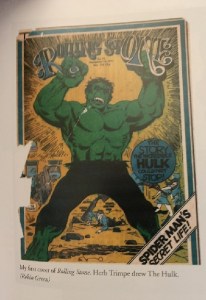

Het was een goede tijd voor de journalistiek. Zoals bekend van Hunter S. Thompson’s escapades betaalde het magazine alle onkosten, en dus waren Green en collega’s niemand iets verschuldigd. Ze konden niet makkelijk omgekocht worden door de PR-industrie en schreven wat ze wilden.
En het was een tijd waarin vrouwen voor hun rechten opkwamen. Green: ‘In this world, the world of rock and roll, men ran the show. They were the rock stars. The journalists and editors were men too. Even before that, in college, it was guys who’d been the ones to grab the microphones at sit-ins and demonstrations. A chick’s mandate: to be by their sides at the revolution, looking hip. Women were seeking equality. Hair under the armpits and getting sweaty. Have sex with everybody. Not out of promiscuity, but for freedom. There were no consequences yet. AIDS would not arrive until the 1980’s.’
De tegencultuur waar ze onderdeel van werd wordt tegenwoordig misschien gezien als nogal puberaal, tegendraads gedrag, maar Green brengt hier tegenin dat er ook een hoop was om boos over te zijn in die jaren: Vietnam, Kennedy’s dood (twee keer), Nixon, Malcolm X, Martin Luther King… En niet te vergeten: de tragische dood van Jim, Janis en Jimi.
Na een periode van zo’n vijf jaar kwam er een einde aan haar carrière bij Rolling Stone. Ze had een verhaal geschreven over de kinderen van Bobby Kennedy, maar vond dat ze een journalistieke grens had overschreden door met Robert Kennedy Jr. naar bed te gaan. Hoofdredacteur Jann Wenner eiste het verhaal wat zij weigerde. Toen liet hij haar naam van de masthead verwijderen.
Jaren later na vele omzwervingen werd Green televisie-schrijver. Grappig dat ze bij The Sopranos terecht kwam, de eerste echte rock-‘n-roll sterren van de televisie. Ook bij dit andere culturele fenomeen was Green de enige vrouwelijke schrijver. Het laatste deel van het boek gaat over deze periode van haar leven en vond ik verreweg het interessantste. Over hoe ze David Chase ontmoette, het genie achter The Sopranos, en samen met haar man Mitchell in het schrijversteam terecht kwam. Over hoe ze haar eigen jeugdervaringen in de scripts verwerkte en over hoe de serie een fenomeen werd. En uiteindelijk, hoe Chase haar ontsloeg in het laatste seizoen omdat ze ‘de show niet zou begrijpen’. Het had iets met zijn moeder te maken, vermoed Green. Toch is er een happy ending voor de schrijver die nu in de zeventig is. Samen met haar man ontwikkelde ze de serie Blue Bloods, die nu al aan het twaalfde seizoen toe is.
Tegenover elk succesverhaal dat je leest staan vele verhalen over mislukking. In ‘The Only Girl’ is dat het verhaal van Robin’s jeugdvriendin Ronnie die keer op keer in een psychiatrisch ziekenhuis McLeans belandt, dat bekend is geworden door de film Girl, Interrupted. Later zou ze zelfmoord plegen. Green schrijft: ‘Life is strange in that way. Why is one in mental pain, and the other juicy, healthy and productive? Riding high.’ En ‘riding high’ heeft ze zeker gedaan. Dat weet ze met deze smakelijke memoires goed over te brengen.




 FRAGMENTEN UIT HET SCHEMERLAND