Death Race 2

Director: Roel Reiné
Written by: Paul W.S. Anderson, Tony Giglio
Cast: Luke Goss, Lauren Cohan, Sean Bean, Ving Rhames

Year / Country: 2010, South Africa
Running Time: 96 mins.

Direct-to-video sequel to Paul W.S. Anderson’s Death Race from 2008, which was in itself a remake of the Roger Corman produced cult movie Death Race 2000 from 1975. Anderson did come up with the story, but the director of this futuristic actioner is Dutchman Roel Reiné.

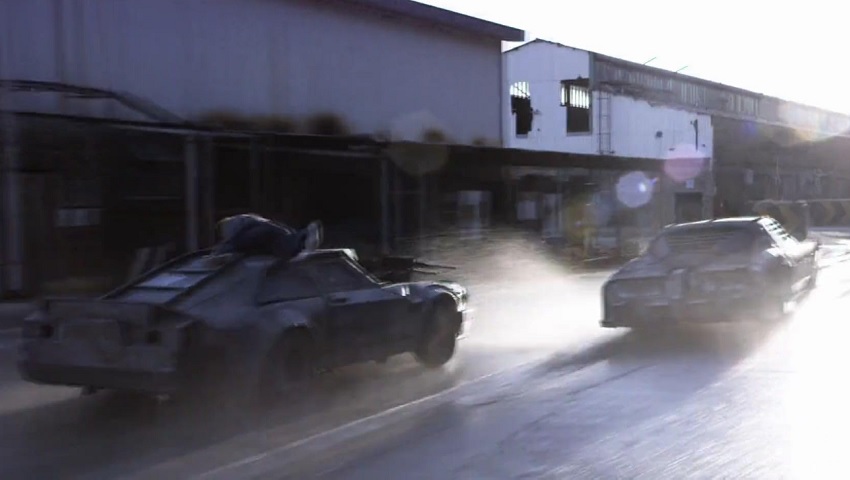
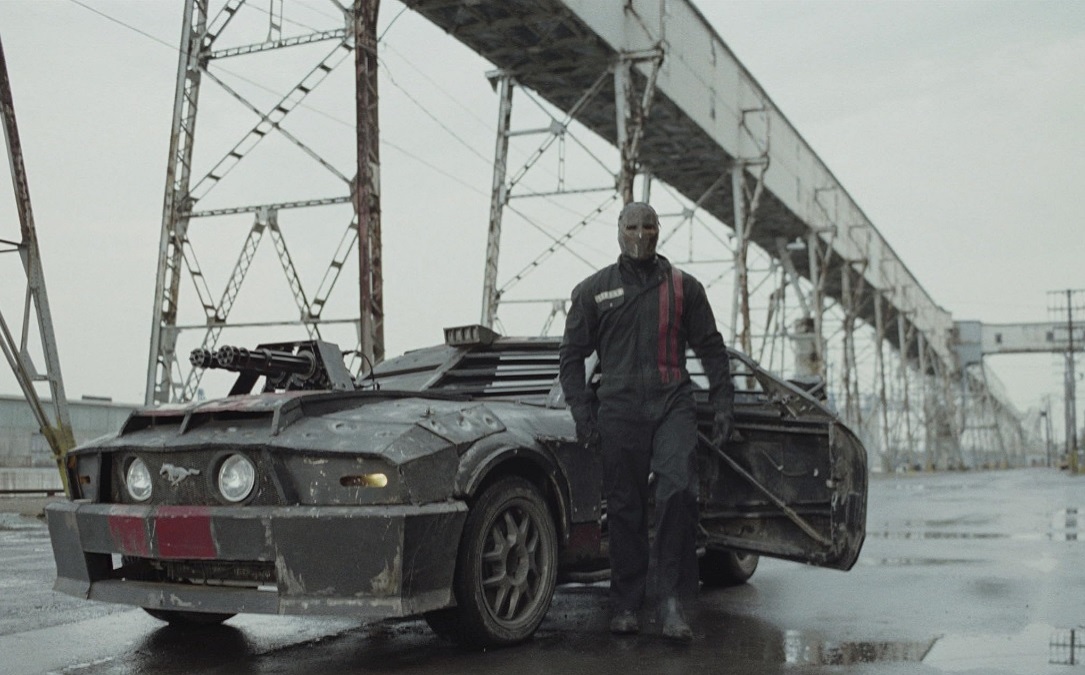
Storywise, this is a prequel to the first film and tells the origins of legendary driver Frankenstein. In the near future, prisons are run by private corporations, and in order to optimize the profits, they organise bloody spectacles that viewers can watch through paid internet streams. First, inmates fight one on one in bloody battles, but as audiences get bored, a deadly race is organised with fast cars armed with machine guns, napalm and missile launchers. Inmate Luke (Luke Goss), a talented getaway driver, is forced to participate.

In a film like this, it’s inevitable to encounter some implausibilities, which could be forgivable if the usually talented cast weren’t burdened with poorly written roles and clunky dialogue. The high-speed action is executed with skill, though the spectacular opening chase scene sets a standard that the rest of the film struggles to match.

One highlight is the ending – a satisfying homage to the 1975 cult classic that fans will undoubtedly appreciate.

If you’re seeking bloody violence, this film delivers in spades. Just don’t expect much beyond that.

Rating:

Biography: Roel Reiné (1969, Eindhoven, The Netherlands) went to the States after the success of his first film The Delivery. He had breakfast with Dutch director Paul Verhoeven, who told him, ‘you have to live here to make movies.’ Reiné made one more movie in The Netherlands before he moved to the States.

Filmography (a selection): The Delivery (1999), Adrenaline (2003), Pistol Whipped (2008), Drifter (2008), Deadwater (2008), Wolfseinde (2008-2009, TV Series), The Marine 2 (2009), The Lost Tribe (2010), Death Race 2 (2010), Death Race 3: Inferno (2013), Michiel de Ruiter (2015), Hard Target 2 (2016), Redband (2018)
Death Race

Director: Paul W.S. Anderson
Written by: Paul W.S. Anderson
Cast: Jason Statham, Joan Allen, Ian McShane, Tyrese Gibson

Year / Country: 2008, USA, Germany, UK
Running Time: 106 mins.

Death Race is supposed to be a remake of Death Race 2000, a Roger Corman produced cult gem from the seventies. While there is certainly resemblance; it is all about a gladiator-like futuristic car race, there are many differences as well. Death Race 2000 was a cynical, humoristic and over the top look at the future, while Death Race doesn’t seem to be more than a straightforward action flick. Not that there’s anything wrong with that, the target audience just might be a little different.

In 2012, a financial crisis threw the Western world into chaos. Jensen Ames (Statham) is an ex-racer who is framed for murdering his wife. In jail he has to replace legendary driver Frankenstein in the internet hit ‘Death Race’. While Ames makes a great Frankenstein, the real monster is warden Hennessey (Joan Allen) who directs the deadly race to make a killing from the broadcasting. But Ames is not one to simply play ball. He has an escape-plan to execute, a conspiracy to solve and enemies to exterminate.

The plot is very predictable, but the concept works well enough to forgive the film this flaw. It seems that in every movie director Anderson directs, he does one thing extremely well and a lot of other things very wrong. In this movie it is the action that blows off the screen. The internet streaming footage is also fabulous. His writing skills leave a lot to be desired though. This is mainstream Hollywood work.

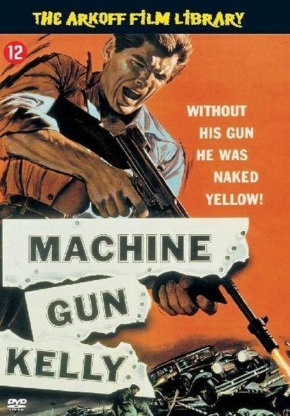
Statham has become quite the badass action star. I preferred David Carradine in the Frankenstein role in the original, but Statham is nevertheless okay. However, Tyrese Gibson is a lousy replacement for Machine Gun Joe. Watching Sylvester Stallone in that part was a thousand times cooler, though it is not entirely Gibson’s fault. The script doesn’t give him much to work with. In the acting department, there is great support from Joan Allen as queen bitch and Ian McShane as Ames’ biggest supporter.

That leaves one comment to be made; the ending is excruciating. But since the largest part of the film is about racing, this movie can be called a modest success. It is certainly the best thing Anderson has done in years.

Rating:

Biography: Paul W.S Anderson (1965, Newcastle-upon-Tyne, UK) gained some notoriety in his native England with his ultra-violent feature debut Shopping in 1994. Its relative success allowed him to direct action / sci-fi films in Hollywood, including the financially successful Mortal Kombat. In 2002 he resurfaced another video game adaptation, Resident Evil. He next was given the helm for the long-awaited film adaptation of the popular Dark Horse comic book, AVP: Alien Vs. Predator.

Filmography (a selection): Shopping (1994), Mortal Kombat (1995), Event Horizon (1997), Soldier (1998), The Sight (2000, TV), Resident Evil (2002), AVP: Alien vs. Predator (2004), Death Race (2008), Resident Evil: Afterlife (2010), The Three Musketeers (2011), Resident Evil: Retribution (2012), Pompeii (2014), Resident Evil: The Final Chapter (2016), Monster Hunter (2020)

The St. Valentine’s Day Massacre (1967)

Directed by:
Roger Corman

Written by:
Howard Browne

Cast:
Jason Robards (Al Capone), George Segal (Peter Gusenberg), Ralph Meeker (George Clarence ‘Bugs’ Moran), Jean Hale (Myrtle), Clint Ritchie (Jack McGurn), Frank Silvera (Nick Sorello), Joseph Campanella (Albert Wienshank), Richard Bakalyan (John Scalise), David Canary (Frank Gusenberg), Bruce Dern (Johnny May)

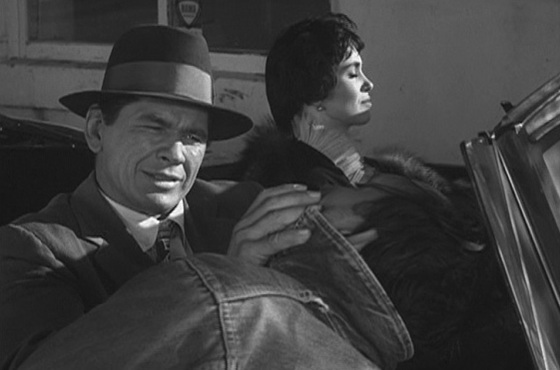
Roger Corman’s gangster movies are generally enjoyable. The St. Valentine’s Day Massacre that follows the famous violent event on February 14, 1929 has got to be his most boring one.

On this specific St. Valentine’s Day, Al Capone set a legendary trap for seven men that were working for his opponent Bugs Moran. In the gang war preceding it, Moran tried to kill Capone to take over the bootlegging and gambling profits in Chicago. The movie uses a sort of journalistic approach. A narrator introduces every character involved and covers the events in a newspaper sort of way.

Al Capone, played by Jason Robards, is the unchallenged leader of Chicago’s most powerful underworld organisation. Robards portrays ‘Alphonse’ as an uncontrolled and ruthless hothead. He yells too often, but still turns in a decent performance. All the supporting characters get a detailed background story provided by the narrator. Unfortunately, there are way too many to remember.

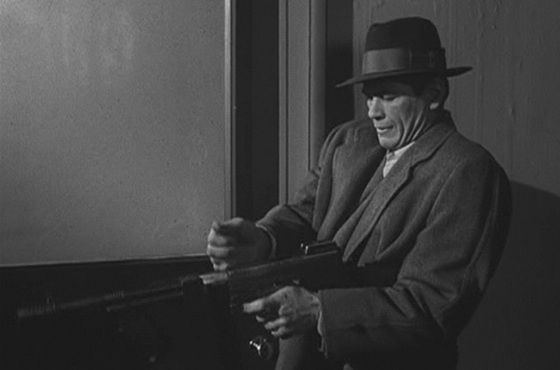
If you enjoy technically proficient Tommy Gun action, you may find something to like about this film. Otherwise, the too factual approach and lack of drama will probably leave you as cold as one of the stiffs from the massacre.

Rating:

Quote:
NARRATOR: “In the years following the passage of the National Prohibition Act of 1920, the nation’s underworld rises to power and battles amongst itself just as modern nations and corporations do.”

Trivia:
The St. Valentine’s Day Massacre’ is also an important event in Capone (1975), a gangster film produced by Roger Corman and starring Ben Gazzara as Al Capone.

Two-Lane Blacktop

Director: Monte Hellman
Written by: Rudolph Wurlitzer, Will Corry
Cast: James Taylor, Dennis Wilson, Laurie Bird, Warren Oates

Year / Country: 1971, USA
Running Time: 98 mins.

After winning a late-night drag race, the driver (James Taylor) and his friend, the mechanic (Dennis Wilson), leave Los Angeles in their gray ’55 Chevrolet. They embark on an aimless road trip, stopping only for food, gas, and the occasional driving challenge. Along the way, they pick up a free-spirited hitchhiker (Laurie Bird) and continue their journey eastward. Their path repeatedly crosses with a 1970 Pontiac GTO, driven by a boastful older man (Warren Oates), leading to a high-stakes cross-country race to Washington, D.C. for ownership of their cars.

This is not a summary of the story, but it’s the whole story. The film unfolds as a meditation on existentialism, where racing becomes a metaphor for life itself. The characters drive not toward any clear destination but toward an uncertain fate, embodying the restless, aimless energy of drifters. Tellingly, none of the main characters even have names, emphasizing their roles as archetypes of the disillusioned wanderer.

Watching this film feels like stepping into a time capsule. Much like American Graffiti, it captures the spirit of a bygone era – an America of the early 1970s, defined by hippies, muscle cars, and rock ‘n’ roll. The minimalist storytelling is complemented by striking cinematography, making the open road a central character in its own right.

Two-Lane Blacktop is more than a movie; it’s a raw, unvarnished piece of Americana. A snapshot of a world long past, it stands as a beautiful, haunting testament to a fleeting time and place in American culture.

Rating:

Biography: Monte Hellman (1932, New York) studied drama at Stanford University and film at UCLA. He joined legendary producer Roger Corman and made his film debut with Beast From Haunted Cave, an enjoyable 50’s creature flick. Hellman teamed up with Jack Nicholson and together they made two low-budget flicks in the Philippines, one written by Nicholson. They continued the co-op and made two more films together, this time Westerns. Once again Nicholson wrote the screenplay for one of them (Ride in the Whirlwind). Hellman then made Two-Lane Blacktop, which did well with critics, but bad at the box-office. After making a couple more cult movies, Hellman mostly worked as second-unit director, editor and executive producer for acclaimed directors such as Samuel Fuller, Paul Verhoeven and Quentin Tarantino. His latest directing effort was a segment of the horror anthology Trapped Ashes.

Filmography: Beast from Haunted Cave (1959), Flight to Fury (1964), Back Door to Hell (1964), Ride in the Whirlwind (1965), The Shooting (1967), Two-Lane Blacktop (1971), Cockfighter (1974), Baretta (1975, TV), The Greatest (1977), China 9, Liberty 37 (1978), Inside the Coppola Personality (1981), Iguana (1988), Silent Night, Deadly Night III: Better Watch Out! (1989), Stanley’s Girlfriend (2006, short), Trapped Ashes (2006, segment ‘Stanley’s Girlfriend’)